Miami Leads Colombia Tourism as US Inbound Arrivals Fall 9.3% in 2026: Florida Gateways Face Shifting Demand

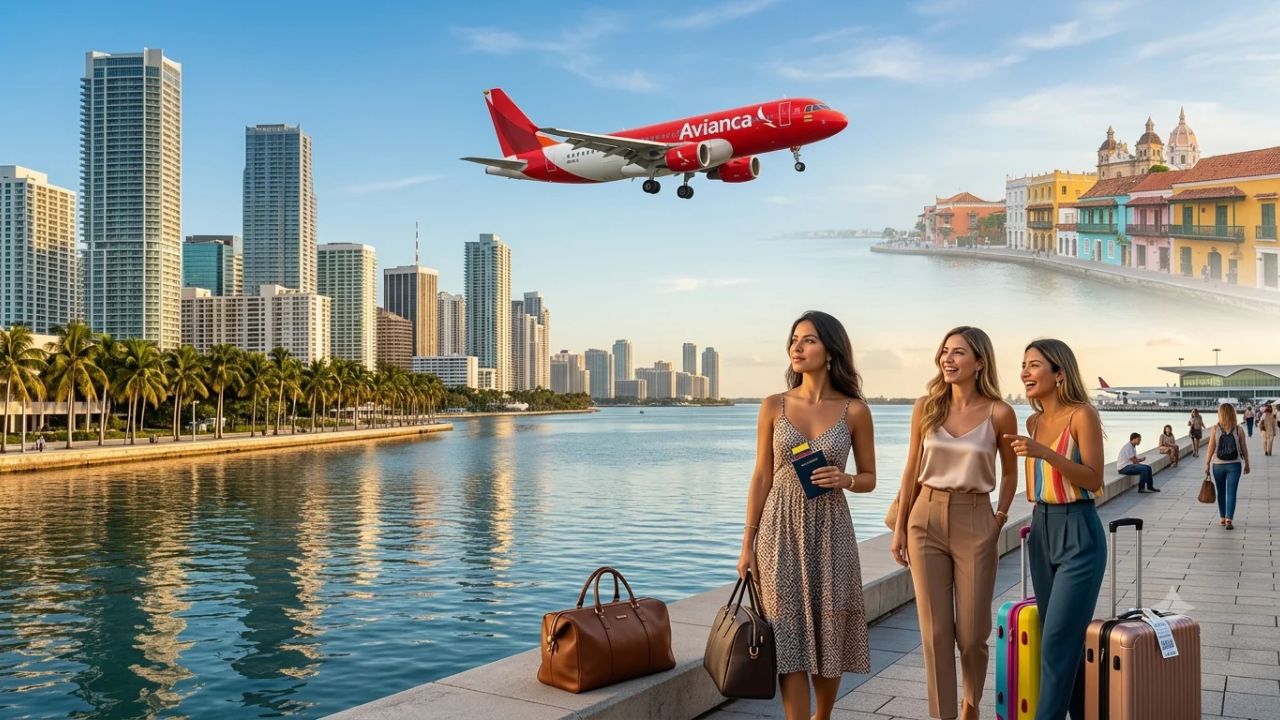
Official immigration records show that while US citizen arrivals to Colombia declined 9.3% in 2026, Miami retained its commanding lead among Florida gateways.
BOGOTÁ, November 3, 2026 — Official bilateral immigration statistics released in Colombia reveal a complex recalibration of American inbound travel, characterized by an overall national decline in United States visitors alongside the enduring gateway dominance of South Florida. According to comprehensive border data covering January through September 2026, total US citizen-originating arrivals to Colombia contracted by 9.3% year-on-year, dropping from 1,069,194 in 2025 down to 969,388—representing an absolute deficit of nearly 100,000 American travelers. Despite this nationwide contraction, Miami consolidated its standing as the primary departure hub from the United States, generating 329,694 arrivals. Miami's volume far surpassed Florida rivals Orlando (50,526) and Tampa (13,640), even as the three cities traced starkly divergent trajectories marked by Miami's 9.6% retreat, Orlando's severe 18.2% summer slump, and Tampa's rapid 144.3% expansion from a modest operational baseline.
[!NOTE] Key Metrics of Colombia's 2026 US Inbound Travel Performance: Between January and September 2026, US citizen arrivals to Colombia decreased 9.3% to 969,388, losing 99,806 visitors compared to the prior year. More than half of this loss occurred during the third-quarter summer peak, which saw arrivals tumble by 56,117. Florida gateways accounted for 393,860 arrivals (40.6% of the nationwide US total). Within Florida, Miami remained the undisputed leader with 329,694 arrivals (-9.6%), representing 83.7% of the state's tri-city total. Orlando recorded 50,526 arrivals (-18.2%), hit by an acute summer plunge, while Tampa grew 144.3% to 13,640 arrivals, reflecting expanded nonstop service.
COLOMBIA INBOUND TRAVEL: US CITIZEN ARRIVALS & FLORIDA GATEWAYS (JAN-SEP 2026)
| Column 1 |
|---|
| [ NATIONAL US CITIZEN ARRIVALS TO COLOMBIA ] |
| * Total Nationwide Volume: 969,388 arrivals (vs 1,069,194 in Jan-Sep 2025). |
| * Absolute Net Contraction: -99,806 traveler entries (-9.3% Year-on-Year). |
| * Summer Peak Vulnerability: Q3 accounted for 56,117 lost arrivals (over 56% of total deficit). |
| [ FLORIDA GATEWAY COMPARISON (MIAMI, ORLANDO, TAMPA) ] |
| * Combined Florida Tri-City Total: 393,860 arrivals (down 8.9% from 432,163 in 2025). |
| * Florida Market Share: Represents 40.6% of all US citizen arrivals entering Colombia. |
| - Florida Dominance: Accounts for 83.7% of combined Florida departures to Colombia. |
| - Key Characteristics: Unmatched flight density, corporate links, & massive Colombian diaspora. |
| - Volatility Profile: Spring surge (March +51.9%) collapsed into steep summer drop (Aug -44.7%). |
| - Structural Drivers: Shift in family vacation budgets & low-cost carrier frequency changes. |
| - Emerging Growth: Triple-digit expansion driven by new nonstop routes & low-baseline comparisons |
The Macro Inbound Contraction: Deciphering Colombia's 100,000 American Visitor Deficit
The loss of 99,806 American arrivals across the first nine months of 2026 marks a notable shift in Colombia's post-pandemic tourism trajectory. Following years of record-breaking inbound expansion—driven by aggressive international destination promotion, the global popularity of Colombian coffee culture and biodiversity, and favorable exchange rates—the 2026 data indicates that demand from Colombia's largest foreign tourism source market is cooling.
This contraction follows an unprecedented era of growth that began after the 2016 Peace Accords and accelerated sharply following the pandemic reopening. Between 2022 and 2025, American leisure travelers embraced Colombia in record volumes, drawn by the vibrant street art of Medellín's Comuna 13, the colonial splendor of Cartagena de Indias, the Andean landscapes of the Coffee Cultural Landscape, and world-class culinary scenes in Bogotá. However, as international travel spending normalized globally, Colombia began facing intense competition from neighboring South American and Caribbean destinations, while local operational costs across Colombia's hospitality sector rose in response to sustained domestic inflation.
An examination of the monthly arrival data reveals that Colombia entered 2026 on relatively stable footing. During the first quarter, US citizen arrivals reached 330,925, representing a minor 2.0% decline compared to the 337,709 visitors recorded in the first quarter of 2025. January recorded a 7.0% decline (97,905 arrivals) and February dipped 2.0% (107,937 arrivals), but March rebounded with a 2.2% year-on-year gain, delivering 125,083 travelers. This positive momentum appeared to hold steady through April, which recorded 99,770 arrivals, virtually unchanged from April 2025 (+0.1%).
The downturn materialized swiftly in May and accelerated throughout the northern hemisphere summer. May arrivals slipped 11.0% to 102,812, while June experienced a sharper 16.8% contraction to 119,986. The third quarter delivered the most severe commercial blow to Colombian tourism operators. July arrivals declined 13.6% to 129,059, August plunged 20.1% to 104,413 (shedding 26,194 visitors in a single month), and September fell 10.5% to 82,423.
In total, the third quarter accounted for 315,895 arrivals compared to 372,012 during the same three months in 2025. This quarterly reduction of 56,117 visitors represented more than 56% of the entire nine-month national deficit. For Colombian tourism businesses—including boutique hotels in Cartagena's historic walled center, eco-lodges across the Coffee Cultural Landscape in Quindío and Risaralda, and gastronomy tours in Medellín and Bogotá—the collapse in summer family and leisure travel placed immediate downward pressure on occupancy rates and ancillary tour revenues.
MONTHLY ARRIVAL DYNAMICS: US CITIZENS VISITING COLOMBIA (JAN-SEP)
| Column 1 | Column 2 | Column 3 | Column 4 | Column 5 |
|---|---|---|---|---|
| Month | 2025 US Arrivals | 2026 US Arrivals | Absolute YoY Change | YoY % |
| :--- | :--- | :--- | :--- | :--- |
| January | 105,255 | 97,905 | -7,350 | -7.0% |
| February | 110,098 | 107,937 | -2,161 | -2.0% |
| March | 122,356 | 125,083 | +2,727 | +2.2% |
| Q1 Subtotal | 337,709 | 330,925 | -6,784 | -2.0% |
| April | 99,643 | 99,770 | +127 | +0.1% |
| May | 115,532 | 102,812 | -12,720 | -11.0% |
| June | 144,298 | 119,986 | -24,312 | -16.8% |
| Q2 Subtotal | 359,473 | 322,568 | -36,905 | -10.3% |
| July | 149,332 | 129,059 | -20,273 | -13.6% |
| August | 130,607 | 104,413 | -26,194 | -20.1% |
| September | 92,073 | 82,423 | -9,650 | -10.5% |
| Q3 Subtotal | 372,012 | 315,895 | -56,117 | -15.1% |
| TOTAL | 1,069,194 | 969,388 | -99,806 | -9.3% |
Miami's Unchallenged Hegemony: Analyzing the 329,000-Arrival Powerhouse Amid a 9.6% Slump
Within the United States, Florida serves as the primary operational conduit for travel to Colombia, generating 393,860 arrivals during the January to September 2026 window. This represents 40.6% of all American travelers entering the country. Within Florida, Miami International Airport (MIA) occupies an unrivaled position, functioning not merely as a regional airport, but as the commercial, financial, and cultural bridge between North America and northern South America.
Miami generated 329,694 US citizen-originating arrivals to Colombia through September 2026. To appreciate the scale of Miami's dominance, its volume was more than six times that of Orlando (50,526) and over twenty-four times that of Tampa (13,640). Miami alone accounted for 83.7% of all Florida departures to Colombia and approximately 34.0% of all US citizen arrivals nationwide.
This structural hegemony is anchored in robust fundamentals. South Florida is home to the largest Colombian diaspora in the United States, with dense communities established across Doral, Weston, Kendall, and Broward County. This demographic base ensures a steady, year-round volume of Visiting Friends and Relatives (VFR) travel, which provides a resilient baseline of passenger traffic that is far less sensitive to macroeconomic cycles than purely discretionary leisure tourism.
In addition, Miami possesses unmatched nonstop flight connectivity. Commercial airlines—including Avianca, American Airlines, and LATAM—operate multiple daily widebody and narrowbody flights connecting Miami directly to every major Colombian gateway: Bogotá's El Dorado (BOG), Medellín's José María Córdova (MDE), Cali's Alfonso Bonilla Aragón (CLO), Cartagena's Rafael Núñez (CTG), and Barranquilla's Ernesto Cortissoz (BAQ). Miami International Airport also functions as a vital dual-purpose hub where passenger flight economics are supported by high-value belly cargo—principally Colombian cut flowers, fresh fruits, and textiles shipped to US distributors. This steady freight revenue provides airline route stability that secondary US airports cannot replicate, ensuring that carriers maintain high flight frequencies even during periods of softer tourist passenger demand.
Nevertheless, Miami's systemic importance could not shield it from the broader contraction in American travel. The gateway shed 35,130 arrivals in 2026, falling 9.6% from the 364,824 visitors recorded in 2025. The downturn was evident from the start of the year: January tumbled 14.1% (29,469 arrivals), February dropped 13.7% (33,366 arrivals), and March fell 18.9% (39,399 arrivals).
While May registered a brief 1.2% recovery (40,046 arrivals) and September inched up 1.1% (29,047 arrivals), the peak summer months saw renewed softness, culminating in an 18.1% drop in August (34,144 arrivals). Because Miami represents such a massive share of the market, its 35,130-visitor reduction accounted for over 91% of Florida's net regional loss and more than a third of the entire nationwide deficit.
FLORIDA GATEWAY BREAKDOWN: MIAMI, ORLANDO & TAMPA MONTHLY METRICS
| Column 1 | Column 2 | Column 3 | Column 4 | Column 5 |
|---|---|---|---|---|
| Month | Miami (YoY Change) | Orlando (YoY Change) | Tampa (YoY Change) | Total |
| :--- | :--- | :--- | :--- | :--- |
| January | 29,469 (-14.1%) | 5,959 (-8.9%) | 1,061 (N/A) | -11.8% |
| February | 33,366 (-13.7%) | 5,702 (-0.2%) | 1,236 (N/A) | -10.6% |
| March | 39,399 (-18.9%) | 7,333 (+51.9%) | 1,656 (+1,871.4%) | -10.3% |
| Q1 Subtotal | 102,234 (-15.9%) | 18,994 (+11.2%) | 3,953 (+4,606.0%) | -11.2% |
| April | 32,041 (-3.6%) | 5,261 (+14.5%) | 1,252 (+77.8%) | -0.1% |
| May | 40,046 (+1.2%) | 4,185 (-31.8%) | 1,990 (+83.9%) | -1.0% |
| June | 45,036 (-10.5%) | 7,134 (-29.6%) | 2,022 (+80.5%) | -11.0% |
| Q2 Subtotal | 117,123 (-4.8%) | 16,580 (-18.9%) | 5,264 (+81.1%) | -4.9% |
| July | 47,146 (-5.1%) | 6,402 (-35.0%) | 2,092 (+99.4%) | -8.4% |
| August | 34,144 (-18.1%) | 4,583 (-44.7%) | 1,369 (+54.2%) | -19.0% |
| September | 29,047 (+1.1%) | 3,957 (-30.2%) | 962 (+46.4%) | -2.8% |
| Q3 Subtotal | 110,337 (-8.2%) | 14,942 (-37.2%) | 4,423 (+69.9%) | -10.3% |
| TOTAL | 329,694 (-9.6%) | 50,526 (-18.2%) | 13,640 (+144.3%) | -8.9% |
Orlando's Summer Collapse Versus Tampa's Triple-Digit Expansion: A Tale of Two Gateways
While Miami maintained steady, high-volume performance with moderate declines, Florida's other two prominent gateways—Orlando and Tampa—exhibited extreme volatility, telling two entirely different commercial stories.
Orlando: High Spring Hopes Followed by an Acute Summer Slump
Orlando International Airport (MCO) recorded 50,526 US citizen arrivals to Colombia between January and September 2026, dropping 18.2% from the 61,755 arrivals registered in 2025. This represented the sharpest proportional contraction among Florida's gateways, resulting in a net loss of 11,229 travelers.
The trajectory of Orlando's market was marked by an extraordinary reversal of fortune between spring and summer. The year began quietly, with January falling 8.9% (5,959 arrivals) and February remaining flat at minus 0.2% (5,702 arrivals). March then delivered an astonishing surge, jumping 51.9% from 4,827 to 7,333 arrivals—adding more than 2,500 travelers in a single month. This momentum carried into April, which gained 14.5% to reach 5,261 arrivals.
However, the market fractured in May, plunging 31.8% to 4,185 arrivals. The summer period brought severe declines: June dropped 29.6% (7,134 arrivals), July tumbled 35.0% (6,402 arrivals), August collapsed 44.7% (4,583 arrivals vs 8,294 in 2025), and September finished down 30.2% (3,957 arrivals).
The timing of this collapse was devastating because Orlando's Colombia route network is heavily dependent on summer leisure travel. In 2025, June and July alone generated 19,977 arrivals; in 2026, those same two months produced only 13,536 arrivals—a direct deficit of 6,441 travelers. Industry analysts attribute Orlando's summer vulnerability to its traveler demographic.
Unlike Miami, where corporate travel and diaspora links stabilize demand, Orlando caters primarily to middle-income American leisure vacationers and family groups. When household budgets tightened under sustained domestic inflation, discretionary summer vacations to international destinations were among the first expenses reduced or replaced with domestic Florida staycations. In parallel, ultra-low-cost carriers operating out of Orlando adjusted flight schedules and trimmed weekly frequencies to Bogotá and Medellín to protect system-wide operational yields.
Tampa: Triple-Digit Expansion from an Emerging Regional Base
In striking contrast to the contractions in Miami and Orlando, Tampa International Airport (TPA) emerged as a dynamic growth corridor, expanding by 144.3% year-on-year. Tampa generated 13,640 arrivals to Colombia in the first nine months of 2026, up from 5,584 in 2025—an absolute gain of 8,056 travelers.
Tampa's growth was consistent across every reporting month of 2026. The airport recorded 1,061 arrivals in January, 1,236 in February, 1,656 in March, 1,252 in April, 1,990 in May, 2,022 in June, 2,092 in July, 1,369 in August, and 962 in September. Year-on-year growth rates were exceptional, including an 83.9% increase in May, an 80.5% gain in June, and a 99.4% surge in July.
However, analytical rigor requires interpreting Tampa's triple-digit growth within its proper historical context. In 2025, Tampa recorded zero passenger arrivals to Colombia in January and February, and only 84 in March, reflecting an absence of scheduled direct flights early in that year. The dramatic percentage expansion in 2026 was largely the mathematical consequence of comparing regular commercial operations against an empty baseline.
In addition, despite its rapid growth, Tampa accounted for only 3.5% of the combined Florida tri-city arrivals and just 1.4% of total US arrivals to Colombia nationwide. Consequently, Tampa's absolute gain of 8,056 visitors was insufficient to offset the 46,359 travelers lost across Miami and Orlando. Beyond these numerical comparisons, Tampa's performance proves that secondary Florida metropolitan areas possess latent demand for direct South American connectivity. The Tampa Bay region—encompassing Hillsborough, Pinellas, Pasco, and Sarasota counties—houses a growing Hispanic business community that values bypassing the three-hour highway drive to Miami International Airport.
ROOT CAUSE ANALYSIS: DRIVERS OF THE 2026 US-COLOMBIA TRAVEL CONTRACTION
| [ AIRLINE CAPACITY & FARE DYNAMICS ] |
|---|
| * Low-Cost Carrier Fleet Shifts: US budget airlines reduced marginal international frequencies. |
| * Base Fare & Ancillary Increases: Higher economy fares and seat/bag fees raised total trip cost. |
| [ INFLATION IN PRIMARY COLOMBIAN TOURIST HUBS ] |
| * Restaurant & Nightlife Inflation: Prices in Medellín (El Poblado) & Cartagena rose 15-25%. |
| * Luxury Lodging Realignment: Boutique hotel rates in historic centers adjusted upward in USD. |
| [ SAFETY PERCEPTIONS & US STATE DEPARTMENT ADVISORIES ] |
| * Advisory Status: Continued Level 3 ("Reconsider Travel") warning from the US State Department. |
| * Media Scrutiny: Widespread international reporting on urban dating-app robberies in Medellín. |
| * Consumer Hesitation: First-time, solo, and casual American vacationers deferred bookings. |
| [ POST-PANDEMIC TRAVEL NORMALIZATION ] |
| * Exhaustion of 'Revenge Travel': The massive 2022-2024 travel boom reached natural maturation. |
| * Diversification of Leisure Spending: American travelers explored Europe, the Caribbean, & Asia. |
Aviation Capacity, Currency Economics, and Safety Perceptions: Unpacking the Root Causes
The downturn in American travel to Colombia reflects an interplay of macroeconomic pressures, airline operational adjustments, and shifting tourist risk perceptions.
Airline Seat Capacity and Low-Cost Carrier Restructuring
Commercial aviation dynamics played an immediate role in shaping 2026 arrival volumes. Over the preceding three years, budget airlines aggressively expanded routes connecting Florida and Colombia, driving down fares and opening the country to price-sensitive backpackers and weekend travelers.
By early 2026, however, American ultra-low-cost carriers faced acute financial pressures, engine delivery delays, and shifting corporate strategies. Carriers reassessed marginal international routes, reducing flight frequencies or discontinuing seasonal services between Florida and Colombian secondary cities like Pereira and Cali. As discount seat capacity contracted, average airfares increased, eliminating the ultra-cheap promotional fares that had previously stimulated impulse vacations.
Local Hospitality Inflation in Prime Tourist Enclaves
Currency dynamics have long favored American visitors in Colombia, with the US Dollar exchanging between 4,000 and 4,400 Colombian Pesos (COP) throughout 2025 and 2026. On paper, American travelers continue to enjoy substantial purchasing power.
In practice, however, local price inflation within primary tourist enclaves has significantly eroded the perceived discount. In popular neighborhoods such as El Poblado and Laureles in Medellín, the Walled City and Getsemaní in Cartagena, and Chapinero in Bogotá, the hospitality sector has progressively realigned pricing toward international dollar standards. High-end dining, boutique hotel accommodations, private yacht charters in the Rosario Islands, and specialty cocktail bars now charge rates comparable to mid-tier American metropolitan cities. When combined with elevated domestic airfares on internal routes within Colombia, overall vacation costs for American travelers rose noticeably, reducing Colombia's price advantage relative to competing regional destinations like Costa Rica, Mexico, or the Dominican Republic.
Safety Concerns and US State Department Advisories
Perceptions of personal security remain an influential factor governing international leisure travel. Throughout 2025 and 2026, the US Department of State maintained a Level 3 Travel Advisory ("Reconsider Travel") for Colombia, citing crime, civil unrest, and kidnapping risks in specific rural and border regions.
While seasoned travelers and diaspora visitors understand that tourist corridors in major cities operate under very different conditions than remote conflict zones, widespread international media coverage of urban security incidents—specifically targeting foreign tourists using online dating applications in Medellín—generated widespread consumer hesitation. For casual American holidaymakers, families, and solo travelers contemplating a vacation, high-profile security warnings prompted many to redirect travel plans toward destinations perceived as less complex or demanding.
The divergent traveler profiles highlight the contrast between diaspora travelers and first-time leisure vacationers. Colombian-Americans and frequent business travelers maintain personal local networks, familial lodging options, and cultural familiarity, making their travel decisions relatively resilient against media headlines. Conversely, first-time leisure vacationers exhibit high sensitivity to safety warnings. When travel advisories are amplified across digital news feeds and social media, casual holidaymakers rapidly substitute Colombia with alternative destinations across the Caribbean or Central America.
Normalization After Years of Exponential Growth
Finally, the 2026 contraction must be understood through the lens of post-pandemic normalization. Following the reopening of international borders in late 2021, Colombia experienced an extraordinary surge in inbound American tourism, driven by pent-up demand and remote-work nomadism.
By 2026, this initial wave of 'revenge travel' had largely reached natural saturation. American travelers who had placed Colombia at the top of their bucket lists had completed their journeys. In the absence of a renewed marketing push or significant new route developments, baseline travel volume naturally contracted toward a more sustainable, mature equilibrium.
Comprehensive Regional Impact: How Colombia's Tourism Hubs Are Adapting
The reduction of nearly 100,000 American travelers has produced varied effects across Colombia's premier tourism departments:
- Bogotá (Cundinamarca): As the nation's political and corporate capital, Bogotá experienced a relatively modest impact. El Dorado International Airport handles a high proportion of business travelers, diplomatic delegations, and connecting transit passengers who are less sensitive to seasonal holiday fluctuations. However, luxury hotels in the financial district and high-end restaurants in the Zona G noted a decrease in American leisure weekend stays.
- Medellín (Antioquia): Medellín felt the summer slowdown acutely. Known as the 'City of Eternal Spring,' Medellín had become Colombia's fastest-growing destination for American digital nomads, medical tourists, and nightlife seekers. The drop in summer arrivals softened short-term apartment rental occupancy and prompted local hospitality associations to launch promotional campaigns highlighting the city's expanding culinary, cultural, and eco-tourism offerings in surrounding municipalities like Guatapé and Santa Elena.
- Cartagena de Indias (Bolívar): As Colombia's flagship Caribbean beach and heritage destination, Cartagena is heavily reliant on American leisure vacationers, destination weddings, and cruise passengers. The summer dip in arrivals from Florida directly impacted luxury boutique hotels, boat tour operators servicing the Barú peninsula, and local artisan markets, underscoring the urgent need to diversify Cartagena's promotional outreach beyond South Florida.
- Coffee Cultural Landscape (Eje Cafetero): Spanning the departments of Caldas, Quindío, and Risaralda, the coffee region represents Colombia's premier eco-tourism and nature destination. While traditional American family travel softened during July and August, European and domestic Colombian visitors helped bridge the gap, highlighting the value of a balanced, diversified international visitor portfolio.
STRATEGIC ROADMAP FOR SUSTAINING US-COLOMBIA TOURISM FLOWS
| Column 1 |
|---|
| [ PROCOLOMBIA PROMOTIONAL PIVOT ] |
| * Niche Tourism Diversification: Expanding marketing beyond urban nightlife toward birding, |
| high-altitude trekking in Los Nevados, coffee hacienda stays, and cultural wellness. |
| * Geographical Targeting: Diversifying promotional campaigns into high-income secondary US hubs |
| such as Charlotte, Dallas, Houston, and Chicago to reduce over-dependence on Florida. |
| [ AIRLINE COLLABORATION & CAPACITY STABILIZATION ] |
| * Incentive Packages: Working with airport concessionaires to offer landing fee discounts for |
| carriers maintaining year-round direct connectivity to secondary Colombian gateways. |
| * Interline Partnerships: Deepening codeshares between US legacy carriers and Avianca/LATAM. |
| [ TOURIST SECURITY & CONSUMER TRANSPARENCY ] |
| * Tourist Police Visibility: Expanding bilingual tourist safety escorts in historic districts. |
| * Strict Price Regulation: Enforcing transparent, published menu and taxi rates in Cartagena |
| to eliminate tourist price-gouging and protect international visitor confidence. |
Strategic Roadmaps for ProColombia, Airlines, and Regional Tourism Boards
To stabilize and revitalize travel from the United States, Colombian tourism authorities, municipal leadership, and private-sector operators are implementing targeted strategic countermeasures:
Diversifying Geographical Source Markets Beyond Florida
While Florida will always remain Colombia's natural departure gateway due to geographic proximity and diaspora density, relying on three Florida airports for more than 40% of all American arrivals creates structural vulnerability. When Florida consumer sentiment softens or regional airline routes are adjusted, Colombia's national tourism figures suffer immediate damage.
ProColombia, the government agency responsible for promoting international tourism and foreign investment, is actively expanding promotional initiatives into non-Florida metropolitan areas. High-potential markets with substantial disposable income—such as Texas (Houston and Dallas), Georgia (Atlanta), North Carolina (Charlotte), New York, and California—represent prime targets for new direct route development. Expanding nonstop flight options from inland US aviation hubs can insulate Colombia from localized Florida market downturns.
Repositioning Colombia Around High-Yield Niche Experiences
To move beyond the commoditized nightlife and urban party tourism that has attracted controversy in cities like Medellín, Colombian destination marketers are aggressively promoting specialized, high-yield tourism niches. Colombia is the most biodiverse country on Earth per square kilometer and ranks number one globally in bird species diversity, with over 1,900 identified avian species.
Promoting birdwatching expeditions in the Sierra Nevada de Santa Marta, culinary masterclasses celebrating Amazonian and Pacific gastronomy, wellness retreats in the Andes, and sustainable coffee immersion programs attracts older, higher-spending American travelers. These demographic groups stay longer, spend more per day, and are far less vulnerable to short-term economic fluctuations than young budget travelers.
Strengthening On-the-Ground Visitor Protection and Pricing Integrity
Protecting visitor confidence requires direct, visible intervention against predatory practices. In Cartagena, municipal authorities have intensified inspections and established fixed, published tariffs for taxis, beach cabanas, and seafood restaurants in tourist hotspots to eliminate notorious price-gouging incidents that damage the country's international reputation on social media.
Simultaneously, municipal governments in Medellín and Bogotá are expanding specialized bilingual tourist police units, deploying informational kiosks at airports, and distributing digital safety guides advising international travelers on safe transport, digital app usage, and emergency contacts. Demonstrating a proactive commitment to traveler safety is essential to overcoming lingering security hesitations among American consumers.
Frequently Asked Questions About Colombia's 2026 US Tourism Trends
Why did US tourist arrivals to Colombia decline in 2026?
US citizen arrivals fell by 9.3% (losing 99,806 visitors) between January and September 2026 due to tightening American household travel budgets, reductions in discount airline seat capacity, hospitality inflation in major Colombian tourist zones, persistent US State Department travel advisories, and the natural normalization of travel demand following the post-pandemic boom.
Which Florida city sends the most travelers to Colombia?
Miami is by far the leading source of Colombia travel in Florida and the entire United States, generating 329,694 arrivals between January and September 2026. Miami accounts for 83.7% of all Florida departures to Colombia and roughly 34% of all American arrivals nationwide.
How did Orlando and Tampa perform in Colombia-bound travel during 2026?
Orlando experienced an 18.2% decline, generating 50,526 arrivals, hit by a steep summer drop where August arrivals collapsed 44.7%. Conversely, Tampa expanded by 144.3%, rising from 5,584 to 13,640 arrivals, supported by expanded direct route connectivity, though it still accounts for only 3.5% of Florida's tri-city total.
Which months saw the steepest drop in American visitors to Colombia?
The downturn was heavily concentrated in the third-quarter summer holiday season. August recorded the steepest single-month decline, plunging 20.1% year-on-year (a loss of 26,194 visitors), while June dropped 16.8% and July fell 13.6%. The third quarter accounted for more than 56% of the total nine-month national deficit.
What are Colombian tourism authorities doing to reverse the decline?
ProColombia and regional tourism boards are diversifying marketing campaigns into secondary US hubs like Texas and New York, pivoting promotion toward high-yield nature, birdwatching, and cultural coffee tourism, working with airlines to stabilize route capacity, and enforcing stricter consumer price protections and safety measures in destinations like Cartagena and Medellín.
Related Travel Guides
- US Inbound Tourism Slumps in 2026 as European Arrivals Plunge 7.3%: UK, Germany, and France Deficit Exceeds 500,000 Visitors
- European Waterways Expands 2027 Luxury Barge Cruises Across Europe: New Brittany Route, Castle Falconry, and 10% Early Booking Savings
- EU Probes Booking.com Under Digital Services Act Over Fake Hotel Listings, Hijacked Reservations, and Search Ranking Transparency
- Italy–Peru Direct Flight Talks: Unlocking Rome, Milan, and High-Speed Rail Two-City Itineraries
This article is for informational purposes. Flight routes, passenger regulations, visa rules, and transit advisories are subject to change by airlines and aviation authorities. Readers are advised to verify schedules and travel documentation with relevant carriers and border agencies before departure.
Related Stories

Canada Inbound Travel from India Falls 7.8% in 2026: Gateway Analysis for Toronto, Vancouver, and Montréal

US Inbound Tourism Slumps in 2026 as European Arrivals Plunge 7.3%: UK, Germany, and France Deficit Exceeds 500,000 Visitors