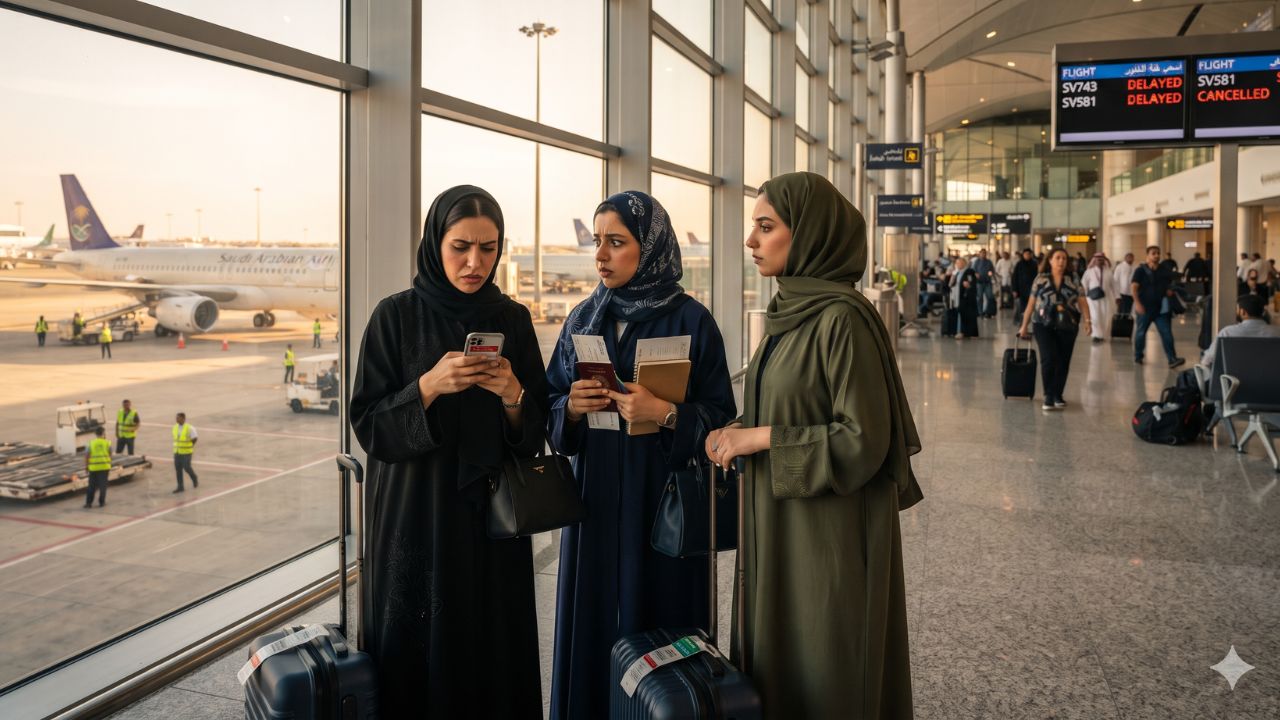
Asia Flight Cancellations and Delays Hit Riyadh, Bali, and India: Cyclone Murasu and Regional Air Alert

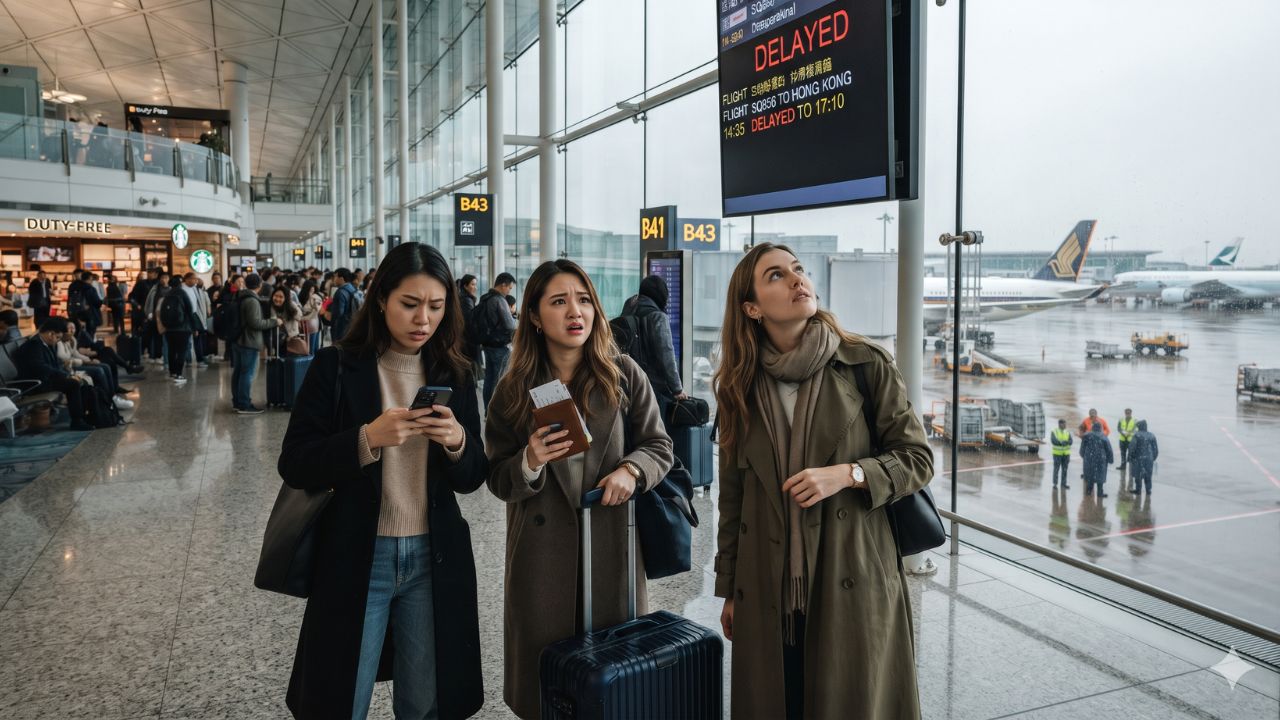
While Cyclone Murasu battered the coastal airfields of Andhra Pradesh—grounding up to 70 percent of scheduled flights at Rajahmundry and 58 percent at Vijayawada—a simultaneous wave of regional airspace security restrictions and East Asian fog pushed total flight disruptions across Asia to 521 cancellations and 4,430 delays on 2–3 November 2026. Real-time aviation tracking captured at 2:13 pm ET on 2 November (12:43 am IST on 3 November) revealed compounding operational bottlenecks spanning the Indian subcontinent, the Arabian Gulf, Southeast Asia, and mainland China. From tropical storm systems tracked by the India Meteorological Department to high-altitude conflict-zone bulletins issued by the European Union Aviation Safety Agency, international travelers are confronting missed connections and extensive ground holds.
Cyclone Murasu and Indian Aviation: Coastal Storm Groundings
The most severe meteorological disruption centered on southern India, where Cyclone Murasu crossed the Andhra Pradesh coastline overnight between 2 and 3 November. Packing damaging wind gusts and heavy torrential downpours, the severe cyclonic storm shut down regional commercial corridors. Coastal feeder airfields bore the brunt of the storm: Rajahmundry recorded a 70 percent cancellation rate for both arriving and departing services, alongside two delays. Vijayawada followed with a 54 percent origin cancellation rate and a 58 percent destination cancellation rate, logging 27 grounded flights without recorded delays.
At major commercial gateways across India, cascading schedule adjustments were widespread. Chennai International Airport recorded 100 delays and 11 cancellations as cyclonic squalls swept across Tamil Nadu. In the national capital, Delhi's Indira Gandhi International Airport logged 243 delays and 14 cancellations, while Mumbai's Chhatrapati Shivaji Maharaj International Airport reported 239 delays and 15 cancellations. Bengaluru's Kempegowda International Airport recorded 120 delays and 21 cancellations, while Hyderabad's Rajiv Gandhi International Airport registered 91 delays and 19 cancellations. Secondary hubs were also affected: Pune recorded 33 delays and seven cancellations, while the newly opened Navi Mumbai International Airport logged 26 delays and eight cancellations.
Saudi Airspace Restrictions: Ongoing Security Adjustments
In the Middle East, continuing security advisories following October missile and drone activity created operational friction across Saudi Arabia's civil aviation network. International reporting confirmed that approximately 86 percent of scheduled flights at Riyadh's King Khalid International Airport were cancelled between 8 and 25 October. Although partial commercial operations resumed, regional carriers continue to trim capacity. Leading Indian carrier IndiGo reduced its scheduled operations by approximately 30 daily flights due to ongoing Saudi airspace restrictions.
The European Union Aviation Safety Agency's conflict-zone bulletin for Saudi airspace remains active until 16 November 2026, advising commercial operators of risks associated with regional military activity. During the 2–3 November tracking window, Riyadh recorded 12 delays and 33 cancellations (a 14 percent origin and 12 percent destination cancellation rate). In western Saudi Arabia, Jeddah's King Abdulaziz International Airport recorded 88 delays and 36 cancellations. Dammam logged 29 delays and seven cancellations, while Medina tracked 29 delays and three cancellations. Elsewhere in the Gulf, Dubai International Airport recorded 165 delays and three cancellations, Bahrain logged 28 delays and nine cancellations, and Kuwait International reported six delays and five cancellations.
| Airport Gateway | Country / Region | Flight Delays | Flight Cancellations | Origin Cancel Rate | Primary Operational Factor |
|---|---|---|---|---|---|
| Kuala Lumpur (KUL) | Malaysia | 491 | 3 | 0% | Heavy regional convective storms & ATC holds |
| Bangkok Suvarnabhumi (BKK) | Thailand | 270 | 4 | 0% | Southeast Asian air corridor flow control |
| Delhi Indira Gandhi (DEL) | India | 243 | 14 | 0% | Downline weather & cascading network holds |
| Mumbai Chhatrapati Shivaji (BOM) | India | 239 | 15 | 1% | West Coast monsoon squalls & flow metering |
| Jakarta Soekarno-Hatta (CGK) | Indonesia | 232 | 22 | 2% | Tropical thunderstorm cells & apron holds |
| Singapore Changi (SIN) | Singapore | 230 | 4 | 0% | Regional connecting bank delays |
| Shanghai Pudong (PVG) | China | 181 | 8 | 0% | East China Sea weather & flow control |
| Dubai International (DXB) | United Arab Emirates | 165 | 3 | 0% | Gulf airspace route diversions |
| Shenzhen Bao'an (SZX) | China | 145 | 13 | 1% | Pearl River Delta convective activity |
| Manila Ninoy Aquino (MNL) | Philippines | 139 | 5 | 0% | Tropical moisture & runway congestion |
| Hanoi Noi Bai (HAN) | Vietnam | 129 | 2 | 0% | Northern Vietnam airspace sequencing |
| Guangzhou Baiyun (CAN) | China | 122 | 14 | 0% | Heavy rain & low visibility |
| Bengaluru Kempegowda (BLR) | India | 120 | 21 | 2% | South India cyclonic flow adjustments |
| Shanghai Hongqiao (SHA) | China | 112 | 15 | 2% | Morning dense radiation fog |
| Beijing Capital (PEK) | China | 107 | 10 | 0% | Northern air corridor flow metering |
| Chennai International (MAA) | India | 100 | 11 | 3% | Cyclone Murasu rain bands & high winds |
| Bali I Gusti Ngurah Rai (DPS) | Indonesia | 98 | 7 | 1% | Island weather & seasonal tourist surges |
| Dhaka Hazrat Shahjalal (DAC) | Bangladesh | 96 | 6 | 2% | Bay of Bengal moisture & feeder holds |
| Hyderabad Rajiv Gandhi (HYD) | India | 91 | 19 | 3% | Southern India network adjustments |
| Jeddah King Abdulaziz (JED) | Saudi Arabia | 88 | 36 | 4% | Regional security rerouting & slot limits |
| Riyadh King Khalid (RUH) | Saudi Arabia | 12 | 33 | 14% | EASA conflict bulletin & flight reductions |
| Vijayawada (VGA) | India | 0 | 27 | 54% | Direct coastal landfall of Cyclone Murasu |
| Rajahmundry (RJA) | India | 2 | 14 | 70% | Direct coastal landfall of Cyclone Murasu |
Southeast Asia and China: Weather Bottlenecks and Tarmac Congestion
Across Southeast Asia, commercial aviation hubs logged severe delay volumes. Malaysia's Kuala Lumpur International Airport (KUL) recorded the highest individual delay tally in the entire continental dataset, logging 491 delayed flights and three cancellations. In Indonesia, Jakarta's Soekarno-Hatta International Airport recorded 232 delays and 22 cancellations, while Bali's I Gusti Ngurah Rai International Airport logged 98 delays and seven cancellations, and Surabaya registered 52 delays and eight cancellations. In Thailand, Bangkok Suvarnabhumi Airport recorded 270 delays and four cancellations, while Singapore Changi Airport logged 230 delays and four cancellations.
In mainland China, meteorological observations confirmed persistent rain at Guangzhou Baiyun (122 delays, 14 cancellations) and dense morning fog at Shanghai Hongqiao (112 delays, 15 cancellations). Shanghai Pudong handled 181 delays and eight cancellations, Shenzhen Bao'an tracked 145 delays and 13 cancellations, and Beijing Capital recorded 107 delays and 10 cancellations. Further inland, Kunming reported 59 delays, Chengdu Tianfu recorded 47 delays, and Hangzhou tracked 47 delays.
| Airline Carrier | Home Country | Recorded Cancellations | Cancel Rate (%) | Recorded Delays | Delay Rate (%) |
|---|---|---|---|---|---|
| IndiGo | India | 51 | 2% | 506 | 23% |
| Akasa Air | India | 37 | 14% | 37 | 14% |
| Batik Air | Indonesia | 25 | 8% | 65 | 21% |
| Shenzhen Airlines | China | 24 | 3% | 65 | 9% |
| Saudia | Saudi Arabia | 22 | 4% | 47 | 10% |
| Hainan Airlines | China | 22 | 3% | 34 | 5% |
| China Eastern Airlines | China | 19 | 0% | 215 | 9% |
| Citilink | Indonesia | 19 | 7% | 9 | 3% |
| flyadeal | Saudi Arabia | 16 | 9% | 11 | 6% |
| SpiceJet | India | 11 | 11% | 42 | 43% |
| Gulf Air | Bahrain | 9 | 6% | 22 | 14% |
| US-Bangla Airlines | Bangladesh | 5 | 5% | 38 | 43% |
| Malindo Air (Batik Air Malaysia) | Malaysia | 3 | 2% | 85 | 56% |
| Thai Vietjet Air | Thailand | 2 | 1% | 55 | 36% |
Visitor Insider Tips: Navigating Asian Airport Layovers During Mass Delays
Travelers moving through Asian transit gateways during periods of systemic airspace stress should utilize strategic local navigation methods:
- Utilize High-Speed Rail to Bypass Southern India Flight Cancellations: If your flight to Vijayawada, Rajahmundry, or Visakhapatnam is cancelled due to Cyclone Murasu, avoid waiting at airport gates. Take the Vande Bharat Express or Godavari Express train from Secunderabad (Hyderabad) or Chennai Central, which operate along reinforced inland rail tracks that remain resilient during coastal squalls.
- Navigate Kuala Lumpur International Without Missing Connections: When facing extensive delays at KLIA (where nearly 500 flights were delayed), check whether your departure operates from the Main Terminal Building or the Satellite Terminal. Use the dedicated aerodrome transit buses that run parallel to the aerotrain, allowing at least 45 minutes to transfer between gates.
- Manage Saudi Airspace Rebookings via Digital Channels: With IndiGo and Gulf carriers trimming regional flights through Riyadh and Jeddah, use airline smartphone self-service portals to secure alternative routes via Muscat, Doha, or Abu Dhabi rather than waiting in long ticket-desk queues.
- Rest Comfortably in Changi and Suvarnabhumi: If delayed on a long layover at Singapore Changi, head to the free snooze lounges in Terminal 3 or explore the indoor forest canopy at Jewel Changi. At Bangkok Suvarnabhumi, proceed to the lower basement level for authentic Thai street food at Magic Food Point, where meals cost under 80 THB ($2.40 USD).
- Retain Comprehensive Receipts for Travel Insurance Claims: For delays exceeding four hours or sudden cancellations, collect timestamped delay certificates from airline gate staff. Keep hotel, meal, and ground transportation receipts to file compensation claims under international passenger protection rules.
Cultural and Environmental Context: Cyclone Resilience and Geopolitical Corridors
The dual disruption drivers across Asia illuminate the complex intersection between severe climate phenomena and international aviation geography. In the Bay of Bengal, post-monsoon cyclonic storms like Cyclone Murasu are intensifying due to elevated sea-surface temperatures. Coastal communities in Andhra Pradesh rely on early meteorological tracking and emergency evacuations to protect lives, while regional civil aviation authorities implement precautionary flight cancellations to prevent runway excursion risks on water-logged tarmac.
Simultaneously, commercial aviation in the Middle East continues to operate around delicate geopolitical boundaries. Rerouting airliners around active conflict zones in the Arabian Peninsula adds substantial flight time and fuel burn, forcing aircraft onto narrow air corridors that compound airspace congestion in neighboring Gulf nations. Understanding these environmental and geopolitical realities enables international travelers to approach unexpected delays with patience and informed awareness.
FAQ: Asian Flight Cancellations and Travel Disruptions November 2026
What caused the 521 flight cancellations and 4,430 delays across Asia?
The widespread disruptions were caused by Cyclone Murasu making landfall along India's Andhra Pradesh coast, ongoing EASA conflict-zone security advisories in Saudi airspace, and heavy rain and fog across major Chinese and Southeast Asian hubs.
Which airports recorded the highest cancellation rates?
Coastal Indian airports bore the highest cancellation rates, with Rajahmundry recording 70 percent and Vijayawada recording up to 58 percent of flights cancelled due to Cyclone Murasu, while Riyadh in Saudi Arabia recorded 14 percent cancellations.
Which airline logged the highest number of delayed flights?
IndiGo recorded the highest number of delays in the region with 506 delayed flights (a 23 percent delay rate), followed by China Eastern Airlines with 215 delays and Malindo Air with 85 delays (a 56 percent delay rate).
How long will the Saudi airspace security advisory remain active?
The European Union Aviation Safety Agency's conflict-zone bulletin for Saudi Arabian airspace remains valid until 16 November 2026, unless revised earlier by aviation security regulators.
[From the storm-swept shores of the Bay of Bengal to the guarded skies of the Arabian desert, regional travelers navigating unpredictable flight boards find resilience in smart planning and local insight.]
Related Travel Guides
This article is for informational purposes. Flight routes, passenger regulations, visa rules, and transit advisories are subject to change by airlines and aviation authorities. Readers are advised to verify schedules and travel documentation with relevant carriers and border agencies before departure.
Related Stories
Asia Air Travel Hit by 193 Cancellations and 1,573 Delays: Mumbai, Jeddah, and Manila Lead Flight Gridlock
Egypt Winter Travel Alert: Bishkek–Sharm El-Sheikh Flights Suspended Amid New Entry Rules