
American Tourist Issues Viral Canada Driving Warning After Toronto Highway Experience Leaves Him Shocked
American Tourist Issues Viral Canada Driving Warning After Toronto Highway Experience Leaves Him Shocked

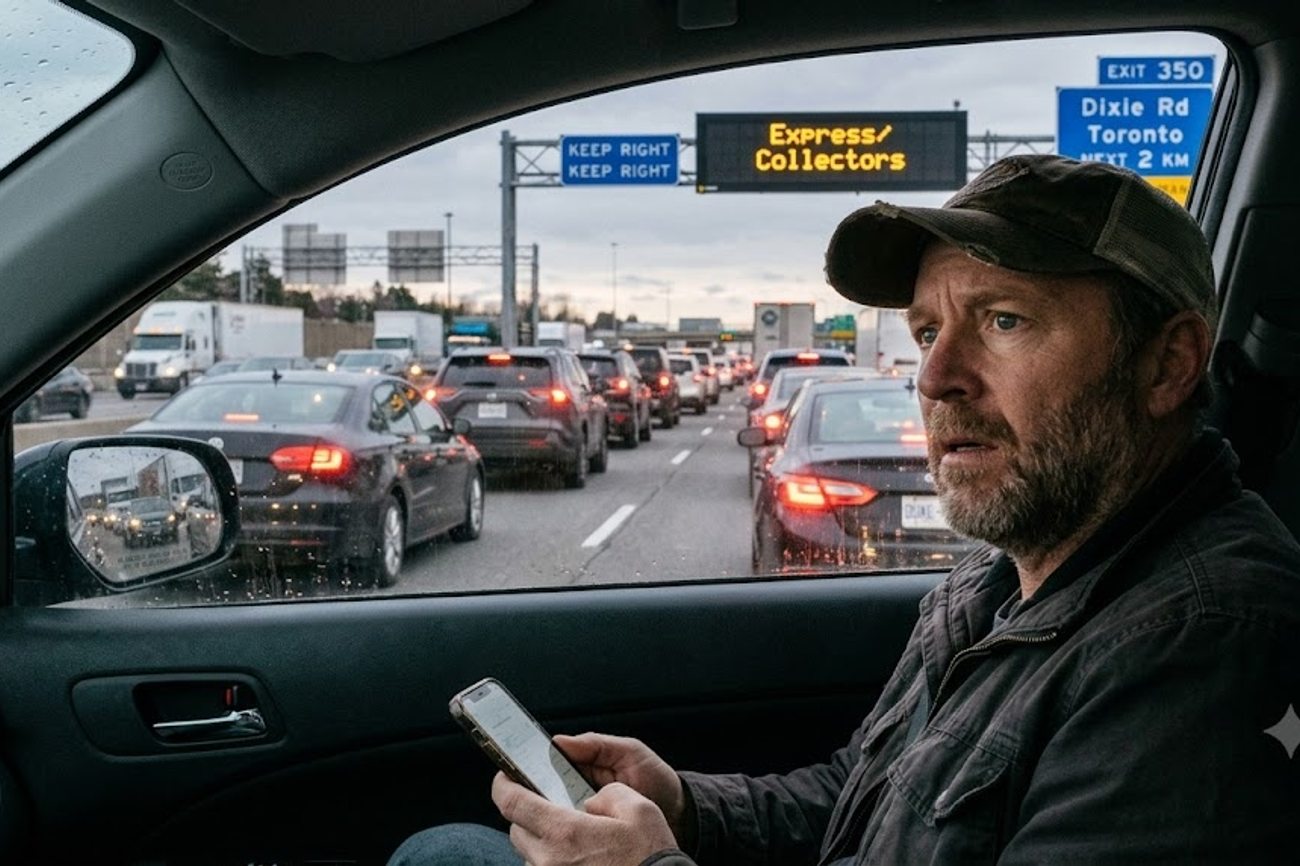
Image generated by AI
[Oakville, October 2024] — An American tourist has issued a stark warning to U.S. citizens regarding the aggressive nature of Ontario highway traffic after a viral encounter on Highway 403. Stephen Bailey, a North Carolina resident known on Instagram as @7thgen_coupe, documented his shock at the speed and driving behavior of local motorists while visiting the Greater Toronto Area (GTA).
The incident occurred during a trip to visit his long-distance partner, during which Bailey filmed his reaction to the high-velocity environment of Ontario's 400-series highways. His footage, which has since sparked a wider debate among Canadian residents and international travelers, suggests that the driving culture in Southern Ontario is significantly more intense than that of the American South, prompting him to advise inexperienced or anxious drivers to avoid operating vehicles in the region.
The Highway 403 Incident
The catalyst for the viral discussion was a clip recorded while Bailey navigated Highway 403 in Oakville. The footage captures the visitor's visible astonishment as surrounding vehicles maintain high speeds and execute aggressive maneuvers. Bailey’s reaction highlights a psychological gap between the driving expectations of a North Carolina motorist and the reality of the Ontario corridor.
The 400-series highways, managed by the Ministry of Transportation Ontario (MTO), serve as the primary arteries for Southern Ontario. These roads are characterized by massive traffic volumes, multiple lanes, and complex interchanges that can overwhelm drivers unfamiliar with the local "flow." For Bailey, the experience was not merely about speed, but the perceived aggression of the traffic environment, which he found jarring compared to his home state.
Who Is Affected
The impact of this driving culture extends beyond a single viral video, affecting a broad spectrum of road users in the GTA.
- U.S. Tourists: Drivers from states with lower traffic density or different highway cultures who assume North American road systems are uniform.
- International Renters: Visitors utilizing rental cars who may be unfamiliar with the specific lane designations of the 400-series network.
- Commuters in Oakville and Toronto: Local drivers who view this high-intensity environment as a standard daily requirement.
- Novice Drivers: Those lacking the confidence to merge into high-speed traffic or navigate complex interchanges under pressure.
What This Means for Travelers
For a tourist booking a trip to Toronto or the surrounding Golden Horseshoe region, this situation translates to a tangible increase in driving stress. While the infrastructure appears similar to U.S. interstates, the behavioral norms differ.
Passenger Impact:
- Increased Anxiety: Drivers should expect a "culture shock" regarding speed. While posted limits exist, actual traffic flow often exceeds these markers, creating pressure on those driving the limit.
- Navigation Complexity: The transition between "express" and "collector" lanes—particularly on the Highway 401—requires split-second decision-making. A wrong lane choice can result in significant detours or dangerous merges.
- Rental Risks: Travelers renting vehicles through agencies at Toronto Pearson International Airport (YYZ) should be aware that they are entering one of the most congested road networks in North America.
- Safety Precautions: There is a heightened need for advanced route planning. Relying solely on real-time GPS without studying the interchange layouts can lead to erratic lane changes that provoke other drivers.
The Speed Limit Shift and Local Sentiment
The timing of Bailey's viral moment coincides with a significant policy shift in Ontario. The provincial government recently increased speed limits from 100 km/h to 110 km/h on approximately 90 per cent of the highway system. While this legislative change provides a legal framework for higher speeds, local residents reacting to Bailey's video argue that the "aggressive" pace was already the status quo.
The discourse among Ontario locals suggests that the legal limit is often secondary to the actual speed of the traffic stream. Commenters noted that the left lane is strictly for high-speed transit, and slower drivers who linger there often face frustration or aggression from other motorists.
The conversation further escalated when locals compared Highway 403 to the legendary Highway 401. The 401 is widely regarded as one of the busiest highways in the world, and residents described the experience of navigating its express/collector system as a "different level of driving anxiety." One local user went as far as to describe the 401 as a "long-running version of World War III," illustrating the visceral stress associated with the corridor.
Navigating the GTA Infrastructure
The disparity in experience between a North Carolina driver and a Toronto driver stems from the density of the Greater Toronto Area. Unlike the more spread-out highway systems in parts of the U.S., the GTA combines dense urban sprawl with high-speed transit corridors.
Drivers must manage:
- High Volume: Constant streams of commercial and passenger vehicles.
- Interchange Density: Frequent exits and entrances that disrupt the flow of traffic.
- Lane Discipline: A rigid, often unspoken set of rules regarding the use of the fast lane.
Despite the stress of the highway, the viral incident did not deter Bailey from his exploration of the city. He continued his visit by visiting local landmarks such as the Downsview Park Merchants Market, suggesting that while the highways are daunting, the destinations within the city remain highly attractive to international visitors.
FAQ: Driving in Ontario 2024
Is it safe for Americans to drive in Toronto? Yes, but it requires high alertness. The infrastructure is similar to the U.S., but traffic volume is significantly higher, and drivers are generally more aggressive. Using ride-shares or public transit is recommended for those uncomfortable with high-speed highways.
What are "express" and "collector" lanes? Common on the Highway 401, collector lanes handle local exits and entrances, while express lanes allow for long-distance travel without frequent stops. Switching between them requires using specific transition points; illegal crossovers are dangerous and penalized.
What is the current speed limit on Ontario highways? Most 400-series highways have seen an increase from 100 km/h to 110 km/h. However, drivers should monitor traffic flow and signage, as limits can vary based on the specific stretch of road or weather conditions.
Should I rent a car for a Toronto visit? Only if you plan to leave the city center. Within Toronto, traffic is dense and parking is expensive. For those staying in the downtown core, the Toronto Transit Commission (TTC) provides a more stress-free alternative to driving.
Drive fast, stay alert, and always check your lane.
#OntarioTraffic #Highway403 #TorontoTravel #USCanadaBorder #GTADriving #MTO
Related Travel Guides
- National Weather Service Issues Urgent Dense Fog Advisories Across Tennessee Virginia and Kentucky Disrupting Interstate Highways and Regional Flights
- Uzbekistan Ministry of Internal Affairs Proposes Unprecedented State Bodyguard Services for Foreign Tourists as Russian Arrivals Surge 30 Percent
- Met Office Issues UK Travel Alert as 25C Late Summer Heat Surge Hits 17 English Destinations on September 14
Disclaimer
This article is for informational and educational purposes only. It does not constitute legal, financial, or professional advice. While we strive to provide accurate and up-to-date information, travel policies, regulations, and conditions change rapidly. Always verify information with official sources before making travel decisions. Nomad Lawyer makes no representations about the accuracy, reliability, completeness, or suitability of the information provided. Readers should consult qualified professionals for advice specific to their circumstances. The views expressed in this article are those of the author and do not necessarily reflect the views of Nomad Lawyer.
Naina Thakur
Contributor & Travel Specialist
Travel enthusiast and legal writer covering visa regulations, responsible tourism, and cultural journeys across global destinations.
Learn more about our team →