
Istanbul Airport Commissions Fourth Runway as Eurasian Mega-Hub Closes the Gap with London Heathrow
Istanbul Airport inaugurates its first east-west runway on September 18, 2026, adding a 2,820-meter concrete strip to eliminate crosswind bottlenecks after logging 84.44 million passengers.

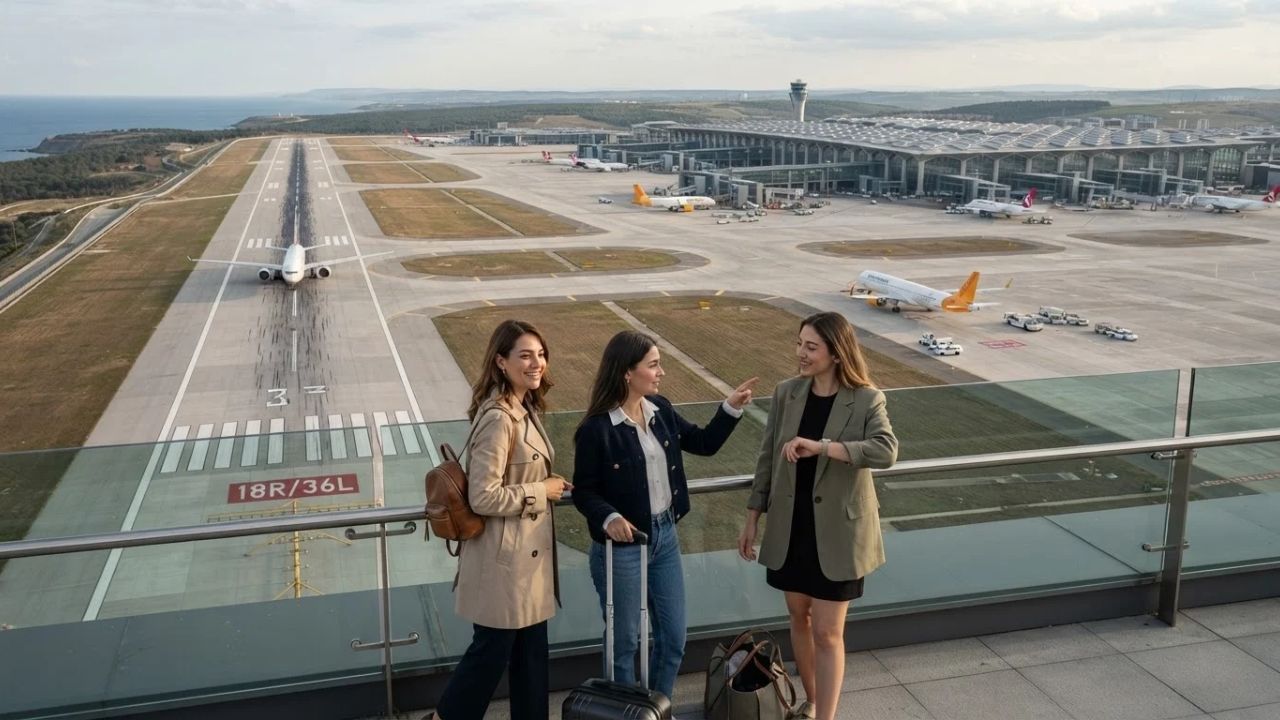
Image generated by AI
In 2025, Istanbul Airport handled 84.44 million passengers, trailing London Heathrow’s 84.48 million by a microscopic margin of just 40,000 travelers—a gap now poised to vanish completely with the commissioning of its fourth main runway on September 18, 2026. Announced by Transport and Infrastructure Minister Abdulkadir Uraloğlu with President Recep Tayyip Erdoğan presiding over the formal inauguration, the new concrete strip measures 2,820 meters (9,250 feet) in length and 45 meters in width. Breaking away from the facility's existing north-south parallel system, this newly constructed surface introduces the airport's inaugural east-west alignment. Situated near the Black Sea coast approximately 20 miles north of Istanbul's legacy municipal aviation footprint, this orthogonal runway delivers vital tactical flexibility, eliminating crosswind holding patterns and cementing Istanbul's position in eighth place among the world’s busiest aviation facilities.
The Crosswind Breakthrough: Redefining European Airspace Economics
Since commercial flight operations commenced in 2018, iGA Istanbul Airport has approached capacity planning as an active expansion rather than a fixed boundary. While legacy European hubs like Heathrow, Frankfurt, and Amsterdam Schiphol struggle under strict night-flight bans, noise caps, and political paralysis over runway construction, Istanbul has steadily expanded its infrastructure. After commissioning a third independent runway in 2020—making it Europe’s first hub capable of simultaneous triple-independent-runway operations—the addition of an east-west runway marks a major operational leap.
The engineering logic behind the east-west runway is rooted in Black Sea meteorology. Strong maritime crosswinds frequently forced air traffic controllers to space out incoming arrivals on the north-south strips, creating holding stacks over Thrace and the Sea of Marmara. By opening an east-west landing and takeoff vector, the airport neutralizes these wind delays. Furthermore, eastern-bound flights heading toward Anatolian destinations like Ankara, Izmir, and Antalya, as well as international routes to Baku, Tbilisi, and the Arabian Gulf, can now depart directly from the southern apron, shaving several miles off taxi journeys, reducing fuel burn, and preventing missed connections across high-density intercontinental itineraries. This operational acceleration was visible in August 2026, when the facility handled 1,739 flight movements and roughly 290,000 passengers on August 16, followed by an all-time record of 1,787 operations on August 30.
What Makes Istanbul Airport Different: Monumental Architecture and Turkish Hospitality
Unlike multi-terminal labyrinths where passengers must clear security multiple times to board connecting flights, Istanbul Airport operates beneath a single, soaring terminal roof spanning 1.4 million square meters. The architectural centerpiece is its air traffic control tower, sculpted in the organic form of a blooming tulip—a historic symbol of Ottoman culture and Turkish design.
Inside the central concourse, travelers step into a vast indoor boulevard that blends international luxury boutiques with the sensory aromas of the Grand Bazaar. Travelers waiting out long layovers can sample freshly carved döner kebabs, watch confectioners stretch sweet sheets of pistachio baklava, or enjoy traditional Turkish black tea brewed in double-stacked samovars (çaydanlık) served in delicate tulip-shaped glasses.
Yet the true appeal of transiting through Istanbul is how easily the airport connects to the historic city itself. With the completion of the M11 metro line, independent travelers with a six-hour layover can leave the airfield, board a high-speed underground train, and reach the European city center in approximately 30 minutes, transitioning effortlessly from high-altitude transit to the timeless shores of the Bosphorus.
Visitor Insider Tips: Navigating the Mega-Terminal and the City
Navigating one of the planet's largest passenger terminals requires planning and local know-how:
- Bypass Expensive Cabs with the M11 Metro Line: Skip highway traffic jams by taking the automated M11 metro line directly from the terminal station to Gayrettepe or Kağıthane. Operating clean, driverless trains with departures every eight minutes, the line connects you to the M2 Yenikapı-Hacıosman line, depositing you in Taksim Square or the historic Sultanahmet district in under an hour for less than a dollar using an Istanbulkart.
- Allow 25 Minutes for Gate Walks: Istanbul Airport's single-terminal design is exceptionally vast. Walking from central international duty-free security to the far ends of Concourse F or G can take up to 25 minutes. If you have an onward transfer, confirm your gate on the digital departure boards immediately upon deplaning and utilize the electric buggies or moving walkways.
- Savoring Authentic Bosphorus Street Food on a Layover: If your connection allows a quick excursion to the historic center, head straight to Karaköy or Eminönü. Order a freshly grilled balık ekmek (mackerel fillet tucked into crusty bread with onions, lettuce, and lemon juice) from the quayside boats, followed by warm, honey-soaked pistachio baklava from the legendary Karaköy Güllüoğlu confectionery.
- Where to Base Yourself for Short Stays: If you have an overnight layover, avoid isolated airport perimeter hotels. Take the metro into vibrant Karaköy or Galata, where boutique hotels housed in 19th-century neoclassical bank buildings offer rooftop vistas of the Golden Horn and immediate access to neighborhood coffee roasters.
- Cultural Protocol and Sacred Spaces: When visiting world-famous sanctuaries recognized by the UNESCO World Heritage Centre—such as the Hagia Sophia Grand Mosque or the Sultanahmet Blue Mosque—dress respectfully with shoulders, arms, and legs covered; women must cover their heads with a scarf. Slip off your footwear before stepping onto the hand-knotted prayer carpets, and avoid walking directly in front of worshippers during designated prayer times. Official visitor guidelines are published online via Go Türkiye.
Cultural and Environmental Context: Black Sea Reclamation and Energy Goals
The construction of Istanbul Airport across former open-cast lignite coal mines and coastal forests stirred intense public environmental debates during its initial development. Recognizing the ecological sensitivity of the Black Sea littoral, airport operator iGA has implemented extensive rehabilitation protocols. Millions of native pine and oak saplings have been planted across surrounding Thracian hills to restore wildlife corridors.
On the airfield itself, the fourth runway features high-efficiency LED lighting systems and specialized stormwater recapture channels that filter runoff before it reaches coastal wetlands. Furthermore, the operational reduction in taxi times achieved by the east-west alignment directly curtails ground-level aviation emissions, saving thousands of metric tons of jet kerosene annually.
Culturally, Istanbul remains an unmatched living bridge between continents. The city's maritime transit—public passenger ferries crisscrossing the Bosphorus between Europe's Beşiktaş and Asia's Kadıköy—remains the daily pulse of urban life. By integrating a forward-looking mega-airport with ancient ferry routes, century-old spice markets, and preserved Byzantine ramparts, Istanbul demonstrates that modern infrastructural ambition can co-exist with deep historical reverence.
FAQ: Navigating Istanbul Airport and the City 2026
What makes Istanbul Airport's fourth runway significant?
Measuring 2,820 meters long, it is the airport's first east-west runway, allowing air traffic control to route domestic and eastern flights directly while eliminating crosswind delays on parallel north-south strips.
How do I travel from Istanbul Airport (IST) to Taksim or Sultanahmet?
Take the fast M11 metro line from the airport to Gayrettepe, then transfer to the M2 line directly into Taksim or Vezneciler (for Sultanahmet), completing the trip in 45 to 55 minutes.
Does Istanbul Airport offer free Wi-Fi for transit passengers?
Yes. Travelers can access free high-speed Wi-Fi throughout the terminal concourse by scanning their physical passport at designated digital kiosks or registering with a cellular mobile number.
How much connection time should I allow for an international transfer at IST?
Allow a minimum connection window of two hours. While through-checked luggage transfers seamlessly, walking distances between distant departure piers can exceed 20 minutes.
Where modern jet engines meet the timeless winds of the Bosphorus, Istanbul proves that the historic crossroads of the world will always welcome the traveler home.
Related Travel Guides
Disclaimer
This article is for informational and educational purposes only. It does not constitute legal, financial, or professional advice. While we strive to provide accurate and up-to-date information, travel policies, regulations, and conditions change rapidly. Always verify information with official sources before making travel decisions. Nomad Lawyer makes no representations about the accuracy, reliability, completeness, or suitability of the information provided. Readers should consult qualified professionals for advice specific to their circumstances. The views expressed in this article are those of the author and do not necessarily reflect the views of Nomad Lawyer.
Raushan Kumar
Founder & Lead Developer
Full-stack developer with 11+ years of experience and a passionate traveller. Raushan built Nomad Lawyer from the ground up with a vision to create the best travel and law experience on the web.
Learn more about our team →