Qatar Airways Launches Landmark Doha to Bogotá and Caracas Flights: Boeing 777-200LR Unlocks South American Corridors


DOHA, Qatar — In a landmark intercontinental expansion bridging the Arabian Gulf with northern South America, Qatar Airways officially commenced scheduled passenger services connecting Doha with Bogotá, Colombia, and Caracas, Venezuela, on Wednesday, November 4, 2026. The bi-weekly service, operated with ultra-long-range Boeing 777-200LR widebody aircraft, marks a historic milestone in international civil aviation, establishing Qatar Airways as the first Gulf mega-carrier to operate commercial flights into Venezuelan territory. Postponed from an initial July target date to optimize bilateral operating authorizations and global slot coordination, the new route opens direct transpacific and transatlantic air bridges for travelers, business delegations, and diaspora communities traveling between Latin America and high-demand feeder markets across Australia, China, Japan, South Korea, Lebanon, and the United Arab Emirates.
+----------------------------------------------------------------------------------------------------+ | KEY TAKEAWAYS: QATAR AIRWAYS BOGOTÁ & CARACAS EXPANSION | +----------------------------------------------------------------------------------------------------+ | • Historic Pioneer Status: Qatar Airways becomes the first Arabian Gulf carrier to establish | | scheduled commercial passenger operations into Caracas, Venezuela. | | • Twin-Destination Corridor: Bi-weekly triangular service connects Hamad International Airport | | (DOH) with El Dorado International (BOG) in Colombia and Simón Bolívar International (CCS). | | • Ultra-Long-Range Equipment: Operated by the Boeing 777-200LR, utilizing sea-level departures | | from Caracas to overcome high-altitude takeoff payload penalties at mountainous Bogotá. | | • Global Feed Synergy: Engineered to channel high-yield transit traffic from Australia, East Asia, | | the Levant, and the Gulf directly through Doha without multi-airline fragmented bookings. | | • Bilateral Energy & Trade Ties: Fortifies diplomatic and commercial transport links between OPEC | | partners while facilitating vital visiting-friends-and-relatives (VFR) family reunifications. | | • Comprehensive Travel Advisory Compliance: Service requires rigorous passenger verification of | | Venezuelan tourist cards, Colombian digital check-ins, and consular insurance requirements. | +----------------------------------------------------------------------------------------------------+
====================================================================================================
                        QATAR AIRWAYS DOHA - BOGOTÁ - CARACAS FLIGHT ROUTING
====================================================================================================

      EASTERN FEEDER CORRIDORS                                WESTERN TERMINUS CORRIDORS
  (Australia, China, Japan, Korea,                       (Colombia, Venezuela & Andean Markets)
       Lebanon, UAE Hubs)                                                    |
               \                                                             |
                \                                                            |
                 +-------------------> [ DOHA (DOH) ] <----------------------+
                                  Hamad International
                                           |
                                           |  QR783 Outbound (Transatlantic Sector)
                                           |  Distance: ~13,200 km (~8,200 Nautical Miles)
                                           v
                              [ BOGOTÁ, COLOMBIA (BOG) ]
                           El Dorado International Airport
                           Elevation: 2,548 m (8,360 ft)
                                           |
                                           |  Intra-South American Tag Sector
                                           |  Light Fuel Load / Full Passenger Access
                                           v
                             [ CARACAS, VENEZUELA (CCS) ]
                          Simón Bolívar International Airport
                          Coastal Sea-Level Elevation (Full MTOW Refuel)
                                           |
                                           |  QR784 Inbound (Ultra-Long-Haul Sector)
                                           +------------------------------------+
====================================================================================================
The Transcontinental Air Bridge: Qatar Airways Enters the Venezuelan Market
The inauguration of Qatar Airways’ scheduled operations into Caracas and Bogotá represents one of the most audacious network expansions executed by a Middle Eastern carrier in the post-pandemic era. For decades, international air connectivity into northern South America—and Venezuela in particular—has suffered from acute geopolitical isolation, airline withdrawals, and currency repatriation restrictions. While European flag carriers such as Air Europa, Iberia, and TAP Air Portugal maintained tenuous transatlantic lifelines into Caracas, and US carriers suspended operations entirely, travelers moving between Latin America and the rapidly expanding economies of Asia, Australasia, and the Middle East faced punishing three- and four-stop journeys plagued by disjointed itineraries and lost baggage risks.
By deploying its high-capacity widebody network into Simón Bolívar International Airport at Maiquetía, Qatar Airways has shattered this connectivity bottleneck. The Qatari flag carrier has established a direct, unified reservation channel linking Venezuela and Colombia with more than 170 destinations across its global network. The strategic timing of the November 4, 2026 inaugural flight signals growing commercial confidence in northern South American air corridors and reflects Qatar's broader foreign policy doctrine of leveraging sovereign aviation assets to build durable economic bridges across non-traditional markets.
The initiative also represents an expansion of Qatar Airways’ footprint on the South American continent. While the carrier has long operated high-frequency services to São Paulo’s Guarulhos International Airport in Brazil—supplemented by historical tag flights to Buenos Aires, Argentina—the northwestern shoulder of the continent remained unserved by Gulf carriers. The simultaneous addition of Bogotá, the thriving political and financial capital of Colombia, and Caracas establishes an essential commercial foothold in an Andean market boasting a combined population of over 80 million people. Bilateral negotiations between the Qatar Civil Aviation Authority, Colombia's Aerocivil, and Venezuela's Instituto Nacional de Aeronáutica Civil (INAC) required nearly three years of technical alignment to resolve airspace transit clearances, ground service handling certifications, and international revenue clearing frameworks.
The launch of the service also introduces vital intra-regional tag operations. Under the bilateral framework, Qatar Airways is permitted to carry commercial passenger and belly-hold cargo traffic between Bogotá and Caracas, creating an ultra-modern widebody alternative on an intra-South American international corridor historically restricted to older narrowbody jets. For business executives managing operations across both Andean capitals, the availability of a widebody Boeing 777 featuring international lie-flat seating on the short 1,025-kilometer flight provides unprecedented comfort, transforming what was once a grueling regional hop into a seamless premium experience.
Industry analysts emphasize that this expansion delivers immediate competitive pressure across regional aviation markets. Historically, passengers journeying from East Asian financial hubs like Tokyo, Seoul, or Shanghai to Bogotá or Caracas were forced to transit through congested North American mega-hubs like Miami, Houston, or Los Angeles, requiring cumbersome US transit visas (C-1) and intrusive customs clearance procedures. Qatar Airways’ routing via Hamad International Airport circumvents North American transit hurdles entirely, offering international travelers a frictionless, single-carrier transit experience through an award-winning hub facility.
Hot-and-High Physics and Ultra-Long-Haul Routing: The Boeing 777-200LR Choice
The selection of the Boeing 777-200LR "Worldliner" for the Doha–Bogotá–Caracas route represents a masterclass in aeronautical performance engineering. While modern twin-engine widebody aircraft such as the Airbus A350-900 and Boeing 787-9 Dreamliner dominate long-range international networks due to their composite structures and exceptional fuel efficiency, the unique geographic topography of northern South America imposes severe thermodynamic and aerodynamic constraints that disqualify standard airframes from direct long-haul operations.
The primary operational obstacle is Bogotá’s El Dorado International Airport. Perched high in the Andean plateau at an elevation of 2,548 meters (8,360 feet) above sea level, El Dorado is one of the highest major commercial airports on Earth. At high altitudes, ambient air density decreases dramatically, severely diminishing aerodynamic wing lift and reducing the mass of oxygen entering turbofan jet engines. As a consequence, aircraft engines produce significantly less takeoff thrust, requiring higher liftoff speeds and exceptionally long runway ground rolls.
====================================================================================================
               AERONAUTICAL TAKEOFF DYNAMICS: BOGOTÁ (ALTITUDE) VS CARACAS (SEA LEVEL)
====================================================================================================

  PERFORMANCE PARAMETER         EL DORADO INTL, BOGOTÁ (BOG)          SIMÓN BOLÍVAR INTL, CARACAS (CCS)
----------------------------------------------------------------------------------------------------
  Field Elevation               2,548 Meters (8,360 Feet)             64 Meters (210 Feet)
  Atmospheric Density           Low Density / Thin Mountain Air       High Density / Coastal Sea Level
  Takeoff Thrust Output         Degraded by ~22-25%                   100% Rated Turbofan Takeoff Thrust
  Runway Length Required        Extremely Extended Ground Roll        Standard Heavy Operating Distance
  Max Allowable Takeoff Weight  Severe Weight & Fuel Penalties        Maximum Certified MTOW Achievable
  Fuel Staging Strategy         Short Intra-Continent Hop to CCS      Full Transatlantic Fuel Tankering to DOH
====================================================================================================
If an airline attempts to operate a fully loaded commercial widebody on a non-stop, 13,200-kilometer sector directly from Bogotá to the Arabian Gulf, the thin mountain air creates a catastrophic payload-range penalty. To get airborne safely along El Dorado’s runways, an aircraft cannot carry both a full load of paying passengers and the massive 120-plus metric tons of aviation fuel required to cross the Atlantic Ocean. The carrier would be forced to block out more than half of its passenger seats or leave cargo holds empty, destroying the economic viability of the flight.
Under high density-altitude conditions, aircraft true airspeed at liftoff must be significantly higher to generate equivalent aerodynamic wing lift, which dramatically lengthens the required takeoff roll. Additionally, in the event of an engine failure at the critical decision speed (V1), an aircraft departing high-altitude Bogotá on an ultra-long-haul flight would struggle to achieve the legally mandated minimum climb gradients required to clear the mountainous terrain encircling the Sabana de Bogotá. These geographic obstacles historically forced European and American carriers operating out of Bogotá to introduce refueling tech-stops in the Caribbean or Central America.
Qatar Airways elegantly circumvents this aeronautical barrier by deploying the Boeing 777-200LR in a triangular routing sequence that pairs high-altitude Bogotá with coastal Caracas. Powered by colossal General Electric GE90-110B1/115BL engines—the most powerful commercial turbofans in service—the 777-200LR possesses an auxiliary fuel tank configuration engineered specifically for ultra-long-distance missions. Departing Bogotá with a light fuel load, the aircraft easily handles the short, 1,025-kilometer hop over the Andes down to Caracas, which sits practically at sea level (64 meters elevation) on the Caribbean shoreline.
At Simón Bolívar International Airport, where dense coastal sea-level air provides maximum engine thrust and wing lift, Qatar Airways ground crews can fill the 777-200LR’s fuel tanks to their maximum certified capacity. The aircraft can then take off at its maximum takeoff weight (MTOW) of 766,000 pounds (347,450 kg), carrying a full contingent of passengers, high-value belly cargo, and ample transatlantic fuel reserves for the continuous, non-stop flight back across the ocean to Doha. Flight dispatchers calculate that this operational staging saves over 15 percent in overall operating costs compared to routing through third-party technical stopovers, while providing commercial passenger rights across both South American nations.
====================================================================================================
                        BOEING 777-200LR TECHNICAL & CABIN ARCHITECTURE
====================================================================================================

  AIRCRAFT SPECIFICATION               PERFORMANCE PARAMETER / CONFIGURATION
----------------------------------------------------------------------------------------------------
  Maximum Operating Range              15,840 Kilometers (8,555 Nautical Miles)
  Powerplant Specifications            Twin General Electric GE90-110B1 / GE90-115BL High-Bypass Turbofans
  Maximum Takeoff Weight (MTOW)        347,450 Kilograms (766,000 Pounds)
  Passenger Cabin Configuration        Two-Class Layout (Total: 272 Seats)
  Business Class Accommodations        42 Fully Lie-Flat Suites (2-2-2 Direct Aisle/Forward Orientation)
  Economy Class Accommodations         230 Ergonomic Slimline Seats (3-3-3 Transcontinental Pitch)
  Belly Cargo Payload Capacity         Up to 18 Metric Tons of High-Yield Commercial Freight
  Inflight Entertainment System        Oryx One Digital Suite (Over 4,000 Audio/Video Channels)
====================================================================================================
Flight Schedule, Triangular Mechanics, and Transatlantic Turnarounds
The published operational schedule for the new South American corridor is structured to accommodate the complex requirements of long-haul fleet utilization while optimizing connecting banks at Hamad International Airport. Operating on a twice-weekly rotation on Wednesdays and Sundays, flight QR783 departs Doha in the morning, making its westbound crossing across the Mediterranean and Atlantic before touching down in northern South America in the late afternoon.
Following the inaugural turnaround, regular operations follow the coordinated triangular circuit:
- Doha to Bogotá (QR783): Departs Hamad International Airport (DOH) at 07:30 local time, performing a non-stop westbound transcontinental trek across 13,200 kilometers to touch down at El Dorado International Airport (BOG) in Bogotá at 16:05 local time.
- Bogotá to Caracas (QR783 Continuation): Following a 90-minute ground stop for passenger disembarkation, regional baggage handling, and crew transit checks, the aircraft pushes back from Bogotá at 17:35, climbing out over the Cordillera Oriental to land at Caracas (CCS) at 20:40 local time.
- Caracas to Doha (QR784): After full sea-level refueling, cabin catering, and outbound boarding, flight QR784 departs Simón Bolívar International Airport at 22:40 local time. The aircraft undertakes a direct, non-stop eastbound oceanic flight through the night, arriving at Hamad International Airport at 19:55 local time the following evening.
====================================================================================================
                   QATAR AIRWAYS REGULAR TRIANGULAR OPERATING TIMETABLE
====================================================================================================

  FLIGHT NO.    DEPARTURE STATION / TIME    ARRIVAL STATION / TIME      SECTOR DISTANCE & NOTES
----------------------------------------------------------------------------------------------------
  QR783         Doha (DOH) - 07:30          Bogotá (BOG) - 16:05        ~13,200 km (Ultra-Long-Haul)
  QR783         Bogotá (BOG) - 17:35        Caracas (CCS) - 20:40       ~1,025 km (Intra-Andean Tag)
  QR784         Caracas (CCS) - 22:40       Doha (DOH) - 19:55 (+1)     ~12,650 km (Non-Stop Transatlantic)
----------------------------------------------------------------------------------------------------
  Frequency: Twice Weekly (Wednesdays & Sundays) | Aircraft: Boeing 777-200LR Long-Range Fleet
====================================================================================================
This schedule allows Qatar Airways to service two major capital cities with a single aircraft frame, conserving fleet resources while evaluating passenger demand and cargo flows across both markets. The late evening departure from Caracas guarantees that incoming passengers from regional Venezuelan feeder networks can connect seamlessly onto QR784, while the evening arrival in Doha at 19:55 perfectly aligns with Qatar Airways’ midnight departure wave, feeding connecting flights departing between 23:00 and 02:00 to destinations throughout the Middle East, South Asia, East Asia, and Australia.
Connecting the East to the Andes: Australia, East Asia, and Levant Feeders
While point-to-point traffic between Qatar and South America will account for government, diplomatic, and commercial energy movements, the true economic viability of the Bogotá and Caracas service relies on Qatar Airways’ ability to harvest passenger traffic from its vast eastern feeder network. The carrier has deliberately targeted six strategic source markets: Australia, China, Japan, South Korea, Lebanon, and the United Arab Emirates.
====================================================================================================
                      STRATEGIC CONNECTING FLOWS CHANNELING INTO DOHA
====================================================================================================

  ORIGIN REGION / NATION     KEY GATEWAYS FEEDING DOH            PRIMARY PASSENGER DEMOGRAPHIC
----------------------------------------------------------------------------------------------------
  Australia                  Sydney (SYD), Melbourne (MEL),      Mining Engineers, Adventure Tourists,
                             Perth (PER), Brisbane (BNE)         Colombian Professional Diaspora

  People's Republic of China Beijing Capital (PEK),              Infrastructure Delegations, State Energy
                             Shanghai Pudong (PVG), Guangzhou    Executives, Sino-Latin Commercial Trade

  Japan & South Korea        Tokyo Narita (NRT), Haneda (HND),   High-Tech Automotive & Electronic Missions,
                             Seoul Incheon (ICN)                 Eco-Tourism & Specialty Coffee Buyers

  Lebanese Republic          Beirut–Rafic Hariri (BEY)           Historic Levant-Venezuelan Family Ties,
                                                                 VFR Relatives, Dual-National Merchants

  United Arab Emirates       Dubai International (DXB),          Corporate Multinationals, Financial Bankers,
                             Abu Dhabi Zayed Intl (AUH)          Commodity Traders & Diplomatic Missions
====================================================================================================
For the Australian market, reaching northern South America has historically represented an arduous journey. Travelers departing Sydney or Melbourne typically had to fly transpacific to Santiago de Chile or Buenos Aires via LATAM or Qantas, followed by multiple regional connections northward, or navigate North American hubs with strict customs protocols. The new Doha connection gives travelers from Sydney, Melbourne, Brisbane, and Perth a single-stop alternative to Bogotá and Caracas, backed by Qatar Airways’ generous long-haul baggage policies.
In East Asia, the corporate demand for reliable connections into South America is surging. China's state-backed energy corporations, mining conglomerates, and telecommunications enterprises maintain substantial long-term infrastructure investments across both Venezuela and Colombia. Direct corporate travel between Beijing, Shanghai, Guangzhou, and Caracas has historically been obstructed by complex flight routings. Through Hamad International Airport, Chinese corporate travelers and governmental delegations can now transit effortlessly with streamlined airport baggage transfers and Mandarin-speaking customer service teams stationed across Doha concourses.
Similarly, corporate travelers from Tokyo and Seoul gain optimized access to Colombia's booming tech startup ecosystem, renewable energy projects, and agricultural export sectors. The route also caters to deeply rooted historical family connections. Venezuela is home to one of the largest Lebanese diaspora populations outside the Middle East, established during waves of migration throughout the twentieth century. Thousands of families living between Caracas, Maracaibo, and Beirut have endured severe travel restrictions for years; the new service provides a direct, culturally attuned air bridge linking Beirut and Caracas with a single, synchronized transfer in Doha.
Geopolitical Dimensions: Energy Diplomacy, Sanctions, and Diaspora Flows
Beyond its commercial aviation merits, Qatar Airways’ entry into Venezuela carries profound geopolitical significance. The state of Qatar and the Bolivarian Republic of Venezuela share historic diplomatic relationships anchored by their foundational membership in the Organization of the Petroleum Exporting Countries (OPEC) and the Gas Exporting Countries Forum (GECF). Both nations command colossal sovereign hydrocarbon reserves—Venezuela boasting the world’s largest proven crude oil reserves in the Orinoco Belt, and Qatar possessing massive liquefied natural gas (LNG) reserves in the offshore North Field.
In recent years, the Venezuelan government under President Nicolás Maduro has actively sought to rehabilitate its international diplomatic standing and reconstruct its decimated aviation networks following years of international sanctions, economic contraction, and diplomatic boycotts. The arrival of Qatar Airways represents a high-profile diplomatic validation for Caracas, signaling that an elite global carrier from a wealthy GCC sovereign state is willing to invest high-value aviation assets into the country.
====================================================================================================
                     VENEZUELAN AVIATION REHABILITATION & GEOPOLITICS
====================================================================================================

  HISTORICAL SANCTIONS & CONTRACTION (2014-2022)       CURRENT REHABILITATION PHASE (2026+)
----------------------------------------------------------------------------------------------------
  • Mass Exodus: US, European, and Regional Carriers   • Strategic Return: Qatar Airways Inaugurates
    Suspended Caracas Flights Over Currency & Safety     First Direct Gulf-Venezuela Widebody Service

  • Stranded Capital: Over $3.8 Billion in Airline     • Bilateral Currency Clearing: Structured Under
    Funds Trapped by Foreign Exchange Controls           Sovereign Government-to-Government Accords

  • Severed Links: Severe Shortage of Direct Seats     • Transcontinental Access: Seamless Integration
    to North America, Middle East, and Asia              with 170+ Destinations via Hamad Mega-Hub

  • Diplomatic Isolation: Limited Commercial Air       • Multilateral Energy Bridges: Reconnecting OPEC
    Bridges Confined to Regional Niche Operators         and GECF Energy Partners across Continents
====================================================================================================
For Qatar, the route aligns with its strategic posture as an independent geopolitical bridge-builder, capable of maintaining constructive commercial relationships across complex ideological divides. However, operating into Venezuela requires exceptional administrative precision. To protect its commercial revenues from the currency controls that historically trapped billions of dollars in foreign airline revenues inside the country, Qatar Airways operates its commercial ticketing under strict US dollar and euro billing structures cleared through international clearinghouses, insulated from domestic hyperinflation.
The cargo economics underpinning the new service provide an equally powerful revenue driver. Operating under the Qatar Airways Cargo brand, the Boeing 777-200LR’s belly-hold capacity unlocks up to 18 metric tons of high-yield freight per departure. Outbound from Colombia, cargo planners are capitalizing on steady demand for perishable agricultural exports, primarily high-grade fresh cut flowers, specialty Arabica coffee beans, and exotic tropical fruits destined for high-end hospitality sectors in Doha, Dubai, Tokyo, and Singapore. From Caracas, freight space supports shipments of high-value raw minerals, specialty cocoa beans, and artisanal seafood products.
In the reverse direction, the eastbound flights from Doha supply northern South America with essential imports, including temperature-controlled medical vaccines, specialized pharmaceutical compounds, high-precision industrial tooling, and telecommunications equipment sourced from manufacturing hubs across China, South Korea, and Western Europe. This air cargo corridor provides critical supply chain resilience for local manufacturing industries that have suffered from erratic ocean shipping schedules and congested Caribbean transshipment hubs.
In addition to state-level energy diplomacy and cargo trade, the flight addresses humanitarian and visiting-friends-and-relatives (VFR) demand. An estimated seven million Venezuelans have relocated across the globe over the past decade. While the vast majority migrated overland to neighboring Latin American states, tens of thousands of skilled Venezuelan engineers, medical professionals, aviation pilots, and academics have settled throughout the Gulf Cooperation Council states, Europe, Southeast Asia, and Australia. For this global diaspora, the launch of reliable, scheduled flights on a five-star carrier provides a dependable means to return home to visit aging parents and extended families without fear of sudden flight cancellations. The availability of consistent, scheduled air service on a respected international airline also stimulates family travel in the opposite direction, enabling relatives based in Latin America to visit diaspora family members residing across the Arabian Gulf, East Asia, and Australia with unprecedented ease.
Navigating Entry Realities: Visas, Airport Security, and Travel Advisories
While the opening of the Doha–Bogotá–Caracas corridor creates unprecedented travel opportunities, prospective passengers must navigate a complex landscape of consular protocols, immigration requirements, and international travel advisories before booking reservations.
====================================================================================================
                     CONSULAR & IMMIGRATION REQUIREMENTS OVERVIEW
====================================================================================================

  JURISDICTION              VISA & ENTRY REQUIREMENTS                MANDATORY HEALTH & TRANSIT RULES
----------------------------------------------------------------------------------------------------
  Republic of Colombia      • Visa-Free Entry for 90 Days for UK,    • Mandatory Digital Check-Mig Form
  (Bogotá - BOG)              EU, US, Canadian & Australian Citizens   Completed 24-72 Hours Before Flight
                            • Valid Passport (Minimum 6 Months)      • Onward / Return Air Ticket Required

  Bolivarian Republic of    • Tourist Cards Available for Eligible   • Comprehensive Travel Health Insurance
  Venezuela (Caracas - CCS)   Western Tourists Upon Commercial Entry   Covering Emergency Medical Care
                            • Consular Visas Required for Select     • Proof of Hotel Booking or Notarized
                              Nationalities (Verify Before Booking)    Letter of Invitation from Host

  State of Qatar            • Visa-Free Transit for 100+ Nations     • Transit Passengers Remaining Airside
  (Doha Transit - DOH)        for Stays Up to 30 or 90 Days            Require No Visas or Biometric Checks
                            • High-Value Stopover Packages Available • Minimum Connection Time: 60 Minutes
====================================================================================================
For travelers entering Colombia through Bogotá, immigration regulations are straightforward. Citizens of the United Kingdom, European Union member states, the United States, Canada, and Australia can generally enter Colombia visa-free for tourism or business stays of up to 90 days. However, all incoming passengers must complete Colombia’s mandatory digital "Check-Mig" registration form online between 24 and 72 hours prior to scheduled departure. Passengers must also be prepared to present evidence of onward or return travel and proof of sufficient financial means to immigration officials upon arrival.
Entry requirements for Venezuela demand considerably greater scrutiny. While British citizens and select international travelers arriving by commercial air for tourism can receive a tourist card allowing stays of up to 90 days upon arrival, requirements vary drastically by passport origin. Many nationalities must secure formal consular visas from Venezuelan embassies abroad well in advance of travel. In addition, travelers must possess a passport valid for at least six months beyond their departure date, confirmed return flight reservations, certified hotel bookings or notarized letters of invitation, and international health insurance that explicitly provides medical coverage within Venezuelan territory. Consular officials and airline check-in staff at Doha and Bogotá will deny boarding to any passenger unable to produce verified documentation before the aircraft doors close.
Health and sanitary protocols also require vigilant planning. International health agencies advise travelers visiting rural or tropical regions of Colombia and Venezuela to carry proof of Yellow Fever vaccination administered at least ten days prior to entry. While vaccination certificates are rarely checked for travelers remaining exclusively within the urban centers of Bogotá or Caracas, passengers planning excursions into Amazonas, Canaima National Park, or the Orinoco Delta face mandatory document inspections at regional checkpoints. Travelers should also carry adequate supplies of prescription pharmaceuticals in their original labeled packaging along with bilingual medical certificates, as localized pharmacy shortages in Venezuela can complicate obtaining specialized medication.
Travelers must also evaluate current consular advisories regarding personal safety. Government agencies, including the UK Foreign, Commonwealth and Development Office (FCDO) and the US Department of State, maintain strict travel advisories advising against all but essential travel to large parts of Venezuela, and against all travel within 80 kilometers of the Colombian border due to regional crime, infrastructure instability, and armed group activity.
Passengers landing at Simón Bolívar International Airport in Maiquetía are strongly advised to pre-arrange licensed, secure transport through accredited hotels or private executive security services to navigate the 45-minute mountain highway transit up to Caracas. Standard street taxis and unverified transport arrangements pose severe safety risks and should be avoided at all costs. Executive business travelers frequently utilize armored vehicle convoys with professional security escorts for transfers between Maiquetía and the financial districts of Chacao, Las Mercedes, and Altamira. Maintaining situational awareness, avoiding ostentatious displays of wealth or high-value electronic gear, and adhering strictly to secure corporate transport itineraries remain standard operating protocols throughout any stay in Caracas.
Technical Benchmark: Middle Eastern Carrier Corridors into South America
To evaluate how Qatar Airways’ new service fits within the broader competitive dynamics of long-haul aviation, the following benchmark compares the current South American route networks operated by the three major Arabian Gulf carriers.
| Operating Carrier | South American Gateway Cities Served | Primary Aircraft Deployed | Flight Routing Structure | Strategic Hub Focus & Strengths | Primary Operational Bottleneck |
|---|---|---|---|---|---|
| Qatar Airways | São Paulo (GRU), Bogotá (BOG), Caracas (CCS) |
Boeing 777-200LR, Boeing 777-300ER |
Non-stop to GRU; Triangular DOH–BOG–CCS–DOH |
First Gulf carrier in Venezuela; High connectivity to China, Japan, Levant | Hot-and-high altitude penalties at BOG; Complex consular documentation |
| Emirates | São Paulo (GRU), Rio de Janeiro (GIG), Buenos Aires (EZE) |
Airbus A380-800, Boeing 777-300ER |
Daily non-stop to GRU; Tag flight DXB–GIG–EZE |
Premium leisure & business traffic; High A380 capacity on Brazil trunk | Long stage lengths; Fifth-freedom dependency between Rio and Buenos Aires |
| Etihad Airways | No Scheduled Direct Passenger Operations | Cargo-Only Flights / Interline Partnerships | Codeshare via European Gateways (Madrid / London) | Focuses on Point-to-Point Indian Subcontinent and European traffic | Relies on interline partners (Air Europa) for South American passenger feeder |
As the comparative matrix illustrates, Qatar Airways has carved out a unique competitive advantage. While Emirates concentrates its massive widebody capacity on the mature, high-volume markets of Brazil and Argentina, Qatar Airways has taken a bolder geographical leap into the northern Andean sphere. By capturing Bogotá and Caracas simultaneously, Qatar Airways commands the northern gateway to South America, positioning itself as the carrier of choice for Asian and Australian travelers heading into the northern continent.
Field Guide for Long-Haul Voyagers: Booking, Baggage, and Doha Stopovers
For prospective travelers planning to embark on Qatar Airways’ new South American service, proper pre-flight preparation is essential to ensure a seamless long-haul journey. Given the twice-weekly operating frequency, booking early and understanding the carrier’s fare rules will prevent unexpected disruptions.
====================================================================================================
                        PASSENGER PRE-DEPARTURE CHECKLIST & LOGISTICS
====================================================================================================

 [ ] Flight Verification: Ensure your reservation clearly identifies whether Bogotá or Caracas is
     an intermediate technical stop or your final ticketed disembarkation point.

 [ ] Check-Mig Registration: Complete the mandatory Colombian digital Check-Mig form online
     within the 72-hour window prior to departure for any travel touching Bogotá.

 [ ] Venezuelan Consular Documents: Print physical copies of onward airline tickets, hotel reservations,
     and valid health insurance policies explicitly covering Venezuelan territory.

 [ ] Secure Ground Transport: Pre-book private, vetted hotel vehicle transfers from Simón Bolívar
     International Airport (CCS) into Caracas prior to boarding your flight.

 [ ] Baggage Allowance Review: Verify your specific ticket category: Economy Lite tickets include
     one 23 kg checked bag; higher Economy fares permit two 23 kg bags. Business Class allows 40 kg.

 [ ] Doha Stopover Integration: Explore Visit Qatar stopover packages to turn long layovers into
     luxury 24- to 48-hour cultural explorations of Doha's museums and waterfront souqs.
====================================================================================================
Ticketing and Baggage Regulations
Qatar Airways offers several fare families across Economy and Business Class cabins. For transatlantic itineraries involving the Americas, baggage allowances are strictly enforced by piece concept:
- Economy Lite: Generally includes one checked bag weighing up to 23 kilograms (50 pounds), alongside one standard 7-kilogram cabin bag.
- Economy Classic & Convenience: Permits two checked bags weighing up to 23 kilograms each, providing ample capacity for long-distance leisure travelers and diaspora families transporting gifts.
- Business Class: Grants passengers two checked bags weighing up to 32 kilograms (70 pounds) each, accompanied by two carry-on baggage pieces totaling 15 kilograms, alongside priority baggage handling and lounge access across all transit points.
Incorporating a Doha Cultural Stopover
Given the extensive travel distances separating northern South America from destinations in East Asia or Australasia, layover times at Hamad International Airport often range between six and sixteen hours. Rather than spending extended durations inside the terminal, eligible passengers can take advantage of the "Visit Qatar" stopover program.
Supported by the Qatar Tourism Authority, the stopover initiative allows transit passengers to convert lengthy layovers into miniature holidays. Travelers can book subsidized luxury hotel accommodations starting at nominal fees, granting access to four- and five-star properties across Doha’s West Bay, Lusail, and Msheireb Downtown districts. During a 24- or 48-hour stopover, visitors can explore the world-class collections of the Museum of Islamic Art, stroll through the vibrant alleys of Souq Waqif, or experience a sunset dune-bashing excursion across the Inland Sea.
With the launch of scheduled Boeing 777-200LR operations connecting Doha, Bogotá, and Caracas, Qatar Airways has redefined the boundaries of international commercial aviation. By overcoming formidable aeronautical hurdles, bridging diplomatic divides, and linking distant continents through its cutting-edge Doha hub, the carrier has unlocked a new era of global travel opportunities between South America and the world.
Related Travel Guides
- Qatar Airways Leads Global Connectivity Focus at 59th AACO AGM in Doha
- UK Restores Hastings Railway Services After Nine-Day Grove Hill Tunnel Overhaul
- Amtrak Expands Thanksgiving Train Services Across the United States for Record 2026 Travel Surge
- Southern France Rail Disruption: Floods Impact Marseille and Regional Connections
This article is for informational purposes. Flight routes, passenger regulations, visa rules, and transit advisories are subject to change by airlines and aviation authorities. Readers are advised to verify schedules and travel documentation with relevant carriers and border agencies before departure.
Related Stories
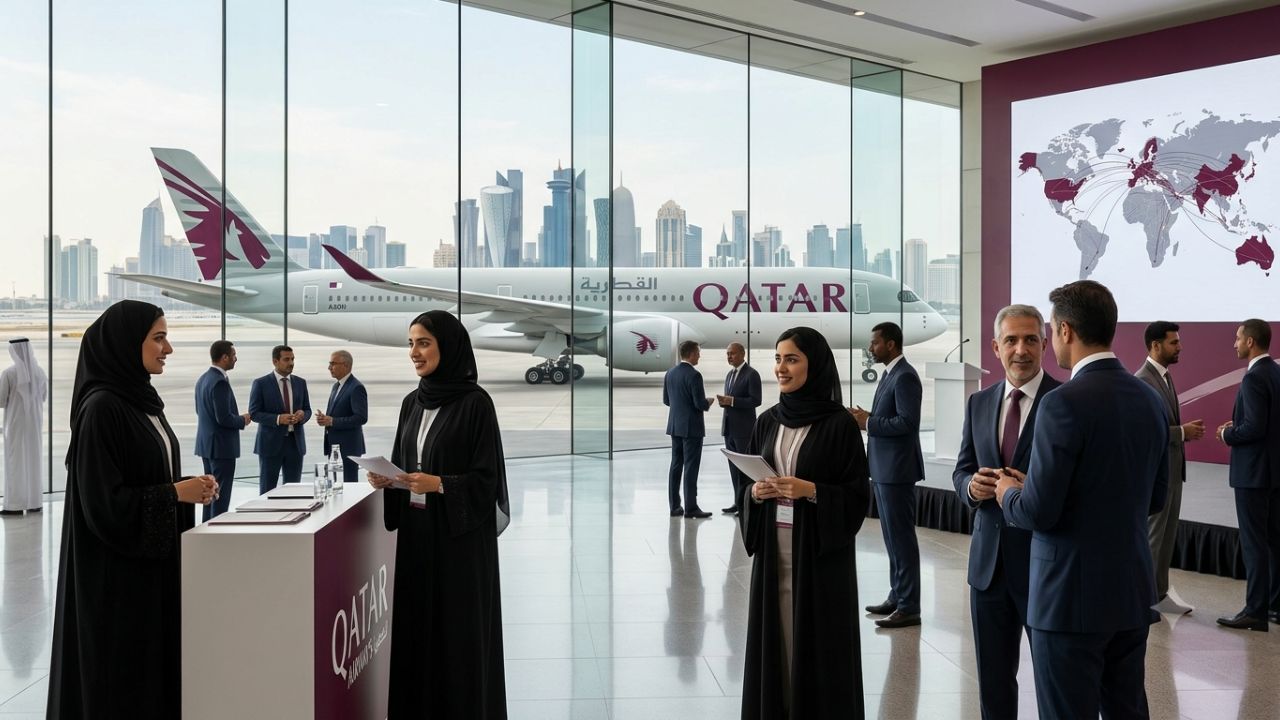
Qatar Airways Puts Global Air Connectivity in Focus as Arab Aviation Leaders Gather for 59th AACO AGM in Doha

Qatar Airways Ends Male Cabin Crew Beard Ban: Doha Grooming Standards & Travel Guide 2026