
Greece Tourism Faces New Pressure as EU Migrant Return Plan Puts Crete and Mediterranean Gateways in Focus

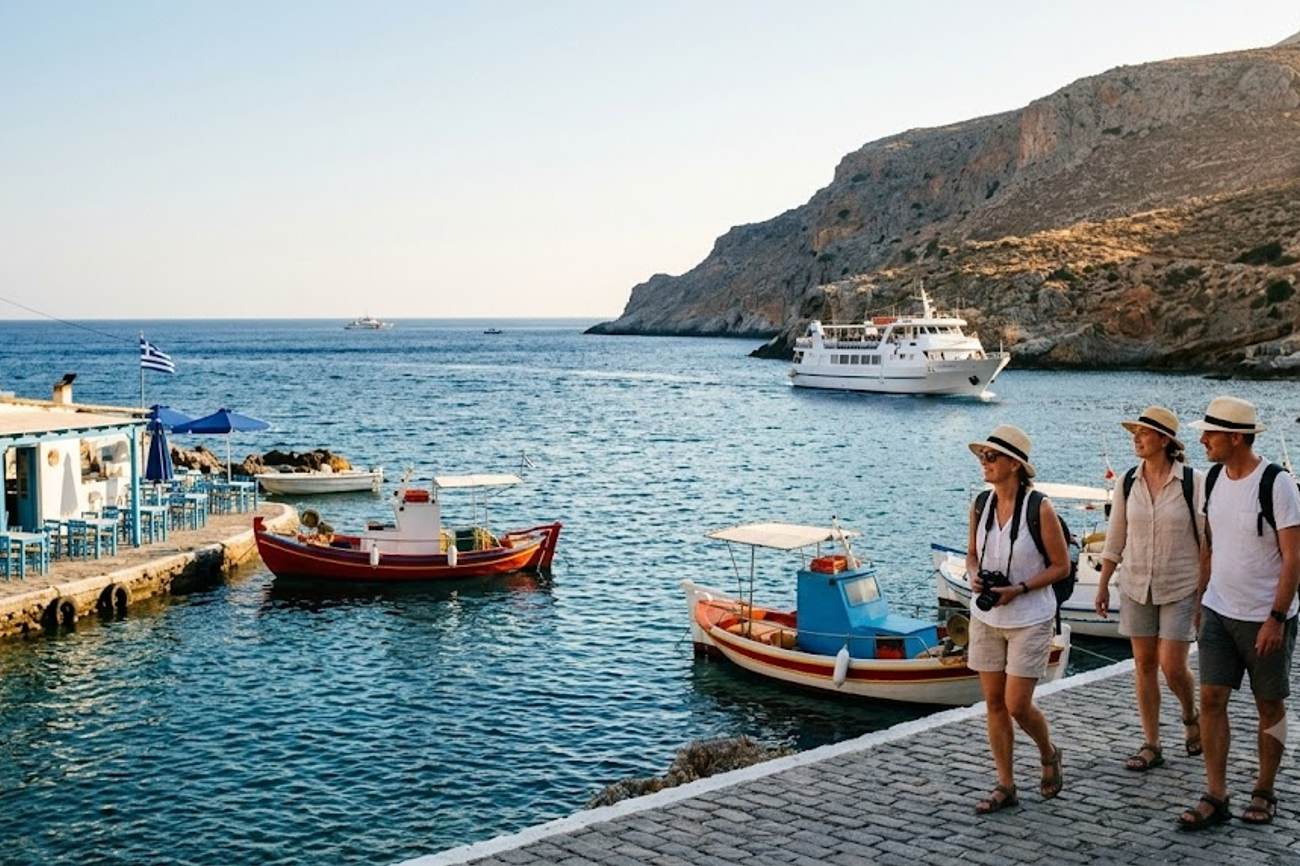
Image generated by AI
**title: Greece Border Policy Update 2026: Potential Impact on Crete Travel date: 2026-08-15 category: Travel Advisory
A family arriving at Heraklion International Airport this summer may find a significantly different security environment than in previous years, as Greek authorities scale up border initiatives to meet new European Union mandates. While holidaymakers hold valid passports, the increased presence of Frontex and national police in southern regions like Crete is a direct result of the island's role as a primary gateway for Mediterranean migration.
The 2026 EU Migrant Return Framework and Greek Implementation
Starting in 2026, Greece is tasked with executing a rigorous set of border policy initiatives dictated by the European Union’s migrant return policy. This is not a standalone Greek decision but part of a coordinated effort involving Germany, Austria, Denmark, and the Netherlands. The primary objective is the repatriation of migrants to third countries, even in instances where those individuals lack a prior migration relationship with the destination country.
The legal foundation for this shift was established on June 1, 2026, when the European Parliament and the Council of the EU reached a provisional agreement on updated return rules. This framework allows member states to create "return hubs" in third countries to streamline the removal of individuals who have no legal right to remain within the EU. Greece, due to its geography, bears a disproportionate responsibility for the physical removal of these individuals from the bloc.
While the Greek government has explicitly stated that no specific restrictions are being placed on tourists, the operational reality in Crete and other southern prefectures is changing. The island of Crete has become a strategic focal point because it serves as the primary landfall for migrants traveling from Libya. This creates a dual-pressure system where the same ports, medical facilities, and coastguard units must simultaneously manage millions of high-spending tourists and a complex humanitarian migration flow.
Affected Regions and Strategic Gateways
The disruption is not characterized by flight cancellations but by increased operational friction at border crossing points. The following areas are seeing the highest concentration of new policy enforcement:
- Heraklion (HER): As a primary international hub, this airport is seeing increased security screenings and a higher presence of border officials.
- Chania (CHQ): Similar to Heraklion, this gateway is under increased scrutiny due to its connectivity to the wider Mediterranean.
- Crete's Southern Ports: These areas are the primary targets for the new migrant control policies due to the Libya-to-Crete corridor.
- Southern Greek Coastal Regions: Any area serving as a potential entry point for irregular migration is subject to the new EU-mandated surveillance.
The scale of the challenge is evident in the data. Between January and June 2026, the European Border and Coast Guard Agency (Frontex) recorded over 49,000 irregular border crossings across the EU. While this is a 37% decrease compared to the same period in 2025, the Eastern and Central Mediterranean routes still account for more than 60% of all detected entries. Specifically, the corridor from Libya to Crete handles more than half of all detections on the Eastern Mediterranean route, with over 16,600 detections recorded in the region during the first half of 2026.
Your Rights as a Passenger and Traveler
For the vast majority of travelers, these policy changes do not alter the legal terms of entry. However, if increased border security leads to delays, missed connections, or secondary screenings, you should be aware of your protections.
Entry and Movement Rights Under the Schengen Agreement, holders of valid visas or passports from visa-exempt countries maintain their right to enter Greece. The new EU migrant return plan is specifically targeted at individuals subject to return decisions; it does not create new immigration hurdles for legal holidaymakers. If you are stopped for questioning, you have the right to clear identification of the officer and, if detained, the right to consular assistance.
Flight Disruption and Compensation If increased security measures at Heraklion or Chania airports lead to flight delays or cancellations, the standard aviation laws apply:
- EU261/2004: For flights departing from an EU airport (like HER or CHQ) or arriving in the EU on an EU-carrier, passengers are entitled to compensation if a flight is cancelled or delayed by more than three hours, provided the cause is within the airline's control.
- Extraordinary Circumstances: Airlines often claim that "government-mandated security surges" are extraordinary circumstances. However, if the delay is due to poor airline staffing during a known policy rollout, you may still be eligible for compensation ranging from €250 to €600 depending on the distance. You can verify your rights via the UK CAA or the US DOT.
Duty of Care Regardless of the reason for a delay, airlines must provide "duty of care," which includes food, drinks, and communication. If a security lockdown at a port or airport strands you, the carrier is responsible for these basics.
Rebooking Strategy and Alternatives
If you anticipate friction at the primary Cretan gateways, consider these logistical pivots to ensure your trip remains seamless.
Diversifying Entry Points If Heraklion (HER) is experiencing significant congestion due to border operations, consider flying into Chania (CHQ) or even Athens (ATH) and taking a domestic flight or ferry to Crete. While Athens is a larger hub, it is less likely to be the direct focal point of the Libya-to-Crete corridor enforcement.
Maritime Alternatives For those traveling via ferry, be aware that port security in southern Crete is heightened. Ensure all documentation is digitized and printed. If ferry delays occur, check Flightradar24 to see if there are last-minute available seats on regional flights that can bypass port congestion.
Refund vs. Rebooking If a sudden security surge leads to a cancellation, do not automatically accept a voucher. Under EU law, you are entitled to a full refund in cash if you choose not to take the rebooked flight. Compare the cost of a new ticket on a competitor airline against the refund value. In the first half of 2026, Greek tourism remained strong, with travel receipts rising 14.8% to €8.80 billion, meaning hotel availability may be tight; prioritize rebooking over refunds if you have non-refundable accommodation.
FAQ: Greece Border Policy 2026
Will I need a new visa to visit Crete in 2026? No. The new policies target irregular migration and the return of individuals without legal status. Standard tourist visas and passport-free entry for eligible nations remain unchanged.
Am I entitled to compensation if security checks delay my flight? Only if the airline failed to plan for known security levels. If the delay is a sudden, unpredictable government order, it may be classified as an "extraordinary circumstance," exempting the airline from payment.
Are there restrictions on movement within Crete? While there are greater restrictions on irregular migrants, there are no announced restrictions for tourists. However, you may encounter more checkpoints in southern coastal regions.
How do I track if my flight is delayed by border operations? Use the airline's official status page (e.g., British Airways Flight Status) or a real-time tracker like FlightAware to monitor aircraft movement.
Stay informed, keep your documents ready, and remember that legal rights persist even amidst shifting border policies.
Related Travel Guides
- Jordan Unveils $15 Billion Investment Powerhouse With Tourism Energy And Transport Projects To Boost Growth
- Porto Tops Europe for Gen Z in 2026 as Edinburgh, Copenhagen and Berlin Surge in Youth Travel Appeal
- Lithuania Is Now on Top of a Private European Sleep Tourism Ranking for More Restful City Breaks
This article is for informational purposes. Flight routes, passenger regulations, visa rules, and transit advisories are subject to change by airlines and aviation authorities. Readers are advised to verify schedules and travel documentation with relevant carriers and border agencies before departure.
Related Stories
Greece Archaeological Site Visitors Surge 12.3% in July 2026 as Museum Attendance Dips

Zen Awakening Festival 2026: Florida's Transformational Music, Mindfulness, and Arts Gathering in Fruitland Park
