Southern Europe's Countryside Hospitality Boom: How Urban Rental Bans, Aviation Costs, and Drive Tourism Reshape Spain, Portugal, Greece, and Croatia


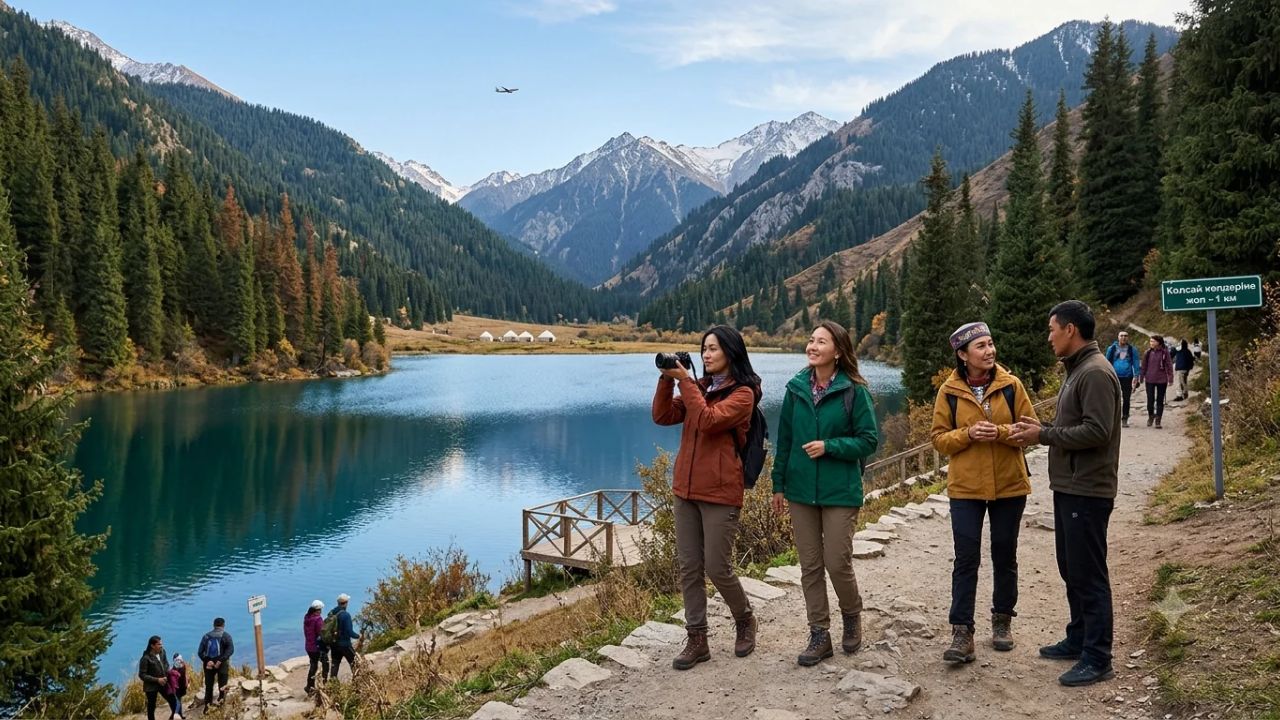
MADRID — A structural revolution in leisure mobility is sweeping Southern Europe, as aggressive urban tourism containment policies, soaring commercial aviation costs, and persistent household services inflation divert domestic travelers away from congested metropolitan centers and toward the rural interior. Across Spain, Portugal, Greece, and Croatia, middle-class households are fundamentally rethinking their vacation patterns. Rather than absorbing exorbitant city-center accommodation rates or paying inflated commercial airfares and ferry tariffs to reach offshore archipelagos, millions of residents are loading private motor vehicles to embark on frequent, high-yield overland getaways into agricultural valleys, mountain highlands, and historic wine corridors.
This behavioral transition, dubbed the regional "micro-cation" surge, is shifting substantial private capital into depopulated hinterlands across the Iberian and Balkan peninsulas. Far from being a transient consumer whim, the countryside hospitality boom is anchored by permanent legislative changes in major metropolitan centers, where municipal authorities have enacted aggressive bans and permit freezes on short-term holiday flats to reclaim residential housing. Simultaneously, regional hoteliers, agritourism estates, and historic manor networks are modernizing their commercial playbooks, deploying algorithmic dynamic pricing, digital self-check-in platforms, and unbundled experiential folios to transform short-stay motoring into a formidable economic engine.
The Triple Macroeconomic Catalyst: Urban Caps, Living Costs, and Aviation Friction
For more than three decades, Southern Europe's tourism economy revolved around mass aviation corridors. Low-cost air carriers funneled tens of millions of northern European and transatlantic holidaymakers into flagship urban hubs such as Barcelona, Madrid, Lisbon, Porto, Athens, and Dubrovnik. While generating immense foreign exchange, this hyper-concentration inflicted acute social and structural costs: skyrocketing residential rents, community displacement, overcrowded public infrastructure, and intense local anti-tourism demonstrations.
In response, national parliaments and municipal assemblies enacted sweeping regulatory interventions throughout 2024, 2025, and 2026, creating the first structural catalyst for rural redistribution:
1. Municipal De-densification and Urban Rental Restrictions
- Barcelona and Catalonia: Regional authorities finalized statutory decrees to eliminate all existing tourist apartment licenses—amounting to approximately 10,000 holiday flats—by November 2028. This deliberate contraction of urban tourist capacity has triggered record room-rate inflation across remaining metropolitan hotel stock, effectively pricing domestic Spanish holidaymakers out of weekend city escapes.
- Lisbon and Porto: Under Portugal's national housing legislative package (Mais Habitação), municipal assemblies secured statutory authority to establish containment zones prohibiting new registrations for local accommodations (Alojamento Local). Historic residential quarters across Lisbon and Porto have frozen new permits, restricting supply and redirecting domestic leisure demand outward.
- Athens: The Hellenic Ministry of Tourism instituted a formal freeze on new short-term rental concessions across central municipal districts, capping commercial holiday flats to shield residential tenants from escalating living costs.
- Croatia: The Croatian Parliament passed landmark tourism legislation empowering municipal councils to impose legally binding carrying-capacity ceilings on private holiday rentals, restricting tourist densities across saturated historic quarters in Split, Dubrovnik, and Zadar.
2. Compressed Household Budgets and Services Inflation
While headline inflation across the Eurozone moderated toward central bank targets, persistent services inflation has remained stubborn across Southern Europe. Elevated hospitality wages, food supply volatility, and energy tariffs have driven up dining and lodging expenses. Central bank economic surveys indicate that despite modest nominal wage increases, real disposable household purchasing power has contracted across middle-income families.
Confronted by reduced discretionary margins, domestic consumers have adapted their travel calculus: extended two-week summer holidays are systematically replaced by high-frequency 2-to-4-night domestic road trips. Overland travel allows households to bypass volatile airline pricing, baggage surcharges, airport transfers, and car rental costs.
3. Aviation Surcharges, Fleet Groundings, and Ferry Inflation
Operational costs across European commercial aviation have escalated dramatically. Airlines must absorb the progressive phase-out of free carbon allowances under the EU Emissions Trading System (ETS), alongside statutory sustainable aviation fuel (SAF) blending mandates under ReFuelEU Aviation directives. Compounding these compliance expenses, aerospace engine supply chain bottlenecks—notably mandatory inspections and groundings of geared turbofan engines—have constrained regional airline fleets. Low-cost carriers have slashed secondary regional routes, eliminating ultra-promotional €19 airfares.
At the same time, passenger and vehicle ferry tariffs across the Mediterranean have surged to historic highs. A standard family of four transporting an automobile from Piraeus to the Cyclades or from Split to Hvar faces roundtrip ferry expenses exceeding €600 to €900. By choosing mainland road networks over island crossings, households eliminate major transit expenses, making private motoring the most economically resilient travel format in an inflationary climate.
DRIVERS OF SOUTHERN EUROPE'S RURAL HOSPITALITY BOOM
| Column 1 | Column 2 | Column 3 | Column 4 | Column 5 |
|---|---|---|---|---|
| URBAN CONTAINMENT | HOUSEHOLD CALCULUS | AVIATION & TRANSIT | ||
| REGULATIONS | & SERVICES INFLATION | BOTTLENECKS | ||
| - Barcelona tourist | - Real disposable | - EU ETS carbon costs | ||
| flat ban by 2028 | margins compressed | & ReFuelEU SAF fees | ||
| - Portugal AL freeze | - Fortnightly holidays | - Airline engine | ||
| in Lisbon & Porto | replaced by 3-night | supply chain cuts | ||
| - Athens central flat | "micro-cations" | - Soaring island car | ||
| permit freeze | - Motoring eliminates | ferry crossing fares | ||
| - Croatia municipal | baggage, transfer, | - Shared vehicle fuel | ||
| capacity ceilings | and car rental fees | and toll efficiencies |
The South-Western Corridor: Iberian Inland Mobility
The geographic redistribution of leisure capital away from coastal resort strips and metropolitan basins is most visible across the Iberian Peninsula. Spain and Portugal possess some of the most modern intercity expressway networks in the European Union, enabling rapid overland transit from metropolitan clusters into agrarian valleys, historic wine regions, and montane hinterlands.
The Castilian Foothills and the Ribera del Duero Axis (Spain)
Surrounding Madrid’s dense metropolitan plateau, resident travel habits have shifted decisively. Rather than boarding weekend flights to Ibiza or Malaga, capital city residents are driving northward and westward along modernized motorways (A-1, A-6, and A-11) into the Castilian plateau, encompassing the historic provinces of Segovia, Ávila, Valladolid, and Soria.
Official statistical returns published by Spain’s National Statistics Institute (INE) confirm counter-cyclical growth:
- While overnight stays in urban tourist apartments experienced steady declines, overnight stays in rural non-hotel accommodations reached historic highs.
- Castilla y León established itself as Spain’s premier rural tourism destination, absorbing more than 20 percent of all domestic rural overnight stays nationwide.
- The average length of stay contracted to 2.3 nights, illustrating that condensed weekend getaways have replaced traditional extended holidays.
- Paradores de Turismo—the state-owned network of historic converted castles, monasteries, and palatial residences—reported record occupancy and room revenues across its Castilian and Extremaduran properties, driven by domestic motorists from Madrid, Valencia, and the Basque Country.
Rural hoteliers along the Ribera del Duero wine route have capitalized on this influx by adopting dynamic weekend pricing models, commanding average daily rates (ADR) exceeding €220 per night during harvest and autumn foliage periods.
The Alentejo Plains and the Silver Coast (Portugal)
In Portugal, an identical structural migration connects Lisbon and Porto with inland agricultural sanctuaries. Situated less than two hours by car from the capital via the A2 and A6 expressways, the rolling plains of the Alentejo have evolved into the primary leisure sanctuary for urban professionals escaping Lisbon’s real estate pressures. Concurrently, residents of Porto are driving eastward into the Douro Valley and south along the Silver Coast (Costa de Prata).
Data from Turismo de Portugal demonstrates the dominance of domestic mobility:
- Domestic vacationers account for more than 62 percent of total overnight stays in rural accommodations across the Alentejo and Centro regions.
- High-end rural boutique lodges (Turismo no Espaço Rural) and traditional country manor estates (Turismo de Habitação) command premium nightly rates through curated agro-tourism offerings, including private cork forest walking tours, estate olive oil pressings, and dark-sky astronomy programs centered around the certified Alqueva Dark Sky Reserve.
- By catering to affluent domestic motorists seeking peaceful countryside retreats, regional operators have successfully shielded their business models from the volatility of international flight bookings.
| Region & Corridor | Key Metropolitan Feeder Hubs | Primary Transit Highway | Dominant Lodging Assets | Average Stay Length |
|---|---|---|---|---|
| Castilla y León (Spain) | Madrid, Valladolid, Bilbao | A-1, A-6, A-11 Motorways | Converted castles, Paradores, Ribera wine châteaux | 2.1 – 2.4 Nights |
| Alentejo & Centro (Portugal) | Lisbon, Porto, Setúbal | A2, A6, A1 Expressways | Restored quintas, cork forest eco-lodges, olive estates | 2.3 – 2.6 Nights |
| Peloponnese (Greece) | Athens, Patras | Olympia Odos, Moreas Motorway | Stone boutique towers, olive grove villas, mountain chalets | 2.8 – 3.2 Nights |
| Istria & Zagorje (Croatia) | Zagreb, Rijeka, Ljubljana | A1, A2, A8/A9 (Istrian Ypsilon) | Agritourism stancije, thermal spa resorts, vineyard cottages | 2.9 – 3.3 Nights |
The South-Eastern Corridor: Balkan Overland Mobilities
Across South-Eastern Europe, drive tourism operates within distinct geographical and infrastructural realities. Rather than navigating radial expressway plains, motorists must transverse complex mountainous terrain across the Hellenic spine and the Dinaric Alps. Nevertheless, modern highway construction has turned regional motorways into powerful conduits of domestic and cross-border leisure commerce.
The Peloponnese and Central Greece Hinterlands
Historically, residents of the Athens metropolitan basin migrated en masse to the Aegean and Ionian islands during summer weekends and public holiday periods. However, hyper-inflated ferry charges—often costing a family upwards of €500 just for vehicle transit—have triggered an overland pivot.
Utilizing the expanded Olympia Odos and Moreas motorway corridors, Athenian motorists are turning toward the Peloponnese and continental Central Greece:
- Historic coastal and mountain settlements such as Nafplio, Monemvasia, Kardamyli in the Mani Peninsula, and the mountain villages of Mount Parnassus have seen sustained domestic arrivals across all four seasons.
- Travel times between Athens and the mountain valleys of Arcadia, Thessaly, and Western Macedonia have been compressed by up to 40 percent thanks to new tunnels and viaducts.
- Former winter-only ski bases surrounding Mount Parnassus and Delphi have successfully converted into year-round hiking, agritourism, and heritage tourism destinations.
The Hellenic National Tourism Organization (EOT) has redirected promotional funding toward mainland road journeys, reducing ecological strain on fragile island aquifers while infusing capital into rural agricultural communities challenged by youth outmigration.
The Istrian Peninsula and the Zagorje Thermal Basin (Croatia)
Croatia offers a compelling demonstration of the economic power of domestic and cross-border motoring. While international cruise travel dominates headlines along the Dalmatian coast, the domestic hospitality sector is anchored by high-frequency vehicular traffic originating from Zagreb and nearby border regions in Slovenia, Austria, and northern Italy.
Centralized data from Croatia’s eVisitor reporting system confirms this structural reality:
- Istria's Interior Dominance: Istria generates approximately one-third of all commercial tourism overnights in Croatia. Supported by the completion of the dual-carriageway Istrian Ypsilon network (A8 and A9), motorists can seamlessly transition from coastal centers like Rovinj into medieval inland hilltop hamlets like Motovun and Grožnjan, renowned for truffle gastronomy and boutique agritourism estates (stancije).
- Zagorje Thermal Wellness Corridor: Located less than an hour's drive north of Zagreb along the A2 motorway, the rolling green hills of Krapina-Zagorje have become a thriving year-round wellness corridor. Capitalizing on natural geothermal springs, regional operators have established high-occupancy thermal spa resorts, private vineyard cottages (kleti), and farm-to-table culinary inns that remain fully booked nearly every weekend, decoupling regional tourism revenue from short summer coastal seasons.
Hospitality Operational Reinvention: Yield Optimization, Unbundling, and Automation
The transition toward high-frequency, condensed-duration overland travel has rendered historical hospitality operating models obsolete. Traditional rural guesthouses historically relied on strict seven-night minimum stay requirements during peak summer months, closing their doors entirely from November through April. Properties maintaining such operational rigidity have suffered acute margin erosion.
Conversely, forward-thinking regional operators across Spain, Portugal, Greece, and Croatia are rewriting their commercial strategies:
Dynamic Pricing and Stay-Length Unbundling
Independent hoteliers and boutique estate owners have dismantled rigid minimum-stay restrictions outside of primary statutory holiday weekends:
- Properties readily accept two-night weekend bookings, utilizing algorithmic revenue management software that adjusts rates dynamically based on real-time highway traffic forecasts, weekend weather conditions, and metropolitan booking velocity.
- To counter traditional midweek occupancy slumps, operators market discounted "work-from-nature" midweek packages tailored to hybrid remote professionals seeking peaceful working environments equipped with high-speed satellite connectivity.
Ancillary Revenue Capture Through Curated Experiences
To offset shorter stay durations, hoteliers have unbundled base room rates from experiential programming, capturing substantial guest expenditure on-site:
- Private vineyard and cellar tours accompanied by professional sommeliers.
- Hands-on artisanal culinary masterclasses covering regional olive oil milling, sourdough baking, and cheese production.
- Guided truffle foraging excursions with trained hunting dogs in Istria and Castilla y León.
- Therapeutic thermal bath access and customized wellness regimens.
By capturing high margins on ancillary services, rural properties frequently generate higher total guest folio values over a 48-hour weekend than traditional guesthouses previously generated over a week of passive bed-and-breakfast stays.
ANCILLARY REVENUE AND YIELD OPTIMIZATION MODEL
| Column 1 | Column 2 | Column 3 | Column 4 | Column 5 |
|---|---|---|---|---|
| ALGORITHMIC PRICING | EXPERIENTIAL FOLIO | MIDWEEK HYBRID WORK | ||
| & STAY UNBUNDLING | UNBUNDLING | PACKAGES | ||
| - Elimination of rigid | - Private wine cellar | - Subsidized midweek | ||
| 7-night minimums | tastings & dinners | rates for professionals | ||
| - Algorithmic surge | - Truffle hunting & | - High-speed Starlink | ||
| rates for weekends | olive oil workshops | satellite connectivity | ||
| - Weather & traffic- | - On-site thermal spa | - Extended stays for | ||
| adjusted flash rates | & wellness therapies | digital nomads |
Digital Automation and Autonomous Hotel Operations
A critical structural challenge facing rural hospitality operators is the acute shortage of skilled seasonal labor. Rural depopulation makes staffing 24-hour reception desks, concierge stations, and administrative offices difficult and financially prohibitive for smaller properties.
To overcome this operational bottleneck, regional operators have embraced end-to-end digital automation:
- Cloud-Based Pre-Registration: Guests receive automated digital pre-arrival links to input mandatory identification credentials, securely transmitting required guest manifest data directly to national police databases (such as Spain's SES.HOSPEDAJES or Portugal's SEF platform) without paperwork.
- Contactless Smart Access: Cloud-connected electronic locks, smart keypads, and mobile Bluetooth credentials allow travelers to arrive at any hour of the night, bypassing traditional reception check-in queues.
- Virtual Concierge Applications: Messaging platforms and mobile applications coordinate dining reservations, housekeeping requests, and winery tours automatically.
- Automated Folio Settlement: Room charges, restaurant bills, and ancillary excursions are settled seamlessly via stored digital payment tokens upon checkout, with digital fiscal receipts dispatched automatically to the guest's email.
By automating administrative tasks, small rural teams can focus their labor entirely on groundskeeping, culinary excellence, and personal hospitality, significantly reducing operating overhead while meeting the expectations of tech-savvy urban road travelers.
Infrastructure Disparities, EV Readiness, and Environmental Carrying Capacities
While the boom in domestic drive tourism provides a vital economic lifeline to depopulated rural municipalities, it has exposed severe infrastructure imbalances that threaten long-term sustainability.
The Electric Vehicle Charging Divide
The accelerating transition toward private motoring intersects directly with the European Union's ambitious electromobility goals. Under the Alternative Fuels Infrastructure Regulation (AFIR) and revised Trans-European Transport Network (TEN-T) guidelines, EU member states are legally mandated to install fast-charging pools along primary motorway corridors at regular 60-kilometer intervals.
However, a pronounced infrastructure divide exists between primary highways and secondary rural hinterlands:
- While motorists navigating the A-1 in Spain or the A1 in Portugal find abundant 150kW to 350kW ultra-fast DC chargers, charging availability deteriorates rapidly once exiting onto secondary provincial roads.
- In mountainous sectors of the Peloponnese, central Greece, and inland Croatian valleys, public fast-charging points remain scarce.
- Rural municipal electrical distribution grids rely heavily on legacy low-voltage transformers that cannot support the multi-megawatt electrical loads demanded by commercial rapid-charging plazas.
This infrastructure deficit creates "range hesitation" among affluent urban electric vehicle owners—precisely the high-spending demographic driving the rural getaway market. Forward-thinking rural hoteliers have capitalized on this gap by installing dedicated Level 2 destination chargers (7.4kW to 22kW) on property grounds, transforming EV charging into a decisive competitive amenity that drives direct bookings.
| Corridor Dimension | Core Trans-European Motorways (TEN-T) | Secondary Rural Arterials & Hinterlands | Impact on Hospitality Operations |
|---|---|---|---|
| Charging Infrastructure | High-density 150kW+ DC fast-charging plazas | Sparse, low-power Level 2 public chargers | Range hesitation limits EV road trips to equipped lodges |
| Grid Capacity | High-voltage substations with industrial capacity | Aging rural transformers; limited expansion | Hoteliers must install solar/battery microgrids for chargers |
| Roadway Design | Multi-lane grade-separated expressways | Narrow, winding two-lane roads; complex terrain | Extended travel times direct traffic through village cores |
| Traffic Governance | Electronic open-road tolling; free-flowing lanes | Historic core bottlenecks; parking constraints | Towns enforce peripheral parking and electric shuttles |
Resource Depletion, Drought, and Carrying Capacities
Intense weekend tourism influxes can overwhelm delicate rural environments. Many favored rural destinations across Southern Europe are located within arid or semi-arid zones facing chronic water scarcity. In Castilla-La Mancha, the Peloponnese, and southern Portugal, prolonged droughts have depleted local aquifers and agricultural reservoirs. When hundreds of weekend visitors arrive simultaneously at boutique lodges featuring lush landscaping, swimming pools, and high per-capita water usage, municipal supplies face severe strain.
Additionally, medieval and historic hilltop settlements—planned centuries ago for agrarian foot traffic and pack animals—cannot absorb hundreds of private motor vehicles arriving on Saturday morning. Unregulated parking along narrow cobbled lanes congests emergency vehicle corridors and damages historic stone plazas.
To mitigate environmental degradation, progressive local councils are enforcing strict access management policies:
- Installation of automated license-plate recognition (ALPR) cameras to restrict vehicular access in historic preservation cores.
- Construction of peripheral interceptor parking facilities outside village boundaries, serviced by low-emission electric shuttle buses.
- Linking municipal tourism operating licenses to mandatory water-saving technologies, including greywater recycling for irrigation and rainwater harvesting systems.
Comparative Regional Synthesis: Southwestern Versus Southeastern Europe
While domestic drive tourism has expanded rapidly across both the Iberian Peninsula and the Balkan-Hellenic region, distinctive market characteristics, infrastructure qualities, and regulatory dynamics differentiate the two sub-regions:
| Comparative Dimension | South-Western Europe (Spain and Portugal) | South-Eastern Europe (Greece and Croatia) |
|---|---|---|
| Primary Feeder Hubs | Madrid, Barcelona, Lisbon, Porto, Seville | Athens, Thessaloniki, Zagreb, Split, Ljubljana |
| Overland Infrastructure | World-class radial expressways with extensive toll-free sections | Mountainous highway corridors; toll motorways; slower coastal links |
| Dominant Lodging Format | Historic Paradores, restored wine châteaux, certified eco-estates | Stone coastal towers, thermal spa wellness resorts, agritourism cottages |
| Primary Regulatory Push | Sweeping urban short-term rental bans and license expirations | Municipal carrying-capacity limits and central district permit freezes |
| Core Consumer Rationale | Bypassing inflated city hotel rates; pursuing unhurried rural calm | Evading high car ferry tariffs and crowded island ferry ports |
| Yield Strategy | Unbundled gourmet dining, wine experiences, hybrid work packages | Season extension, thermal wellness programs, truffle gastronomy |
| Critical Bottleneck | Rural grid constraints for EV charging; regional water stress | Secondary mountain road safety; sparse rural DC charging networks |
Practical Advice for Countryside Road Travelers in Southern Europe
For travelers planning a rural motoring holiday across Southern Europe, navigating regional roads and countryside accommodations requires thoughtful preparation:
1. Reserve Destination Accommodations with Dedicated Charging
If driving an electric or plug-in hybrid vehicle, never rely on finding public rapid chargers in small rural villages. Confirm that your accommodation provides dedicated, reservable on-site EV destination chargers, and map primary corridor charging plazas along major motorways before departure.
2. Respect Historic Village Access Regulations
Many historic hilltop towns across Spain, Portugal, Greece, and Croatia enforce strict Limited Traffic Zones (Zonas de Bajas Emisiones or local pedestrian rules). Never attempt to drive into ancient village cores without verifying hotel parking access. Utilize designated peripheral interceptor parking lots and transfer to local shuttle links to avoid automated municipal fines.
3. Book Experiential Activities Well in Advance
Because boutique rural estates limit group sizes to preserve intimacy and service quality, high-demand experiential offerings—such as private wine cellar tastings, guided truffle hunts, and thermal spa sessions—frequently sell out weeks before arrival. Reserve experiential packages at the time of lodging booking.
4. Pack for Changing Elevation and Microclimates
Continental plateaus and montane interiors experience dramatic diurnal temperature swings compared to maritime coastal zones. In regions like the Castilian plateau, Mount Parnassus, or the Zagorje hills, daytime temperatures may be pleasantly warm while evening temperatures drop sharply. Pack layered clothing suitable for both rural walking trails and cool evening dining.
Strategic Synthesis: The Permanent Realignment of Southern European Tourism
The rise of domestic drive tourism and short-stay rural hospitality represents a permanent structural realignment of Southern Europe's visitor economy. Driven by urban housing regulations, economic realities, and aviation cost pressures, the dispersal of travelers into rural hinterlands is democratizing tourism revenue, revitalizing depopulated agrarian communities, and relieving acute pressure on saturated metropolitan and coastal gateways.
As regional governments mobilize European transport modernization funds to strengthen rural electrical grids, expand EV charging corridors, and safeguard delicate water supplies, the countryside hospitality sector will solidify its position as an indispensable pillar of regional economic resilience. By pairing innovative operational technology with authentic cultural and culinary heritage, Southern Europe’s interior destinations are ensuring that the future of travel remains sustainable, distributed, and enduringly rewarding.
Related Travel Guides
- Iberian Road Trips: Best Scenic Driving Routes Across Spain and Portugal
- European Electric Vehicle Motoring: Charging Networks and Mountain Transit Guide
- Balkan Mainland Discovery: Driving Through Greece and Croatia's Hidden Interiors
- The Paradores of Spain: Complete Guide to Historic Castle and Monastery Lodgings
This article is for informational purposes. Flight routes, passenger regulations, visa rules, and transit advisories are subject to change by airlines and aviation authorities. Readers are advised to verify schedules and travel documentation with relevant carriers and border agencies before departure.
Related Stories

Zanzibar Mandates High-Definition CCTV Surveillance for All Tourist Accommodations Ahead of December 15 Deadline