
Greece Aligns With Hungary And More 42 Countries Across Europe In New Facial Photograph Rules As Longer Border Waits Affect Travellers
Greece Aligns With Hungary And More 42 Countries Across Europe In New Facial Photograph Rules As Longer Border Waits Affect Travellers

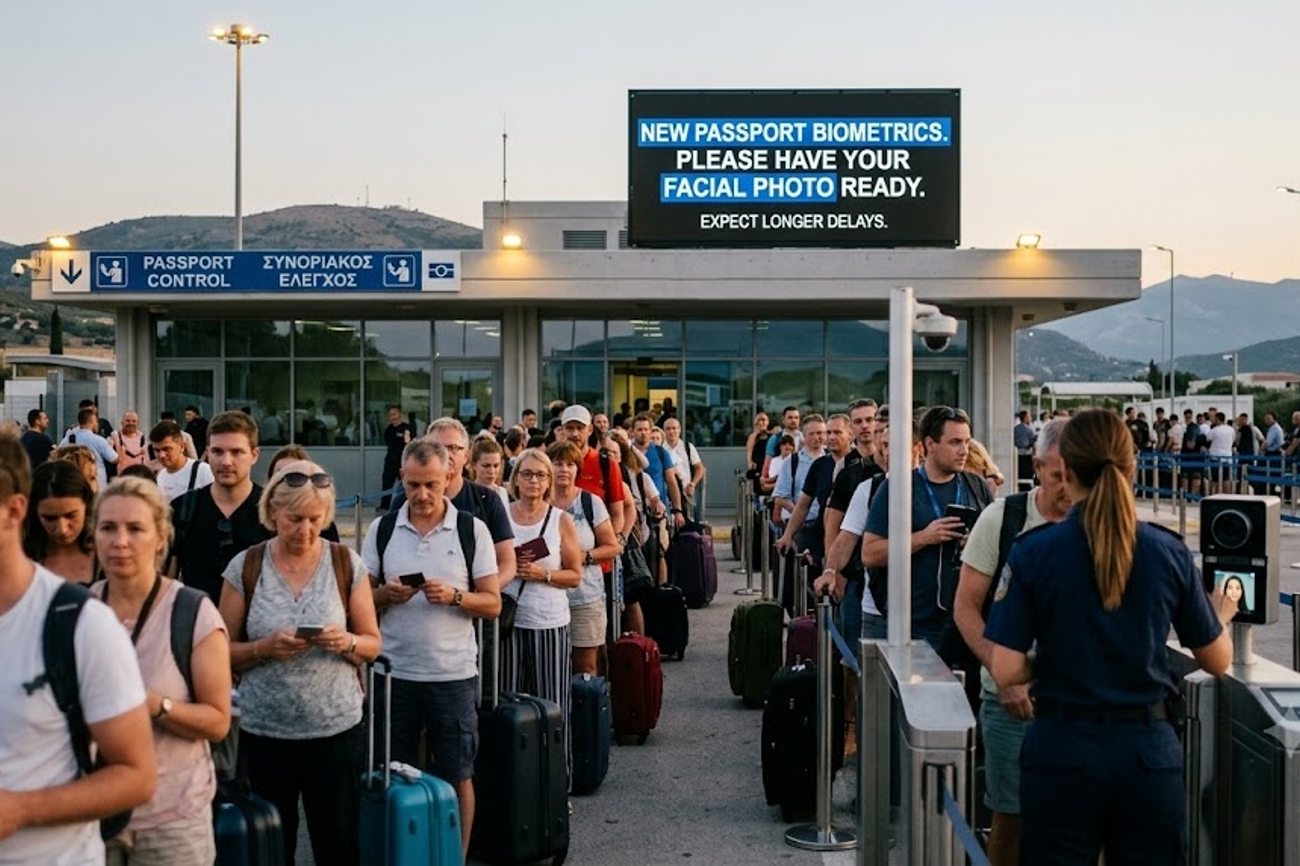
Image generated by AI
43 European nations are now transitioning to a biometric-first border regime, fundamentally altering the entry process for millions of non-EU citizens. The implementation of the Entry/Exit System (EES) marks the end of the traditional ink-stamp era, replacing manual passport verification with a centralized digital database that tracks facial photographs and fingerprint records for every eligible visitor entering the Schengen Area.
The Architecture of the Entry/Exit System
The shift toward digitalization is not merely a convenience update but a systemic overhaul of how the European Union manages its external perimeter. For decades, border agents relied on physical stamps to track the duration of a visitor's stay, a method prone to human error and forgery. The EES replaces this with a mandatory biometric registration process. Upon their first entry into the Schengen Zone, eligible non-EU nationals must submit their passport details, two fingerprints, and a high-resolution facial image.
This data is stored in a unified digital ledger that monitors the strict "90/180 rule"—the regulation permitting visitors to stay within the Schengen Area for a maximum of 90 days within any 180-day window. By automating this calculation, the EU aims to eliminate "overstaying" by identifying individuals who exceed their permitted time the moment they attempt to exit the zone. This transition is being led by a coalition of nations including Greece and Hungary, though it extends to the entirety of the Schengen territory, including non-EU members like Switzerland.
Biometric Implementation Across the Schengen Zone
The rollout is comprehensive, affecting every primary point of entry, from major international airports to remote land borders and ferry terminals. The following table outlines the specific application of these rules across key member states:
| Country | Primary Biometric Requirement | Operational Change |
|---|---|---|
| Greece | Facial photograph & fingerprints | Digital records replace stamps at Athens, Santorini, and Mykonos |
| Hungary | Facial photograph & fingerprints | Biometric registration for all non-Schengen arrivals |
| France | Biometric checks | Digital processing at airports, ports, and rail terminals |
| Germany | EES digital registration | Mandatory biometric data for non-EU short-stay visitors |
| Spain | Biometric checks | High-volume processing at major airports and ports |
| Italy | Facial photograph & fingerprints | Transition to digital entry/exit logs |
| Switzerland | EES compliance | Biometric registration despite non-EU membership |
| Romania | Digital registration | New requirements for newly integrated Schengen borders |
| Austria | Facial photograph & fingerprints | Digital tracking of entry and exit dates |
| Belgium | Digital records | Elimination of manual passport stamping |
For those traveling through hubs like Paris, Rome, Madrid, Frankfurt, Amsterdam, or Barcelona, the experience will shift from a brief passport scan to a multi-step registration process. Travelers will likely encounter dedicated biometric kiosks designed to capture the required facial and fingerprint data before they can proceed to the immigration officer.
Expert Analysis: The Friction of Digital Security
From a logistical standpoint, the EES creates a "first-visit friction" that will have immediate repercussions for international travel patterns. While the long-term goal is a more seamless border, the short-term reality is a significant increase in processing time per passenger.
For travelers booking routes into high-traffic destinations like Athens or Mykonos, the direct consequence is a heightened risk of missed connections. The requirement to stop at kiosks for fingerprinting and facial scanning adds several minutes to the processing time of each individual. When multiplied by thousands of passengers arriving during the summer holiday peak or Christmas travel windows, this creates a bottleneck effect.
The pricing pressure created by these delays may indirectly impact the travel industry. As waiting times increase at ports and airports, we can expect a surge in demand for "fast-track" services or premium lounge access that offers expedited security and immigration lanes. Furthermore, the move toward a digital record means that any discrepancy in a traveler's biometric data or passport validity will be flagged instantly by the European Border and Coast Guard Agency (Frontex), leaving less room for the discretionary leniency that occasionally occurred with manual stamping.
The geopolitical driver here is clear: the EU is prioritizing security and migration control over tourist convenience. By creating a foolproof digital trail, the Schengen Area is insulating itself against the legal loopholes of the manual system. For the "nomad" or frequent business traveler, this means their movements are now tracked with surgical precision. There is no longer any ambiguity regarding the 90-day limit; the system will trigger an alert the moment a visitor enters their 91st day, potentially leading to fines or entry bans upon future attempts to visit the region.
Key Takeaways
- Mandatory Biometrics: Non-EU citizens must provide fingerprints and a facial photograph upon their first entry into the Schengen Area.
- End of Passport Stamps: Physical ink stamps are being phased out in favor of a digital ledger that records entry and exit dates.
- Strict Limit Tracking: The system automatically calculates the 90-day stay limit within a 180-day period, making overstays nearly impossible to hide.
- Increased Transit Time: Travelers should expect longer queues at major hubs (e.g., Athens, Paris, Frankfurt) due to the registration process at kiosks.
- Broad Scope: The rules apply across 43 nations, including non-EU members like Switzerland, ensuring a unified digital border.
FAQ: Schengen Biometric Entry 2024-2025
Do I need to provide fingerprints every time I enter Europe? No. Biometric registration (facial photo and fingerprints) is typically required during your first entry after the system's implementation. Subsequent entries will use this existing data to verify your identity more quickly.
Will the EES affect my 90-day visa-free limit? The EES does not change the 90-day rule, but it changes how it is enforced. The system automatically tracks your days, removing the need for manual counting or stamp verification.
Which documents do I need for the biometric kiosks? You will need a valid passport that meets international standards. The kiosk will scan your passport and then prompt you to provide your fingerprints and a live facial photograph.
Will this cause delays at the airport? Yes, especially during peak seasons like summer or Christmas. Travelers are advised to allow extra time for immigration processing to avoid missing connecting flights or transport.
The era of the passport stamp is dead; the era of the digital identity has arrived.
Tags: #SchengenArea #EntryExitSystem #EUBorderControl #BiometricTravel #GreeceTourism #Frontex2024
Related Travel Guides
- Libya Travel Takes Off as MedSky Restores Direct Paris Flights After More Than 15 Years
- India Travel Destinations Showcase 4 Luxury Escapes for a Royal and Memorable Vacation Experience in 2026
- SAS Celebrates 80 Years of Global Aviation Legacy With Historic Scandinavia to New York Anniversary Flights
Disclaimer
This article is for informational and educational purposes only. It does not constitute legal, financial, or professional advice. While we strive to provide accurate and up-to-date information, travel policies, regulations, and conditions change rapidly. Always verify information with official sources before making travel decisions. Nomad Lawyer makes no representations about the accuracy, reliability, completeness, or suitability of the information provided. Readers should consult qualified professionals for advice specific to their circumstances. The views expressed in this article are those of the author and do not necessarily reflect the views of Nomad Lawyer.
Raushan Kumar
Founder & Lead Developer
Full-stack developer with 11+ years of experience and a passionate traveller. Raushan built Nomad Lawyer from the ground up with a vision to create the best travel and law experience on the web.
Learn more about our team →