
Fresno Yosemite Airport Triggers Emergency Logistics as 33,000 Passengers Overwhelm Terminals for July 4th
Fresno Yosemite International Airport is bracing for unprecedented terminal gridlock as federal security agents prepare to process 33,000 departing passengers.

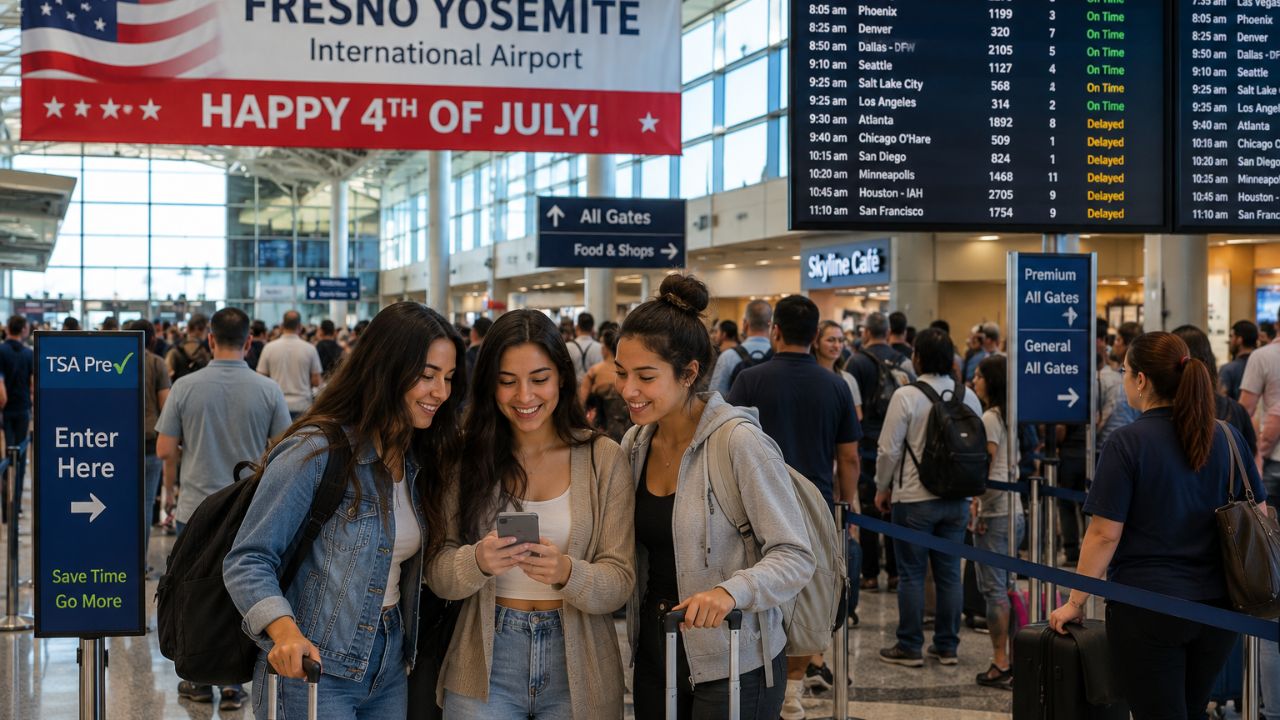
Image generated by AI
[Fresno, July 3] — Fresno Yosemite International Airport (FAT) is currently absorbing one of the most severe operational stress tests in its history. Propelled by surging Central Valley tourism and patriotic holiday migration, terminal physical capacity and federal security checkpoints are operating at absolute maximum thresholds. Transportation Security Administration (TSA) officials report they are actively preparing to screen an overwhelming 33,000 departing passengers through local checkpoints between Tuesday, June 30, and Monday, July 6.
This hyper-concentrated Independence Day rush directly follows a massive economic milestone for the regional gateway, which recently processed a record-breaking 2.75 million annual passengers. While the City of Fresno Department of Airports recently finalized major capital developments to expand terminal infrastructure, the highly compressed departure windows associated with the July 4th holiday guarantee that traditional passenger processing channels will experience severe friction.
Critical Congestion Windows Identified
Flight tracking data and local terminal models indicate that traveler volume will brutally overwhelm infrastructure during two specific daily intervals. The most severe checkpoint gridlock is projected during the early morning rush, stretching from 4:00 a.m. to 7:00 a.m., followed by a massive secondary midday surge spanning from 9:30 a.m. to 2:00 p.m.
Simultaneously, the massive influx of regional motorists has pushed airport parking facilities to near-maximum capacity. Aviation directors emphasize that passengers arriving without an integrated transit plan risk catastrophic delays. Federal authorities also issued aggressive legal warnings regarding hazardous materials, explicitly reminding all passengers that fireworks of any kind—including consumer sparklers—are strictly prohibited inside both carry-on and checked luggage networks. Violations will trigger immediate confiscation and federal legal penalties.
The Metropolis Parking System Launch
Amidst the terminal chaos, FAT is actively transitioning its ground transportation infrastructure. Airport developers confirmed the impending launch of the "Metropolis" parking system, a highly anticipated, state-of-the-art contactless platform engineered to eliminate curbside ticketing bottlenecks.
Because the Metropolis system is not scheduled to go fully live online until next week, current ground transit operations remain highly vulnerable to manual processing delays. To prevent curbside drop-off zones from collapsing into gridlock, transportation planners are strongly directing motorists to utilize the designated Free Cell Phone Waiting Area, forcing drivers to stage off-site until arriving passengers are physically waiting on the outer curb.
Key Facts Breakdown
- Passenger Load: TSA agents will screen 33,000 departing passengers between June 30 and July 6.
- Peak Congestion Times: Maximum gridlock occurs daily from 4:00 a.m. - 7:00 a.m. and 9:30 a.m. - 2:00 p.m.
- Airport Milestone: FAT recently achieved a record-breaking 2.75 million passenger volume.
- Tech Upgrade: The contactless "Metropolis" parking system launches fully next week.
- Security Threat: All fireworks and consumer sparklers are strictly prohibited on aircraft.
- Arrival Windows: Passengers must arrive 2 hours prior for domestic and 3 hours prior for international flights.
Why This Matters
Our analysis of the regional flight data indicates that Fresno Yosemite International Airport has permanently crossed the threshold from a secondary regional feeder into a high-density international hub. Processing 33,000 outbound passengers through FAT's existing infrastructure in just seven days leaves zero buffer capacity for unexpected disruptions. The awkward timing of launching the Metropolis parking system precisely after the Independence Day crush suggests that airport operations rushed their capital development schedule but failed to clear the final technical hurdles before the holiday surge hit. The sheer volume of this weekend proves that passenger demand out of the Central Valley is growing far faster than the physical footprint of the airport can comfortably support.
Industry Outlook
Market trends suggest that terminal gridlock at FAT will remain highly volatile throughout the entire July 4th weekend, particularly during the 4:00 a.m. to 7:00 a.m. departure corridor. Travelers must aggressively verify flight status digitally before turning their ignitions, as massive regional congestion will likely force airlines into localized gate holds. Moving forward, the successful deployment of the Metropolis parking system next week is critical; if ground transportation logistics fail during the impending Labor Day travel window, FAT risks severe reputational damage among Central Valley travelers who increasingly demand frictionless transit options.
Related Travel Guides
- Investindustrial Joins WTTC as Global Member to Accelerate Private Capital Influence
- US and Cambodia Sign Historic Open Skies Treaty After 12 Years
- US Aviation Faces Historic Gridlock as America 250 Triggers FAA’s Busiest July 4th
- Trans-Tasman Aviation Chaos: 900 Flights Grounded
- Global Air Travel Demand Drops 2.2% in May
Disclaimer
This article is for informational and educational purposes only. It does not constitute legal, financial, or professional advice. While we strive to provide accurate and up-to-date information, travel policies, regulations, and conditions change rapidly. Always verify information with official sources before making travel decisions. Nomad Lawyer makes no representations about the accuracy, reliability, completeness, or suitability of the information provided. Readers should consult qualified professionals for advice specific to their circumstances. The views expressed in this article are those of the author and do not necessarily reflect the views of Nomad Lawyer.
Kunal K Choudhary
Co-Founder & Contributor
A passionate traveller and tech enthusiast. Kunal contributes to the vision and growth of Nomad Lawyer, bringing fresh perspectives and driving the community forward.
Learn more about our team →