France’s Burgundy And Champagne Luxury Barge Cruises Attract Record Australian Travellers As Slow Tourism Takes Over Europe

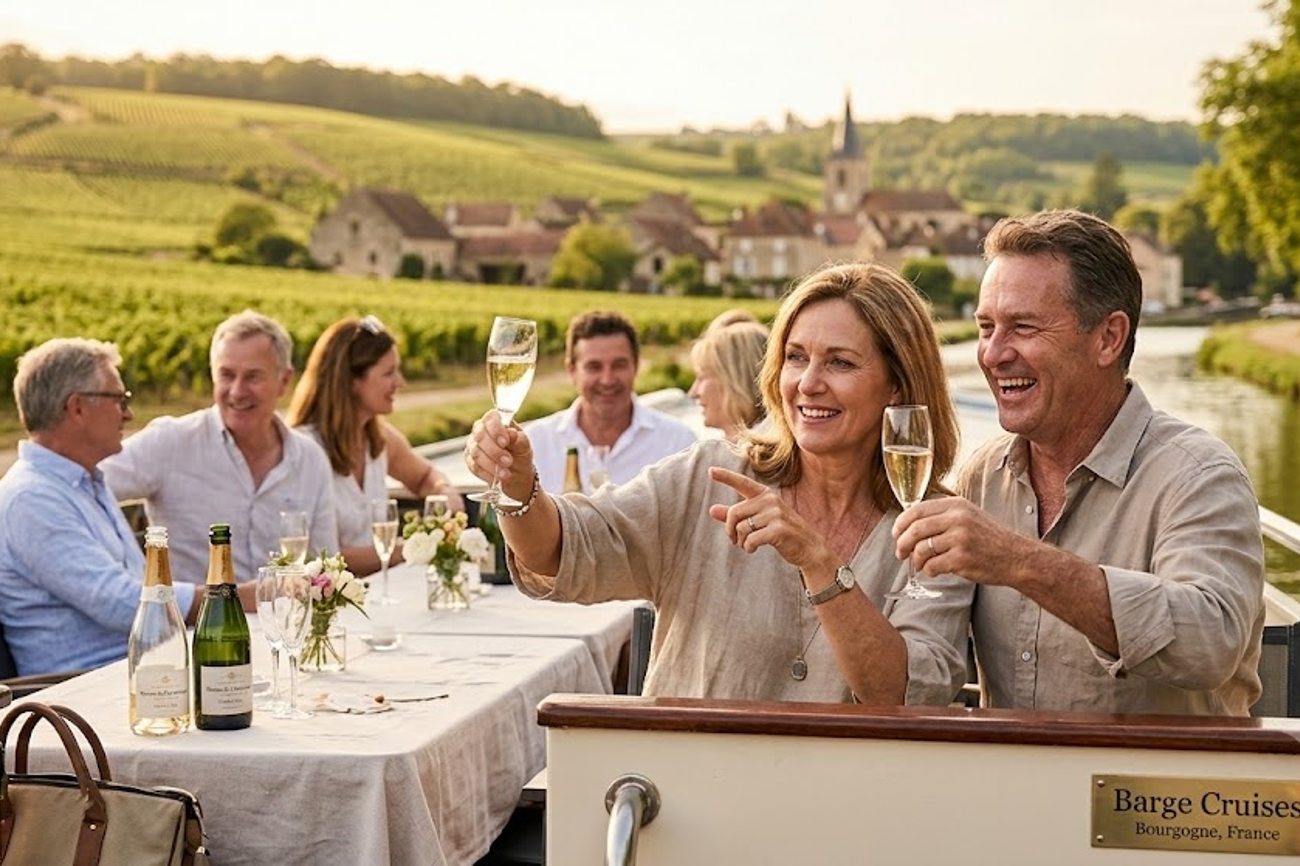
Image generated by AI
A 67% surge in Australian bookings for hotel barge cruises in Burgundy signals a fundamental pivot in how high-net-worth travelers from the Asia-Pacific region engage with Europe. This shift represents a departure from the "checklist" style of tourism—characterized by rapid transitions between metropolitan hubs like Paris and London—toward a model of regional immersion and "slow travel."
The Erosion of the Metropolitan Monopoly
For decades, the Australian luxury travel market followed a predictable pattern: high-density itineraries centering on European capitals. However, data from European Waterways indicates a cooling of interest in traditional city tours. The modern Australian traveler is no longer satisfied with the superficiality of a three-day stay in a major city; they are instead opting for extended, singular-region residencies.
This movement is not merely a change in destination but a change in cadence. By trading airport transfers and hotel check-ins for the steady pace of a canal barge, travelers are effectively decoupling their holiday from the stresses of urban logistics. This transition is particularly evident in France, where the rural hinterlands of Burgundy, Champagne, and the Canal du Midi are absorbing the demand previously reserved for the Louvre or the Colosseum. This trend aligns with broader shifts tracked by the International Air Transport Association (IATA), as travelers seek more sustainable, less congested modes of exploration.
Regional Growth Metrics and Vessel Capacity
The redistribution of Australian tourism spend is most visible in the specific growth percentages across France's luxury waterways. Burgundy has emerged as the primary beneficiary of this shift, while the Champagne and Southern France regions are seeing double-digit growth.
The following data outlines the current growth trajectory for Australian guests:
| Region | Booking Increase | Primary Appeal | Key Vessel/Metric |
|---|---|---|---|
| Burgundy | 67% | Wine culture & historic towns | Top Australian Destination |
| Champagne | 50% | Sparkling wine & vineyard landscapes | Kir Royale (12 passengers) |
| Canal du Midi | 20% | Mediterranean landscapes & rural life | Enchanté (8 passengers) |
Beyond regional preferences, the demographic composition of these trips is evolving. There is a notable rise in independence among luxury travelers: individual cabin bookings have climbed by 29%, and the number of solo Australian travelers has risen by 14%. This suggests that the "slow travel" movement is not exclusively for couples or families, but is increasingly an avenue for solo exploration of the French countryside.
Expert Analysis: The Economics of Immersive Luxury
For the traveler, the direct consequence of this shift is a transition from "sightseeing" to "experiencing." The traditional model of European travel focused on the monument—the Eiffel Tower, the Vatican, the Big Ben. The new model focuses on the producer—the boutique winemaker in Burgundy or the artisanal cheese maker along the Canal du Midi.
From a market perspective, this is a strategic pivot toward "high-yield, low-impact" tourism. By utilizing vessels with capacities as low as 6 to 20 guests, operators are avoiding the pitfalls of mass tourism that have plagued cities like Venice or Barcelona. This creates a virtuous cycle: the exclusivity of the experience justifies a premium price point, while the small scale of the vessels prevents the degradation of the local environment and culture.
The pricing pressure this creates means that luxury travel is becoming more fragmented. We are seeing a move away from the "all-inclusive mega-ship" toward "hyper-local boutique" experiences. For Australians, who face some of the longest flight durations in the world to reach Europe, the logic is simple: if you are spending 24+ hours in the air, the value is found in staying longer in one place rather than spending a third of the trip in transit between cities.
France's Burgundy and Champagne regions have witnessed a significant surge in Australian travellers opting for luxury barge cruises, with many seeking unique and relaxing experiences. According to Atout France, the official French tourism board, this trend is part of a larger shift towards slow tourism in Europe, where travellers prioritize immersive cultural experiences over fast-paced sightseeing. As a result, luxury barge cruise operators are catering to this demand by offering bespoke itineraries and high-end amenities.
Furthermore, the fact that Champagne is already leading forward bookings for 2027 suggests that this is not a post-pandemic anomaly, but a permanent structural change in luxury consumer behavior. Travelers are now planning their "slow" journeys years in advance to secure limited berths on small-capacity vessels like the 8-passenger Enchanté. To understand the regulatory environment governing these waterways, travelers can refer to the European Canal and Waterway authorities.
Key Takeaways
- Burgundy Dominance: With a 67% increase in Australian bookings, Burgundy is now the leading luxury waterway destination for this market.
- Capacity Shift: Demand is pivoting toward ultra-small vessels (6–20 guests), with the 8-passenger Enchanté being a top performer on the Canal du Midi.
- Solo Growth: Luxury travel is becoming less group-dependent, evidenced by a 14% rise in solo Australian travelers and a 29% jump in individual cabin bookings.
- Long-Term Planning: The trend is solidified for the long term, with Champagne already dominating bookings for the 2027 season.
- Economic Redistribution: Luxury spending is shifting from urban centers to rural producers and independent regional businesses in France.
FAQ: France Regional Travel 2025
Is a hotel barge cruise different from a river cruise? Yes. River cruises often carry hundreds of passengers on large ships. Hotel barges are boutique vessels accommodating 6 to 20 guests, allowing them to navigate narrower canals and offer a more intimate, slow-paced experience.
Which region is best for wine enthusiasts? Burgundy is currently the most popular for its world-famous wine culture, while Champagne offers a specialized focus on sparkling wine, with the Kir Royale being a primary vessel for this route.
Can I book a luxury barge cruise as a solo traveler? Yes. There is a growing trend toward solo luxury travel, with a 14% increase in solo Australian bookings and a 29% increase in individual cabin requests.
How far in advance should I book a French canal cruise? Given that some regions, like Champagne, are already seeing heavy bookings for 2027, it is advisable to book 18 to 36 months in advance for high-demand, small-capacity vessels.
The era of the European whirlwind tour is ending; the era of the curated, slow-motion journey has arrived.
Related Travel Guides
- Europe Rebuilds Its Tourism Future as Turkiye and More Turn Crisis Recovery Into Resilient Destinations
- Germany Is Now Connecting Six Nations to Unlock Better Sustainable Tourism Experiences in Europe
- Greece Tourism Faces New Pressure as EU Migrant Return Plan Puts Crete and Mediterranean Gateways in Focus
This article is for informational purposes. Flight routes, passenger regulations, visa rules, and transit advisories are subject to change by airlines and aviation authorities. Readers are advised to verify schedules and travel documentation with relevant carriers and border agencies before departure.
Related Stories
France and European Source Markets Drive Tunisia Tourism Receipts to $2.38 Billion as Long-Haul Corridors Expand in 2026
European Winter Travel Surge as 76% Plan Seasonal Getaways Across France, Spain, and Italy