
European Winter Travel Surge as 76% Plan Seasonal Getaways Across France, Spain, and Italy


European travel intentions for autumn and winter 2026–2027 have surged to 76%, marking a notable three-percentage-point increase year-on-year as holidaymakers prioritize seasonal escapes across France, Spain, Italy, Germany, and the Mediterranean corridor.
Data released by the European Travel Commission (ETC) in its Monitoring Sentiment for Intra-European Travel – Wave 20 comprehensive survey confirms that continental wanderlust remains exceptionally resilient despite persistent financial pressures, high aviation charges, and shifting geopolitical concerns. Covering sentiment across ten major outbound source markets for travel between October 2026 and March 2027, the findings underscore a profound transformation in how Europeans construct their winter holidays. Travellers are actively trading sweltering summer peaks for milder southern climates, combining Christmas market excursions with heritage city breaks, and leaning heavily into generative artificial intelligence tools to assemble bespoke, budget-conscious travel itineraries.
This seasonal momentum is underpinned by solid macroeconomic fundamentals recorded by Eurostat, which documented 1.321 billion tourist accommodation nights across the European Union in the first half of 2026 alone—a 1.7% expansion over the previous record year. Supported by cross-border rail expansions and low-cost air route realignments, the 2026–2027 winter season represents an important structural pivot for European destination marketing organizations (DMOs), tour operators, and municipal transport networks aiming to disperse tourism footfall across secondary cities and off-peak calendar windows.
European Winter Travel Sentiment: Key Macro Trends for 2026–2027
The ETC sentiment monitor reveals that 76% of surveyed Europeans intend to undertake at least one overnight trip within the continent before the end of March 2027. This 3% expansion compared to the autumn/winter 2025–2026 wave indicates that leisure travel has entrenched itself as an essential consumer expenditure, resilient even in the face of persistent inflation across transport and lodging.
Several dominant macro trends characterize this travel cycle:
- Extended Shoulder Season Travel: Rather than concentrating visits entirely within peak July–August windows, travelers increasingly embrace October through November and February through March. This trend is driven by cooler temperatures, lower crowd densities at signature landmarks, and significant savings on airfare and accommodation.
- Dominance of Short-Haul Intra-European Corridors: Over 82% of those planning trips intend to stay within Europe rather than embark on long-haul intercontinental journeys. Intra-European travel benefits from predictable border crossing conventions under Schengen, dense high-speed rail networks, and competitive point-to-point airline connections.
- Budget Consciousness Balanced with Frequency: While travelers are taking shorter average trips (three to six nights rather than extended fortnights), their propensity to take multiple micro-trips throughout the winter has grown. Thirty-eight percent of respondents indicated intentions to book two or more getaways during the six-month observation window.
- Demand for Climate Comfort: Summer heatwaves across the Mediterranean in recent years have altered consumer behavior. Southern European destinations—such as Andalusia, Sicily, the Algarve, and Crete—are now viewed as prime autumn and winter refuges offering comfortable 16°C to 22°C afternoons without the oppressive humidity of July.
- Mainstream Integration of Digital Planning Tools: Digital literacy among European travelers has matured rapidly. While search engines and traditional online travel agencies (OTAs) maintain their footing, artificial intelligence platforms are playing a direct advisory role in building cost-effective multi-city routes and finding hidden regional gems.
Intra-European Travel Intentions: Source Market Analysis
Outbound travel willingness varies across European nations, reflecting differing economic backdrops, household disposable incomes, and cultural inclinations toward winter leisure. Central and Western European nations continue to power continental outbound demand, with Poland, Germany, and the Netherlands setting the highest participation rates.
Poland: Continental Leader in Outbound Willingness
Poland leads all surveyed nations with an extraordinary 87% of respondents indicating plans to travel between October 2026 and March 2027. This reflects Poland's robust real wage growth, expanding low-cost flight connectivity out of Warsaw, Kraków, Katowice, and Gdańsk, and a strong cultural appetite for escaping the harsh Central European winter. Polish holidaymakers exhibit balanced demand between winter sun destinations like Spain (particularly the Canary Islands and the Costa del Sol) and cultural escapes to Italy and France.
Germany: The Bedrock of European Outbound Volume
Germany, Europe's largest outbound source market, registers a 79% travel intention rate. German travelers display clear seasonal segmentation: early winter journeys focus heavily on domestic and Austrian alpine destinations, Christmas markets, and wellness retreats, whereas January and February feature substantial departures toward the Mediterranean and the Atlantic archipelagos. German holidaymakers also represent the highest per-trip average expenditure, prioritizing quality hotel stays and comprehensive cancellation insurance policies.
The Netherlands and Belgium: Cross-Border Urban Explorers
Dutch travelers match Germany at 79% intent, with Belgian respondents registering 74%. In both Low Countries, proximity to high-speed rail corridors (Eurostar, ICE, and TGV networks) significantly shapes destination choices. Over 20% of Belgian travelers designate France as their primary winter destination, driven by easy train access to Paris, Lyon, and the French Alps. Dutch travelers show a pronounced preference for Spain (16%) and Germany (14%), blending city breaks in Berlin and Cologne with sunny retreats in Valencia and Alicante.
United Kingdom: Sustained Demand for Southern Sanctuaries
Despite remaining outside the European Union and facing passport control stamps and currency variations, British travelers exhibit a 78% intention to visit continental destinations this winter. Spain remains the unchallenged market leader for British holidaymakers, capturing 12% of outbound intent, followed by France (11%) and Italy (9%). British consumers demonstrate high sensitivity to package deals and all-inclusive packages that provide upfront expenditure certainty against fluctuating exchange rates.
Southern Europe's Reciprocal Appetite: France, Spain, and Italy
Domestic and intra-regional mobility remains vibrant within Southern Europe. In Spain, 77% of citizens intend to travel, with France (17%) and Portugal serving as prime outbound targets alongside domestic exploration. In Italy, 76% express travel intentions, directing their outward interest toward France (15%), Spain, and Germany. In France, 74% plan winter excursions, with Italy (15%) and Spain ranking as top foreign destinations, complemented by massive domestic movements to French ski resorts in Savoie and Haute-Savoie.
| Source Country | Travel Intention (%) | Top Outbound Destination #1 | Top Outbound Destination #2 | Top Outbound Destination #3 |
|---|---|---|---|---|
| Poland | 87% | Italy (13%) | Spain (12%) | Germany (10%) |
| Germany | 79% | Austria (11%) | Spain (10%) | Italy (9%) |
| Netherlands | 79% | Spain (16%) | Germany (14%) | France (10%) |
| United Kingdom | 78% | Spain (12%) | France (11%) | Italy (9%) |
| Spain | 77% | France (17%) | Italy (12%) | Portugal (9%) |
| Italy | 76% | France (15%) | Spain (13%) | Germany (8%) |
| France | 74% | Italy (15%) | Spain (13%) | Germany (7%) |
| Belgium | 74% | France (20%) | Spain (12%) | Germany (8%) |
| Austria | 73% | Germany (16%) | Italy (14%) | Austria (Domestic 12%) |
| Switzerland | 71% | France (14% tie) | Italy (14% tie) | Germany (12%) |
The North-to-South Axis: Why Southern Europe Leads Winter Migration
The ETC report confirms that Southern Europe and the Mediterranean basin capture 53% of all intra-European leisure travel preferences during the 2026–2027 autumn and winter period. This overwhelming regional preference demonstrates that the traditional seasonality curve of Southern European tourism is flattening permanently into a year-round operational model.
Several factors drive this sustained migration:
1. Temperate Climates and Extended Daylight
Northern and Eastern Europe experience short daylight hours and freezing temperatures between November and February. In contrast, Southern European coastal regions—such as Andalusia, the Algarve, Crete, Rhodes, and the Maltese archipelago—offer daily highs ranging from 15°C to 20°C and upwards of six hours of daily sunshine. While swimming in the sea is reserved for hardier visitors, these conditions are ideal for outdoor walking tours, cycling, archaeological exploration, and al fresco dining.
2. Off-Peak Access to Iconic Cultural Heritage
Visiting major heritage complexes like the Colosseum and Vatican Museums in Rome, the Alhambra in Granada, the Uffizi Gallery in Florence, or the Acropolis in Athens during July often involves four-hour queues, intense heat, and crowded viewing galleries. Visiting during November, January, or February transforms the guest experience. Lines shrink dramatically, pre-booking slots are readily available, and municipal authorities offer lower entry fees, creating an unhurried cultural engagement.
3. Attractive Value and Accommodation Availability
High summer demand in Mediterranean hotspots regularly drives hotel average daily rates (ADR) past €350 per night in key four-star and boutique properties. In winter, these same establishments often adjust rates to €110–€160 per night, providing premium hospitality at accessible price points. Restaurant availability improves, enabling visitors to secure tables at celebrated regional establishments without reserving months ahead.
4. Expansion of "Workation" Infrastructure
Remote and hybrid working arrangements have firmly taken root across European professional sectors. Knowledge workers from Scandinavia, Germany, the Benelux nations, and the UK increasingly book two- to four-week stays in southern destinations during January and February. Coastal towns across southern Portugal and Spain have actively adapted to this demographic, outfitting rental apartments with high-speed fiber broadband, co-working memberships, and mid-term lease discounts.
Shifting Holiday Typologies: City Breaks, Heritage, and Alpine Escapes
European holidaymakers are not pursuing a single uniform holiday format this winter. The ETC data breaks down travel motivations into clear holiday typologies, showing how travelers balance city exploration, cultural immersion, and nature activities.
INTRA-EUROPEAN WINTER HOLIDAY PREFERENCES (2026-2027)
| Category / Entity | Details / Impact |
|---|---|
| City Breaks (Urban Discovery & Shopping) | 19% |
| Culture, Arts & Architectural Heritage | 18% |
| Sun & Coastal Relaxation (Winter Warmth) | 18% |
| Nature, Hiking & Countryside Getaways | 14% |
| Alpine Sports & Winter Snow Experiences | 11% |
| Gastronomy, Wine Tours & Culinary Discovery | 9% |
| Wellness, Thermal Spas & Health Escapes | 8% |
| Other Leisure / Visiting Friends & Relatives | 3% |
City Breaks Lead at 19%
City breaks stand as the single most popular trip format, selected by nearly a fifth of all intending travelers. Urban getaways appeal strongly because they fit neatly into four-day weekend windows, minimizing paid leave requirements.
Key destinations benefiting from the city-break surge include:
- Paris, France: Bolstered by lasting infrastructure upgrades from major global sporting events, new pedestrianized river corridors, and cultural exhibitions at the Louvre and Musée d'Orsay.
- Barcelona and Madrid, Spain: Combining world-class art collections, expansive food markets like Mercado de San Miguel and La Boqueria, and lively evening social culture.
- Vienna, Austria: Drawing international crowds for its imperial architecture, classical concert halls, and historic coffeehouse traditions.
- Prague, Czech Republic and Budapest, Hungary: Offering accessible price points, thermal bath complexes, and gothic urban landscapes.
Culture and Heritage Holding 18%
Historic monuments, museum retrospectives, and archaeological sites drive 18% of travel planning. Cultural travelers tend to be older, possess higher discretionary spending power, and prioritize authentic regional experiences over standard resort amenities. Secondary historic cities—such as Seville, Bologna, Lyon, Ghent, and Coimbra—are experiencing rapid growth among cultural tourists looking for distinctive local character away from mega-hubs.
Sun and Beach at 18%
Coastal escapes maintain an 18% share of winter demand. However, the nature of coastal visits in winter differs sharply from summer beach holidays. Coastal visitors in January focus on scenic seaside walks, yacht excursions, fresh seafood dining, and wellness retreats rather than tanning. The Canary Islands (Tenerife, Gran Canaria, Lanzarote) represent the primary exception, where subtropical Atlantic latitudes ensure year-round beach weather.
Snow and Alpine Sports at 11%
Accounting for 11% of intended travel, alpine winter sports represent a focused yet high-spending segment. High-altitude ski resorts across the French, Austrian, Swiss, and Italian Alps—such as Val Thorens, St. Anton, Zermatt, and Cortina d'Ampezzo—benefit from early season snowmaking investments and glacier access. With climate variability affecting lower-altitude slopes, skiers prioritize resorts above 2,000 meters that guarantee dependable conditions between December and April.
Hard Economic Data: Eurostat Accommodation Benchmarks and Short-Term Rentals
The positive sentiment documented by the ETC aligns directly with official statistical tracking by Eurostat, the statistical office of the European Union. In its comprehensive dataset for the first half of 2026, Eurostat recorded 1.321 billion nights spent in tourist accommodation establishments across the EU, representing a 1.7% expansion compared to the first six months of 2025.
EU TOURIST ACCOMMODATION NIGHTS (H1 COMPARISON)
Year          Total Nights Spent      YoY Growth Rate
H1 2024       1.272 Billion           +2.1%
H1 2025       1.299 Billion           +2.1%
H1 2026       1.321 Billion           +1.7%
A closer examination of the Eurostat figures illustrates where the growth originated:
- International Guest Nights: Rose by 2.5% in H1 2026, reaching 612.4 million nights. This confirms that cross-border intra-European trips outpaced purely domestic movements.
- Domestic Guest Nights: Grew by 0.9%, totaling 708.6 million nights, showing steady baseline domestic activity.
- Short-Term Rental Platforms: Data collected from online platforms (including Airbnb, Booking.com, Vrbo, and TripAdvisor) revealed 258.8 million guest nights booked in the second quarter of 2026 alone, representing a sharp 5.3% year-on-year increase.
EUROPEAN SHORT-TERM RENTAL PLATFORM GUEST NIGHTS (Q2)
2024: [==================================] 232.4M nights
2025: [====================================] 245.8M nights (+5.8%)
2026: [======================================] 258.8M nights (+5.3%)
This rapid growth in short-term rental nights illustrates how travelers seek multi-room apartments with private kitchens to offset dining expenses. It also highlights the ongoing friction between municipal housing regulators and rental platforms in cities like Barcelona, Florence, and Amsterdam, where strict local registration caps have been established to protect residential housing stock.
Consumer Cost Concerns and Financial Headwinds
Despite positive booking intent, the ETC study identifies clear financial concerns weighing on consumer psychology:
- 37% rank travel cost inflation as their biggest hurdle: Rising airfares, hotel room tariffs, and local restaurant prices force consumers to scrutinize budgets closely.
- 23% point to geopolitical instability: Rerouted flight paths around conflict zones and heightened regional security concerns dampen demand for certain eastern perimeter destinations.
- 20% highlight safety and destination security: Tourists prioritize orderly destinations with visible policing, efficient healthcare access, and low crime rates.
- 15% cite unpredictable extreme weather: Concerns about unseasonal rain, high winds, or lack of snow in alpine valleys influence the timing of bookings.
- 14% depend directly on last-minute discount deals: A growing subset of price-sensitive travelers postpones final commitments until flash promotions appear.
Generative AI and Algorithmic Itineraries: The Digital Booking Revolution
A standout finding from the autumn/winter 2026–2027 ETC sentiment survey is the rapid adoption of artificial intelligence in travel planning. Forty percent of surveyed Europeans now use Generative AI tools—including conversational search assistants, dedicated travel agents, and algorithmic itinerary generators—to organize their upcoming holidays.
GENERATIVE AI ADOPTION IN EUROPEAN TRAVEL PLANNING (BY AGE COHORT)
18–34 Years : [================================================] 56%
35–54 Years : [===================================] 39%
55+ Years   : [=======================] 26%
All Groups  : [========================================] 40%
Generational Divide in AI Deployment
Adoption rates vary significantly across demographic cohorts:
- Ages 18–34 (Gen Z & Millennials): A commanding 56% actively use generative AI platforms during holiday planning. These travelers use AI to discover alternative dining spots, identify photogenic viewpoints, build optimized multi-stop public transit routes, and compare flight-and-rail combinations.
- Ages 35–54 (Gen X): 39% incorporate AI assistance, focusing on family-friendly logistics, finding accommodation with specific child amenities, and structuring multi-generational daily schedules.
- Ages 55+ (Baby Boomers & Seniors): 26% utilize AI tools, often relying on search engines with integrated AI summaries to research accessibility, healthcare options, and guided cultural tours.
How European Travelers Use AI Tools
Travelers are moving past simple static search queries toward dynamic, multi-parameter planning:
- Complex Route Optimization: Travelers input constraints—such as five days, three cities, public transport only, and a budget under €600—and receive customized transit schedules, ticket types, and daily itineraries.
- Hyper-Personalized Dining and Activity Selection: Algorithms filter recommendations based on specialized dietary needs (gluten-free, vegan) or hyper-niche interests (mid-century modernist architecture, artisan ceramic studios).
- Price Discrepancy Tracking: Travelers deploy AI-backed browser extensions and apps that scan hotel direct rates, aggregator prices, and alternative booking dates to identify lowest-cost booking windows.
Despite this technological shift, traditional digital discovery channels remain foundational:
- Search Engines (Google, Bing): Consulted by 59% of respondents for general overviews and location checks.
- Online Travel Portals and Destination Websites: Used by 57% to read verified guest reviews and verify opening hours.
- Direct Carrier and Hotel Websites: Visited by 44% to secure loyalty perks, flexible cancellation terms, and direct customer support.
- Social Video Platforms (TikTok, Instagram Reels): Influencing 34% of travelers, particularly for visual food reviews and scenic scenery discovery.
Cross-Border Transport Dynamics: Rail Expansion and Aviation Adjustments
The shift toward sustainable, lower-stress winter travel is reshaping European transport networks, accelerating an ongoing contest between expanding high-speed rail operators and legacy low-cost airlines.
The European Rail Renaissance
High-speed and overnight rail corridors have evolved into viable alternatives to regional aviation across Western and Central Europe:
- Nightjet Network Expansion: Austrian federal railway ÖBB, in collaboration with Deutsche Bahn, SNCF, and SBB, has added frequencies on premier overnight sleeper routes, including Vienna–Brussels, Berlin–Paris, and Zurich–Amsterdam. Modern Nightjet trainsets feature private mini-cabins with keycard access, power sockets, and integrated luggage storage, attracting solo business and leisure travelers alike.
- Open-Access High-Speed Competition: In Italy, fierce competition between state-owned Trenitalia (Frecciarossa) and private operator Italo keeps high-speed fares between Milan, Florence, Rome, and Naples among the lowest in Western Europe. In Spain, competition between Renfe (AVE/Avlo), Iryo, and Ouigo has slashed ticket prices between Madrid, Barcelona, Valencia, and Seville by up to 40%, drawing millions of passengers off domestic flights.
- Cross-Border Intercity Rail: The Eurostar network connecting London, Paris, Brussels, Rotterdam, and Amsterdam operates at near-peak winter occupancy, benefiting from terminal-to-terminal travel times that beat flying when airport security queues are factored in.
Aviation Capacity Realignment
European airlines have adapted their winter schedules to reflect emerging travel patterns:
- Low-Cost Carriers Reallocate to Southern Europe: Carriers such as Ryanair, easyJet, and Wizz Air have curtailed marginal secondary domestic routes in high-tax Northern European markets (such as Germany) and shifted fleet capacity toward southern bases in Spain, Portugal, Italy, and Morocco.
- Focus on Weekend Flight Waves: Airlines have concentrated frequencies on Thursday evening and Friday morning departures with Sunday night and Monday morning returns, catering to the growing 19% city-break demographic.
- Strict Ancillary Pricing: To protect profit margins against jet fuel volatility and European Union Emissions Trading System (ETS) carbon allowances, airlines enforce stringent charges for cabin baggage, seat selection, and airport check-in, pushing savvy travelers to pack light.
Strategic Playbook for European Hospitality and Tourism Boards
Destination management organizations and private hospitality operators face a distinct operational landscape this winter. To capture market share and sustain profitability through March 2027, industry stakeholders are executing targeted strategic adjustments:
1. Active Shoulder-Season Promotion and Event Scheduling
Cities and regional councils are scheduling high-profile cultural festivals, gastronomy weeks, and sports marathons during typically quiet November and February weeks. Examples include light art festivals in Lyon and Amsterdam, truffle and olive oil harvest celebrations in Tuscany and Istria, and international film festivals in Berlin and Rotterdam. These scheduled happenings provide distinct reasons to visit outside holiday weekends.
2. Transparent Dynamic Pricing and Value Packages
With 37% of travelers citing inflation as their chief concern, hotels that bundle value rather than simply discounting room rates gain a competitive edge. Successful operators offer packages that include complimentary regional breakfasts, local transit day passes, museum discount cards, or late checkout privileges. These inclusions improve perceived value without degrading standard room rates.
3. Adapting Digital Content for Semantic and AI Search
As 40% of travelers turn to conversational AI engines, destinations can no longer rely solely on legacy keyword-targeted search engine optimization. Regional tourism boards must maintain clean, structured schema metadata, publish accurate up-to-date opening hours, and provide clear information on public transit connections, allowing Large Language Models and AI booking agents to parse and recommend their attractions accurately.
4. Supporting Dispersal to Secondary and Rural Hubs
To prevent over-concentration in historic city centers and ease urban housing pressures, regional authorities are actively promoting secondary destinations located within one hour of major transport hubs. Regional transit authorities offer unified regional passes—such as regional train-and-bus day tickets—making day excursions to smaller heritage towns straightforward and affordable.
Practical Traveler Guide: Planning a Cost-Effective European Winter Journey
For travelers organizing an intra-European journey between November 2026 and March 2027, adhering to a few practical principles ensures maximum comfort and cost efficiency:
Strategic Booking Windows
- Aviation: Secure intra-European flights four to six weeks in advance for mid-week departures (Tuesday through Thursday), where fares are routinely 30% to 50% lower than Friday and Sunday services.
- High-Speed Rail: Book long-distance rail tickets (Eurostar, TGV, ICE, Frecciarossa) exactly when ticket booking windows open (typically 90 to 180 days ahead). Advance-purchase fares are often a fraction of full-fare walk-up prices.
- Ski Accommodation: Alpine resorts experience peak demand and premium rates during Christmas/New Year week and the February school holiday block (spanning the second through fourth weeks of February). Booking in January or early March unlocks substantial lodging discounts and uncrowded lift queues.
Maximizing Regional Transit Passes
Most major European metropolitan areas provide dedicated visitor transit passes that offer unlimited travel on subways, trams, buses, and suburban trains. In cities like Vienna, Berlin, Prague, and Madrid, buying a 72-hour or 7-day multi-modal transport card pays for itself within three to four journeys per day, eliminating the hassle of buying single tickets.
Navigating Seasonal Weather and Daylight
When visiting Northern or Central Europe in December and January, plan outdoor sightseeing activities between 09:00 and 15:30 to make the most of limited daylight hours. Reserve late afternoons and evenings for indoor museums, art galleries, thermal baths, and culinary dining. When visiting Southern Europe, take advantage of mild midday sunshine for outdoor exploration, but pack warm layers, as evening temperatures drop rapidly after sunset.
Understanding Tax-Free Shopping Rules
Non-EU residents (including travelers from the United Kingdom, the United States, and Switzerland) visiting EU nations can claim value-added tax (VAT) refunds on eligible retail purchases. Digital validation kiosks (such as Pablo in France or DIVA in Spain) allow travelers to scan refund barcodes at exit airports, speeding up refund processing on apparel, leather goods, and regional design products.
Frequently Asked Questions
What does the European Travel Commission (ETC) report reveal about winter 2026–2027 travel?
The ETC Monitoring Sentiment for Intra-European Travel – Wave 20 report indicates that 76% of surveyed Europeans intend to take an overnight trip between October 2026 and March 2027. This represents a 3% year-on-year increase, led by high outbound interest in Poland (87%), Germany (79%), and the Netherlands (79%).
Which European destinations are most popular for winter getaways?
Southern European countries lead overall preferences, capturing 53% of holiday intentions. France, Spain, and Italy are the top three individual destinations across virtually all surveyed source markets. France ranks as the top foreign destination for travelers from Belgium, Spain, Italy, and Switzerland, while Spain is the primary outbound choice for holidaymakers from the Netherlands and the UK.
What types of holidays are European travelers choosing this winter?
City breaks lead all categories at 19%, followed by culture and heritage exploration at 18%, sun and coastal retreats at 18%, nature and hiking getaways at 14%, alpine winter sports at 11%, and gastronomy tours at 9%.
How widely is Artificial Intelligence being used to plan European holidays?
Overall, 40% of European travelers planning winter getaways report using Generative AI tools to research destinations, draft itineraries, or compare travel costs. Adoption rises sharply among younger travelers aged 18–34, where 56% actively deploy AI tools, compared to 39% among travelers aged 35–54 and 26% among those aged 55 and older.
What are the main concerns affecting European travelers this season?
Financial constraints and travel inflation are the primary concern for 37% of respondents, followed by geopolitical instability (23%), destination safety and security (20%), unpredictable extreme weather (15%), and reliance on last-minute budget promotions (14%).
How is European public transport adapting to winter travel demand?
High-speed rail networks (including Eurostar, Trenitalia, Renfe, and SNCF) and ÖBB Nightjet sleeper trains are running expanded winter timetables, offering competitive cross-border alternatives to regional flights. At the same time, low-cost airlines have shifted capacity toward southern Mediterranean bases and concentrated weekly departures around weekend city-break schedules.
Related Travel Guides
- Budapest Public Transport Expansion: 2027 Regional Passes and Commuter Integration
- Braemar Hotels Refinances Luxury Resorts: $358 Million Portfolio Strategy
- Kuala Lumpur New Year Tourism Surge: Luxury Hotels and Festive Spending
- Val Thorens Wins World's Best Ski Resort 2026: Alpine Winter Tourism Benchmark
This article is for informational purposes. Flight routes, passenger regulations, visa rules, and transit advisories are subject to change by airlines and aviation authorities. Readers are advised to verify schedules and travel documentation with relevant carriers and border agencies before departure.
Related Stories
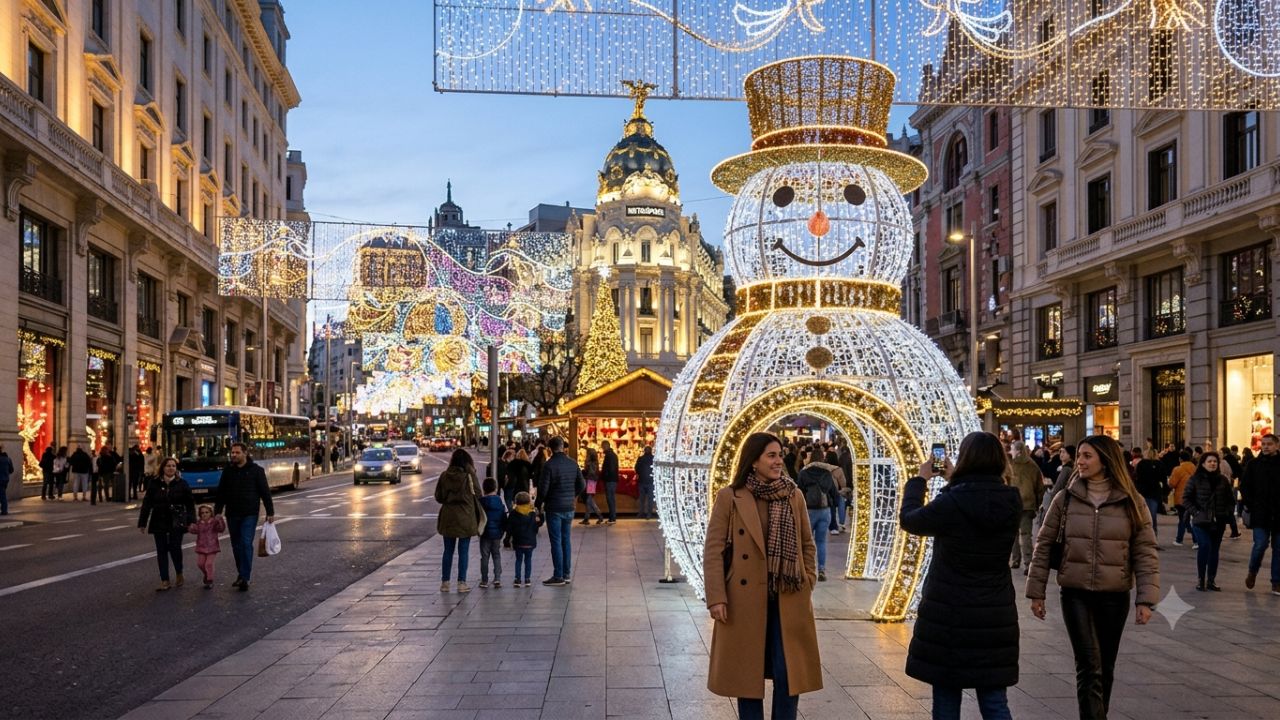
Madrid Unveils 14 Million Christmas Lights, Giant Walk-Through Snowman, and 250 Urban Illuminations Across 21 Districts for 2026–2027 Season

Spain Allocates €42 Million to Rural and Experiential Tourism as Inbound Arrivals from Switzerland, Poland, and Belgium Expand