France and European Source Markets Drive Tunisia Tourism Receipts to $2.38 Billion as Long-Haul Corridors Expand in 2026

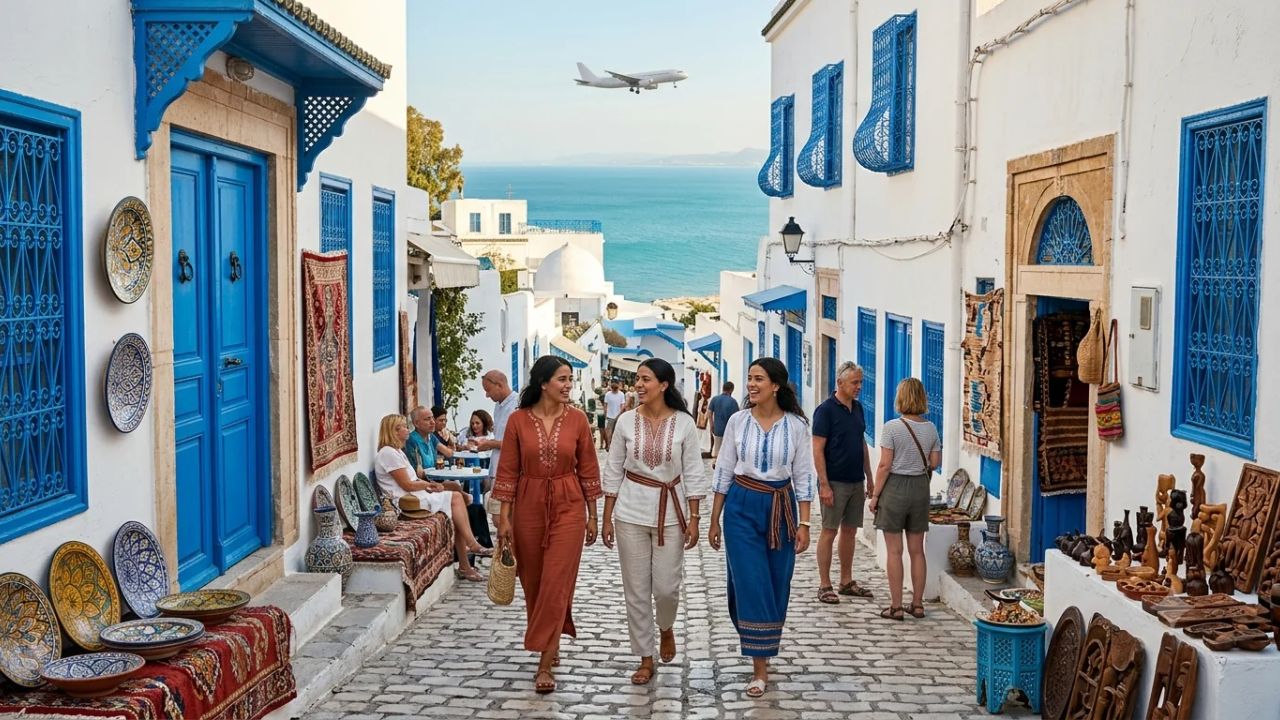
Tunisia’s hospitality and tourism economy generated 7.152 billion Tunisian dinars (approximately 2.384 billion US dollars) in national tourism receipts through the end of October 2026, marking a 3.4 percent increase over the first ten months of 2025 and an extraordinary 25.1 percent expansion compared to the pre-pandemic baseline of 2019. Revealed during a joint parliamentary session reviewing the 2027 state budget, the financial milestone reflects robust demand from traditional European source markets led by France, complemented by an 83 percent revenue surge from Russia, measurable gains from China and Japan, and strong domestic hotel occupancy. With total international arrivals surpassing nine million visitors, the North African nation is executing a disciplined transition from volume-driven metrics to high-yield economic profitability ahead of its tenure as the Capital of Arab Tourism in 2027.
The performance presented before parliament highlights how strategic source-market diversification and targeted aviation capacity can transform a destination's commercial trajectory. European travelers served as the foundational bedrock of the financial expansion, generating 64.8 percent of all inbound tourism revenues. Concurrently, aggressive expansion into Eastern Europe and Asia has broadened the geographic scope of visitor spending, distributing capital beyond conventional seaside resort clusters into inland archaeological reserves, Sahara expeditions, and artisanal manufacturing villages.
========================================================================================
TUNISIA INBOUND TOURISM FINANCIAL PERFORMANCE SCORECARD: 2019–2026
========================================================================================
Financial & Operational Metric       10-Month 2026 Performance        Comparative Baseline Trend
----------------------------------------------------------------------------------------
Total National Tourism Receipts      TND 7.152 Billion ($2.384B USD)   +3.4% vs. Jan–Oct 2025 (TND 6.917B)
Growth Relative to Pre-Pandemic      +25.1% Expansion vs. 2019        Structural leap over 2019 (TND 5.717B)
European Revenue Market Share        64.8% of Total Tourism Receipts  Anchor driver of national foreign exchange
Primary Individual Source Market     France                           Dominant generator of arrivals and spend
High-Growth Eastern European Market  Russia (+83% Revenue Surge)       Weekly flights expanded from 6 to 13
East Asian Cultural Inbound Receipts Japan & China (>TND 40M Each)    High-spending archaeological circuits
Cumulative International Arrivals    9.0+ Million International GuestsFirmly on track for ~12.0M annual target
Domestic Hospitality Participation   2.0+ Million Resident Guests     35.7% of all hotel guests nationwide
Approved Tourism Capital Investment  TND 1.206 Billion (+18% YoY)     Private and institutional capital inflow
Foreign Direct Investment (FDI)      TND 149 Million (2025 cycle)     5-fold increase over TND 30M in 2024
========================================================================================
Official Source: Ministry of Tourism Budget Presentation, Joint Parliamentary Session (November 2026).
========================================================================================
Macroeconomic Breakthrough: Analyzing the TND 7.15 Billion Milestone
The financial results reported for the first ten months of 2026 underscore the durability of Tunisia's tourism recovery. The accumulation of TND 7.152 billion in foreign exchange receipts reinforces the sector’s standing as one of the state's most critical sources of hard currency, essential for stabilizing foreign exchange reserves, servicing sovereign external commitments, and funding critical commodity imports.
========================================================================================
HISTORICAL TOURISM RECEIPTS TRAJECTORY: 10-MONTH PERIODS (TND BILLIONS)
========================================================================================
Year & Evaluation Window             Nominal Receipts (TND)            Variance Analysis
----------------------------------------------------------------------------------------
Jan–Oct 2019 (Pre-Pandemic Peak)     5.717 Billion                    Historical benchmark for Mediterranean traffic
Jan–Oct 2024 (Recovery Phase)        6.241 Billion                    Post-pandemic normalization
Jan–Oct 2025 (Record Year)           6.917 Billion                    Previous record for arrivals and receipts
Jan–Oct 2026 (Current Milestone)     7.152 Billion                    +3.4% YoY; +25.1% vs. 2019 baseline
----------------------------------------------------------------------------------------
US Dollar Equivalent (2026)          $2.384 Billion USD               Calculated at prevailing official exchange rate
========================================================================================
When evaluated in US dollar terms, the $2.384 billion total illustrates sustained pricing power across Mediterranean hospitality assets. While earlier phases of Tunisia's recovery were characterized by aggressive discounting to rebuild occupancy, the 2026 data reflects improved yield management. Hotel operators, tour companies, and transport providers successfully negotiated higher contract rates across European distribution channels, insulating operating margins against domestic inflation, energy costs, and food supply adjustments.
In addition, presenting these figures during parliamentary budget hearings underscores the government's integration of tourism policy within the overarching 2027 macroeconomic framework. Rather than viewing tourism merely as an isolated leisure activity, legislative committees examined its direct contribution to the national balance of payments, municipal tax revenues, and regional employment distribution.
European Powerhouses Anchor the Financial Surge: France, Germany, Italy, Poland, and the UK
The stability of Tunisia’s tourism receipts continues to depend on European travelers, who contributed 64.8 percent of all tourism revenues recorded between January and October 2026. Proximity, extensive charter flight networks, well-established bilateral agreements, and historical cultural familiarity combine to make Western and Central Europe the foundation of the country's travel economy.
========================================================================================
EUROPEAN SOURCE MARKET PERFORMANCE & STRATEGIC PROFILES
========================================================================================
Market Origin        Primary Geographic Focus          Commercial Contribution & Growth Driver
----------------------------------------------------------------------------------------
France               Hammamet, Djerba, Tunis, Sousse   #1 Source market; cultural ties; high ADR
Germany              Djerba, Sousse, Port El Kantaoui  Extended resort stays; high cultural spend
Poland               Enfidha, Monastir, Hammamet       Fastest-growing Central European charter market
Italy                Tunis, Cap Bon, Tabarka           Resilient maritime ferry & short-hop air access
United Kingdom       Enfidha, Sousse, Yasmine Hammamet Capacity rebound via low-cost carrier route additions
========================================================================================
Aggregate Contribution: European travelers generated 64.8% of total national tourism receipts.
========================================================================================
France: The Uncontested Market Engine
France retained its position as Tunisia’s single most influential tourism source market. French holidaymakers generate steady, year-round arrivals, avoiding the sharp winter troughs seen in other European markets. French travelers patronize luxury coastal hotels in Hammamet and Djerba, while also driving strong occupancy in independent boutique properties, historic guesthouses (dar accommodations) across the Medina of Tunis, and cultural lodgings in Sidi Bou Said.
The French market also generates substantial retail and culinary spend. Visitors from Paris, Lyon, and Marseille actively spend in independent restaurants, artisan galleries, and cultural heritage sites, delivering higher per-capita economic benefits than all-inclusive beach resort packages alone.
Germany, Poland, Italy, and the United Kingdom
Beyond France, several key European countries provided critical revenue momentum:
- Germany: German travelers have long anchored Tunisia’s Mediterranean resort circuit. German visitors typically record longer average stays (frequently exceeding ten to twelve nights) and exhibit strong participation in guided archaeological excursions to El Jem, Kairouan, and Carthage, boosting average spending per guest.
- Poland: Poland has emerged as one of Central Europe’s fastest-growing outbound markets for North Africa. Expanding charter flight programs direct from Warsaw, Katowice, and Kraków into Enfidha-Hammamet International Airport bolstered bed-night volumes across the coastal governorates of Nabeul and Sousse.
- Italy: Benefiting from geographic proximity, Italy sustained consistent visitor traffic. Regular scheduled maritime passenger ferries linking Genoa, Civitavecchia, and Palermo with the Port of La Goulette in Tunis provided convenient access for self-drive and group tourists, while scheduled flights sustained business and short-break leisure demand.
- United Kingdom: The British market registered a notable upswing, driven by aggressive capacity deployment by leading low-cost and leisure carriers, including easyJet, Jet2, and TUI. Direct flight additions connecting regional UK airports (Manchester, Birmingham, London Gatwick) with Enfidha and Monastir significantly expanded seat capacity into Tunisian coastal resorts.
Eastern Europe and East Asia: Surging Flight Corridors and Cultural Diversification
While Western Europe provided financial volume and stability, the most dramatic growth rates originated in Eastern Europe and East Asia. These emerging corridors demonstrate how active air route development directly unlocks pent-up international leisure demand.
========================================================================================
EMERGING & HIGH-GROWTH SOURCE MARKET EXPANSION MATRIX
========================================================================================
Market Origin        Growth Metric                     Operational Catalyst & Strategic Target
----------------------------------------------------------------------------------------
Russia               +83% YoY Revenue Expansion        Weekly direct flights expanded from 6 to 13;
                                                       strategic national target of 600,000 visitors.
Belarus              Corridor Re-establishment         Direct air links re-established to seaside hubs.
China                >TND 40 Million Receipts          Heritage, archaeological circuits, and desert tours.
Japan                >TND 40 Million Receipts          High-spending cultural expeditions & UNESCO sites.
========================================================================================
The Russian and Belarusian Rebound
Revenues derived from the Russian travel market surged by more than 83 percent year-on-year across the first ten months of 2026. This rapid acceleration was enabled by targeted air connectivity adjustments: weekly direct commercial flights between Russian metropolitan centers and Tunisian airports more than doubled, increasing from six to thirteen frequencies per week.
Tunisian aviation and tourism authorities have leveraged this momentum to establish an ambitious target: attracting 600,000 Russian travelers annually through expanded charter authorizations, bilateral air service agreements, and extended flight schedules. This effort is complemented by the re-establishment of direct air corridors connecting Belarus with Tunisian coastal gateways, providing alternative Mediterranean holiday options for Eastern European travelers.
East Asian Cultural Inflows: High-Yield Diversification
In East Asia, travelers from China and Japan made a distinct financial impression on the sector balance sheet. Both the Japanese and Chinese source markets individually surpassed TND 40 million in direct tourism receipts through October 2026.
Although smaller in raw passenger numbers than European sun-seeking vacationers, East Asian tourists represent exceptionally high-yield visitors. Travelers from Tokyo, Osaka, Beijing, and Shanghai rarely purchase standard beach resort packages. Instead, their itineraries focus on archaeological exploration, cultural heritage education, and desert landscapes:
- Touring UNESCO World Heritage Roman ruins at Dougga, Bulla Regia, and the Amphitheatre of El Jem.
- Exploring traditional Troglodyte architecture in Matmata and ancient Berber granaries (ksour) across Tataouine.
- Traversing the Chott el Djerid salt flats and date palm oases in Tozeur.
- Purchasing high-grade handcrafted ceramics, woven rugs, and essential oils.
This behavioral pattern directly supports national strategy by generating revenue in non-coastal governorates, mitigating regional economic disparities, and smoothing seasonal drop-offs during the winter months.
Arrival Milestones, Profitability Shifts, and Domestic Tourism Strength
Behind the $2.384 billion revenue milestone lies an extraordinary volume of traveler movement. By the close of October 2026, total international arrivals surpassed nine million visitors. This performance confirms that the country is firmly on pace to achieve its full-year objective of approximately twelve million international arrivals, easily surpassing the previous all-time benchmark of eleven million-plus recorded across 2025.
========================================================================================
INTERNATIONAL ARRIVALS & DOMESTIC HOSPITALITY MATRIX (JAN–OCT 2026)
========================================================================================
Performance Category                 Observed Metric                   Strategic Evaluation
----------------------------------------------------------------------------------------
International Tourist Arrivals       Surpassed 9.0 Million Guests      Tracking toward ~12.0M annual target
Previous Year Comparison Baseline    11.0+ Million (Full Year 2025)    Current trajectory sets new historical high
Strategic Paradigm Shift             Focus on Per-Guest Yield          Prioritizing ADR & receipts over headcounts
Domestic Hotel Guests                Over 2.0 Million Tunisian Guests  Accounts for 35.7% of all hotel guests
Domestic Bed-Night Function          Seasonal Shock Absorption         Sustains cash flows during shoulder periods
========================================================================================
Importantly, parliamentary discussions emphasized that national tourism planning has moved beyond the single-minded pursuit of arrival headcounts. While gross visitor volume remains an important indicator of market vitality, government policy now focuses on sector profitability, length of stay, and per-capita spending. By targeting higher-spending traveler segments and encouraging multi-destination domestic travel, authorities aim to increase the economic yield generated by each arrival.
The Stabilizing Role of Domestic Tourism
While international travelers generated the bulk of foreign currency receipts, domestic tourism served as the vital operational backbone of the hospitality industry. Across the first ten months of 2026, more than two million Tunisian residents stayed in domestic hotels, representing 35.7 percent of all registered hotel guests nationwide.
Internal travel serves an essential stabilizing function. During shoulder seasons, school holidays, and religious festivals, domestic travelers maintain steady occupancy levels across family resorts in Nabeul, Sousse, Mahdia, and Monastir. This consistent domestic patronage provides independent hotel owners with predictable operational cash flows, preventing off-season staff retrenchments and protecting hospitality employment.
The Broader Macroeconomic Footprint: Tourism Satellite Account Breakdown
To understand how visitor expenditure permeates the wider national economy, the Ministry of Tourism presented updated metrics from the comprehensive 2025 Tourism Satellite Account (TSA) cycle. The TSA framework measures direct and indirect economic linkages across interconnected industrial sectors, providing an objective evaluation of travel's structural footprint.
========================================================================================
TUNISIA TOURISM SATELLITE ACCOUNT (TSA) CONSUMPTION MATRIX (2025 CYCLE)
========================================================================================
Economic Consumption Dimension       Value (TND)                       Component Share & Sector Breakdown
----------------------------------------------------------------------------------------
Total Internal Tourism Consumption   17.47 Billion TND                 Aggregate national tourism spend
Historical Trend Progression         Up from 16.1B (2024), 14.6B (2023)+19.6% Total growth over two-year cycle
Non-Resident (Inbound) Expenditure   12.80 Billion TND                 73.3% of total internal consumption
Domestic Tourism Expenditure         4.70 Billion TND                  26.7% of total internal consumption
----------------------------------------------------------------------------------------
Inbound Spending: Hotel Lodging      5.15 Billion TND                  40.2% of non-resident expenditure
Inbound Spending: National Aviation  2.58 Billion TND                  20.2% (Tunisair & domestic air carriers)
Inbound Spending: Retail & Artisans  2.48 Billion TND                  19.4% (Handicrafts, apparel, shopping)
Inbound Spending: External Dining    1.64 Billion TND                  12.8% (Independent restaurants & cafes)
Inbound Spending: Other Services     0.95 Billion TND                  7.4% (Ground transport, leisure, tours)
========================================================================================
Data Source: Official National Tourism Satellite Account Analysis (Presented November 2026).
========================================================================================
The data confirms that total internal tourism consumption reached TND 17.47 billion during the 2025 cycle, climbing steadily from TND 16.1 billion in 2024 and TND 14.6 billion in 2023. Non-resident international visitors accounted for TND 12.80 billion (73.3 percent), while resident domestic travelers generated TND 4.70 billion (26.7 percent).
The distribution of the TND 12.80 billion in international expenditure illustrates how tourism capital flows through the economy:
- Commercial Accommodation: Captured TND 5.15 billion (40.2 percent), underscoring the lodging industry's role as the primary financial beneficiary.
- National Passenger Transport: Generated TND 2.58 billion (20.2 percent), directly benefiting national carrier Tunisair, domestic operators, and airport transit infrastructure.
- Retail Goods and Artisan Products: Absorbed TND 2.48 billion (19.4 percent), injecting cash directly into regional markets, souvenir retailers, and independent artisans.
- External Dining and Gastronomy: Produced TND 1.64 billion (12.8 percent), supporting local food producers, agriculture, fisheries, and private restaurant operators outside all-inclusive resort gates.
Capital Investment, Quality Standards, and Infrastructure Revitalization
Sustained demand and rising revenues have sparked substantial renewed interest from commercial investors and international hospitality brands. Approved tourism investments increased by 18 percent year-on-year to reach TND 1.206 billion by the end of October 2026.
========================================================================================
CAPITAL INVESTMENT, ASSET REVITALIZATION, AND QUALITY AUDIT BENCHMARKS
========================================================================================
Performance Metric                   Recorded Value                    Strategic Industry Impact
----------------------------------------------------------------------------------------
Approved Capital Investments         TND 1.206 Billion (+18% YoY)      Hotel renovations & new capacity
Foreign Direct Investment (FDI)      TND 149 Million (2025)            5-fold surge over TND 30M in 2024
Regularized Inactive Establishments  28 Properties Restored            Legal, financial, & tax regularization
Successfully Reopened Properties     17 Closed Hotels Reopened         Restored operational rooms since 2024
National Regulatory Inspections      5,475 Audits Conducted            Enforcing strict hygiene & service standards
Audited Operating Facilities         Nearly 3,000 Facilities Visited   Comprehensive coverage of hotels & eateries
========================================================================================
A prominent indicator of growing international confidence is the dramatic expansion of Foreign Direct Investment (FDI) into the hospitality sector. FDI inflows experienced a fivefold surge, jumping from TND 30 million in 2024 to approximately TND 149 million in 2025. Institutional capital from the Gulf Cooperation Council (GCC), France, and international hotel groups has financed luxury coastal refurbishments, desert ecotourism retreats, and wellness thalassotherapy centers.
Infrastructure Regularization and Quality Audits
To expand accommodation capacity without unchecked new construction, regulatory authorities executed an aggressive program to rehabilitate distressed hospitality assets. Since 2024, specialized inter-ministerial taskforces regularized the legal and financial status of 28 previously closed tourism properties, allowing 17 shuttered hotels to successfully reopen and welcome guests. This initiative restored thousands of dormant bed-places in established resort zones, revitalizing local commercial districts.
Simultaneously, the National Tourism Office intensified quality and safety enforcement. Specially trained inspection teams conducted 5,475 unannounced compliance audits across nearly 3,000 accommodation, dining, and leisure facilities. These inspections rigorously enforced environmental sustainability, food safety, water treatment, fire protection, and service quality benchmarks, protecting the destination's international reputation.
Cultural Heritage, Artisans, and the 2027 Arab Tourism Capital Roadmap
A vital priority within Tunisia’s 2027 strategic roadmap is elevating the traditional handicrafts sector and integrating cultural heritage directly into international travel routes.
========================================================================================
TRADITIONAL HANDICRAFTS & CULTURAL ASSETS: ECONOMIC INDICATORS
========================================================================================
Artisanal Sector Dimension           Economic Indicator                Strategic Policy Objective
----------------------------------------------------------------------------------------
Contribution to National GDP         Roughly 4.0% of National GDP      Integral pillar of non-agrarian rural economy
Contribution to Total Exports        2.0% of Total National Exports    Key driver of non-energy exports
Controlled Export Receipts           TND 160 Million (2025 Cycle)      Certified high-grade artisanal shipments
Regional Products Under Legal Shield 24 Geographic Indications (GI)    Pottery (Guellala), Carpets (Kairouan), Ceramics
Cruise Shore Excursion Integration   La Goulette & Regional Harbors    Direct passenger transfers to artisan centers
2027 Capital of Arab Tourism Status  Nationwide Strategic Designation  Promoting cultural, heritage, & Saharan travel
========================================================================================
Handicrafts generate roughly 4 percent of Tunisia’s gross domestic product and account for 2 percent of total national exports. In 2025, certified artisan businesses generated TND 160 million in controlled export revenues.
To safeguard intellectual property, preserve ancestral craft methods, and guarantee product authenticity for international buyers, authorities are instituting official Geographical Indication (GI) legal protections for 24 iconic regional artisanal products. These include the famed hand-thrown pottery of Guellala on Djerba, the terracotta ceramics of Nabeul, the high-density knotted wool carpets of Kairouan, and traditional handwoven textiles from the Sahel region.
At the same time, tourism planners are actively connecting traditional artisan villages, medina cooperative workshops, and southern craft guilds directly into international Mediterranean cruise itineraries calling at the Port of La Goulette. Shore excursion programs now transport arriving cruise guests directly to certified artisan workshops, providing artisans with immediate retail income and shielding travelers from counterfeit imported goods.
The 2027 Capital of Arab Tourism Initiative
Looking ahead to 2027, Tunisia will serve as the official Capital of Arab Tourism, a prestigious designation conferred by the Arab Tourism Organization. The government’s 2027 state budget allocates dedicated financial resources toward marketing Tunisia across the Arabian Gulf, the Levant, and North Africa.
The initiative aims to reposition the country as a multi-dimensional cultural, culinary, wellness, and heritage destination, moving far beyond seasonal summer beach tourism. Campaigns will spotlight winter thalassotherapy packages, golf tournaments along the Mediterranean coastline, Saharan festival circuits in Douz and Tozeur, and historic architectural preservation across UNESCO-listed medinas.
Practical Traveler Advisory: Planning a Journey to Tunisia
For international visitors, travel planners, and tour operators organizing itineraries to Tunisia, understanding entry regulations, financial logistics, and regional transportation ensures an efficient and rewarding experience.
========================================================================================
PRACTICAL TRAVEL GUIDELINES FOR INTERNATIONAL VISITORS TO TUNISIA
========================================================================================
Planning Domain            Official Regulation / Parameter   Operational Traveler Guidance
----------------------------------------------------------------------------------------
Visa Formalities           Visa-free for 90 days for EU,     Passport must be valid for at least 3 to 6
                           UK, US, Canada, Japan, etc.       months beyond intended departure date.
----------------------------------------------------------------------------------------
Currency & Financial Rules Strict closed-currency laws;      Import/export of TND is strictly prohibited;
                           Tunisian Dinar (TND) non-convertible retain exchange receipts to reconvert at airport.
----------------------------------------------------------------------------------------
Aviation Gateways          Tunis-Carthage (TUN), Enfidha (NBE),Enfidha & Monastir serve central beach resorts;
                           Monastir (MIR), Djerba-Zarzis (DJE)Djerba serves southern & desert circuits.
----------------------------------------------------------------------------------------
Domestic Ground Transit    Louage (shared intercity taxis);   Louages provide rapid, low-cost intercity transit;
                           SNCFT passenger rail; car rental  coastal toll motorways (A1, A3, A4) are well-maintained.
----------------------------------------------------------------------------------------
Optimal Travel Seasons     Coastal Resorts: May to October;   Spring and autumn provide optimal weather
                           Sahara & Heritage: Oct to April    for desert touring and archaeological exploration.
========================================================================================
Navigating Passport, Visa, and Currency Regulations
Citizens of the European Union, the United Kingdom, the United States, Canada, Japan, and several other nationalities can enter Tunisia visa-free for tourism stays of up to 90 days. Passports must remain valid for a minimum of three to six months beyond the planned departure date.
Travelers must pay careful attention to Tunisia's strict currency control laws. The Tunisian Dinar (TND) is a closed, non-convertible currency, meaning it cannot be imported, exported, or purchased outside national borders. Travelers should carry major international currencies (Euros, US Dollars, British Pounds) or utilize international ATM cards to withdraw Dinars upon arrival.
It is vital to retain all bank ATM slips and official exchange receipts throughout the journey. Travelers wishing to reconvert unspent Tunisian Dinars back into foreign currency before flying home must present their original exchange receipts at airport banking counters prior to clearing passport control.
Transportation and Regional Logistics
Tunisia features an established multimodal transportation network:
- Aviation Gateways: Tunis-Carthage International Airport (TUN) serves the northern capital, business travelers, and heritage sites. Enfidha-Hammamet International (NBE) and Monastir Habib Bourguiba International (MIR) handle the vast majority of seasonal European charter traffic for Hammamet and Sousse. Djerba-Zarzis International (DJE) anchors the southern resort and desert exploration corridor.
- Intercity Transit: For independent travelers, the shared minibus system (louage) provides affordable, frequent transportation between major cities and regional towns. The national railway operator (SNCFT) operates comfortable air-conditioned passenger train services connecting Tunis with Sousse, Sfax, Gabès, and Bizerte.
- Road Infrastructure: Tunisia’s modern toll motorway network—including the A1 (Tunis to Sfax and Gabès), the A3 (Tunis to Béja), and the A4 (Tunis to Bizerte)—enables straightforward self-drive exploration.
Why This Matters (Information Gain): Strategic Blueprint for Destination Maturity
Tunisia’s 2026 performance offers important lessons for the global travel and hospitality industry, demonstrating how an established destination can successfully modernize its commercial model:
========================================================================================
STRATEGIC TAKEAWAYS: THE MODERNIZATION OF MEDITERRANEAN TOURISM
========================================================================================
Conventional Destination Model       Modernized Tunisian Strategic Model
----------------------------------------------------------------------------------------
Single-source market reliance.       Diversified portfolio: Western Europe, Eastern Europe, & East Asia.
Volume-at-all-costs metrics.         Prioritizes Satellite Account yield, ADR, and per-capita spend.
Neglects domestic travelers.         Elevates domestic tourism (35.7% of guests) as a seasonal stabilizer.
Concentrates spend at coastal gates. Integrates UNESCO sites, Saharan circuits, and artisan villages.
Unregulated inventory expansion.     Regularizes closed assets (28 properties) and conducts 5,400+ quality audits.
========================================================================================
First, Tunisia has illustrated the power of balanced market diversification. By pairing dependable, high-volume European source markets led by France with surging Eastern European direct air corridors and high-yield East Asian cultural travelers, the country has built resilience against economic contractions in any single source country.
Second, the state’s deliberate focus on macroeconomic yield through the Tourism Satellite Account framework marks a critical evolution. Moving beyond raw arrival counts allows planners to evaluate how visitor dollars flow into airlines, restaurants, retail shops, and craft cooperatives, ensuring that tourism acts as a true catalyst for broad-based national economic development.
Finally, by coupling aggressive quality audits and hotel asset regularization with robust legal protections for traditional handicrafts, Tunisia is elevating its product standards. As the country prepares to take center stage as the Capital of Arab Tourism in 2027, its $2.384 billion tourism milestone stands not merely as a temporary post-pandemic high, but as the proven foundation of a resilient, modern Mediterranean travel economy.
Related Travel Guides
- US and Canada Drive South Africa Overseas Air Travel as September 2026 Arrivals Reveal Critical Gateway Hub Dynamics
- Puerto Rico Showcases Cultural Heritage and Eco-Tourism as 75th Miss Universe Celebrations Open Across the Island
- Wales Elevates Outdoor Travel and Wild Landscapes: Complete Guide to Twelve Distinctive Destinations Across Cymru
- Vietnam Airlines Expands India Footprint with Daily Hanoi Flights from Delhi and Bengaluru Starting December 2026
This article is for informational purposes. Flight routes, passenger regulations, visa rules, and transit advisories are subject to change by airlines and aviation authorities. Readers are advised to verify schedules and travel documentation with relevant carriers and border agencies before departure.
Related Stories

Tunisia Welcomes Nine Million Visitors as Tourism Receipts Reach 7.15 Billion Dinars: Mediterranean Expansion and 2030 Strategic Roadmap

European Winter Travel Surge as 76% Plan Seasonal Getaways Across France, Spain, and Italy