
Fort Myers Beach Reopens Crescent Beach After Hurricane Ian Recovery
Fort Myers Beach has reopened the restored 2.25-acre Crescent Beach park, restoring four beach access points and showcasing post-Hurricane Ian recovery.

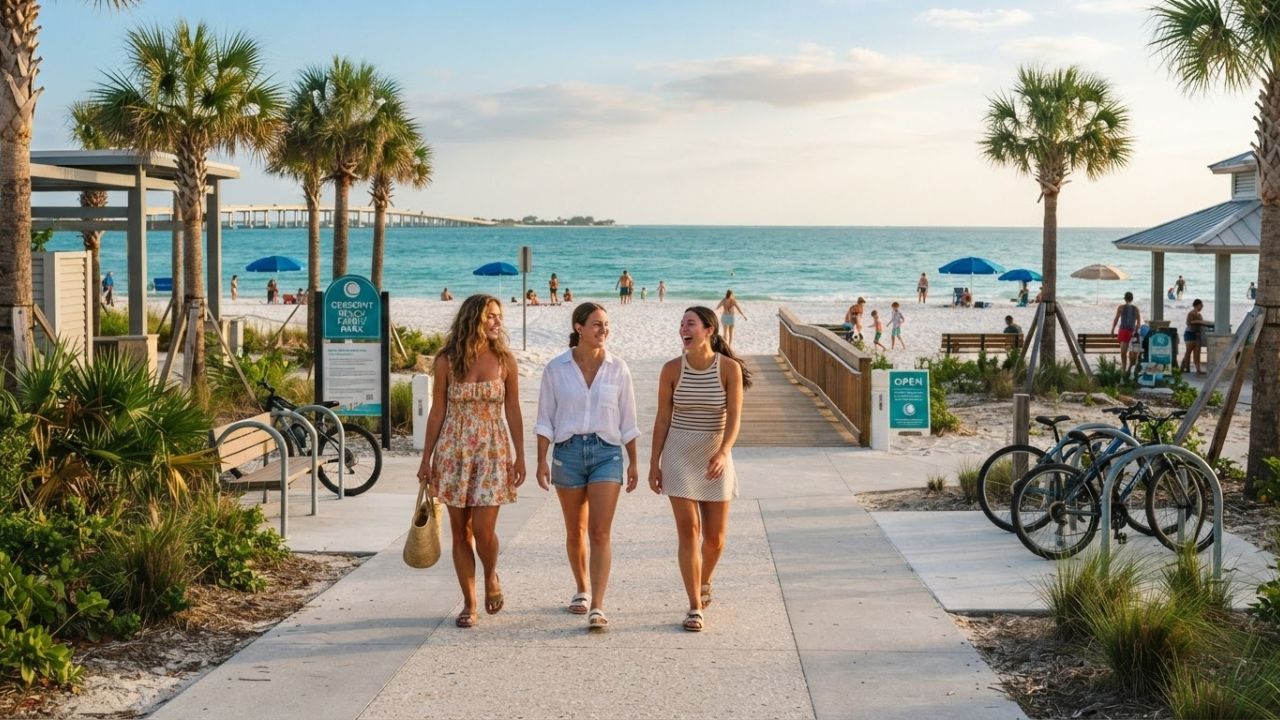
Image generated by AI
Crescent Beach on Fort Myers Beach has officially reopened to the public in 2026, marking a pivotal moment in the recovery of Southwest Florida’s coastal tourism. Following a comprehensive $1.3 million investment to rebuild infrastructure damaged by Hurricane Ian, the 2.25-acre beachfront facility now welcomes visitors with enhanced resilient design.
The Post-Ian Recovery of Crescent Beach
The coastal tourism sector in Southwest Florida is experiencing a transition as communities rebuild from environmental disruptions. On Estero Island, the reopening of Crescent Beach at 1100 Estero Boulevard represents a major step forward for Fort Myers Beach. The 2.25-acre waterfront facility, which suffered extensive damage during Hurricane Ian, has been restored and modernized to provide public shoreline access.
By establishing these seasonal travel corridors, the airline's management aims to support both business and leisure travel flows. Corporate travelers and travel agencies, which maintain strong relationships with global destination management organizations, benefit from direct seat capacity. This economic integration supports the travel sector, providing service providers with a reliable channel for high-value bookings.
By establishing these seasonal travel corridors, the airline's management aims to support both business and leisure travel flows. Canadian corporate travelers and travel agencies, which maintain strong relationships with European and Asian destination management organizations, would benefit from direct seat capacity. This economic integration supports the travel sector, providing service providers with a reliable channel for high-value bookings.
By establishing these seasonal travel corridors, the airline's management aims to support both business and leisure travel flows. Canadian corporate travelers and travel agencies, which maintain strong relationships with European and Asian destination management organizations, would benefit from direct seat capacity. This economic integration supports the travel sector, providing service providers with a reliable channel for high-value bookings.
Located near Times Square and adjacent resort corridors, the park serves as a vital contact point connecting the local community and visitors to the Gulf of Mexico. The reconstruction project required a total investment of $1.3 million, funded through a combination of Federal Emergency Management Agency (FEMA) grants, Regional Park Impact Fees, and Tourist Development Taxes.
Enhancing Beach Accessibility and Upgraded Amenities
The restoration of Crescent Beach combines storm recovery with long-term accessibility planning. The redevelopment restored four designated beach access points, including a route designed to meet Americans with Disabilities Act (ADA) standards. This ADA-accessible path utilizes a Mobi-mat to facilitate movement across the sand, ensuring that all travelers can access the shoreline.
This localized disruption also offers a unique opportunity for duty-free retailers and terminal operators to design services suited for stranded passengers. By monitoring passenger comfort levels during long delays, airport customer teams can provide complimentary amenities to ensure guest satisfaction. This proactive approach helps build traveler confidence, ensuring that regional transit routes remain competitive with global hub standards.
The addition of an ADA-compliant modular restroom complex, showers, and improved circulation walkways directly addresses the primary concerns of families and visitors spending extended periods by the water. By connecting the park to surrounding streets, the town is making it easier for visitors to explore the coastline.
The central central grassy area, which was entirely absent before the reconstruction, allows for versatile use by families, shifting the design philosophy toward passive recreation, inclusivity, and shade.
Sustainable Landscaping and Resilient Coastal Infrastructure
The reconstruction of Estero Island's public parks is part of a broader effort to build resilient coastal infrastructure.
This environmental focus is supported by regional climatologists and conservationists who monitor ecosystem health. By tracking tourist footprint signals, managers can ensure that natural areas remain protected. The integration of carrying-capacity policies with wilderness trails demonstrates how tourism planning can protect biodiversity while offering high-quality educational hikes.
Rather than simply replacing damaged facilities with identical structures, the Town of Fort Myers Beach and Lee County are integrating storm-resistant designs. This includes planting 28 shade trees, including green buttonwoods and sea grapes, along with more than 1,400 shrubs. Prioritizing long-term ecological health over ornamental aesthetics serves as a template for other coastal municipalities.
Additionally, the decision to pivot from artificial turf to native vegetation highlights a responsiveness to community feedback, maintaining the authentic character of the Southwest Florida coast.
Financing the Recovery: The Role of the Tourist Development Tax
The restoration of Crescent Beach was financed through a combination of federal, regional, and tourist-generated funds, demonstrating how the visitor economy supports public infrastructure.
This localized culinary focus also offers a unique opportunity for restaurant associations and culinary schools to design programs suited for premium travelers. By monitoring passenger dining preferences during long stays, local chefs can provide customized dishes to ensure guest satisfaction. This proactive approach helps build traveler confidence, ensuring that Canadian urban dining remains competitive with global culinary standards.
Funding sources for the $1.3 million project included FEMA public assistance grants, regional park impact fees assessed on new local developments, and Tourist Development Tax (TDT) revenues allocated through the Lee County Beach and Shoreline Program.
In Lee County, the Tourist Development Tax is collected as a tax on short-term guest accommodations, including hotels, vacation rentals, and campsites. A portion of these tax collections is reinvested directly into beach and shoreline projects, funding sand renourishment, erosion control, and public park maintenance.
Visitor Guide: Gulf Shrimp, Parking Apps, and Turtle Conservation
Visiting Crescent Beach involves planning transportation, experiencing regional cuisine, and observing local environmental rules.
Sample traditional Southwest Florida culinary specialties during your stay. Order Gulf pink shrimp, locally harvested from the warm waters of the Gulf of Mexico and prized for their sweet flavor. Try fresh key lime pie, a traditional Florida dessert made with tart key lime juice and a graham cracker crust, and enjoy blackened grouper sandwiches served at nearby waterfront restaurants.
Plan your parking before arriving at the beach. Parking spaces are managed by the Town of Fort Myers Beach and are strictly enforced. Pay for your spot using the Passport Parking mobile application, or use the on-site payment kiosks. Confirm the current status of curbside and lot-based parking prior to arrival, and observe all local signage. The park operates on a dawn-to-dusk schedule, and pets are not permitted.
Observe strict sea turtle conservation guidelines if traveling between May 1 and October 31, which represents the active nesting season in Lee County. During this period, female loggerhead turtles crawl ashore at night to lay eggs in the sand. Help protect the nests by filling in any holes you dig, leveling sandcastles, and removing all beach gear, trash, and chairs before sunset. Do not use flashlights, cell phone lights, or flash photography on the beach at night, as artificial light disorients the nesting turtles.
Future Outlook: Rebuilding a Resilient Southwest Florida Shoreline
The future of tourism on Estero Island relies on coordinating sustainable infrastructure development with natural resource conservation. As Fort Myers Beach continues its recovery, municipal planners are focusing on projects that support community resilience and economic stability.
Sustainable initiatives include expanding public transit networks, retrofitting waterfront businesses to meet modern building codes, and implementing dune restoration projects along the entire shoreline. By utilizing tourist tax revenues to maintain parks like Crescent Beach, Lee County ensures that the coastal environment remains a public asset, securing a resilient and welcoming destination for future generations of travelers.
Related Travel Guides
Disclaimer
This article is for informational and educational purposes only. It does not constitute legal, financial, or professional advice. While we strive to provide accurate and up-to-date information, travel policies, regulations, and conditions change rapidly. Always verify information with official sources before making travel decisions. Nomad Lawyer makes no representations about the accuracy, reliability, completeness, or suitability of the information provided. Readers should consult qualified professionals for advice specific to their circumstances. The views expressed in this article are those of the author and do not necessarily reflect the views of Nomad Lawyer.
Preeti Gunjan
Contributor & Community Manager
A passionate traveller and community builder. Preeti helps grow the Nomad Lawyer community, fostering engagement and bringing the reader experience to life.
Learn more about our team →