China’s US$280 Billion Luxury Travel Surge Challenges US Global Dominance as Wealthy Tourists Look East

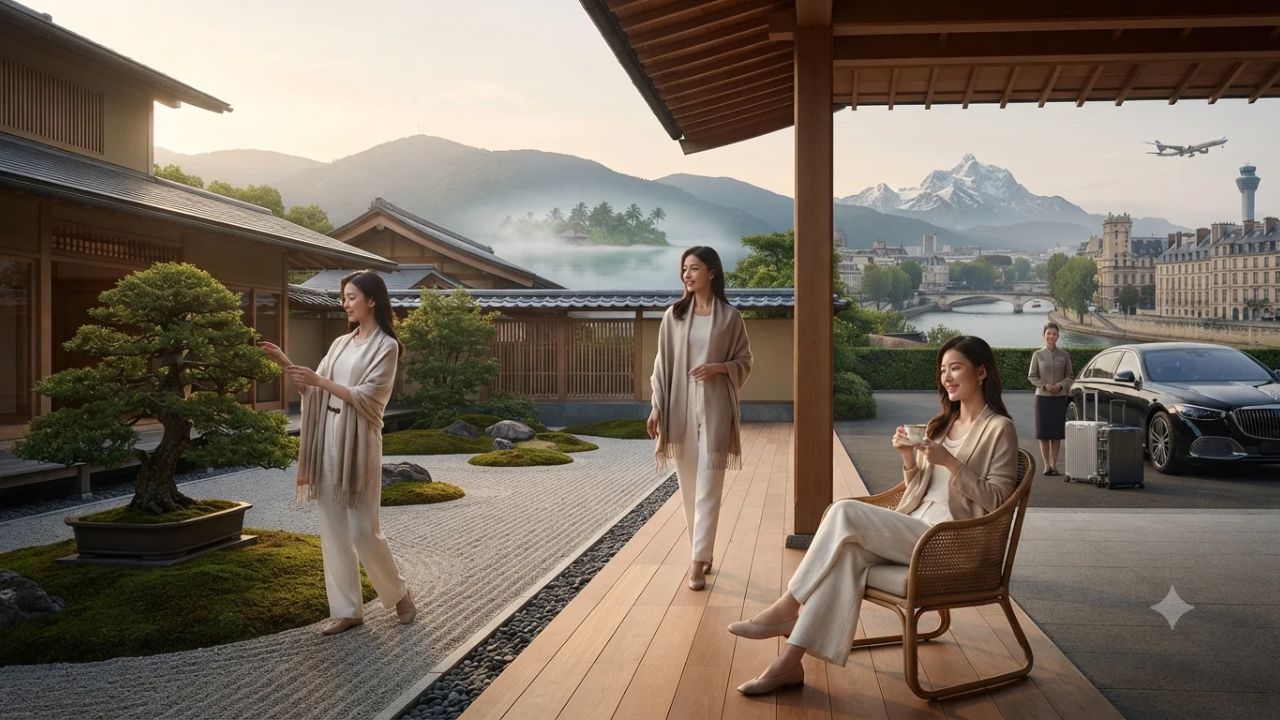
The global luxury travel landscape is undergoing an unprecedented structural realignment in late 2026, as outbound expenditure from the People's Republic of China surges by a projected 22.5% to approach US$280 billion according to official forecasts from the World Travel & Tourism Council (WTTC). This massive capital influx is challenging decades of American dominance across international high-end tourism, threatening to eclipse total outbound expenditure by United States travelers and fundamentally reshaping where the world’s wealthiest consumers allocate discretionary holiday budgets. However, this power play is defined by more than sheer liquidity: affluent Chinese travelers have executed a profound behavioral shift away from conspicuous luxury shopping toward immersive, privacy-centric experiential journeys. Spurred by survey findings from the Hurun Research Institute and Virtuoso’s global network, elite capital is flowing heavily into East Asia and boutique global sanctuaries, establishing Japan as the world’s most requested luxury destination, lifting private island retreats in the Maldives and Alpine lodges in Switzerland, while simultaneously positioning China itself as the top rising luxury travel destination for 2027.
While the United States continues to defend its historical crown as the largest individual national luxury travel market—anchored by ultra-premium domestic resort corridors in Hawaii, Aspen, Los Angeles, and New York that power North America’s 32.2% share of the global luxury travel economy—the rapid international dispersion of Chinese high-net-worth individuals (HNWIs) is redefining airline premium cabins, five-star hotel design, and bespoke destination marketing. According to Grand View Research, the global luxury travel market expanded to US$1.6 trillion in 2025 and is on track to cross US$3.0 trillion by 2033. Within this multi-trillion-dollar arena, the spending priorities of wealthy Chinese tourists have decoupled from traditional retail tours: data from the Hurun Chinese Luxury Consumer Survey 2026 reveals that shopping-focused vacations have plummeted to a marginal 3.8% share, while beach holidays (17%) and secluded luxury resorts (14%) command top priority. As European capitals, Alpine sanctuaries, and Asian destinations compete to capture this sophisticated wave of capital, the global tourism economy has entered a multipolar era where cultural authenticity and seclusion outweigh logo-driven consumption.
========================================================================================
GLOBAL LUXURY TRAVEL BENCHMARKS: UNITED STATES VS. CHINA (2025 – 2026)
========================================================================================
Macroeconomic & Behavioral Metric    United States Profile             China Profile / Trajectory
----------------------------------------------------------------------------------------
2026 Outbound Tourism Spend Forecast ~US$260 – US$275 Billion          Nearly US$280 Billion (+22.5% YoY)
Long-Term Travel Economy Projection  US$3.1 Trillion by 2035           US$3.5 Trillion by 2036 (WTTC)
National Luxury Market Status        #1 Largest Individual Country Mkt #1 Fastest Growing High-End Outbound
Global Regional Revenue Share (2025) North America: 32.2% Share        Asia-Pacific: Expanding Past 28%
Europe’s Regional Luxury Share (2025)Europe: 33.8% Share (Global Ldr)   Primary High-End Outbound Recipient
Preferred International Destination  Western Europe, Mexico, Caribbean Japan (#1 Hurun 2026 Survey)
Top Rising Luxury Destination (2027) National Park / Domestic Luxury   China (#1 Virtuoso Luxe Report)
Dominant Affluent Travel Motivator   Bespoke Wellness & Active Leisure Seclusion, Culture, Nature (Shop: 3.8%)
Average Luxury Booking Window        60 to 90 Days in Advance          30 to 45 Days (Rapid Digital Booking)
Preferred Hospitality Format         Boutique Heritage & Wilderness    Private Island Villas & Ryokans
========================================================================================
Sources: World Travel & Tourism Council (WTTC), Grand View Research, Hurun Research Institute, and Virtuoso 2027 Luxe Report.
========================================================================================
The US$280 Billion Outbound Wave: WTTC Forecasts and Economic Architecture
The projection by the World Travel & Tourism Council (WTTC) that Chinese outbound tourism spending will expand by 22.5% in 2026 to approach US$280 billion represents a watershed moment in modern aviation and hospitality economics. Prior to the 2020 border closures, China was already the world’s largest international tourism spender, contributing US$254.6 billion to global destinations in 2019. The post-pandemic recovery, initially hindered by flight capacity bottlenecks and passport renewal backlogs throughout 2023 and 2024, has completed its operational transition into an accelerated expansion cycle.
Significantly, the WTTC’s 2026 spending forecast indicates that China could officially surpass the United States in consolidated international tourism expenditure. While American outbound spending remains exceptionally robust—bolstered by a strong US Dollar that fueled record transatlantic departures to southern Europe in 2024 and 2025—the Chinese outbound engine is powered by a fundamentally different demographic scale and wealth accumulation dynamic.
========================================================================================
CHINA OUTBOUND TOURISM EXPENDITURE TRAJECTORY (2019 – 2036 PROJECTIONS)
========================================================================================
Calendar Year            Outbound Spend (USD)   Annual Growth Rate  Market Paradigm & Operating Context
----------------------------------------------------------------------------------------
2019 (Historical Peak)   $254.6 Billion         +8.5% YoY           Pre-pandemic peak; massive shopping tour groups
2020 (Pandemic Freeze)   $130.5 Billion         -48.7% YoY          International border controls and quarantine
2022 (Trough Phase)      $115.3 Billion         -11.6% YoY          Strict border management; domestic travel pivot
2023 (Initial Reopening) $196.5 Billion         +70.4% YoY          Border reopening; passport & visa backlog clearing
2024 (Regional Normal)   $228.0 Billion         +16.0% YoY          Aviation capacity restoration across Asia-Pacific
2025 (Verified Actual)   $228.6 Billion         +0.3% YoY           Consolidation; economic recalibration
2026 (WTTC Forecast)     Nearly $280.0 Billion  +22.5% YoY          Overtakes US; pivot to high-end experiential trips
2036 (Long-Term Horizon) US$3.5 Trillion        Sustained +7.2%     Consolidated domestic and international economy
========================================================================================
Sources: World Travel & Tourism Council (WTTC) Economic Impact Reports and United Nations Tourism (UNWTO) Statistics.
========================================================================================
Clarifying Outbound Totals vs. Pure Luxury Spend
Industry analysts emphasize an important distinction when evaluating the US$280 billion headline figure:
- Total Outbound Volume vs. Segmented Luxury: The US$280 billion projection encompasses all forms of cross-border traveler spending, including independent leisure, corporate business travel, family visits, educational study abroad, and cross-border medical trips.
- The Disproportionate Luxury Multiplier: While mass-market package travelers generate significant baseline volume, wealth distribution data from the Hurun Report demonstrates that the top 5% of Chinese travelers—consisting of high-net-worth individuals possessing investable assets exceeding US$1.5 million—account for more than 35% of total international travel expenditure.
- The US$3.5 Trillion Horizon: Looking beyond the immediate annual cycle, the WTTC projects that China’s total domestic and outbound travel economy will expand to an astounding US$3.5 trillion by 2036, cementing the country’s position as the primary economic engine of global commercial aviation and hospitality development.
The Global Luxury Travel Battlefield: US Resilience vs. Chinese Expansion
The competition between the United States and China takes place against the backdrop of an expanding global luxury travel sector. According to Grand View Research, the global luxury tourism market was valued at US$1.6 trillion in 2025 and is projected to expand at a compound annual growth rate (CAGR) of 8.2% to surpass US$3.0 trillion by 2033.
========================================================================================
GLOBAL LUXURY TRAVEL MARKET SHARE BY REGION (GRAND VIEW RESEARCH 2025)
========================================================================================
Geographical Region      Market Share (%)       Valuation (2025)    Primary Growth Engines & Anchors
----------------------------------------------------------------------------------------
Europe                   33.8% Regional Share   US$540.8 Billion    Historic luxury hotels, Alpine ski resorts,
                                                                    Mediterranean yachts, haute cuisine
North America            32.2% Regional Share   US$515.2 Billion    United States domestic market dominance,
                                                                    Hawaii, Aspen, luxury safari outposts
Asia-Pacific             24.6% Regional Share   US$393.6 Billion    Rapid wealth generation in China, Japan luxury
                                                                    expansion, Southeast Asian private retreats
Middle East & GCC        5.8% Regional Share    US$92.8 Billion     Ultra-luxury mega-projects (UAE, Saudi Red Sea)
Latin America & Africa   3.6% Regional Share    US$57.6 Billion     Eco-luxury safari reserves, private islands
========================================================================================
Consolidated Global Luxury Market (2025): US$1.60 Trillion | Forecast by 2033: US$3.00 Trillion
Source: Grand View Research Luxury Travel Market Size, Share & Trends Analysis Report 2025–2033.
========================================================================================
The United States: Defending the Domestic High-End Crown
Despite China’s dramatic outbound acceleration, the United States firmly retains its crown as the world’s largest individual national market for luxury travel revenue. Several structural factors secure the American market:
- Massive Domestic Wealth Concentration: The United States accounts for more than 38% of global millionaires and the highest concentration of ultra-high-net-worth individuals (UHNWIs). American luxury consumers spend heavily within domestic borders, driving average daily room rates (ADR) exceeding US$1,200 across iconic resorts in Maui, Aspen, Palm Beach, Napa Valley, and Manhattan.
- Outbound Purchasing Power: Supported by a persistently strong US Dollar, American outbound luxury travelers have set spending records across southern Europe, the Caribbean, and Africa, maintaining commanding market shares in five-star European hotels throughout Italy, France, and the United Kingdom.
- Aviation and Hotel Infrastructure: North American hotel chains—including Marriott International (The Ritz-Carlton, St. Regis, Luxury Collection), Hilton (Waldorf Astoria), and Hyatt (Park Hyatt)—control more than 60% of the world's branded luxury accommodation inventory, giving American corporate hospitality immense pricing power over global booking channels.
Consequently, China’s outbound surge does not signal an outright collapse of American leadership, but rather the establishment of a bipolar luxury tourism architecture, where Western brands must split capital allocation and service customization between high-spending American leisure travelers and increasingly discerning Chinese explorers.
The Behavioral Revolution: The Death of Logo-Driven Shopping
The defining characteristic of China’s 2026 luxury travel wave is not merely how much capital is spent, but how that capital is allocated. For two decades, Chinese outbound tourism was stereotyped by bus tours moving between duty-free boutiques, outlet malls, and flagship luxury department stores in Paris, Milan, London, and New York.
That era has officially concluded. Findings from the authoritative Hurun Chinese Luxury Consumer Survey 2026 reveal a profound collapse in shopping-motivated overseas travel, replaced by an overwhelming demand for physical seclusion, bespoke cultural exploration, and wellness retreats.
========================================================================================
HURUN 2026 SURVEY: SHIFTING VACATION PREFERENCES OF WEALTHY CHINESE TRAVELERS
========================================================================================
Holiday Preference Category  Share of Preferences (%)  Socio-Economic & Behavioral Driver
----------------------------------------------------------------------------------------
Beach & Coastal Holidays     17.0% of Respondents      Desire for clean air, warm climate, and relaxation
Luxury Resort Stays          14.0% of Respondents      Demand for secluded villas, spas, and bespoke dining
Nature & Mountain Retreats   12.5% of Respondents      Interest in Alpine hiking, hot springs, and clean living
Cultural & Historical Tours  11.2% of Respondents      Deep interest in heritage, local art, and architectural history
Adventure & Active Tourism   8.4% of Respondents       Skiing, diving, sailing, and wildlife photography
Culinary & Wine Tourism      6.5% of Respondents       Michelin-starred dining, private vineyards, cooking masters
Shopping-Focused Travel      3.8% of Respondents       Collapse of retail tours; luxury goods bought domestically
========================================================================================
Source: Hurun Research Institute Chinese Luxury Consumer Survey 2026. Note: Remaining shares split across health/wellness and urban exploration.
========================================================================================
           PREFERENCES OF WEALTHY CHINESE TRAVELERS (HURUN 2026)
           ======================================================

     Beach Holidays             [#################]  17.0%
     Luxury Resorts             [##############]     14.0%
     Nature & Mountain Retreats [############]       12.5%
     Cultural & Heritage Tours  [###########]        11.2%
     Adventure & Active Leisure [########]            8.4%
     Culinary Tourism           [######]              6.5%
     Shopping-Focused Travel    [###]                 3.8%
Why Shopping Travel Collapsed to 3.8%
The precipitous decline of shopping-focused travel from over 30% a decade ago to just 3.8% in 2026 is driven by three structural catalysts:
- Domestic Luxury Market Maturation: The expansion of duty-free special economic zones in Hainan Island, combined with price harmonization policies enacted by global luxury houses (such as LVMH, Hermès, and Kering) between European boutiques and mainland Chinese flagship stores, has eliminated the historical 30% to 40% price arbitrage that previously drove retail tourism.
- Generational Wealth Transition: Today's affluent Chinese travelers are younger, digitally sophisticated millennials and Gen Z inheritors who view purchasing designer handbags as commonplace. Instead, social capital and status recognition on platforms like Xiaohongshu (RED) and WeChat are earned through unique, unrepeatable travel experiences: chartering a private wooden sailboat in Komodo, sleeping in an authentic machiya townhouse in Kyoto, or booking a heli-skiing excursion in New Zealand.
- Privacy and Stress Reduction: Independent research published by Dragon Trail International confirms that wealthy Chinese professionals face intense urban corporate pressures. When traveling abroad, their primary objectives are mental restoration, sleep hygiene, digital disconnection, and quality family time in secure, uncrowded environments.
The Asian Ascendancy: Japan Overtakes Italy as the World's Premier Luxury Destination
The primary beneficiary of China’s experiential luxury pivot is Japan, which has secured a dominant position at the summit of global high-end tourism rankings.
In the Hurun Chinese Luxury Consumer Survey 2026, Japan was ranked as the number-one preferred international destination among high-net-worth Chinese citizens, outperforming traditional European heavyweights. Simultaneously, the prestigious Virtuoso 2027 Luxe Report—compiled from thousands of elite luxury travel advisers spanning North America, Europe, Asia, and Latin America—revealed that Japan has officially overtaken Italy as the world's most requested luxury travel destination overall.
========================================================================================
HURUN 2026 VS. VIRTUOSO 2027: GLOBAL LUXURY DESTINATION RANKINGS
========================================================================================
Rank  Hurun 2026 (Wealthy Chinese Preferred)    Virtuoso 2027 Luxe Report (Global Most Requested)
----------------------------------------------------------------------------------------
#1    Japan (Cultural immersion & ryokans)     Japan (Overtakes Italy for the first time)
#2    Maldives (Private overwater island villas)Italy (Enduring Mediterranean luxury appeal)
#3    Switzerland (Alpine landscapes & rail)    France (Paris glamour & Côte d'Azur resorts)
#4    France (Heritage palaces & gastronomy)   Greece (Aegean villa charters & Santorini luxury)
#5    New Zealand (Wilderness & outdoor lodges) United Kingdom (London hotels & Scottish estates)
========================================================================================
The Drivers of Japan’s Unprecedented Luxury Dominance
Japan's ascent to the peak of international luxury tourism reflects a convergence of cultural appeal, infrastructure excellence, and financial timing:
- The Currency Valuation Dynamic: The historical weakness of the Japanese Yen against both the US Dollar and Chinese Yuan between 2024 and 2026 provided extraordinary purchasing power for affluent foreign visitors. Fine dining, Michelin-starred omakase experiences, and bespoke crafts became remarkably cost-effective for wealthy travelers.
- The Tri-City Luxury Axis (Tokyo, Kyoto, Osaka):
- Tokyo: Serves as the premier modern luxury urban hub, featuring brand-new ultra-luxury hotel openings including Janu Tokyo (Aman’s sister brand), Bulgari Hotel Tokyo, and The Tokyo Edition Ginza.
- Kyoto: Commands the highest average daily rates in Asia through private traditional ryokans, restored historic estates, and tranquil garden sanctuaries that offer the privacy demanded by elite travelers.
- Osaka: Anchors gastronomic and nightlife exploration, serving as a gateway to the cultural heartland of Kansai.
- Cultural Proximity and Frictionless Travel: For Chinese travelers from Shanghai, Hangzhou, or Beijing, Japan is situated within a two- to four-hour flight envelope. High flight frequencies, streamlined visa processes for high-earning applicants, exceptional personal safety, and shared tea and culinary traditions make Japan an intuitive, repeatable luxury escape.
Seclusion, Nature, and High-End Sanctuaries: Maldives, Switzerland, France, and New Zealand
Beyond Japan, the Hurun 2026 survey identifies four distinct global destinations that capture the overwhelming majority of affluent Chinese travel capital: the Maldives, Switzerland, France, and New Zealand. Each destination caters to specific psychological demands within the high-net-worth demographic.
========================================================================================
ANATOMY OF CHINA'S TOP 5 LUXURY DESTINATIONS (HURUN RESEARCH 2026)
========================================================================================
Country Destination  Target Luxury Aesthetic   Dominant Chinese Traveler Activity
----------------------------------------------------------------------------------------
Japan                Refined Zen aesthetics;   Bespoke culinary tours; private onsen ryokans;
                     craftsmanship & tradition contemporary art galleries in Naoshima
Maldives             Barefoot ultra-luxury;    Overwater pool villas; private yacht charters;
                     marine conservation       underwater dining; wellness coral rehabilitation
Switzerland          Alpine grandeur; pristine Historic scenic rail journeys (Glacier Express);
                     clean air & wellness      medical spas in Bad Ragaz; St. Moritz skiing
France               Haute couture legacy;     Private palace hotel salons; Bordeaux châteaux
                     architectural grandeur    wine tastings; Cannes and Saint-Tropez yachting
New Zealand          Pristine remote wilderness;Luxury wilderness lodges in Queenstown/Hawke's Bay;
                     adventure & eco-isolation private helicopter fjord tours; organic dining
========================================================================================
1. The Maldives: The Ultimate Private Island Retreat
Ranked second among preferred overseas destinations, the Maldives represents the gold standard of private island escapism for Chinese HNWIs.
Resorts like the Cheval Blanc Randheli, The Ritz-Carlton Maldives, and Soneva Fushi have tailored offerings to affluent Chinese travelers by providing Mandarin-speaking private butlers (thakurus), customized Cantonese and Shanghainese fine-dining options alongside international menus, and multi-bedroom overwater villas designed to accommodate multigenerational families. The guarantee of complete physical isolation and immediate access to pristine coral waters makes the archipelago an unrivaled sanctuary.
2. Switzerland: Medical Wellness, Alpine Serenity, and Scenic Rail
Holding the third position, Switzerland appeals to Chinese travelers seeking rejuvenation and natural beauty.
Wealthy Chinese visitors increasingly frequent Swiss medical wellness centers and thermal spa resorts in Bad Ragaz, Montreux, and Lucerne, combining preventative healthcare with leisure. In addition, Switzerland’s iconic luxury railway journeys—such as the Excellence Class on the Glacier Express—provide comfortable, panoramic mountain experiences that avoid the physical exhaustion of conventional bus tours.
3. France: Heritage Palaces and Gastronomic Prestige
Ranked fourth, France continues to maintain an enduring romantic and artistic hold on the Chinese luxury imagination.
While mass shopping groups in department stores have receded, independent Chinese travelers are booking suites at Parisian "Palace" designated hotels (such as Le Bristol, Hôtel de Crillon, and Cheval Blanc Paris). Outside the capital, demand has pivoted toward private estate buyouts in Provence, vineyard tours across Champagne and Burgundy, and summer coastal holidays in Cannes and Saint-Tropez.
4. New Zealand: Clean-Air Wilderness and Eco-Luxury
Rounding out the top five, New Zealand fulfills the growing desire for outdoor adventure and pristine natural landscapes.
Affluent Chinese travelers are booking ultra-exclusive backcountry luxury lodges, including Matakauri Lodge overlooking Lake Wakatipu and The Farm at Cape Kidnappers. Activities prioritize private helicopter excursions into Milford Sound, bespoke fly-fishing, star-gazing in certified Dark Sky reserves, and experiencing organic farm-to-table cuisine far removed from industrial urban centers.
The Inbound Reversal: China as Virtuoso’s Top Rising Luxury Destination for 2027
While global attention focuses on Chinese outbound capital, a striking counter-trend has emerged within international high-end travel advisory networks: China itself is emerging as a premier luxury destination for international travelers.
In its authoritative 2027 Luxe Report, Virtuoso officially named China as the number-one top rising luxury destination in the world, reflecting surging interest among North American, European, and Australian high-net-worth clients seeking unexplored, culturally rich itineraries.
========================================================================================
VIRTUOSO 2027 LUXE REPORT: TOP 5 RISING LUXURY DESTINATIONS GLOBALLY
========================================================================================
Rank  Rising Luxury Destination Key Competitive Advantage for Global High-End Travelers
----------------------------------------------------------------------------------------
#1    China                     Unprecedented high-speed rail network; boutique eco-lodges;
                                visa-free transit expansion; rich cultural antiquities
#2    Iceland                   Geothermal wellness resorts; private glacier expeditions
#3    Slovenia                  Pristine Alpine-Adriatic ecotourism; Michelin green gastronomy
#4    Portugal                  Historic pousadas; coastal Douro valley wine estates
#5    Colombia                  Private coffee haciendas; high-end biodiversity expeditions
========================================================================================
Source: Virtuoso 2027 Luxe Report Global Advisor Network Consensus.
========================================================================================
Catalysts Driving China’s Inbound Luxury Renaissance
The sudden surge of international luxury interest in China is powered by systematic structural reforms and innovative hospitality concepts:
- Unilateral Visa-Free Expansion: Throughout 2024, 2025, and 2026, the Chinese government progressively expanded unilateral 15-day and 30-day visa-free entry policies to citizens of dozens of European, Asian, and Latin American nations, alongside extending 144-hour visa-free transit facilities across dozens of international ports of entry. This eliminated the bureaucratic paperwork that historically deterred spontaneous high-end travelers.
- The World-Class Transport Backbone: China’s high-speed rail (HSR) network—spanning more than 46,000 kilometers—allows luxury travelers to glide directly between imperial monuments in Beijing, the Terracotta Warriors in Xi'an, and futuristic skylines in Shanghai at 350 km/h in Business Class train cabins featuring lie-flat seating, dedicated attendants, and gourmet catering.
- The Rise of Boutique Indigenous Luxury Lodges: Modern luxury travelers to China are bypassing standard concrete corporate hotels in favor of visionary boutique hospitality groups. Brands such as Songtsam Resorts—which operates a circuit of luxury lodges across Tibet and Yunnan along the ancient Tea Horse Road—combine traditional Tibetan stone architecture, holistic wellness, and community-guided trekking. Similarly, high-end retreats in Guilin’s karst mountains, Hangzhou’s West Lake tea plantations, and Dunhuang’s desert dunes offer levels of aesthetic refinement and personalized service that rival the finest resorts in Europe or Japan.
Airline & Hospitality Re-Engineering: The Race for the Affluent Asian Traveler
The tectonic shift in Chinese travel spending has forced international airlines and luxury hotel conglomerates to overhaul their premium product architecture.
========================================================================================
AIRLINE & HOSPITALITY ADAPTATION STRATEGIES FOR THE EXPANDING CHINESE LUXURY MARKET
========================================================================================
Industry Sector      Strategic Product Intervention       Target Operational Outcome
----------------------------------------------------------------------------------------
Commercial Aviation  Expansion of First and Business ClassPremium seat yields maximized on long-haul
                     suites with sliding privacy doors   routes to Tokyo, London, Zurich, and Maldives
Private Jet Aviation Growth of on-demand fractional jet  Capturing UHNW family group travel across
                     charters across Asia-Pacific hubs   regional island and mountain airstrips
Luxury Hospitality   Integration of Mandarin-speaking    Eliminating service friction; ensuring cultural
                     concierges and private butler wings comfort for multi-generational families
Culinary Programmes  Collaborations with Michelin-starred Elevating fine-dining reputation; replacing
                     Chinese and pan-Asian guest chefs   generic international buffets with authentic fare
Digital Ecosystem    Full integration of WeChat Mini-    Enabling frictionless direct booking, payments,
                     Programs and Alipay payment portals and customized itinerary planning via smartphone
========================================================================================
The Premium Cabin Surge
Airlines connecting East Asia with Europe, the Middle East, and North America are experiencing unprecedented demand for premium cabin real estate:
- Suite Enclosures: Major long-haul operators—including Cathay Pacific, Singapore Airlines, Emirates, Qatar Airways, and Air France—have accelerated the retrofit of their Boeing 777-300ER and Airbus A350-1000 fleets to install fully enclosed Business and First Class suites equipped with closing privacy doors, 4K entertainment screens, and wireless charging pads.
- Direct Regional Connectivity: Rather than forcing travelers to route through congested national hubs, airlines are expanding direct point-to-point premium flights connecting China's secondary wealth hubs (such as Chengdu, Hangzhou, Shenzhen, and Wuhan) directly to Tokyo, Osaka, Male, and European capitals.
Geopolitical and Currency Vectors: US-China Travel Dynamics vs. Regional Diversification
While the macroeconomic figures illustrate a booming Chinese outbound travel economy, geopolitical realities continue to suppress travel flows between China and the United States.
========================================================================================
GEOPOLITICAL FACTORS GOVERNING US-CHINA TRAVEL (2026 AUDIT)
========================================================================================
Operational Friction Point   Current Status & Policy Reality      Market Impact on Travel Flows
----------------------------------------------------------------------------------------
Bilateral Flight Frequencies Limited weekly direct flight quotas  Direct air connectivity remains below
                             maintained under DOT agreements      2019 baseline; airfares remain elevated
Visa Processing Friction     Lengthy interview wait times at US   Affluent travelers redirecting trips to
                             consulates across mainland China     visa-free or eVisa destinations (Japan, GCC)
Geopolitical Tensions        Bilateral trade disputes and travel  Perception of unwelcoming climate discourages
                             advisories issued by both governmentsleisure tourists from visiting the US
Currency Valuation Dynamic   Resilient US Dollar vs. softer Asian Asian destinations offer superior purchasing
                             currencies (Yen, Baht, Ringgit)      power compared to expensive US gateway cities
========================================================================================
The Pivot Away from North America
Before 2020, California, New York, and Hawaii were prime destinations for Chinese tourists. In 2026, while Chinese corporate executives and university students still travel to the US, leisure travel has contracted sharply.
Faced with long visa appointment wait times at American consulates, bilateral restrictions limiting direct commercial flight frequencies, and high ground costs in US cities due to American inflation, wealthy Chinese travelers are voting with their wallets. They are bypassing North America in favor of welcoming, visa-friendly, or regional destinations that actively roll out the red carpet: Japan, the United Arab Emirates, Saudi Arabia, Thailand, and Western Europe.
Master Strategic Timeline: The Next Decade of Luxury Travel (2025 to 2036)
The competition between established Western markets and ascending Asian travel powerhouses will unfold across a series of critical milestones over the coming decade.
========================================================================================
CHRONOLOGICAL ROADMAP: THE MULTIPOLAR LUXURY TRAVEL ERA (2025 – 2036)
========================================================================================
Year   Key Projected Industry Milestone & Structural Shift
----------------------------------------------------------------------------------------
2025   Global luxury travel market reaches US$1.60 Trillion; US retains #1 country status
2026   China outbound travel spending surges 22.5% to approach US$280 Billion (WTTC);
       Japan overtakes Italy as Virtuoso’s most requested luxury destination globally
2027   China matures as Virtuoso’s #1 rising luxury destination for global high-end travelers;
       widespread adoption of biometric frictionless transit across East Asian aviation hubs
2028   Global luxury travel market crosses US$2.0 Trillion; Europe’s accommodation ecolabels
       and luxury sustainability standards establish new operating benchmarks
2030   Japan and ASEAN capture over 45% of Chinese outbound luxury leisure expenditure;
       complete electrification of ground luxury transfers across major Asian resorts
2033   Global luxury travel market reaches US$3.00 Trillion (Grand View Research forecast)
2036   China's consolidated travel and tourism economy reaches US$3.50 Trillion (WTTC),
       cementing its role as the dominant macroeconomic driver of global tourism
========================================================================================
Sources: Compiled from WTTC Economic Forecasts, Grand View Research Projections, and Virtuoso Global Intelligence.
========================================================================================
Frequently Asked Questions
What is the projected outbound tourism spending from China in 2026?
According to forecasts by the World Travel & Tourism Council (WTTC), Chinese outbound tourism spending is expected to increase by 22.5% in 2026, reaching nearly US$280 billion.
Does the US$280 billion figure measure only luxury travel?
No. The US$280 billion forecast represents total international outbound spending across all traveler segments, including leisure, business, education, and family travel. However, high-net-worth individuals account for an estimated 35% of this total spend.
Which country currently leads the global luxury travel market in revenue?
The United States remains the largest individual country market for luxury travel revenue, with North America generating 32.2% of global luxury travel revenue in 2025, closely trailing Europe’s 33.8% market share.
What is the size of the global luxury travel market?
According to Grand View Research, the global luxury travel market was valued at US$1.6 trillion in 2025 and is projected to expand to US$3.0 trillion by 2033.
What is the top preferred international destination for wealthy Chinese travelers?
According to the Hurun Chinese Luxury Consumer Survey 2026, Japan is the number-one preferred international destination for affluent Chinese travelers.
Why has Japan surpassed European destinations in luxury popularity?
Japan's dominance is driven by an exceptional concentration of high-end ryokans and luxury hotels, world-class gastronomy, high personal safety, geographic proximity, and a favorable currency exchange rate that offers high purchasing power.
What are the other top international destinations favored by affluent Chinese tourists?
Following Japan, the top destinations in Hurun’s 2026 survey are the Maldives (private overwater resorts), Switzerland (Alpine scenery and wellness), France (palace hotels and culture), and New Zealand (wilderness and eco-lodges).
How have the spending habits of wealthy Chinese travelers changed?
Wealthy Chinese travelers have transitioned from logo-driven retail shopping to experiential luxury. Hurun’s 2026 survey shows that shopping-focused travel dropped to just 3.8%, while beach holidays (17%) and luxury resorts (14%) dominate demand.
Why was China named the top rising luxury destination for 2027?
Virtuoso’s 2027 Luxe Report named China the world's leading rising luxury destination due to its expanding visa-free entry policies, an unmatched high-speed rail network, and the rise of boutique indigenous luxury lodge circuits such as Songtsam Resorts.
What long-term projection has the WTTC made for China's travel economy?
The World Travel & Tourism Council projects that China's total domestic and outbound travel economy will reach US$3.5 trillion by 2036.
Strategic Outlook: The Rise of a Multipolar Luxury Travel Economy
The dramatic expansion of China’s US$280 billion outbound travel economy in 2026 represents far more than an annual statistical rebound; it signals the permanent establishment of a multipolar global tourism architecture. The era when Western consumers and travel preferences exclusively dictated the standards of international luxury hospitality has ended.
As wealthy Chinese travelers seek out serene private islands in the Maldives, historic ryokans in Kyoto, Alpine wellness sanctuaries in Switzerland, and wilderness lodges in New Zealand, the definition of luxury travel has fundamentally matured. Opulent logos and crowded shopping avenues have given way to quiet luxury: privacy, emotional restoration, cultural reverence, and unblemished natural beauty.
For global airlines, luxury hotel groups, and national tourism ministries, success in the coming decade will require balancing the enduring economic strength of the American domestic and outbound market with the sophisticated, experiential demands of the ascending Asian traveler. Destinations that cultivate authenticity, preserve natural heritage, provide frictionless digital service, and welcome guests with genuine cultural warmth will command the lion's share of this multi-trillion-dollar travel renaissance.
Related Travel Guides
- Cambodia Aviation Faces Severe Downturn as International Air Passenger Traffic Drops 11% in 2026
- Europe and Saudi Arabia Reveal Two Competing Models for the Future of Sustainable Tourism
- Azamara, MSC, Princess, and Oceania Launch Black Friday 2026 Cruise Deals with Up to 50% Off and $1,000 Credits
- European Airports Post 3.2% Passenger Growth as Madrid Overtakes Paris and Winter Seat Capacity Slows to 1.6%
This article is for informational purposes. Flight routes, passenger regulations, visa rules, and transit advisories are subject to change by airlines and aviation authorities. Readers are advised to verify schedules and travel documentation with relevant carriers and border agencies before departure.
Related Stories
US Tourism Suffers 9% Domestic Revenue Contraction as Overseas Arrivals Plunge Across Las Vegas and Miami

Albany Christmas Festival and Pageant 2026: Essential Access and Transit Guide for Families