
Charlotte Amalie Named 2026 World War II Heritage City: Exploring St. Thomas Beyond the Beaches

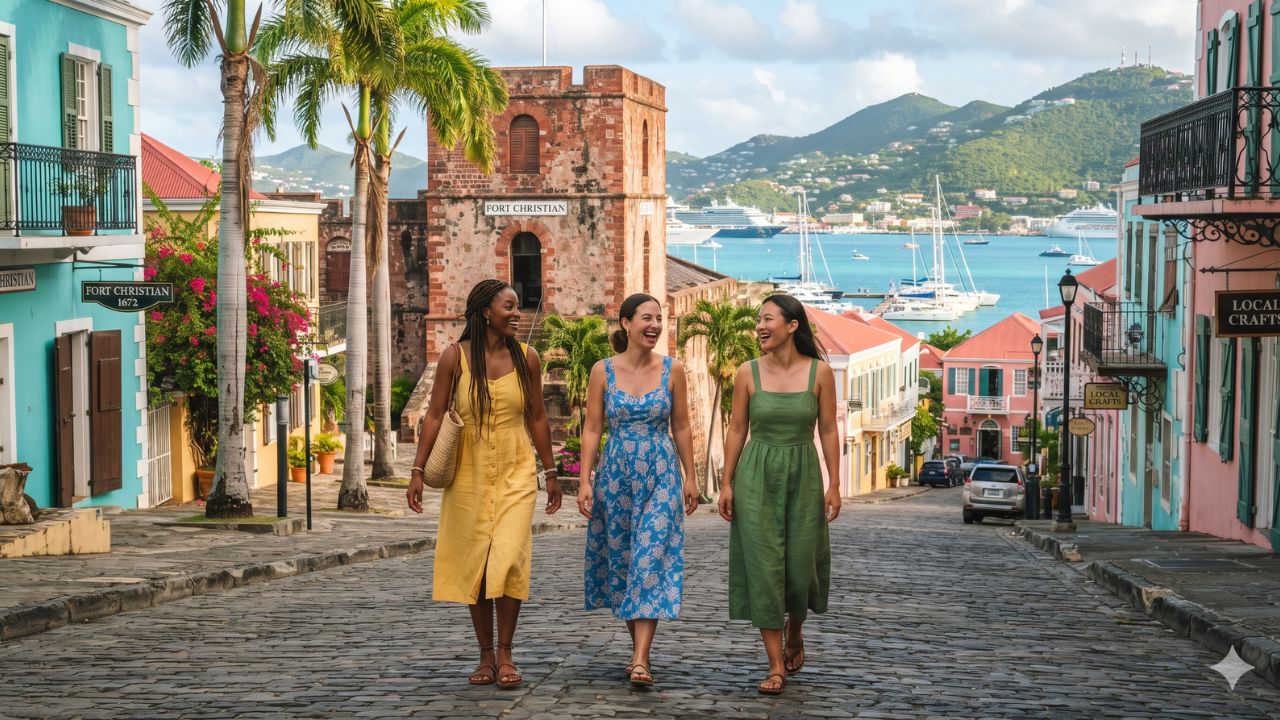
While duty-free diamond boutiques and catamaran day sails define modern Charlotte Amalie, deep beneath the palm fronds of St. Thomas lie reinforced concrete bunkers and coastal artillery batteries that secretly guarded the eastern approaches to the Panama Canal. In an official national recognition, the National Park Service (NPS) designated Charlotte Amalie, the capital of the U.S. Virgin Islands, as an official 2026 American World War II Heritage City—one of just 10 jurisdictions selected nationwide in 2026.
This prestigious designation elevates the territory's identity far beyond conventional resort tourism. During the Second World War, St. Thomas was converted into a fortified Caribbean military bastion. Its protected deepwater harbor, submarine listening stations, and naval aviation ramps formed an impenetrable defensive barrier shielding critical Allied shipping lanes, merchant convoys, and petroleum routes transiting through the Caribbean basin. Today, preserved fortifications at Fort Christian, Hassel Island, and Water Island invite travelers to encounter a poignant chapter of American military history etched directly into volcanic Caribbean hillsides.
The 2026 Milestone: Joining America's Exclusive Ten Jurisdictions
The American World War II Heritage Cities program, established by Congress and administered by the National Park Service, honors local communities that made extraordinary contributions to the home front war effort and have committed to preserving their physical defense heritage. Charlotte Amalie’s inclusion among the exclusive ten jurisdictions recognized in 2026 highlights the vital, often overlooked geopolitical role played by American island territories during global conflict.
Following the United States' purchase of the Danish West Indies in 1917 for $25 million—primarily motivated by fears of German submarine bases in the Caribbean—the onset of World War II accelerated massive defense infrastructure construction. By 1941, German U-boats were aggressively hunting Allied oil tankers departing Venezuela and Aruba.
In response, the U.S. Navy and Army established Charlotte Amalie as the tactical hub of Caribbean Sea frontier defense:
- Naval Submarine and Aviation Base: Seaplane ramps and naval air stations at Lindbergh Bay (now Cyril E. King Airport) deployed continuous anti-submarine patrols across the Anegada Passage.
- Harbor Fortress Network: The entrance to Charlotte Amalie Harbor was sealed with submarine nets, radar towers, and coastal gun batteries positioned on flanking offshore cays.
- Community Mobilization: Thousands of Virgin Islanders served in the armed forces, while local civilian workforces labored around the clock constructing underground ammunition bunkers, fuel storage tanks, and airfield extensions.
What Makes Charlotte Amalie's Military and Maritime Heritage Different
Unlike mainland naval yards that were dismantled or swallowed by modern urban expansion, Charlotte Amalie’s wartime architecture remains frozen in an extraordinary natural setting, surrounded by crystal-clear waters and lush tropical vegetation:
- Fort Christian's Living Citadel: Dominating the harbor waterfront, Fort Christian is the oldest standing structure in the U.S. Virgin Islands. Originally constructed by Danish colonizers between 1672 and 1680, this distinctive red-walled citadel transitioned into a vital military communications, police command, and civil defense center during World War II, illustrating centuries of evolving maritime protection.
- Hassel Island’s Maritime Relics: Situated in the mouth of Charlotte Amalie harbor, the 136-acre Hassel Island preserves a continuum of naval warfare. Alongside 19th-century British Royal Navy garrisons and the historic Creque Marine Railway, the island hosts concrete observation posts and tactical communications lookouts utilized by the U.S. Navy to monitor Axis submarine activity across the Caribbean.
- Water Island and the Secrets of Fort Segarra: Positioned just south of Crown Bay, Water Island is the fourth-largest and youngest of the U.S. Virgin Islands. During World War II, the federal government acquired the island to construct Fort Segarra—a top-secret subterranean coastal artillery installation designed to detect and engage enemy warships. Visitors can explore surviving underground tunnels, cannon magazines, watchtowers, and fire-control bunkers offering sweeping views toward Puerto Rico and Culebra.
- Colonial Architecture Blended with Defensive Engineering: The historic downtown historic district of Charlotte Amalie features Danish colonial masonry, step streets (frangipani-draped stone stairways built in the 1700s like the famous 99 Steps), and brick warehouses that served as supply points for naval forces operating across the Antilles.
Charlotte Amalie WWII Heritage Matrix: Fortress Sites, Harbor Defenses, and Island Access
The key historic sites, strategic wartime roles, and practical visitation logistics across Charlotte Amalie’s World War II network are organized below:
| Historic Landmark | Strategic World War II Function | Preservation Status & Managing Agency | Visitor Access & Transit Method | Core Architectural Feature |
|---|---|---|---|---|
| Fort Christian | Naval communications, coastal lookout, civil command | National Historic Landmark; USVI Government | Waterfront Charlotte Amalie; open weekdays | 1670s red-brick Danish fortress with rooftop cannons |
| Hassel Island | Harbor defense observation, marine maintenance | Managed by Virgin Islands National Park (NPS) | Water taxi from Frenchtown or guided kayak tours | Creque Marine Railway, garrison ruins, and watchpoints |
| Fort Segarra (Water Island) | Subterranean artillery bunkers, fire-control towers | Public historic site; Department of the Interior | 10-minute passenger ferry from Crown Bay Marina | Underground concrete bunkers, tunnels, and gun mounts |
| Bourne Field (Lindbergh Bay) | Naval air station; anti-submarine patrol seaplane base | Active commercial aviation (Cyril E. King Airport) | Public beach access at Lindbergh Bay | Historic seaplane ramps and wartime hangar structures |
| Charlotte Amalie Step Streets | Coastal vantage points, inland troop routing | Preserved historic district public stairways | Pedestrian walking tour from King's Wharf / 99 Steps | Stone ballast masonry and 18th-century lookout vistas |
Visitor Insider Tips: Ferries, Fort Explorations, and Local Culture
- Take the Crown Bay Ferry to Water Island: To explore the hidden wartime subterranean complex of Fort Segarra, head to Crown Bay Marina and board the Water Island passenger ferry. The scenic 10-minute crossing costs just a few dollars each way. Rent a golf cart at Phillips Landing or hike up the hill to inspect the concrete bunkers and observation platforms, which remain completely uncrowded compared to St. Thomas beaches.
- Kayak Across to Hassel Island: Rather than viewing Hassel Island from afar along the waterfront promenade, book an eco-heritage kayak excursion departing from Frenchtown. Guided historical paddles allow you to disembark at Careening Cove and hike to British and American fortification ruins stewarded by the St. Thomas Historical Trust.
- Walk the Historic District Early in the Morning: Avoid the heat and midday cruise passenger foot traffic by starting your architectural walking tour along Government Hill and the 99 Steps between 7:30 AM and 9:30 AM. Morning light illuminates the Danish brick warehouses along Dronningens Gade (Main Street) and offers peaceful photography angles of the harbor.
- Savor Traditional Virgin Islands Gastronomy: Step away from international resort menus to taste authentic Crucian and St. Thomas delicacies. Seek out local culinary spots in Savan or Frenchtown to enjoy kallaloo (hearty stewed greens with okra, crab, and salted meats), fried whole red snapper with plantains, and sweet coconut tarts.
- Consult Territorial Tourism Resources: Plan your heritage itineraries through the official U.S. Virgin Islands Department of Tourism portal to verify seasonal museum operating hours and coordinate historical excursions across St. Thomas and neighboring St. John.
Cultural and Environmental Context: Preservation in the Path of Hurricanes
Preserving historical military heritage in the northern Caribbean presents profound environmental and financial challenges. The islands of St. Thomas, Hassel Island, and Water Island sit in the direct Atlantic hurricane belt, regularly enduring Category 5 storms like Hurricanes Irma and Maria that stripped vegetation, destabilized historic mortar, and damaged coastal roofs.
The 2026 American World War II Heritage City designation provides crucial momentum for stabilization initiatives. Historic preservation trusts and the National Park Service have worked closely with territorial authorities to secure structural integrity across Fort Christian and Fort Segarra, utilizing lime-based mortars and storm-resilient restoration techniques that respect original construction methods.
Concurrently, this cultural tourism initiative promotes sustainable dispersal. By encouraging travelers to explore the military installations of Water Island, the maritime trails of Hassel Island, and the historic civic museums of downtown Charlotte Amalie, visitor spending distributes beyond cruise-dock duty-free emporiums into locally owned water taxi services, independent guides, and neighborhood culinary establishments, preserving the living history of the Virgin Islands for future generations.
FAQ: Visiting Charlotte Amalie WWII Heritage Sites 2026
What is the significance of Charlotte Amalie’s 2026 WWII Heritage City designation?
The National Park Service recognized Charlotte Amalie as one of only 10 jurisdictions in 2026 for its vital strategic role protecting Caribbean shipping corridors and Panama Canal access during World War II.
How do I get to Fort Segarra on Water Island?
Take the regular 10-minute passenger ferry from Crown Bay Marina on St. Thomas to Water Island, then walk or rent a golf cart to reach the historic hilltop bunkers.
Can visitors enter Fort Christian in Charlotte Amalie?
Yes. Fort Christian is open to the public on weekdays, housing cultural exhibitions and historical artifacts detailing centuries of Danish and American maritime defense.
Do I need a passport to visit St. Thomas from the United States?
No. As a U.S. territory, American citizens do not require a passport to enter the U.S. Virgin Islands, though a valid government-issued photo ID is required for travel.
Beneath the Caribbean sun and emerald peaks of St. Thomas, Charlotte Amalie’s historic battlements stand as an enduring tribute to the islanders who guarded freedom across Atlantic waters.
Related Travel Guides
- Thanksgiving Parade Destinations 2026: Comparing New York, Chicago, and Philadelphia
- Beyond the Golden Route: Japan's Six Governors Launch Historic US Tourism Campaign
- Aruba Tropical Christmas 2026: Gaita Carols, Dande Traditions, and SEYO Artisans
- Chicago to Bermuda Nonstop 2027: United Airlines Flights and Island Tourism
Disclaimer
This article is for informational and educational purposes only. It does not constitute legal, financial, or professional advice. While we strive to provide accurate and up-to-date information, travel policies, regulations, and conditions change rapidly. Always verify information with official sources before making travel decisions. Nomad Lawyer makes no representations about the accuracy, reliability, completeness, or suitability of the information provided. Readers should consult qualified professionals for advice specific to their circumstances. The views expressed in this article are those of the author and do not necessarily reflect the views of Nomad Lawyer.
Preeti Gunjan
Contributor & Community Manager
A passionate traveller and community builder. Preeti helps grow the Nomad Lawyer community, fostering engagement and bringing the reader experience to life.
Learn more about our team →