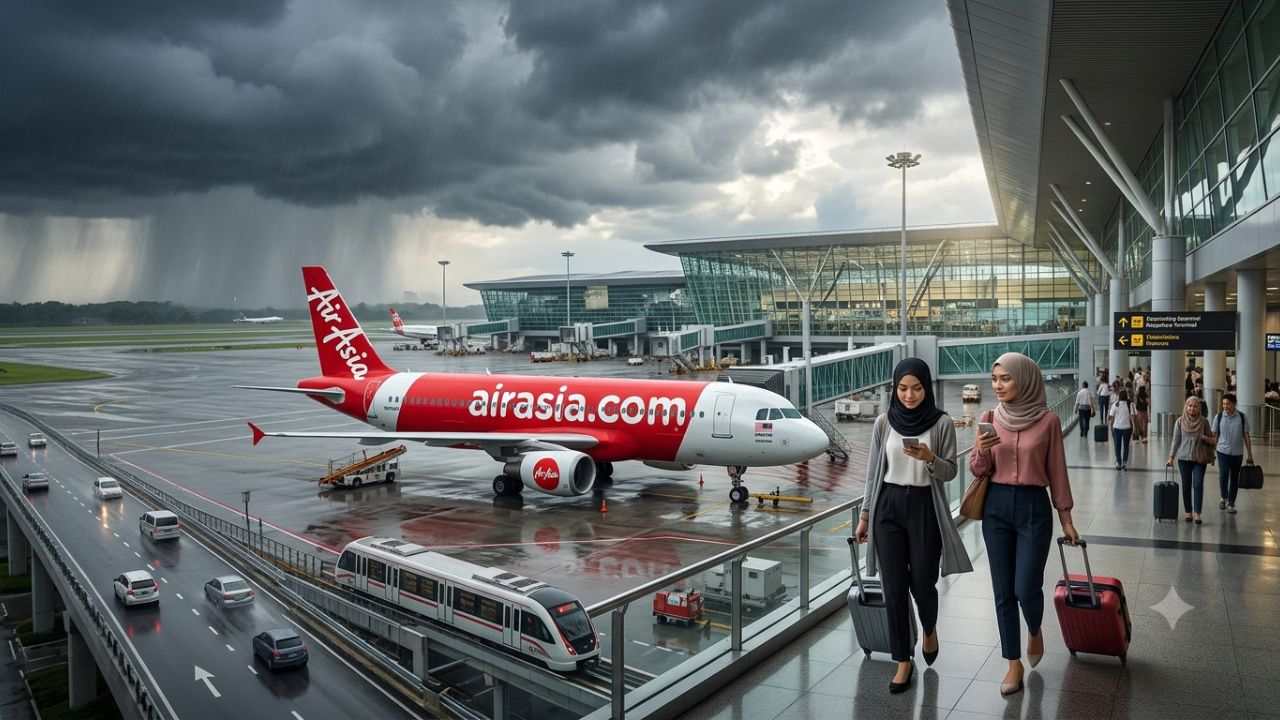
Asia Flight Disruptions: Over 2,270 Delays and 280 Cancellations Hit Bangkok, Beijing, and Mumbai

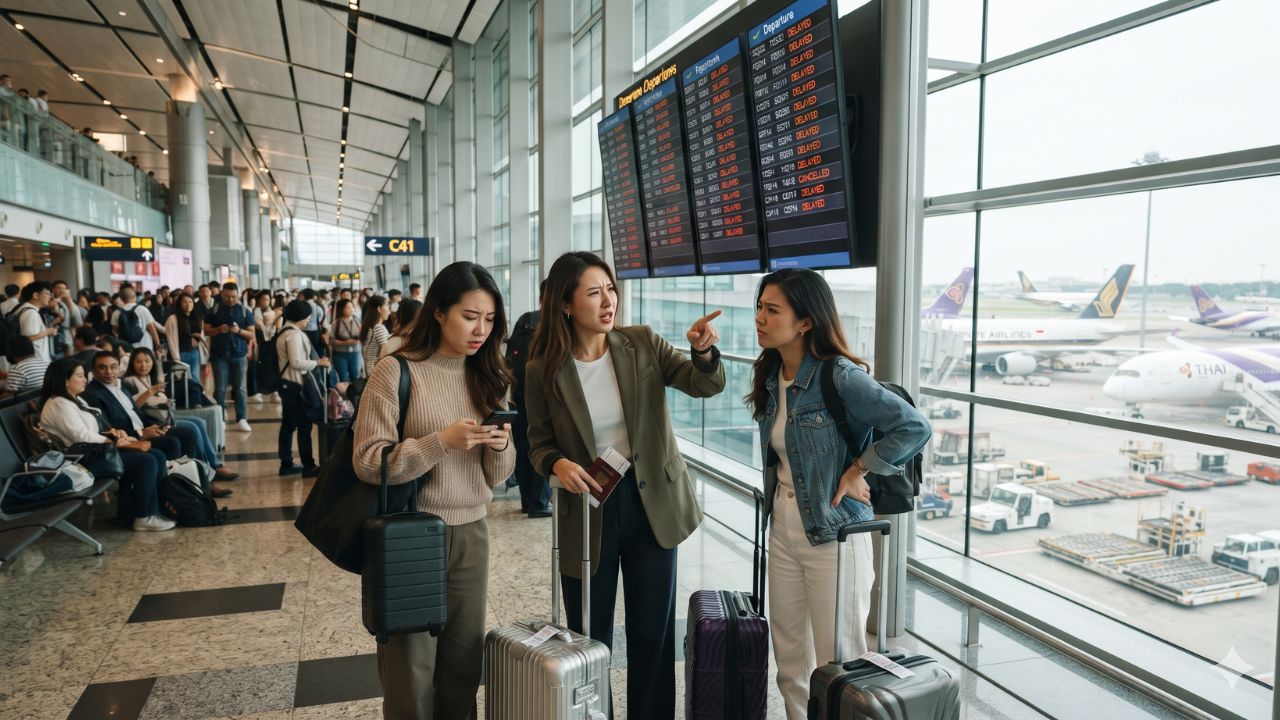
Image generated by AI
At Bangkok's Suvarnabhumi Airport, over four out of every ten departing flights suffered ground delays on 4 November 2026, anchoring a continent-wide aviation bottleneck that generated 2,276 delays and 280 cancellations across 19 major Asian hubs. Compiled from real-time flight telemetry recorded by FlightAware at 1:29 pm ET (11:59 pm IST), the operational turmoil stretched from the trunk routes of mainland China—where China Eastern alone cancelled 57 flights and delayed 254—to India's primary domestic junctions and the Arabian Gulf. In the Middle East, regional security developments led Etihad Airways to extend the suspension of all passenger and cargo services between Abu Dhabi, Riyadh, and Dammam through 19 November 2026, compelling thousands of international passengers to rebook complex long-haul itineraries.
Trans-Asian Air Corridor Strain: From Suvarnabhumi's Gate Holds to Gulf Airspace Diversions
The scale of disruption reflects acute operational friction converging across Asia's primary air lanes. Rather than an isolated local weather incident, schedule collapses rippled across domestic and international sectors due to a combination of airport capacity bottlenecks, tight carrier turnaround schedules, and geopolitical airspace rerouting.
Thailand's premier international gateway bore the heaviest delay burden of any single facility on the continent. Airports of Thailand recorded 386 flight delays and six cancellations at Suvarnabhumi Airport (BKK), representing a 43 percent departure delay rate and a 26 percent arrival delay rate. These backlogs left passenger concourses crowded with travelers connecting between long-haul intercontinental arrivals and regional flights to destinations like Phuket, Samui, and Chiang Mai.
In South Asia, India's two busiest aviation hubs experienced substantial compounding delays. Mumbai's Chhatrapati Shivaji Maharaj International Airport (BOM) registered 11 cancellations and 222 delays, while Delhi's Indira Gandhi International Airport (DEL) logged 17 cancellations alongside 211 delays, maintaining an across-the-board 14 percent delay rate for both inbound and outbound aircraft movements. In Southeast Asia, Jakarta's Soekarno-Hatta International Airport (CGK) followed closely, recording 11 cancellations and 206 delays with a 17 percent delay rate impacting both arrivals and departures.
Mainland China accounted for the highest concentration of outright flight cancellations. Xi'an Xianyang International Airport (XIY) led all Asian facilities in grounded services, reporting 26 cancellations and 74 delays, while Shenzhen Bao'an International Airport (SZX) logged 23 cancellations and 93 delays. Major dual-hub metropolitan gateways faced parallel pressures: Shanghai Pudong (PVG) and Hongqiao (SHA) collectively recorded 24 cancellations and 319 delays, while Beijing Capital (PEK) and Beijing Daxing (PKX) combined for 21 cancellations and 139 delays.
| Impacted Airport & Hub Code | Metropolitan Region / Country | Total Cancelled Flights | Total Delayed Flights | Operational Flight Conditions |
|---|---|---|---|---|
| Suvarnabhumi (BKK) | Bangkok, Thailand | 6 | 386 | Highest delays in Asia; 43% departure delay rate |
| Chhatrapati Shivaji Maharaj (BOM) | Mumbai, India | 11 | 222 | Heavy secondary delays across domestic routes |
| Indira Gandhi (DEL) | Delhi, India | 17 | 211 | 14% arrival/departure delays; tight runway slots |
| Soekarno-Hatta (CGK) | Jakarta, Indonesia | 11 | 206 | 17% arrival/departure delay rate |
| Shanghai Pudong (PVG) | Shanghai, China | 16 | 199 | Intercontinental transfer delays; taxiway queuing |
| Changi (SIN) | Singapore | 2 | 132 | High runway efficiency; minimal cancellations |
| Shanghai Hongqiao (SHA) | Shanghai, China | 8 | 120 | High-density domestic trunk line congestion |
| Kempegowda (BLR) | Bengaluru, India | 14 | 107 | Tech-corridor business travel backlogs |
| Shenzhen Bao’an (SZX) | Shenzhen, China | 23 | 93 | Severe regional feeder ground stops |
| Chengdu Tianfu (TFU) | Chengdu, China | 21 | 86 | Western China transfer cancellations |
| King Abdulaziz (JED) | Jeddah, Saudi Arabia | 23 | 86 | Middle East regional security adjustments |
| Chongqing Jiangbei (CKG) | Chongqing, China | 9 | 76 | River valley weather & slot constraints |
| Xi’an Xianyang (XIY) | Xi’an, China | 26 | 74 | Highest cancellations recorded in Asia |
| Beijing Capital (PEK) | Beijing, China | 13 | 73 | Northern air corridor military flow control |
| Beijing Daxing (PKX) | Beijing, China | 8 | 66 | Modern mega-terminal departure holds |
| Hangzhou Xiaoshan (HGH) | Hangzhou, China | 15 | 65 | Eastern coastal airspace flow control |
| Kunming Changshui (KMG) | Kunming, China | 20 | 36 | Southwest mountain gateway cancellations |
| King Khalid (RUH) | Riyadh, Saudi Arabia | 24 | 21 | Regional security threats; carrier suspensions |
| Taiyuan Wusu (TYN) | Taiyuan, China | 13 | 17 | North-central domestic schedule trimming |
Carrier Impact: Fleet Strain and Middle Eastern Security Measures
The burden of cancellations fell disproportionately across several major regional airlines. China Eastern Airlines recorded the highest disruption figures in Asia, scrubbing 57 flights and delaying 254. Indian budget carrier Akasa Air suffered 43 cancellations and 33 delays, while Shenzhen Airlines logged 31 cancellations and 45 delays. Flag carriers also adjusted schedules to avoid airspace logjams, with Air China recording 21 cancellations and 91 delays, and Saudia posting 22 cancellations and 49 delays.
| Affected Carrier | Primary Operating Base | Cancelled Flights | Delayed Flights | Impact Assessment |
|---|---|---|---|---|
| China Eastern | Shanghai, China | 57 | 254 | Highest combined flight disruption in Asia |
| Akasa Air | Mumbai, India | 43 | 33 | Severe schedule pruning across domestic Indian routes |
| Shenzhen Airlines | Shenzhen, China | 31 | 45 | Southern China slot losses and air traffic holds |
| Saudia | Jeddah / Riyadh, Saudi Arabia | 22 | 49 | Schedule realignment amid regional security alerts |
| Air China | Beijing, China | 21 | 91 | Beijing hub delays; domestic trunk route pruning |
| Tianjin Airlines | Tianjin, China | 20 | 44 | Regional feeder cancellations |
| XiamenAir | Xiamen, China | 18 | 52 | Coastal corridor flow control delays |
| Hainan Airlines | Haikou, China | 16 | 37 | Island route realignments and schedule changes |
| Batik Air | Jakarta, Indonesia | 13 | 66 | Southeast Asian regional network delays |
| SpiceJet | Delhi, India | 12 | 36 | Aircraft rotation constraints and secondary holds |
In the Middle East, commercial civil aviation remains heavily constrained by regional geopolitical developments. Under the regulatory oversight of the General Authority of Civil Aviation of Saudi Arabia, flight safety protocols have tightened following reported drone and missile activity originating from Yemen's Houthi movement. On 2 November, Houthi forces claimed to have targeted Dammam's King Fahd International Airport with uncrewed aerial vehicles, although Saudi authorities did not immediately confirm direct impacts. Heightened alert levels also enveloped Riyadh's King Khalid International Airport (RUH), which recorded 24 cancellations.
Responding to these operational risks, UAE flag carrier Etihad Airways confirmed it has extended its suspension of all passenger and cargo operations between Abu Dhabi and both Riyadh and Dammam until 19 November 2026. However, Etihad noted that selected Abu Dhabi–Jeddah flights will resume on 6 November, with other scheduled Jeddah services continuing without alteration.
Visitor Insider Tips: Layover Buffers, Airline Rights, and Terminal Transit Hacks
Traversing Asia's congested hubs during periods of widespread schedule volatility requires strategic booking practices and clear knowledge of passenger protection mandates.
- Protecting Suvarnabhumi Transfers: With BKK experiencing a 43 percent departure delay rate, never book separate domestic connecting tickets (such as BKK to Chiang Mai or Krabi) with layovers under three and a half hours. If your incoming flight is delayed, clear customs and immigration, then take the Airport Rail Link located on the basement level of the terminal for a 26-minute direct transit into central Bangkok rather than sitting in highway gridlock.
- Indian Airport Rights and DigiYatra Access: Passengers transiting Delhi (DEL) or Mumbai (BOM) should enroll in India's facial-recognition DigiYatra system to bypass standard terminal entry and domestic security queues, saving up to 45 minutes. Under regulations established by the Directorate General of Civil Aviation, passengers facing delays over two hours on flights with block times under two and a half hours are entitled to complimentary meals and refreshments, while cancellations announced without two weeks' notice require carriers to provide full refunds or alternative flights.
- Navigating China's Domestic Flow Controls: Flight delays in mainland China frequently stem from military air traffic flow control rather than bad weather. If traveling on China Eastern, Air China, or Shenzhen Airlines, download the carrier's native mini-program within WeChat or Alipay to receive gate-change alerts up to an hour before airport displays update, allowing you to secure earlier alternative flights immediately.
- Gulf Rerouting Safeguards: If your journey involves connecting through the Arabian Peninsula to Riyadh or Dammam, contact Etihad or your booking agent to reroute through alternative Gulf hubs like Doha or Dubai, which maintain standard commercial connectivity. Verify that your travel insurance policy includes specific riders covering airspace closures and state-mandated security cancellations.
Cultural and Environmental Context: Infrastructure Strain Across Expanding Megacities
The pressure on Asian aviation hubs highlights a fundamental infrastructure challenge across the Eastern Hemisphere. Over the past decade, rapid economic expansion and the rise of middle-class tourism have generated unprecedented demand for commercial air travel. However, airspace capacity in densely populated aviation corridors—such as the Pearl River Delta, the Java Sea basin, and the Indo-Gangetic Plain—remains structurally constrained.
These operational logjams carry direct environmental consequences. When 386 aircraft idle on Suvarnabhumi's taxiways or circle in holding patterns over Shanghai and Mumbai, aircraft fuel burn escalates, releasing thousands of tons of avoidable carbon emissions into regional airsheds. In response, regional civil aviation bodies are investing in modern Performance-Based Navigation (PBN) and digital air traffic management systems to straighten flight trajectories and minimize fuel-intensive holding stacks.
Equally significant is the human element. Airport service workers, baggage handlers, and cabin crew face immense physical strain during extended delay cycles. Navigating travel delays with patience, understanding cultural communication nuances across different Asian cultures, and treating terminal staff with dignity remain the defining marks of an experienced global traveler.
FAQ: Traveling Through Asian Flight Disruptions November 2026
Which Asian airport had the most flight delays on 4 November 2026?
Bangkok's Suvarnabhumi Airport (BKK) recorded the highest delays in Asia, logging 386 delayed flights and a 43 percent departure delay rate.
Why are Etihad Airways flights to Saudi Arabia suspended?
Etihad has extended flight suspensions between Abu Dhabi, Riyadh, and Dammam through 19 November 2026 due to regional security concerns, while planning partial resumptions to Jeddah starting 6 November.
What compensation is available for delayed flights in India?
Under DGCA civil aviation rules, Indian airlines must provide complimentary food and refreshments for domestic delays exceeding two to four hours, depending on flight distance, or free rebooking and full refunds for cancellations.
Are flights operating normally through Singapore Changi Airport?
Yes. Changi Airport experienced minimal disruption, recording only two cancellations and 132 delays, maintaining standard international schedule integrity.
[When commercial flight schedules waver across continents, experienced voyagers rely on verified telemetry, generous layovers, and quiet patience to navigate the journey.]
Related Travel Guides
Chiang Mai Airport Flight Disruptions for Yi Peng and Loy Krathong: Complete Traveler Guide 2026
US Flight Disruptions: Over 1,440 Delays and 140 Cancellations Hit Dallas, Miami, and Chicago
Asia Flight Disruptions: Bangkok, Mumbai, and Shanghai Delays
This article is for informational purposes. Flight routes, passenger regulations, visa rules, and transit advisories are subject to change by airlines and aviation authorities. Readers are advised to verify schedules and travel documentation with relevant carriers and border agencies before departure.
Related Stories
Asia Air Travel Hit by 371 Cancellations and 3,663 Flight Delays: Bangkok, Mumbai, and Shanghai Lead Gridlock

Middle East Flight Disruptions: Over 880 Delays and 70 Cancellations Hit Dubai, Doha, and Saudi Airports