EU Adopts Landmark Sustainable Tourism Strategy as Greece and Eight Global Partners Pioneer Data Alignment, SME Green Capital, and Workforce Reform

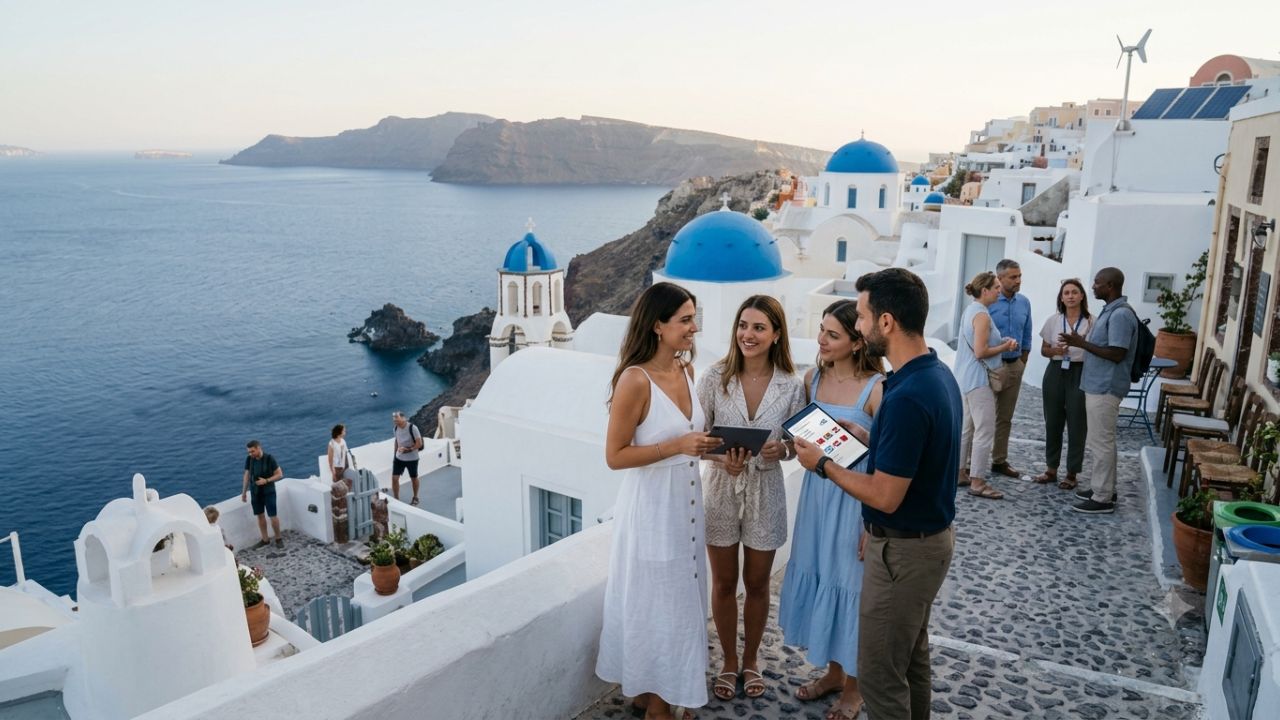
BRUSSELS / ATHENS — In a transformative policy breakthrough that establishes a new governance framework for continental travel, the European Commission has formally enacted its comprehensive Sustainable Tourism Strategy, creating an integrated economic and ecological blueprint designed to safeguard the world’s most visited region.
Formally adopted in Brussels on 4 November 2026, the strategy addresses structural vulnerabilities across Europe's visitor economy. Tourism represents an indispensable pillar of European prosperity, generating approximately 10.1 percent of the European Union's gross value added and supporting more than 20 million jobs across five million commercial enterprises—99 percent of which operate as small and medium-sized enterprises (SMEs).
However, mounting systemic pressures, including acute hospitality labor shortages, intensifying climate disruptions, summer heat waves across Mediterranean coastlines, and fierce international competition, made a centralized continental doctrine essential.
Under the leadership of the newly appointed European Commissioner for Sustainable Transport and Tourism, Apostolos Tzitzikostas, the strategy establishes four foundational pillars: the European Academy of Tourism to professionalize the workforce, the EU Tourism Observatory for real-time environmental and visitor flow monitoring, a targeted regulatory framework for SME green financing, and the multi-stakeholder EU Tourism Alliance.
Serving as the Mediterranean vanguard of this continental transition, Greece has forged a strategic coalition with eight key partner nations.
Spanning the Adriatic-Ionian basin to East Asia and the Arabian Gulf—including Italy, Croatia, Albania, Japan, India, the United Arab Emirates, Saudi Arabia, and Qatar—this nine-nation alliance is supercharging the strategy’s operational enforcement through cross-border data alignment, joint workforce training academies, and synchronized green capital investments.
EU SUSTAINABLE TOURISM STRATEGY: FOUR FOUNDATIONAL PILLARS
| Entity / Route | Metrics | Operational Status |
|---|---|---|
| Strategic Pillar | Operational Mandate | Target Impact |
| 1. European Academy of | Standardized vocational | Eradicates |
| Tourism | hospitality credentials | staffing gaps |
| 2. EU Tourism Observatory | High-tech centralized data hub | Real-time flow |
| for carrying-capacity metrics | monitoring | |
| 3. SME & Digital | Targeted green transition | Capital for |
| Emancipation | capital and red-tape relief | decarbonization |
| 4. The EU Tourism Alliance | Public-private governance | Transnational |
| across national authorities | implementation |
The Macroeconomic Imperative: Why Europe Redesigned Tourism Governance
For decades, European tourism governance operated in a decentralized manner. Individual member states, autonomous regional governments, and municipal councils enacted disparate tourism marketing campaigns, zoning rules, and tax regimes without unified continental coordination.
While this decentralized approach celebrated regional diversity, it proved ill-equipped to manage modern challenges such as peak-season overtourism in historic capitals, localized housing shortages driven by short-term holiday rentals, and severe environmental strain on fragile coastal and alpine ecosystems.
The economic magnitude of the European visitor economy required institutional reform:
- Massive Employment and SME Dominance: With five million commercial enterprises employing over twenty million citizens, tourism represents one of the largest employers of young workers, women, and rural residents. However, 99 percent of these businesses are small family-owned hotels, independent tour operators, and local restaurants that lack the capital reserves needed to independently finance renewable energy installations, digital booking infrastructure, and carbon-accounting software.
- Acute Workforce Deficits: Following structural shifts in labor markets, hotels and dining establishments across Europe faced chronic labor shortages. Hospitality businesses struggled to attract qualified culinary professionals, front-desk managers, and certified guides, threatening service standards across premier Mediterranean and Alpine destinations.
- Climate Vulnerabilities Across Southern Europe: Successive summer heat waves, forest fires across the Mediterranean basin, and unpredictable snowfall across mid-altitude ski resorts made climate resilience an existential priority. Without coordinated continental funding, regional destinations faced the risk of severe tourism revenue drops during peak summer months.
The newly enacted strategy transforms European tourism from an uncoordinated volume-driven model into a managed, high-yield, and ecologically sustainable system.
                  THE EU SUSTAINABLE TOURISM GOVERNANCE AXIS

   [ European Commission (Commissioner Apostolos Tzitzikostas) ]
                                |
                                v
   +---------------------------------------------------------------+
   |               FOUR CORE IMPLEMENTATION MECHANISMS             |
   |                                                               |
   |  * European Academy of Tourism: Vocational credentialing      |
   |  * EU Tourism Observatory: Centralized AI data aggregation   |
   |  * SME Green Capital Framework: Subsidized transition funds   |
   |  * EU Tourism Alliance: Public-private stakeholder execution  |
   +---------------------------------------------------------------+
                                |
                                v
   [ Mediterranean Vanguard: Greece (SETE / INSETE / MFF 2028-34 Lobby) ]
                                |
                                v
   +---------------------------------------------------------------+
   |             EIGHT INTERNATIONAL STRATEGIC PARTNERS            |
   |                                                               |
   |  * EUSAIR Basin: Italy, Croatia, Albania                      |
   |  * Asia-Pacific Allies: Japan, India                          |
   |  * Persian Gulf Resiliency Bridge: UAE, Saudi Arabia, Qatar   |
   +---------------------------------------------------------------+
Greece as the Mediterranean Vanguard: Shaping European Tourism Policy
Greece’s proactive role in championing and shaping the Sustainable Tourism Strategy reflects years of domestic institutional preparation.
For the Greek tourism sector, which generates more than twenty percent of the nation’s gross domestic product, sustainable destination management has long transitioned from an abstract concept into an urgent operational requirement.
Led by the Association of Greek Tourism Enterprises (SETE) and its President, Agapi Sbokou, the Hellenic tourism sector welcomed the European Commission’s policy adoption as a historic milestone.
SETE, alongside its specialized research arm INSETE and promotional organization Marketing Greece, worked closely with European policymakers during the drafting process to ensure the strategy directly addressed the operational realities of Mediterranean island and coastal communities.
GREECE'S STRATEGIC POLICY INITIATIVES IN THE EU
| Entity / Route | Metrics | Operational Status |
|---|---|---|
| Greek Initiative | Institutional Mechanism | Policy Objective |
| European Academy of | Formal bid to host physical | Establish Athens/Crete as the |
| Tourism Headquarters | academy campus in Greece | premier continental training hub |
| Dedicated MFF Tourism | Active lobbying in the European | Ring-fence accessible EU transition |
| Budget Line (2028–2034) | Parliament and European Council | grants for tourism SMEs |
| National Carrying- | Coordinated municipal visitor caps | Balance high-density cruise calls |
| Capacity Frameworks | and disembarkation levies (€20) | with resident community well-being |
| Island Clean Energy | GR-eco Islands initiative deployed | Transform Aegean islands into |
| Transformation | across Chalki, Astypalea, and Poros | zero-emission green tourism models |
Greece has asserted its leadership through two major institutional proposals:
- Hosting the European Academy of Tourism: The Greek government officially proposed hosting the physical headquarters and primary training campus of the newly created European Academy of Tourism. By locating the academy in Greece, the country aims to become the central laboratory for developing modern hospitality curricula, testing digital hotel technologies, and training the next generation of European hospitality executives.
- Dedicated MFF Funding Lines (2028–2034): The Greek parliamentary delegation is actively lobbying the European Parliament and Council of the European Union to establish an independent, dedicated funding category for tourism within the upcoming Multiannual Financial Framework (MFF 2028–2034). Historically, tourism businesses had to compete for generic regional development or environmental subsidies. A dedicated budget allocation guarantees accessible, low-interest green transition capital for family-run tourism SMEs across the continent.
A central pillar of Greece’s domestic sustainability blueprint is the pioneering GR-eco Islands initiative, which is serving as an operational showcase for European island decarbonization. Across pilot islands such as Astypalea, Chalki, and Poros, the Greek government successfully phased out fossil fuel generation, replacing it with local hybrid solar-wind energy parks, municipal electric vehicle fleets, and smart power grids. By demonstrating that remote Mediterranean islands can transition to zero-emission operations while expanding tourism arrivals, Greece offers the European Commission a proven, replicable model for insular destination stewardship across the Cyclades, the Dodecanese, and the wider Aegean archipelago.
Concurrently, SETE’s comprehensive 'Greek Tourism 2030' strategic roadmap emphasizes the qualitative transformation of the visitor economy over sheer volume expansion. Rather than measuring success solely by headline airport arrivals, Greek authorities are prioritizing average length of stay, daily expenditure per traveler, and territorial wealth redistribution into regional mountain and agricultural communities. This strategic realignment directly influenced the European Commission’s decision to appoint former Central Macedonia Governor Apostolos Tzitzikostas to lead the new transport and tourism portfolio, embedding Mediterranean regional expertise at the heart of European Union policymaking.
The Eight Partner Nations: A Country-by-Country Operational Breakdown
To ensure the strategy succeeds across diverse geographic territories, Greece has united with eight key partner nations.
Three nations represent the European Adriatic-Ionian macro-region, ensuring internal cohesion, while five represent global economic powers across the Middle East and Asia, securing international competitiveness and resilient long-haul travel corridors.
THE NINE-NATION STRATEGIC SUSTAINABLE TOURISM ALLIANCE
| Entity / Route | Metrics | Operational Status |
|---|---|---|
| Country | Strategic Alignment / Bloc | Core Operational Contribution |
| 1. Greece | Mediterranean Vanguard / EU Member | Academy bid; MFF funding lobby; |
| carrying-capacity frameworks | ||
| 2. Italy | EUSAIR Anchor / G7 Economy | Cultural heritage crowd-tech; |
| green financing for family SMEs | ||
| 3. Croatia | EUSAIR Pillar 4 Formal Coordinator | Standardizing data architectures; |
| coastal-to-inland crowd dispersal | ||
| 4. Albania | EUSAIR Pillar 4 Co-Coordinator | Greenfield ecotourism development; |
| Mediterranean diet agro-circuits | ||
| 5. Japan | Asia-Pacific Tech & Mobility Ally | High-speed rail data integration; |
| high-yield sustainable travelers | ||
| 6. India | High-Growth Outbound Mega-Market | Off-peak European tour alignment; |
| secondary city passenger dispersal | ||
| 7. UAE | Persian Gulf Transit & Fuel Bridge | Sustainable aviation fuels (SAF); |
| predictive long-haul demand data | ||
| 8. Saudi Arabia | Vision 2030 Capital & Climate Ally | Green hospitality FDI alignment; |
| water conservation research sharing | ||
| 9. Qatar | Event Legacy & Crisis Resilience | Mega-event crowd management models; |
| geopolitical travel corridor safety |
1. Italy: Heritage Crowd Technology and Green SME Finance
Sharing the Mediterranean basin with Greece, Italy is a foundational anchor of the EU Strategy for the Adriatic and Ionian Region (EUSAIR).
Italy’s contribution focuses on technological innovation at congested cultural heritage sites. By deploying automated digital ticketing systems, timed-entry reservation portals, and predictive foot-traffic algorithms across cultural landmarks in Venice, Florence, and Rome, Italy provides the EU Tourism Observatory with real-time crowd data.
In addition, Italy’s network of family-owned hospitality businesses is serving as the primary test bed for the European Commission’s green-financing pilot programs, demonstrating how centuries-old historic properties can install geothermal climate control, solar roofs, and zero-waste kitchens without violating architectural heritage protections.
2. Croatia: Technical Standardization for the EU Observatory
As the official coordinator of EUSAIR’s "Pillar 4 – Sustainable Tourism," Croatia serves as the technical architect of the alliance.
Historically, tourism data across southeastern Europe was fragmented across incompatible municipal databases. Croatia is leading the technical integration of national data grids, standardizing environmental indicators, hotel occupancy metrics, and border crossing figures to feed directly into the centralized EU Tourism Observatory.
By tracking micro-trends in visitor mobility, Croatia has designed targeted marketing initiatives that successfully guide travelers away from the crowded coastal city of Dubrovnik into rural agricultural regions in Slavonia and central Istria, effectively curbing summer seasonality.
3. Albania: Greenfield Ecotourism and Agro-Tourism Circuits
Co-coordinating EUSAIR Pillar 4 alongside Croatia, Albania offers a distinct developmental advantage.
As an emerging European destination experiencing rapid visitor growth, Albania can construct modern, sustainable tourism infrastructure from scratch rather than retrofitting outdated legacy systems.
Supported by European Union technical assistance, the Albanian government is developing zero-emission ecotourism circuits across the Accursed Mountains (Albanian Alps) and the Vjosa River National Park (Europe’s first wild river national park). By promoting rural farm-to-table culinary routes celebrating the traditional Mediterranean diet, Albania proves that emerging destinations can achieve economic growth without resorting to unsustainable high-density coastal construction.
4. Japan: Advanced Mobility Systems and High-Yield Travel Pipelines
Outside the European continent, Japan stands as a vital technological and commercial partner. Following high-level discussions between Commissioner Tzitzikostas and the Japan Tourism Agency, the European Union is adapting Japanese innovations in high-speed rail passenger flow management and contactless station turnstile technologies.
On the commercial front, coordinated marketing initiatives between European destination marketing organizations and Japanese travel agencies are designed to attract culturally engaged Japanese travelers who favor off-peak autumn and winter travel, demonstrate high per-capita spending, and respect local heritage sites.
5. India: Managing Demographic Inbound Growth Sustainably
India represents the fastest-growing middle-class outbound travel market in the world. As millions of Indian travelers plan holidays to Europe, the EU Sustainable Tourism Strategy must accommodate this visitor volume without overwhelming traditional tourist centers.
Through bilateral agreements with major Indian tour operators and corporate travel associations, the coalition is restructuring European package tours. Indian travel agencies are incentivized to package off-peak travel dates (spring and autumn) and feature secondary European destinations—such as Thessaloniki, Bologna, Ljubljana, and Valencia—distributing economic benefits across regional communities.
6. United Arab Emirates: The Sustainable Aviation and Resilience Bridge
The Persian Gulf serves as the primary intercontinental aviation crossroads connecting Europe to Asia, Australasia, and eastern Africa.
The United Arab Emirates—anchored by global carriers Emirates and Etihad Airways—is collaborating with European authorities to accelerate the adoption of Sustainable Aviation Fuels (SAF) and optimize transatlantic and Euro-Gulf air corridors.
The UAE is sharing predictive travel flow data with the EU Tourism Observatory, helping European authorities anticipate long-haul demand spikes and prepare for international supply-chain disruptions.
7. Saudi Arabia: Aligning Sovereign Investments with Green Regulations
As Saudi Arabia executes its Vision 2030 economic transformation, the kingdom has become a major institutional partner for European tourism.
Under bilateral investment frameworks, Saudi sovereign wealth funds investing in European hospitality assets agree to adhere to the European Union’s strict green transition taxonomy, financing carbon-neutral hotel renovations, renewable energy installations, and greywater recycling systems.
Concurrently, both regions share scientific research on combating climate-induced desertification, preserving freshwater reserves, and managing extreme summer temperatures in coastal resort environments.
8. Qatar: Mega-Event Crisis Preparedness and Geopolitical Stability
Qatar completes the eight-nation coalition, contributing expertise gained from hosting major global sporting spectacles, including the FIFA World Cup.
Qatari authorities are sharing event management models, emergency crowd evacuation protocols, and venue legacy planning frameworks with the EU Tourism Alliance.
In addition, high-level diplomatic dialogues between Brussels and Doha ensure the maintenance of secure, reliable aviation and maritime travel corridors connecting the Middle East to the European Union, insulating international tourism flows from regional geopolitical instability. Cross-regional civil aviation safety coordination and shared airspace monitoring protocols help commercial airlines navigate complex international skies, safeguarding holiday passenger traffic between Europe and the Arabian Gulf.
Operational Mechanisms: How the Coalition Enforces the Strategy
The collaboration between Greece and its eight partner nations extends beyond diplomatic communiqués, driving practical, on-the-ground operational programs:
                  OPERATIONAL ENFORCEMENT BLUEPRINT

   [ Harmonized Digital Data Grid ]
        * Direct API integration connecting regional data to the EU Tourism Observatory
        * Predictive AI modeling to detect overtourism bottlenecks weeks in advance

   [ Transnational Ecological Corridors ]
        * Cross-border marine protected areas across the Ionian and Adriatic Seas
        * Joint environmental monitoring protecting Posidonia seagrass and coastal waters

   [ Mobile Workforce Development ]
        * Standardized vocational hospitality certificates accredited across borders
        * Student and worker exchange programs centered around the European Tourism Academy

   [ Green Capital Deployment ]
        * Streamlined micro-grants enabling family SMEs to adopt renewable energy
        * Simplified ESG compliance frameworks designed specifically for small businesses
- Harmonizing the Digital Ecosystem: By integrating national data collection systems into the EU Tourism Observatory, the coalition creates an accurate, transparent map of Europe's visitor economy. This centralized data architecture allows the European Commission to identify regions experiencing sudden drops in demand or acute environmental stress, enabling immediate adjustments in promotional campaigns and emergency funding allocations.
- Eradicating Cross-Border Bureaucratic Silos: Through EUSAIR Pillar 4 initiatives, Italy, Croatia, Albania, and Greece have streamlined regulatory procedures that historically prevented joint environmental management. The partner nations have established transnational marine protection zones across the Ionian and Adriatic seas, ensuring coordinated oversight of coastal water quality, yacht wastewater discharge, and marine biodiversity conservation.
- Revolutionizing Vocational Training and Labor Mobility: With Greece bidding to host the European Academy of Tourism, the coalition is establishing student and instructor exchange programs. Hospitality workers from Albania, Croatia, and Italy will be eligible to train at Greek campuses, earning recognized vocational credentials that guarantee fair wages, standardized working conditions, and seasonal employment mobility across member states.
- Shielding the Sector Against External Shocks: Ongoing dialogues with global partners—Japan, India, the UAE, Saudi Arabia, and Qatar—ensure that European tourism does not operate in regional isolation. By analyzing global travel patterns and sharing emergency management protocols, the strategy ensures that Europe’s visitor economy can navigate economic fluctuations, energy crises, and public health disruptions with resilience.
To empower the EU Tourism Observatory with predictive analytical capability, the European Commission is integrating high-resolution satellite monitoring from the Copernicus Earth Observation Programme. By combining satellite imagery tracking coastal water temperatures, urban heat island intensity in metropolitan capitals, and environmental stress indices in national parks with anonymized mobile telecommunications roaming data, the Observatory generates multi-layered vulnerability maps. Regional tourism authorities can detect when visitor density threatens to exceed localized freshwater capacity or air quality limits, triggering automated adjustments in public transport schedules, museum ticketing releases, and dynamic visitor dispersion advisories weeks before severe congestion occurs.
Simultaneously, the SME and Digital Emancipation pillar is being reinforced through the deployment of dedicated green credit facilities managed in partnership with the European Investment Bank (EIB). Under the expanded InvestEU tourism guarantee framework, family-owned hospitality businesses, boutique winery estates, and independent hiking operators can access low-interest micro-loans with deferred repayment periods to finance thermal insulation, heat pump installations, rainwater harvesting tanks, and solar water heating. By removing bureaucratic credit barriers and providing simplified digital ESG reporting templates, the European Union ensures that small local enterprises remain the primary economic beneficiaries of the sustainable transition, rather than being displaced by well-capitalized multinational hotel chains.
Practical Travel Playbook: Navigating Europe's Sustainable Tourism Era
For international travelers planning European vacations under this new regulatory framework, aligning itineraries with sustainability policies delivers superior experiences and financial savings.
SUSTAINABLE EUROPEAN TRAVEL ACTION CHECKLIST
| Entity / Route | Metrics | Operational Status |
|---|---|---|
| Dimension | Recommended Strategic Action | Traveler Benefit |
| Seasonal Timing | Target shoulder seasons (April–May | Avoids summer heat waves and |
| and September–October) | crowds; captures lower hotel rates | |
| Destination Selection | Choose secondary cities and regional | Authentic cultural immersion; |
| interiors over capital hotspots | direct support of local families | |
| Intermodal Transit | Utilize cross-border high-speed rail | Low carbon footprint; central |
| (Eurostar, Frecciarossa, TGV, AVE) | city-center arrival convenience | |
| Advance Reservations | Book timed-entry museum tickets and | Guarantees entry under municipal |
| regional passes via official apps | carrying-capacity quota caps | |
| Certified Eco-Lodging | Choose accommodations with verified | Ensures genuine environmental |
| EU Ecolabel or Green Key credentials | standards without greenwashing |
1. Embracing Shoulder-Season Travel
With summer temperatures across the Mediterranean routinely exceeding 40°C (104°F) in July and August, travelers should plan vacations during the spring (April to June) and autumn (September to November) shoulder months.
During these windows, daytime weather is comfortable for walking tours and outdoor recreation, hotel room rates are twenty to thirty percent lower, and cultural attractions can be explored without long queues.
2. Utilizing High-Speed Rail Corridors
Europe’s expanding high-speed railway networks provide a comfortable, low-carbon alternative to short-haul domestic flights.
Rail journeys aboard high-speed services—such as Italy's Frecciarossa, France's TGV, Spain's AVE, and international Eurostar links—connect city centers directly, eliminating the security delays, baggage fees, and highway transfers associated with suburban airports.
3. Navigating Timed-Entry Heritage Systems
Major cultural destinations—including the Acropolis in Athens, the Colosseum in Rome, and the historic canals of Venice—operate under strict daily carrying-capacity limits and timed-entry reservation systems.
Travelers should reserve admission passes weeks in advance through official municipal websites to avoid being turned away at turnstiles. In cities with access fees, ensure digital day-tripper vouchers are stored on your smartphone to present to municipal inspectors.
Passenger Rights and Consumer Protection Standards
Travelers exploring Europe under the Sustainable Tourism Strategy benefit from the most rigorous passenger rights protections in international travel:
                     EUROPEAN PASSENGER PROTECTION FRAMEWORKS

   [ Air Travel Disruption: EU Regulation (EC) No 261/2004 ]
                 |
                 +---> Flight Delay >3 Hours: €250 to €600 statutory cash compensation
                 |
                 +---> Cancellation: Immediate choice of full refund or alternate re-routing,
                                     plus hotel lodging and meals during overnight delays

   [ Rail Travel Disruption: EU Regulation (EU) 2021/782 ]
                 |
                 +---> Delay 60 to 119 Minutes: 25% statutory ticket fare refund
                 |
                 +---> Delay >120 Minutes: 50% statutory ticket fare refund
                 |
                 +---> Missed Rail Connection: Right to continue journey on next service
                                               at no additional expense
1. Air Passenger Protections (EU261)
Passengers flying into or within the European Union are protected under Regulation (EC) No 261/2004.
If a commercial flight is delayed by more than three hours upon arrival, canceled without fourteen days of advance notice, or affected by denied boarding due to airline overbooking, passengers are entitled to fixed statutory cash compensation ranging from €250 to €600, depending on flight distance, unless the delay was caused by extraordinary circumstances beyond the airline's control.
2. Cross-Border Rail Passenger Rights (EU 2021/782)
Rail travelers on domestic and cross-border trains across member states are protected by Regulation (EU) 2021/782.
If a train is delayed by sixty to 119 minutes, passengers are entitled to a mandatory 25 percent refund of the ticket price; delays exceeding 120 minutes trigger a 50 percent refund.
When a delay causes a traveler to miss a connecting train, the operating railway must provide re-routing on the next available train at no extra cost, alongside complimentary refreshments and hotel lodging if the disruption necessitates an overnight stay.
Strategic Horizons: The Future of European Tourism
The enactment of the European Union Sustainable Tourism Strategy on 4 November 2026 marks a decisive turning point in global travel history.
By moving past the era of unregulated mass tourism, Europe has established a framework that treats destination sustainability as a core economic discipline rather than an optional marketing slogan.
Through Greece’s proactive leadership and the operational integration of eight international partners—Italy, Croatia, Albania, Japan, India, the United Arab Emirates, Saudi Arabia, and Qatar—this coalition has built a functional bridge connecting grassroots European hospitality businesses with global capital, technology, and outbound markets.
By empowering family-owned SMEs with green transition funding, monitoring carrying capacity through the EU Tourism Observatory, and standardizing workforce education through the European Academy of Tourism, the European Union is ensuring that its cultural monuments, historic towns, and natural landscapes remain protected, accessible, and prosperous for generations to come.
Related Travel Guides
- Greece Showcases Agios Nikolaos at WTM London 2026 with Luxury Cruise Plans
- Spain and 42 European Nations Set Record Overnight Travel Growth
- Mexico and Italy Transform Global Tourism Economics Through Multi-Year Wholesale Deals
- Angola Courts Gulf Capital to Power Tourism Expansion as Portuguese Hospitality Enrolments Surge
This article is for informational purposes. Flight routes, passenger regulations, visa rules, and transit advisories are subject to change by airlines and aviation authorities. Readers are advised to verify schedules and travel documentation with relevant carriers and border agencies before departure.
Related Stories

Angola Courts Gulf Capital to Power Tourism Expansion as Portuguese Hospitality Enrolments Surge by 106%
Thailand, Japan, and Cambodia Brace for Winter Tourism Setback as Chinese Group Travel Plunges Amid Safety Concerns