Angola Courts Gulf Capital to Power Tourism Expansion as Portuguese Hospitality Enrolments Surge by 106%

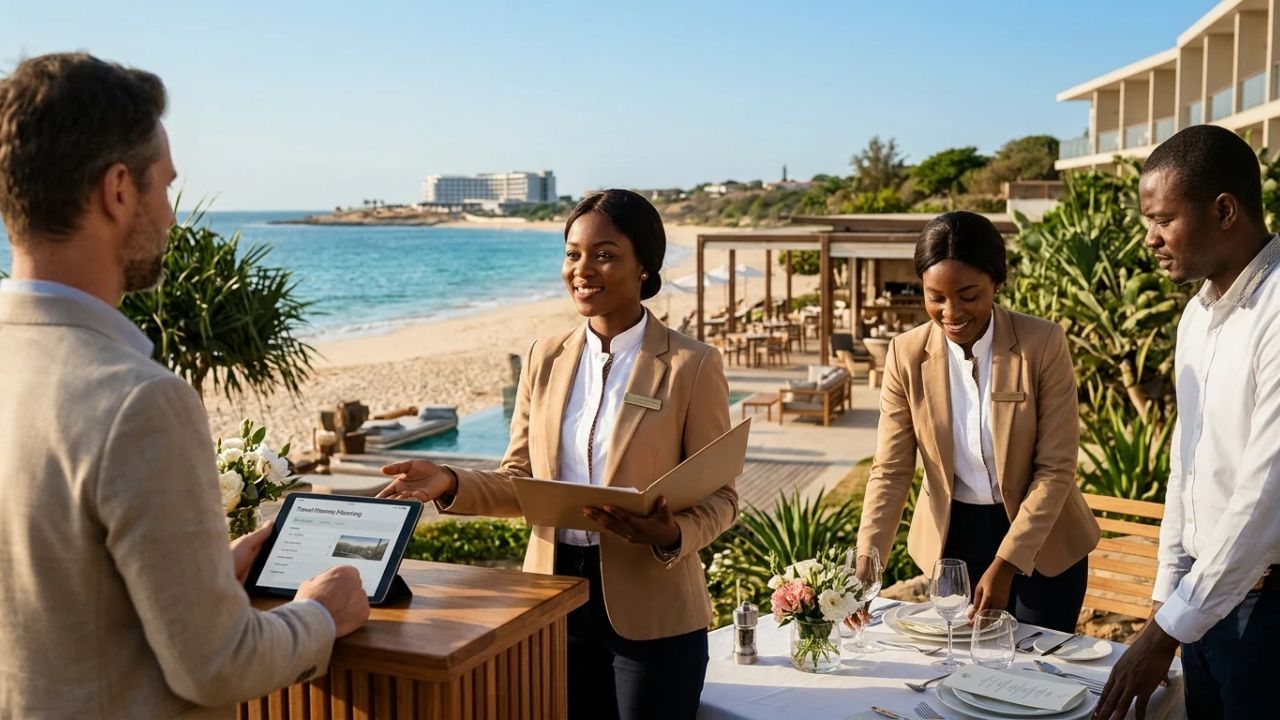
LUANDA / LISBON — In an ambitious economic restructuring designed to diversify its sovereign revenues beyond crude oil extraction, Angola has launched an aggressive, dual-track tourism development strategy combining human capital training in Portugal with large-scale foreign capital mobilization across the Persian Gulf.
At the center of this national effort is an unprecedented investment in professional workforce education. Under an expanding bilateral accord between Angola’s Ministry of Tourism and the Portuguese government, 105 Angolan students arrived in Portugal for the 2026/2027 academic year to undertake intensive vocational degrees across ten elite hospitality and culinary academies.
Representing a 106 percent expansion over the 51 trainees placed across six institutions the previous year, the program provides comprehensive training in seven core disciplines, spanning culinary arts, hotel operations, nature tourism guiding, pastry production, and cultural heritage management.
This training surge coincides with an aggressive diplomatic pivot toward the Middle East. Seeking to transform its 1,600-kilometer Atlantic coastline, biodiverse national parks, and colonial architectural legacy into an international leisure destination, the Angolan government designated the Persian Gulf as a top-priority foreign investment partner.
Spearheaded by projects such as the $500 million Dubai Investments Park Angola and high-level bilateral trade compacts with the United Arab Emirates, Angola is positioning itself as southern Africa's next major frontier for high-yield hospitality.
However, as Lusophone peer economies demonstrate, international capital and marketing campaigns alone do not guarantee a thriving visitor economy. Success hinges on converting institutional training into domestic employment, managing the domestic travel foundation that currently drives 70 percent of local hotel occupancy, and developing conservation concessions that deliver tangible prosperity to rural communities.
ANGOLA TOURISM TRANSFORMATION METRICS: 2026 BENCHMARKS
| Strategic Pillar | Operational Metric | Growth / Scope |
|---|---|---|
| Hospitality Workforce | 105 Trainees in Portugal | +106% YoY |
| Training Program | 10 Hospitality Academies | 7 Disciplines |
| Priority Capital Feeder | Persian Gulf (UAE, KSA, Qatar) | Sovereign FDI |
| Target Markets | Europe, Maghreb, N. America | Target Pools |
| Primary Mixed-Use Anchor | Dubai Investments Park Angola | USD $500M |
| Development | 60-Room Boutique Hotel Anchor | Late-2029 Open |
| Domestic Lodging Share | 70% of Accommodation Occupancy | Core Bed Base |
| Annual Foreign Arrivals | 223,000+ International Guests | Baseline Inflow |
| Visa Facilitation Accord | 98-Nation Visa Waiver System | 30-Day Stays |
| Regional Aviation Megahub | Dr. António Agostinho Neto Int | 15M Capacity |
The Human Capital Imperative: Inside the Portuguese Hospitality Pipeline
For emerging destinations attempting to build a luxury visitor economy, human capital represents the primary operational bottleneck. While international sovereign wealth funds can finance five-star beach resorts and desert safari camps, a world-class destination requires certified executive chefs, bilingual front-desk managers, licensed wilderness guides, and trained hotel operations teams.
Recognizing that domestic vocational infrastructure could not scale quickly enough to meet the demands of planned luxury resorts, the Angolan Ministry of Tourism established a government-to-government human resource partnership with Turismo de Portugal, the state tourism authority.
                  THE LUSOPHONE TRAINING PIPELINE

   [ Angolan Ministry of Tourism Recruitment ]
                        |
                        v
   [ 105 Selected Trainees (2026/27 Academic Year) ]
                        |
                        v
   +---------------------------------------------------------------+
   |        TEN ACCREDITED HOSPITALITY ACADEMIES IN PORTUGAL       |
   |                                                               |
   |  * Culinary Arts & Professional Kitchen Management            |
   |  * Bakery, Confectionery & Pastry Production                  |
   |  * Food & Beverage Operations & Table Service                 |
   |  * Hotel Rooms Division & Executive Housekeeping              |
   |  * Ecotourism Guiding & Protected Landscape Interpretation   |
   |  * Cultural Heritage Curation & Museum Administration         |
   |  * Tourism Enterprise Leadership & Event Planning             |
   +---------------------------------------------------------------+
                        |
                        v
   [ 2-Year Practical Rotations in Portuguese Boutique Hotels ]
                        |
                        v
   [ Repatriation to Angolan Coastal Resorts, Safaris, and AIAO Hub ]
The 106 percent expansion in student intake reflects a strategic shift from general education toward specialized technical expertise. The 105 students placed across ten Portuguese schools—spanning Lisbon, Porto, the Algarve, Coimbra, and Estoril—undergo two-year dual-education programs combining classroom theory with hands-on kitchen and hotel internships.
The curriculum covers seven operational sectors:
- Culinary Arts and Food Production: Professional kitchen organization, nutritional science, high-volume banquet management, and the modern reinvention of traditional Angolan gastronomy (moamba de galinha, fresh Atlantic seafood, tropical fruit reductions).
- Bakery and Pastry Craftsmanship: European pastry production, artisanal baking, and chocolate confectionery to staff five-star resort bakeries.
- Food and Beverage Service Operations: Dining room etiquette, international wine cellar management, sommelier foundations, and banquet service.
- Hotel Rooms Division Management: Front office software operations, yield management, executive housekeeping, and VIP concierge services.
- Ecotourism and Nature Guiding: Wilderness survival, ethical wildlife observation, regional botany and zoology, and low-impact trail logistics.
- Cultural Heritage and Monument Interpretation: Archival preservation, museum guiding, and the historical presentation of Angola’s UNESCO-listed Mbanza Kongo historic center and colonial coastal fortresses.
- Hospitality Management and Event Operations: Financial budgeting, personnel scheduling, digital reservation systems, and international corporate conference coordination.
However, the ultimate success of this training pipeline will be judged by post-graduation employment outcomes. Tourism analysts emphasize that Angola and Portugal must establish formal tracking mechanisms to monitor graduation rates, verify repatriation to Angola, and guarantee job placements within domestic hotels, airlines, and safari reserves.
Without guaranteed career pathways and competitive domestic wage structures, repatriated hospitality professionals risk being lost to corporate administrative roles or the European job market, diminishing the initiative's impact on Angola's tourism sector.
The linguistic and institutional alignment provided by the Community of Portuguese Language Countries (CPLP) gives this training initiative a decisive advantage. Because Portuguese is the official language of instruction, Angolan trainees bypass the language barriers that often hinder technical education in Anglophone or Francophone centers. Students enter directly into advanced professional coursework, master European Union hygiene and food safety standards, and assimilate service methodologies that match international luxury hospitality benchmarks.
In addition, the immersion in Portugal’s mature tourism economy provides trainees with invaluable exposure to world-class destination stewardship. From Lisbon’s historic urban boutique hotels to the eco-resorts of the Alentejo and the high-density coastal resort operations of the Algarve, students observe how a nation successfully balanced tourism expansion with cultural preservation. This practical experience equips returning graduates to introduce sustainable waste management, energy conservation, and authentic local sourcing into Angola's emerging resort corridors.
Courting Gulf Capital: The Pivot to Middle Eastern Sovereign Investors
While Portugal provides the operational knowledge, Angola is looking to the Persian Gulf for the massive capital investments required to construct luxury resort infrastructure.
In August 2026, the Council of Ministers formally designated the Persian Gulf as a tier-one investment territory, placing Gulf cooperation alongside bilateral initiatives targeting Europe, the Maghreb, South Africa, and North America.
The strategic alignment between Luanda and Gulf capitals—particularly Abu Dhabi, Dubai, and Doha—is built on mutual economic interests. For Gulf sovereign funds and private conglomerates seeking to deploy capital into long-term agricultural, logistics, and hospitality assets across resource-rich developing markets, Angola offers untouched geographic assets, vast natural diversity, and strong government support.
ANGOLA'S FOUR TARGET TOURISM INVESTMENT PILLARS
| Entity / Route | Metrics | Operational Status |
|---|---|---|
| Growth Pillar | Primary Geographic Locations | Target Investor Profile |
| 1. Sun and Beach | Luanda Bay, Ilha de Luanda, Cabo | Luxury resort developers, marina |
| Tourism | Ledo, Benguela, Baía Azul, Namibe | operators, private beach clubs |
| 2. Nature and | Kissama National Park, Cangandala, | Eco-safari concessionaires, |
| Wildlife Safaris | Iona National Park, Okavango Basin | sustainable lodge operators |
| 3. MICE & Corporate | Luanda Financial District, Talatona | International business hotel |
| Conferences | Convention Centers, AIAO Corridor | chains, exhibition conglomerates |
| 4. Luxury and | Serra da Leba, Kalandula Falls, | High-end wellness retreats, thermal |
| Wellbeing Retreats | Huíla Highlands, Pedras Negras | spa resorts, boutique eco-villages |
1. The Dubai Investments Park Angola Project
The most prominent symbol of this Gulf economic partnership is Dubai Investments Park Angola (DIP Angola), a $500 million mixed-use residential, commercial, and industrial master-planned development located along the coastline south of Luanda.
Modeled on the successful Dubai Investments Park in the UAE, the multi-year development incorporates light industrial zones, corporate office towers, residential neighborhoods, and recreational infrastructure.
Within the hospitality component of the master plan, developers have announced a flagship 60-room luxury boutique hotel. Designed to serve international corporate executives, visiting trade delegations, and leisure travelers exploring the coastal beaches of Cabo Ledo, the property is scheduled to anchor the community's oceanfront boulevard.
However, industry analysts stress that investment announcements must be evaluated alongside construction progress. Project schedules indicate that initial residential handovers are targeted for late 2029, with full development completion projected for late 2030.
For the hotel to succeed, developers must secure operational hotel management agreements with established international luxury brands, obtain environmental construction permits, and ensure that local Angolan construction labor and material suppliers are meaningfully integrated into the project.
2. Four Strategic Investment Sectors
Angola’s investment promotion agency (AIPEX) is pitching projects across four sectors:
- Sun and Beach Resorts: Developing luxury coastal resorts along the untouched sands of Cabo Ledo (internationally famous among surfing communities) and the tranquil waters of Baía Azul in Benguela.
- Nature and Ecotourism: Structuring public-private concessions within national parks, attracting specialized conservation safari operators to build low-impact luxury tented camps.
- MICE and Urban Business Hospitality: Upgrading executive hotel capacity in Luanda and Talatona to host continental energy conferences, mining symposiums, and regional political assemblies.
- Highland Wellness Escapes: Capitalizing on the dramatic topography of the Huíla plateau, Kalandula Falls (one of Africa's largest waterfalls by volume), and the scenic hairpin passes of Serra da Leba to construct high-altitude wellness and mountain retreats.
The Foundation of Domestic Travel: The 70% Occupancy Reality
While international promotion garners headlines, the day-to-day foundation of Angola’s hospitality sector remains domestic tourism.
According to official statistical updates released by the Ministry of Tourism in October 2026, domestic travelers accounted for approximately 70 percent of total accommodation occupancy across the country in 2025.
During the same twelve-month period, the country welcomed 223,000 international visitors.
                  ANGOLAN ACCOMMODATION OCCUPANCY DYNAMICS

   [ Total National Commercial Lodging Capacity ]
                        |
                        +---> 70% Driven by Domestic Angolan Residents
                        |     (Corporate business travel, provincial trade,
                        |      weekend family beach getaways, religious visits)
                        |
                        +---> 30% Driven by International Inbound Visitors
                              (Energy sector executives, diplomatic missions,
                               regional African traders, international tourists)
This 70 percent domestic occupancy metric provides important operational context:
- Year-Round Revenue Stability: Domestic travelers provide essential cash flow during seasonal dips in international travel. Business executives shuttling between Luanda, Huambo, and Lobito, alongside urban families taking weekend breaks in coastal Benguela or Namibe, sustain occupancy across local hotels, dining establishments, and transport companies.
- Affordability and Pricing Distortions: The heavy concentration of domestic travel highlights a structural market challenge. Decades of oil-driven inflation made Luanda one of the most expensive cities in Africa. Luxury hotels regularly command rack rates between $250 and $450 per night, pricing standard accommodations out of reach for middle-class Angolan families. For domestic tourism to expand sustainably, the hospitality sector must develop mid-tier, affordable family lodges and self-catering facilities.
- Infrastructure Accessibility Outside the Capital: Outside the paved highway links connecting Luanda to Benguela and Malanje, regional road transit across interior provinces remains challenging. Bridging this gap requires public investments in secondary roadway resurfacing, interprovincial rail upgrades on the Benguela Railway (Caminho de Ferro de Benguela), and lower domestic airfares on the state carrier, TAAG Angola Airlines.
Provincial business travel and regional agricultural fairs also play an underestimated role in anchoring domestic hotel occupancy. Cities such as Huambo in the central highlands and Lubango in Huíla Province host annual agricultural exhibitions, cattle auctions, and regional trade conclaves that draw thousands of domestic delegates. These gatherings create concentrated demand for local guesthouses (pensões), regional vehicle rentals, and municipal food markets, demonstrating that domestic business mobility extends far beyond Luanda's oil towers.
To unlock the full economic potential of domestic travel, municipal administrations are exploring public-private partnerships to construct community campsites, municipal beach facilities, and designated picnic areas along major coastal highways. By providing clean sanitation, secure vehicle parking, and affordable food stalls operated by local entrepreneurs, authorities can encourage responsible domestic exploration while keeping travel expenses manageable for middle-class citizens.
Comparative Lessons: Tourism Models in Mozambique and Cabo Verde
Angola’s tourism ambitions can be evaluated through the contrasting experiences of its fellow Lusophone African partners, Mozambique and Cabo Verde.
LUSOPHONE AFRICAN TOURISM BENCHMARK COMPARISON: 2026
| Country | Strategic Approach | Key Metric Observed | Operational Lesson |
|---|---|---|---|
| Angola | Gulf capital mobilization + | 70% domestic lodging | Must bridge luxury |
| Portuguese vocational training | 223k foreign arrivals | pricing with local | |
| affordability | |||
| Mozambique | Bilateral Portugal training pact + | Expanding trade and | Bilateral frameworks |
| UAE commercial investment missions | maritime logistics | require concrete, | |
| via Maputo corridors | funded milestones | ||
| Cabo Verde | Mass sun-and-beach resort tourism | +9.2% guest arrivals; | Headline arrivals |
| heavily dependent on European pack. | -0.6% bed overnights; | can mask declining | |
| Occupancy fell to 52% | length of stay |
1. Mozambique: Parallel Bilateral Agreements
Like Angola, Mozambique has forged partnerships with Portugal and the Gulf. In June 2026, the Portuguese government approved a formal bilateral tourism cooperation agreement with Mozambique, establishing structured programs in joint marketing, technical expertise sharing, and hospitality curriculum design.
Concurrently, a high-level trade and investment delegation from the UAE visited the Maputo International Trade Fair (FACIM) in August 2026, exploring commercial partnerships in transport logistics and coastal real estate.
However, Mozambique’s experience highlights the distinction between framework diplomacy and ground-level execution. Bilateral agreements require ring-fenced budgets, defined administrative responsibilities, and private-sector involvement.
Without specific project milestones and regulatory approvals, government-to-government memorandums risk remaining aspirational rather than delivering operational lodges and employment opportunities.
2. Cabo Verde: The Metric Trap of Fleeting Arrivals
The island archipelago of Cabo Verde provides a cautionary case study regarding how tourism performance is measured.
During the second quarter of 2026, Cabo Verdean hotels celebrated a 9.2 percent year-on-year surge in guest arrivals, welcoming 276,598 international visitors.
However, deeper statistical analysis reveals an operational paradox:
- Total overnight stays fell by 0.6 percent to 1,292,441.
- The average length of stay compressed from 4.9 nights to 4.5 nights.
- Overall bed occupancy dropped from 60 percent to 52 percent.
This dynamic demonstrates that higher visitor arrival numbers can mask declining occupancy and compressed spending.
For Angola, the lesson is clear: pursuing high headline arrival statistics through discounted short stays produces minimal local benefit.
Instead, the country must structure its visitor economy to maximize dwell time, per-visitor expenditure, and local economic retention, ensuring that tourists explore inland provinces, patronize local restaurants, and support community enterprises.
Conservation and Ecotourism: Sustainable Safari Concessions
Angola possesses some of the most expansive and ecologically varied protected landscapes in southern Africa, spanning coastal deserts, tropical rainforests, savannah woodlands, and the headwaters of the Okavango Delta.
However, during decades of civil conflict, wildlife populations were severely depleted. Over the past decade, the Ministry of Environment has executed an ecological restoration program, reintroducing key species and partnering with international conservation organizations.
                    ANGOLA'S STRATEGIC CONSERVATION LANDSCAPES

   [ Kissama National Park ] --------> Coastal savannah & riverine forests along Kwanza River;
                                       Elephant, giraffe, and eland sanctuaries near Luanda

   [ Cangandala National Park ] -----> Protected habitat of the Giant Sable Antelope
                                       (Palanca Negra Gigante), Angola’s national icon

   [ Iona National Park ] -----------> Vast 15,150 sq km coastal desert wilderness;
                                       Managed in partnership with African Parks;
                                       Pristine dunes, endemic Welwitschia, desert wildlife

   [ Okavango Delta Headwaters ] ----> Source rivers in central-eastern Angola providing
                                       vital water flows to Botswana’s wildlife sanctuaries
To finance long-term park protection without overburdening the state treasury, the government is tendering sustainable ecotourism concessions:
- Kissama National Park: Located just two hours south of Luanda along the banks of the Kwanza River, Kissama represents Angola’s most accessible safari destination. Concession models focus on luxury riverboat cruises, sport-fishing lodges, and open-vehicle wildlife game drives, offering international and domestic visitors high-quality wildlife encounters within easy reach of the capital.
- Iona National Park: Spanning over 15,000 square kilometers in southwestern Namibe Province, Iona is being restored under a long-term co-management agreement with African Parks. As the oldest and largest national park in Angola, Iona combines sand dunes meeting the Atlantic Ocean with unique desert-adapted species, including cheetah, springbok, oryx, and the endemic Welwitschia mirabilis plant. Concession plans emphasize low-density, high-value luxury desert camps that employ indigenous Himba and Herero pastoral communities as guides, trackers, and cultural interpreters.
- Cangandala National Park: In Malanje Province, Cangandala preserves the sanctuary of the Giant Sable Antelope (Hippotragus niger variani), an animal revered as Angola's national emblem. Eco-lodges under development focus on scientific tourism, photographic safaris, and educational field excursions, with concession revenues directly funding anti-poaching ranger units.
To avoid the pitfalls of greenwashing, the Ministry of Tourism must ensure that all ecotourism concessions undergo rigorous environmental impact assessments, enforce strict carrying-capacity caps, and guarantee that surrounding local communities receive direct revenue shares, employment quotas, and access to basic healthcare and educational infrastructure.
Angola’s strategic geographic position also places it at the ecological foundation of the Kavango-Zambezi Transfrontier Conservation Area (KAZA TFCA), the world’s largest cross-border terrestrial conservation landscape. The Cuito and Cubango river catchments originating in central Angola supply roughly 95 percent of the freshwater that sustains Botswana’s Okavango Delta. By developing low-impact wilderness concessions along these pristine river corridors, Angola can link its emerging safari sector with established circuits in Namibia, Botswana, and Zambia.
Community involvement remains the benchmark of this ecological strategy. In partnership with international conservation trusts, local forestry cooperatives are trained in community-based natural resource management. By granting rural villages formal tenure rights over wildlife habitats and sharing lodge concession fees, conservation authorities convert former subsistence poachers into certified wildlife monitors and eco-lodge hosts. This integration protects endangered species while creating sustainable, multi-generational livelihood options outside industrial resource extraction.
Aviation Infrastructure and Regional Gateway Access: The New Luanda Airport
The foundation of any international tourism strategy is aviation connectivity. For decades, Luanda’s legacy Quatro de Fevereiro International Airport (LAD) struggled with passenger congestion, airside bottlenecks, and limited wide-body parking.
In response, Angola constructed the Dr. António Agostinho Neto International Airport (AIAO), located forty kilometers southeast of central Luanda in Bom Jesus.
Constructed with an investment exceeding $3 billion, the facility represents one of the largest modern airport campuses on the African continent:
DR. ANTÓNIO AGOSTINHO NETO INTERNATIONAL AIRPORT (AIAO) SPECIFICATIONS
| Entity / Route | Metrics | Operational Status |
|---|---|---|
| Engineering Feature | Technical Capability | Operational Significance |
| Passenger Capacity | 15 Million Passengers Annually | Slashes airport bottlenecks; |
| (Expandable based on master plan) | enables Southern African hub transit | |
| Parallel Runways | North Runway: 4,000m x 60m (Code F) | Accommodates Airbus A380 and |
| South Runway: 3,800m x 60m (Code E) | Boeing 777-9 full-payload departures | |
| Cargo Logistics Center | 130,000 Metric Tonnes Annually | Perishable goods, marine exports, |
| Dedicated cold-storage facilities | and regional logistics forwarding | |
| Express Rail Connector | Dedicated suburban passenger rail | High-speed passenger connection |
| linking airport to downtown Luanda | bypassing urban roadway gridlock |
The commercial operationalization of AIAO transforms Angola’s aviation economics:
- Global Hub Transit Potential: With two full-length parallel runways capable of handling Code F aircraft (including the Airbus A380 and Boeing 747-8), AIAO positions national carrier TAAG Angola Airlines to construct a competitive transcontinental hub. Passengers traveling between South America (São Paulo) and East Asia, or between Western Europe and southern Africa, can connect seamlessly in Luanda.
- Direct Middle Eastern and European Corridors: Emirates, Qatar Airways, and Turkish Airlines have steadily expanded seat allocations into Luanda, providing direct long-haul connectivity to major Gulf capitals. European links are anchored by daily non-stop flights from TAP Air Portugal and Air France, linking Luanda directly to Lisbon and Paris.
- Dedicated Rail Linkage: To overcome suburban roadway traffic along the Luanda-Viana highway corridor, the government completed a dedicated express passenger railway linking AIAO directly to downtown Luanda's Estação da Boavista, providing travelers with safe, reliable thirty-minute airport transfers.
Immigration Reforms: Presidential Decree 189/23 and Frictionless Entry
Historically, obtaining an entry visa for Angola was notoriously complex, requiring consular letters of invitation, notarized bank guarantees, and lengthy bureaucratic processing times that deterred all but essential oil-sector personnel.
Recognizing that visa friction was crippling leisure travel growth, the Angolan government enacted Presidential Decree No. 189/23, establishing unilateral tourist visa exemptions for citizens of ninety-eight nations worldwide.
ANGOLA'S 98-NATION VISA EXEMPTION FRAMEWORK: 2026
| Entity / Route | Metrics | Operational Status |
|---|---|---|
| Category | Covered Jurisdictions | Entry Terms & Permitted Stays |
| European Union & UK | All 27 EU Member States, United | Visa-free entry for tourism; |
| Kingdom, Switzerland, Norway | Up to 30 days per entry | |
| North & South America | United States, Canada, Brazil, | Up to 90 cumulative days per |
| Argentina, Chile, Mexico | calendar year; no consular pre-fee | |
| Middle East & Gulf | UAE, Saudi Arabia, Qatar, Kuwait, | Immediate passport stamp at AIAO |
| Bahrain, Oman | and maritime port border control | |
| African Neighbors | SADC member states, Morocco, Egypt, | Seamless regional cross-border |
| Rwanda, Kenya, Ghana | leisure and corporate transit |
Under this modern immigration framework:
- Eligible passport holders do not require an advance visa or electronic consular pre-authorization.
- Visitors receive an entry stamp at airport border controls upon presenting a passport with at least six months of remaining validity, a confirmed return flight booking, and international certification of vaccination against yellow fever.
- Stays are granted for up to thirty days per visit, with travelers permitted a maximum of ninety days within any calendar year.
- This policy eliminates hundreds of dollars in consular fees and bureaucratic delays, making spontaneous leisure holidays, surf expeditions, and safari tours accessible to international travelers.
Passenger Rights and Consumer Protection Standards
International travelers and corporate executives flying into Angola benefit from established statutory air passenger protections, depending on their carrier and route structure:
                     AIR PASSENGER PROTECTION FRAMEWORKS

   [ Flights Departing EU/UK to Luanda (e.g., TAP Air Portugal, Air France) ]
                 |
                 +---> Flight Delay >4 Hours (Long-Haul): €600 cash compensation under EU261
                 |
                 +---> Cancellation / Denied Boarding: Re-routing or full cash refund
                 |                                     plus airline-provided hotel & meals

   [ Domestic and Regional African Flights (TAAG Angola Airlines) ]
                 |
                 +---> Regulated by National Civil Aviation Authority (ANAC Angola)
                 |
                 +---> Airline-caused overnight cancellations mandate hotel lodging,
                       ground transport, and passenger re-accommodation
1. Long-Haul European Flights and EU261 Protections
Travelers departing European gateways (such as Lisbon, Paris, or Frankfurt) aboard European-flagged airlines are protected by Regulation (EC) No 261/2004. In the event of a long-haul cancellation or arrival delay exceeding four hours caused by airline operational faults, passengers are legally entitled to statutory cash compensation of €600, alongside mandatory hotel accommodations and meal vouchers.
2. Domestic Aviation Safeguards (ANAC Angola)
Domestic air travel within Angola—linking Luanda to regional provincial capitals like Lubango, Huambo, Saurimo, and Cabinda—is overseen by the National Civil Aviation Authority (ANAC Angola). Under national transport regulations, airlines that cancel scheduled flights due to technical or crew scheduling faults must provide passengers with immediate re-accommodation on the next available flight, meal vouchers during extended delays, and complimentary hotel accommodations if flights are deferred to the following day.
Practical Travel Playbook: Navigating Angola Safely in 2026
For independent travelers, wildlife photographers, and corporate delegations visiting Angola throughout 2026 and 2027, strategic preparation guarantees a rewarding experience.
EXECUTIVE ANGOLA TRAVEL ACTION CHECKLIST
| Entity / Route | Metrics | Operational Status |
|---|---|---|
| Element | Recommended Operational Protocol | Key Travel Advantage |
| Health & Immunization | Yellow fever vaccination certificate | Mandatory for entry; carry yellow |
| required; malaria prophylaxis | WHO card with passport | |
| Currency Logistics | Carry fresh US dollar / Euro cash; | Local currency (Kwanza) cash via |
| Multi-currency debit cards | official bank bureaus (Câmbio) | |
| Ground Transportation | Hire 4x4 vehicle with driver for | Navigates unpaved rural tracks; |
| travel outside Luanda city limits | eliminates navigation challenges | |
| Telecommunications | Purchase local SIM card at airport | Reliable 4G/5G mobile connectivity |
| (Unitel or Africell counters) | across provincial urban centers |
1. Currency Exchange and Digital Payments
Angola’s official currency is the Kwanza (AOA). While international credit cards (Visa and Mastercard) are increasingly accepted at five-star hotels, airline offices, and upscale restaurants in Luanda, cash remains necessary for day-to-day transactions in rural provinces, national parks, and artisanal craft markets.
- Bring crisp, undamaged US Dollar or Euro banknotes (issued after 2013) to exchange at licensed bank exchange bureaus (Casas de Câmbio) or commercial bank branches.
- ATMs (Multicaixa) are widely available in Luanda, though foreign debit cards can occasionally encounter withdrawal limits.
- Avoid unvetted street moneychangers; utilize official bank exchange desks to ensure fair market rates and counterfeit protection.
2. Ground Transit and Overland Safaris
Traveling between Luanda and coastal beach destinations like Cabo Ledo or Benguela can be undertaken via paved coastal highways. However, excursions into Kissama, Iona, or Kalandula Falls require high-clearance 4x4 vehicles equipped with recovery gear.
- Independent travelers should hire a reputable vehicle with a licensed local driver-guide through accredited Angolan tour operators.
- Check military checkpoint protocols: carrying certified color photocopies of your passport and entry stamp facilitates smooth passage through provincial security checkpoints.
3. Health and Medical Preparedness
- Mandatory Yellow Fever Certificate: Border immigration officials inspect the International Certificate of Vaccination or Prophylaxis (ICVP). Ensure your yellow fever vaccine was administered at least ten days before departure.
- Malaria Prevention: Angola is a malaria-endemic region. Travelers should consult travel medicine physicians regarding appropriate prescription malaria prophylactics (such as atovaquone-proguanil or doxycycline), utilize insect repellent containing DEET, and sleep under insecticide-treated mosquito nets when staying in rural eco-lodges.
- Medical Evacuation Insurance: Ensure your travel insurance policy incorporates comprehensive international medical evacuation coverage, providing emergency air-ambulance transport to Luanda or Johannesburg in the event of serious injury.
Strategic Horizons: The Next Chapter in African Tourism
Angola’s pursuit of Gulf investment and Portuguese vocational hospitality education reflects an understanding of modern tourism economics. Transforming an economy from fossil fuel dependence into a diversified visitor destination cannot be achieved overnight through marketing slogans alone.
By coupling human capital development with sovereign investment partnerships, modernizing aviation infrastructure through the Dr. António Agostinho Neto International Airport, and implementing open-door visa exemptions for ninety-eight nations, Angola has laid the institutional groundwork for sustainable growth.
As the 105 hospitality students complete their culinary and hotel management programs in Portugal and return home to lead operations in Luanda, Benguela, and Iona, they carry the skills required to welcome the world. If Angola balances foreign luxury capital with domestic accessibility and conservation stewardship, it stands poised to establish itself as one of the most compelling, authentic travel destinations on the African continent.
Related Travel Guides
- Argentina Outpaces the United States to Drive Brazil's Record €1.74 Billion Corporate Travel Milestone in 2026
- Mexico and Italy Transform Global Tourism Economics Through Multi-Year Wholesale Deals
- Greece Showcases Agios Nikolaos at WTM London 2026 with Luxury Cruise Plans
- Spain and 42 European Nations Set Record Overnight Travel Growth
This article is for informational purposes. Flight routes, passenger regulations, visa rules, and transit advisories are subject to change by airlines and aviation authorities. Readers are advised to verify schedules and travel documentation with relevant carriers and border agencies before departure.
Related Stories
Thailand, Japan, and Cambodia Brace for Winter Tourism Setback as Chinese Group Travel Plunges Amid Safety Concerns