
FIFA World Cup 2026 Drives $3.5 Billion Impact for New York and New Jersey
The 2026 FIFA World Cup generated a record $3.5 billion in economic impact for New York and New Jersey, beating the original $3.3 billion projection.

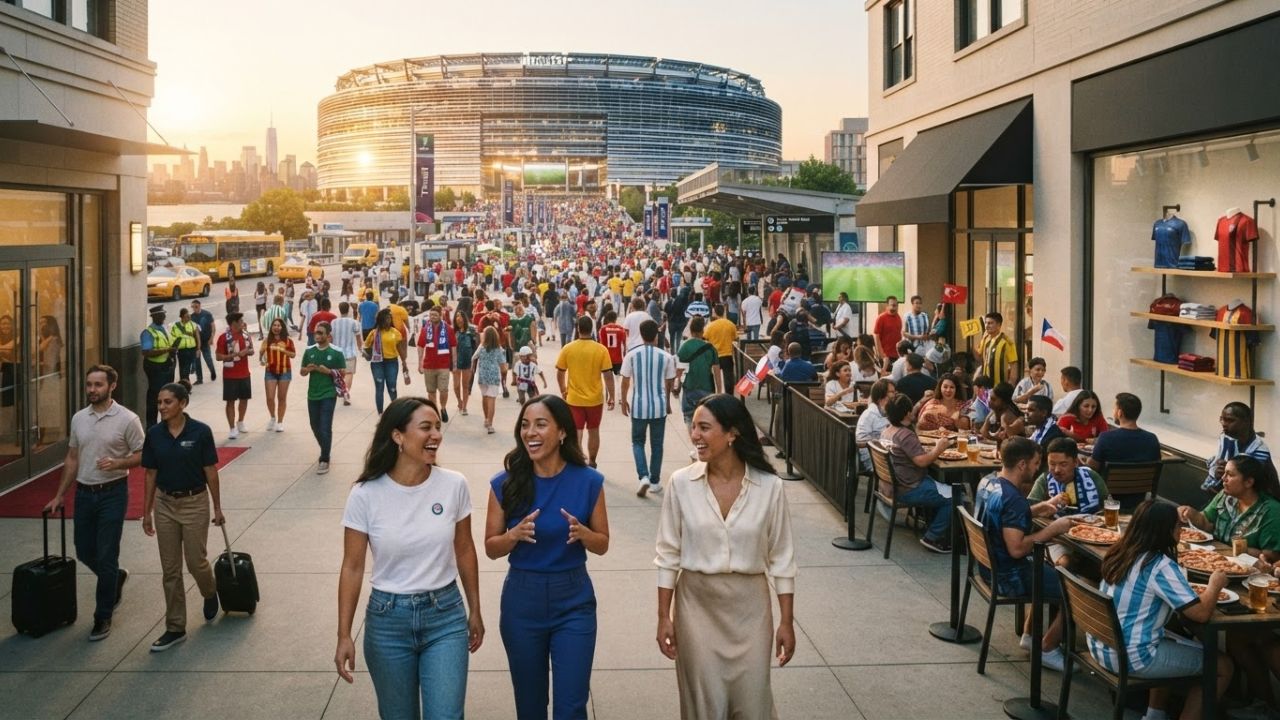
Image generated by AI
The FIFA World Cup 2026 generated an estimated $3.5 billion in total regional economic impact for New York and New Jersey, beating the original $3.3 billion forecast. The post-event study indicates that direct visitor and fan spending across lodging, food, and transport reached $1.9 billion, supporting 27,424 regional jobs.
The Local Trend Revealed
According to the post-event analysis conducted by Tourism Economics, the multi-state region of New York and New Jersey outpaced other U.S. host destinations during the tournament, which ran from June 11 to July 19, 2026. The economic return was driven by high visitor volumes and operational spending:
- Inbound Visitor Numbers: The two states welcomed more than 1.2 million visitors. Over 645,000 fans attended eight matches (including the FIFA World Cup Final in East Rutherford), while another 626,300 non-local travelers visited for regional fan experiences, contributing $1.7 billion in direct spending. Tournament operations added $286 million.
- Direct Spending by Sector: Lodging received approximately $653 million in direct spending, followed by food and beverage ($346 million), retail ($264 million), transportation ($200 million), and recreation/entertainment ($195 million).
- Economic Circulation: The $1.9 billion in direct activity generated an additional $693 million in indirect and $916 million in induced economic activity.
- Employment and Wages: The event supported 27,424 total jobs (nearly 18,000 directly related), with food/beverage supporting 4,500, transportation 4,400, and lodging 4,000. These jobs produced roughly $1.4 billion in total labor income ($792 million direct).
- Tax Generation: World Cup activity generated $759 million in combined federal, state, and local taxes, including $414.2 million for state and local governments ($174 million in sales tax, $39 million in bed tax).
- Community Engagement: A $500,000 State Community Grant Program funded local viewing events. Watch parties attracted approximately 6,000 fans at Stony Brook University, over 13,000 at UBS Arena, over 5,500 at Kensico Dam Plaza, and over 30,000 in Central Park.
- Legacy Investments: Under the FY27 Budget, the region launched the $5 million NY Kicks initiative, providing soccer infrastructure in disadvantaged communities, with up to $1 million in additional funding for equipment and training.
Cultural & Environmental Value
For the visitor, the real impact of the tournament is the redistribution of economic benefits to local communities. Travelers can support neighborhood merchants by dining at family-run eateries in Queens or Newark's Ironbound district (famous for Portuguese and Spanish cuisines) rather than chain restaurants near tourist hubs, ensuring that tourism spending directly supports local business owners.
Eco-tourism is also reflected in the region's transport choices. The NJ Transit Meadowlands Rail Line and the NYC MTA subway serve as models of low-impact mass transit. Choosing rail networks instead of private rideshares reduces traffic congestion and carbon emissions in the metropolitan area.
Visitor Insider Tips for New York and New Jersey Travel
Travel specialists recommend the following tips for regional travel:
- Utilize Secaucus and Meadowlands Rail Links: MetLife Stadium (New York New Jersey Stadium) has limited parking. Ride the NJ Transit rail link from Penn Station in Manhattan to Secaucus Junction, transferring directly to the Meadowlands Rail Line. Purchase round-trip tickets in advance via the NJ Transit mobile app to avoid long ticket lines.
- Observe the Off-Peak Window: Plan your regional visit during the spring (late April to May) or autumn (late September to October). The weather is comfortable, and room rates are lower than during peak summer events or winter holiday periods.
- Sample Regional Culinary Specialties:
- In New York: Try a classic street-cart hot dog, warm soft pretzels, or a slice of New York-style thin-crust pizza.
- In New Jersey: Order a classic Taylor Ham / Pork Roll, Egg, and Cheese breakfast sandwich at a local diner.
- Observe Transit and Sidewalk Etiquette: Stand on the right and walk on the left when riding escalators in transit hubs. Pedestrians walk quickly in NYC; step to the side if checking directions, and never block subway turnstiles. Tipping of 15 to 20 percent is standard.
- Explore Under-the-Radar Spots: Skip the crowded Manhattan viewpoints and take the free Staten Island Ferry for panoramic views of the Statue of Liberty. In New Jersey, visit Liberty State Park in Jersey City for a quiet waterfront walk overlooking lower Manhattan.
Tourism Outlook
The long-term impact of hosting the World Cup will solidify the region's position as a leading global host for major events. By coordinating transit upgrades, community watch parties, and soccer legacy investments, the state governor's offices can leverage international media exposure to drive future leisure and business travel, supporting regional tourism employment.
FAQ: New York & New Jersey World Cup Impact
What was the final economic impact of the World Cup in NY and NJ? The tournament generated $3.5 billion in total regional economic impact, exceeding the original $3.3 billion projection.
How many visitors traveled to the region for the World Cup? Over 1.2 million visitors traveled to the two states, including 645,000 match attendees and 626,300 non-local fans visiting for regional events.
What is the NY Kicks program? It is a $5 million World Cup legacy investment fund designed to build soccer infrastructure in disadvantaged communities across New York State.
How many jobs were supported by the tournament? The tournament supported 27,424 total jobs and generated approximately $1.4 billion in labor income across the two states.
Related Travel Guides
Disclaimer
This article is for informational and educational purposes only. It does not constitute legal, financial, or professional advice. While we strive to provide accurate and up-to-date information, travel policies, regulations, and conditions change rapidly. Always verify information with official sources before making travel decisions. Nomad Lawyer makes no representations about the accuracy, reliability, completeness, or suitability of the information provided. Readers should consult qualified professionals for advice specific to their circumstances. The views expressed in this article are those of the author and do not necessarily reflect the views of Nomad Lawyer.
Raushan Kumar
Founder & Lead Developer
Full-stack developer with 11+ years of experience and a passionate traveller. Raushan built Nomad Lawyer from the ground up with a vision to create the best travel and law experience on the web.
Learn more about our team →