
Brazil Powers Global Travel Surge: Complete 2026 Guide to Coastal Booms, Rio Carnival ROI, Ecotourism, and Nomad Visas
Brazil's visitor economy surges past $165B GDP impact, driven by Rio Carnival revenues, Amazon ecotourism, Copacabana hotel yields, and digital nomad growth.

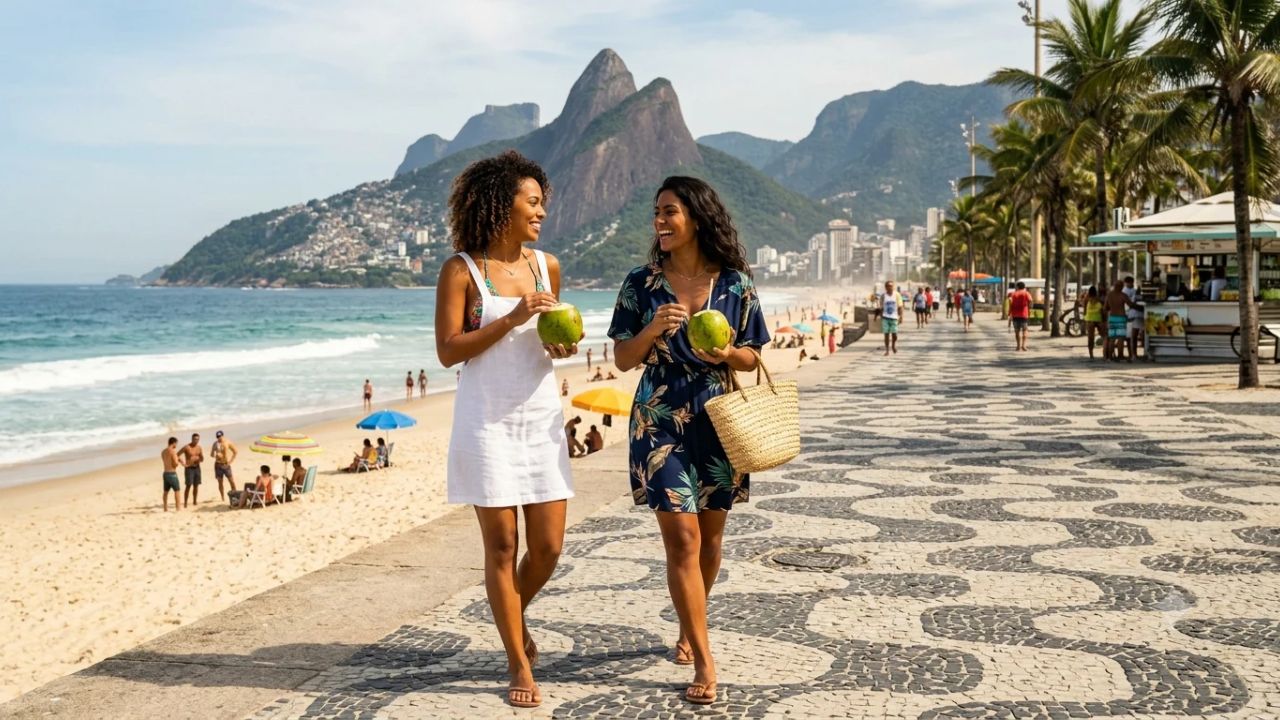
Brazil is redefining global travel dynamics through an unprecedented coastal and cultural expansion, with the national travel economy projected to generate over $165 billion in direct GDP contribution and international foreign visitor receipts surpassing $6.9 billion.
From the sun-drenched sands of Copacabana and Ipanema to the dense riverways of the Amazon Basin and the wildlife-rich wetlands of the Pantanal, South America's largest nation is experiencing a multi-sector tourism boom.
By blending world-renowned mega-events like the Rio Carnival with high-yield eco-tourism reserves, progressive digital nomad frameworks, and modernized aviation gateways, Brazil is converting its vibrant cultural identity into a powerful engine of macroeconomic growth.
===================================================================================
          BRAZIL NATIONAL TOURISM & MACROECONOMIC BENCHMARK 2026
===================================================================================
 [MACROECONOMIC PERFORMANCE & REVENUE METRICS]
  * Direct GDP Contribution: Projected to exceed $165 billion (~7.8% of national GDP).
  * Annual Foreign Visitor Direct Spend: Surpasses $6.9 billion.
  * Inbound International Arrivals: Targeting over 6.8 million international travelers.
  * Daily Spend Per Long-Haul Tourist: Averages between $115 and $140 per day.
  * Food & Beverage Expenditure Share: 28% of total spending ($35–$50 daily).

 [MEGA-EVENT & COASTAL HOSPITALITY ECONOMICS]
  * Rio Carnival Direct Impact: Generates $1.06 billion (5 billion BRL) in two weeks.
  * Carnival Hotel Occupancy: 92% to 98% capacity across Rio de Janeiro and Salvador.
  * Flight Surge for Carnival: 800+ additional domestic and international flights.
  * Beachfront Hotel Yields (Copacabana/Ipanema): ADR $180–$320; RevPAR up 22% in summer.
  * Beach Kiosk Economy: 4,000+ licensed kiosks generating $85 million annually.

 [BIODIVERSITY, ECOTOURISM, & REMOTE WORK TRENDS]
  * Amazon Basin Ecotourism: 6.7M sq km hosting 10% of global known biodiversity.
  * Pantanal Wetland Density: 170,000 sq km; 8 jaguar sightings per 100 km riverbank.
  * Ecotourism Permit Receipts: $45 million annually reinvested in park conservation.
  * Digital Nomad Visas: 35% annual growth; monthly spend $2,200–$3,100 per worker.
===================================================================================
Macroeconomic Architecture: Tourism GDP Contribution and Foreign Receipts
An analysis of Brazil's macroeconomic data confirms that cultural, beach, and nature-based tourism have evolved into pivotal pillars of national economic resilience.
Tourism’s direct contribution to Brazil’s Gross Domestic Product is projected to exceed $165 billion, representing approximately 7.8% of the country’s total economic output.
Foreign visitor spending now surpasses $6.9 billion annually, propelled by long-haul travelers from North America, Europe, and neighboring South American economies.
On average, international long-haul visitors spend between $115 and $140 per day, stimulating regional supply chains and strengthening the Brazilian Real (BRL).
BRAZIL TOURISM MACROECONOMIC VALUE BREAKDOWN
| Entity / Route | Metrics | Operational Status |
|---|---|---|
| ECONOMIC COMPONENT | RECORDED VOLUME | STRUCTURAL IMPACT |
| Direct GDP Contribution | $165+ billion | 7.8% of total national |
| economic production | ||
| Foreign Direct Spending | $6.9+ billion annually | Major foreign exchange |
| reserve accumulator | ||
| Inbound Target Arrivals | 6.8+ million visitors | Sustained post-pandemic |
| international growth | ||
| Average Daily Spend | $115 to $140 per traveler | Distributed into dining |
| lodging, and transport | ||
| Street Food Economy | $320 million annually | 150,000+ licensed micro |
| food entrepreneurs |
Coupled with sustained expansion in foreign arrivals targeting over 6.8 million inbound visitors, this macroeconomic performance incentivizes institutional capital to fund airport modernizations, boutique eco-resorts, and sustainable urban transport corridors.
Mega-Event Economics: Rio Carnival and Cultural Festival ROI
Cultural festivals in Brazil operate as colossal economic engines rather than isolated entertainment spectacles.
The crown jewel of this calendar is the world-renowned Rio de Janeiro Carnival, which generates more than $1.06 billion (equivalent to 5 billion Brazilian Reais) in direct economic turnover during its two-week celebration each February.
RIO DE JANEIRO CARNIVAL ECONOMIC RETURN PROFILE
| FINANCIAL METRIC | RECORDED LEVEL | OPERATIONAL SIGNIFICANCE |
|---|---|---|
| Total Economic Turnover | $1.06 billion (5 billion BRL) | Largest cultural event |
| windfall in Americas | ||
| Hotel Occupancy Peak | 92% to 98% capacity | Sustained across South |
| Zone, Centro, & Barra | ||
| Aviation Seat Capacity | 800+ extra flights | Coordinated by Galeão |
| (GIG) & Santos Dumont | ||
| Street Party (Bloco) Att. | 2+ million attendees daily | Massive municipal crowd |
| & sanitation logistics |
During Carnival, hotel occupancy across Rio de Janeiro and Salvador surges to near-total capacity, holding between 92% and 98%.
Civil aviation authorities schedule over 800 supplemental domestic and international flights to accommodate more than 2 million daily attendees celebrating at neighborhood street block parties, known locally as blocos.
Beyond Rio, regional celebrations showcase Brazil’s multifaceted heritage:
- Carnaval da Bahia (Salvador): Rooted in Afro-Brazilian culture, featuring electric sound trucks (trios elétricos), percussion ensembles (blocos afro like Ilê Aiyê and Olodum), and street celebrations.
- Festas Juninas (Northeast & South): Celebrated throughout June, honoring rural folklore, agrarian harvests, and Saint John with neighborhood bonfires, quadrilha folk dances, and corn-based regional dishes.
Coastal Hospitality and Urban Resort Yields: Copacabana and Ipanema
Urban beach tourism represents an exceptional driver of hospitality real estate value in Brazil.
In Rio de Janeiro’s prestigious beachfront districts—including Copacabana, Ipanema, and Leblon—the beach acts as a democratic civic forum where athletics, social life, and luxury hospitality intersect seamlessly.
===================================================================================
      COPACABANA, IPANEMA, & LEBLON BEACHFRONT HOSPITALITY METRICS
===================================================================================
 [HOTEL REAL ESTATE PERFORMANCE]
  * High-Season Average Daily Rate (ADR): Ranges from $180 to $320 per night.
  * Summer RevPAR Acceleration: Spikes by 22% during peak months (December to March).
  * Iconic Landmark Properties: Copacabana Palace (A Belmond Hotel), Fasano Rio,
    Fairmont Rio de Janeiro Copacabana, and Hotel Arpoador.

 [BEACHFRONT MICRO-ECONOMY]
  * Licensed Beach Kiosks: Over 4,000 beachfront kiosks operating along the promenade.
  * Annual Kiosk Revenues: Generates $85 million annually in food, drink, and beach hire.
  * Recreational Economy: Surfing schools, beach volleyball, futevôlei clinics,
    and sunset caipirinha bars drive high per-square-metre commercial yields.
===================================================================================
Urban planning along the iconic black-and-white wave-patterned calçadão promenade has turned coastal leisure into an organized commercial sector.
The 4,000 licensed beach kiosks generate $85 million annually, providing thousands of formal jobs in refreshments, sports rentals, and coastal entertainment while maintaining clean, secure, and accessible public waterfronts.
Ecotourism and Biodiversity Metrics: The Amazon Basin and the Pantanal
Brazil hosts an unmatched concentration of biological wealth, providing the foundation for world-class conservation travel.
Rather than treating ecosystems as passive scenery, national authorities and certified eco-operators utilize tourism as an active funding mechanism for environmental protection.
BRAZIL BIODIVERSITY & ECOTOURISM BENCHMARKS
| NATURAL ECOSYSTEM | PHYSICAL SCALE & SPECIES | CONSERVATION METRICS |
|---|---|---|
| Amazon Rainforest Basin | 6.7 million square kilometres; | 10% of world's known |
| 40,000+ plant species; | biodiversity; 85% of | |
| 1,300+ documented bird species | lodge revenue stays | |
| with indigenous tribes | ||
| Pantanal Tropical | 170,000 square kilometres; | World's highest jaguar |
| Wetland | World's largest tropical | sighting density: 8 per |
| wetland ecosystem | 100 km riverbank in dry |
The Amazon Basin: Low-Impact Rainforest Navigation
The Amazon Basin stretches across nine Brazilian states, anchored by the river hub of Manaus in Amazonas.
Sustainable jungle lodges and expedition riverboats operate strictly on low-impact principles.
Community profit-sharing models guarantee that 85% of eco-lodge revenues remain directly within indigenous native communities, funding local schools, healthcare outposts, and forest surveillance to deter illegal logging.
The Pantanal: The Global Capital of Jaguar Safaris
Covering 170,000 square kilometers across Mato Grosso and Mato Grosso do Sul, the Pantanal is the world's largest tropical wetland.
Because the vegetation consists of open savannas and seasonal floodplains rather than dense forest canopy, wildlife viewing is exceptional.
During the dry season from May to September, river safari boats along the Cuiabá and Piquiri Rivers record an average of eight jaguar sightings per 100 kilometers of riverbank.
Nationwide, ecotourism permit revenues generate over $45 million annually, channeled directly into national park ranger teams and anti-poaching operations.
Gastro-Tourism: Culinary Capital and Agrifood Export Synergy
Food and beverage consumption represents 28% of total foreign tourist spending in Brazil, with international travelers allocating an average of $35 to $50 per day to gastronomic experiences.
Brazilian dining reflects a complex cultural convergence of indigenous ingredients, Portuguese colonial traditions, and African culinary methods brought through the transatlantic trade.
BRAZILIAN GASTRONOMIC & STREET FOOD ECONOMY
| Entity / Route | Metrics | Operational Status |
|---|---|---|
| CULINARY SECTOR | ECONOMIC SCALE | SIGNATURE SPECIALTIES |
| National Food & Beverage | 28% of total visitor outlays; | Feijoada, Moqueca, |
| Spend | $35 to $50 average per day | Churrasco, Acarajé |
| Street Food Vendor | 150,000+ licensed vendors; | Pão de queijo, pastéis, |
| Micro-Economy | $320 million annual revenue | coxinha, tapioca crepes |
| Agrifood Export Stimulus | +14% export growth in artisan | Specialty cachaça, |
| regional food products | single-origin coffee |
The Communal Ritual of Feijoada
The national dish, Feijoada—a slow-cooked stew of black beans, beef cuts, and pork served with white rice, farofa (toasted manioc flour), sautéed collard greens, and sliced oranges—functions as a communal celebration of hospitality.
Traditionally served on Wednesdays and Saturdays across restaurants and family homes, feijoada anchors social gatherings from neighborhood botecos to high-end dining halls.
The Street Food Micro-Economy
Brazil's street food economy encompasses more than 150,000 licensed vendors generating $320 million annually.
Iconic bites such as warm pão de queijo (cassava flour cheese breads), golden coxinhas (shredded chicken croquettes), and crisp pastéis provide accessible, flavorful fuel for travelers exploring municipal markets like São Paulo's Mercado Municipal or Salvador's Rio Vermelho.
Culinary tourism also produces a measurable export multiplier: foreign interest in culinary tours has driven a 14% increase in international exports of artisan cachaça spirits and single-origin specialty coffees from Minas Gerais and Bahia.
Aviation Gateways and Multi-Modal Transit Connectivity
Connecting a nation larger than the contiguous United States requires an expansive, synchronized transportation network.
International air capacity into Brazil exceeds 4,500 monthly flights, concentrated primarily through São Paulo-Guarulhos International Airport (GRU) and Rio de Janeiro-Galeão International Airport (GIG).
BRAZIL MULTI-MODAL PASSENGER TRANSIT INFRASTRUCTURE
| Entity / Route | Metrics | Operational Status |
|---|---|---|
| TRANSIT MODE | OPERATIONAL VOLUME | COVERAGE & PERFORMANCE |
| International Aviation | 4,500+ monthly inbound flights | Non-stop links to North |
| across GRU, GIG, BSB, SSA | America, Europe, Africa | |
| Domestic Air Networks | Expanded 12% year-over-year | Vital links to Manaus, |
| (LATAM, Gol, Azul) | into regional secondary hubs | Foz do Iguaçu, Cuiabá |
| Intercity Long-Distance | 120 million passengers served | 94% on-time departure |
| Bus Network (Rodoviária) | annually across modern coaches | rate; leito sleeper bus |
To facilitate regional dispersal, domestic airline networks operated by LATAM, Gol, and Azul expanded route frequencies by 12% year-over-year.
This enables seamless connections from São Paulo or Rio into ecological hubs like Manaus (MAO), Foz do Iguaçu (IGU) for Iguazu Falls, and Campo Grande (CGR) for the Pantanal.
On the ground, Brazil’s long-distance intercity bus network (rodoviária) transports 120 million passengers annually.
Featuring luxury executive and full-sleeper (leito-cama) coaches, the bus network maintains a 94% on-time departure record, providing dependable, cost-effective cross-country mobility.
Digital Nomad Influx and Long-Stay Remote Work Economics
Brazil was among the first South American nations to establish a formal Digital Nomad Visa (Visto Temporário XIV), allowing location-independent professionals to live and work in the country for up to 12 months, with eligibility for renewal.
===================================================================================
             BRAZIL DIGITAL NOMAD ECONOMIC MULTIPLIER 2026
===================================================================================
 [NOMAD VISA PERFORMANCE PARAMETERS]
  * Annual Visa Growth Rate: 35% year-over-year increase in approved permits.
  * Average Monthly Spend: $2,200 to $3,100 per remote professional.
  * Economic Lifetime Value: Generates 3.2 times the net spend of a 10-day tourist.
  * Co-Working Expansion: 45% increase in dedicated flexible workspaces nationwide.

 [PRIMARY DIGITAL NOMAD HUBS IN BRAZIL]
  * Florianópolis (Santa Catarina): "Silicon Island"; top beach, surf, and tech cluster.
  * Rio de Janeiro (South Zone): Ipanema, Leblon, and Botafogo co-working spaces.
  * São Paulo (Vila Madalena / Pinheiros): Financial, culinary, and venture capital core.
  * Pipa & Jericoacoara (Northeast): Coastal kite-surfing and bohemian remote enclaves.
===================================================================================
By spending between $2,200 and $3,100 per month on residential apartment rentals, co-working memberships, local dining, and domestic travel, digital nomads provide sustained revenue during traditional off-peak shoulder seasons.
Co-working facilities have expanded by 45% across major urban centers, providing remote workers with gigabit fiber internet, meeting rooms, and collaborative professional networks.
Sustainability Benchmarks and Regenerative Travel Frameworks
Brazil’s tourism development strategy actively aligns with global environmental sustainability and social equity standards.
Rather than relying on superficial marketing, the sector is backed by audited benchmarks:
SUSTAINABILITY AND REGENERATIVE TOURISM BENCHMARKS
| Entity / Route | Metrics | Operational Status |
|---|---|---|
| SUSTAINABILITY PILLAR | VERIFIED BENCHMARK | ENVIRONMENTAL BENEFIT |
| Indigenous Community | 85% of eco-lodge revenues stay | Eliminates commercial |
| Equity Sharing | directly with native tribes | leakage; funds rangers |
| Clean Energy Adoption | 68% of major hotel chains use | Decarbonizes grid power |
| solar or wind power contracts | in major urban resorts | |
| Consumer Carbon Offsets | 32% of international travelers | Directly finances local |
| purchase certified credits | Amazon reforestation |
These initiatives ensure that the expansion of tourism does not compromise pristine ecosystems or marginalize traditional populations, establishing Brazil as a leader in regenerative hospitality across the Global South.
Comprehensive Traveler Logistics Guide: Navigating Brazil
Exploring Brazil is exhilarating and deeply rewarding when travelers understand domestic logistics, urban geography, and cultural etiquette.
===================================================================================
                 BRAZIL TRAVELER LOGISTICS & SAFETY CHECKLIST
===================================================================================
 [ENTRY REQUIREMENTS & VISA POLICIES]
  * Visa Policies: Tourists from the European Union, United Kingdom, and many global
    nations enter VISA-FREE for up to 90 days.
  * Digital Nomad Visa: Remote workers must demonstrate minimum monthly earnings of
    $1,500 USD or a bank balance of $18,000 USD to qualify for the 1-year residency permit.

 [CURRENCY, PAYMENTS, & PIX]
  * National Currency: Brazilian Real (BRL). Exchange rate ~5.00–5.40 BRL = $1 USD.
  * Digital Payments: Brazil is virtually cashless; credit and debit cards (Visa/Mastercard)
    are accepted everywhere from upscale boutiques to remote beach coconut kiosks.
  * The PIX System: Brazil’s instant central bank mobile payment system is ubiquitous;
    foreign visitors can access PIX via approved partner travel fintech wallets.

 [SEASONALITY & OPTIMAL TRAVEL TIMING]
  * Amazon & Pantanal Wildlife: Dry season (May to September) offers optimal jaguar
    tracking and low mosquito density.
  * Rio Carnival & Beach Season: Southern hemisphere summer (December to March)
    delivers hot sunshine, vibrant beach life, and Carnival celebrations.
  * Northeast Beaches: Year-round tropical temperatures (27°C–31°C); windy season
    (July to November) is world-class for kitesurfing.
===================================================================================
OPTIMAL REGIONAL TRAVEL TIMING ACROSS BRAZIL
| Entity / Route | Metrics | Operational Status |
|---|---|---|
| REGION | BEST MONTHS TO VISIT | KEY HIGHLIGHTS |
| Rio de Janeiro & Coast | December to March (Summer) | Carnival, beach life, |
| outdoor sunsets | ||
| Amazon Rainforest | July to December (Low Water) | Trekking, riverboat, |
| pink dolphin spotting | ||
| Pantanal Wetlands | May to September (Dry Season) | Jaguar boat safaris, |
| birdwatching spectacles | ||
| Salvador & Bahia Coast | December to March / June | Afro-Brazilian culture, |
| Festas Juninas events |
Urban Safety and Neighborhood Navigation in Rio and São Paulo
Navigating Brazil's metropolitan hubs requires practical street awareness:
- Transportation Safety: Use verified rideshare mobile applications (such as Uber or 99) or registered yellow airport taxis rather than hailing unverified street cabs at night.
- Neighborhood Awareness: In Rio de Janeiro, stay within established neighborhoods such as Ipanema, Leblon, Copacabana, Botafogo, and Urca. Avoid wandering into informal settlements (favelas) unless part of a certified, community-guided tour.
- Discreet Technology Usage: Avoid openly displaying expensive smartphones, high-end DSLR cameras, or luxury jewelry when walking through crowded city centers or along the beach promenade after dusk.
- Language Engagement: Portuguese is the national language. While major hotel reception desks speak English, learning basic Portuguese greetings (bom dia, obrigado, por favor) will instantly unlock warm, genuine interactions with locals.
Frequently Asked Questions
What is the economic scale of Brazil's tourism sector?
Brazil's tourism sector is projected to generate over $165 billion directly to national GDP (around 7.8% of economic output), attracting over 6.8 million international visitors who generate more than $6.9 billion in annual foreign exchange receipts.
How much revenue does the Rio de Janeiro Carnival generate?
The Rio de Janeiro Carnival generates over $1.06 billion (5 billion BRL) in economic turnover in just two weeks, driving hotel occupancy rates between 92% and 98% and attracting more than 2 million daily attendees to street blocos.
When is the best time to visit the Amazon and the Pantanal?
The dry season from May to September is optimal. In the Pantanal, receding floodwaters concentrate wildlife along riverbanks, averaging 8 jaguar sightings per 100 km of riverbank. In the Amazon, lower river levels enable guided rainforest trekking.
How does Brazil's Digital Nomad Visa work for remote workers?
The Digital Nomad Visa permits location-independent professionals to live and work remotely in Brazil for up to 12 months, with renewal options. Applicants must show minimum monthly earnings of $1,500 USD or a bank balance of $18,000 USD.
Related Travel Guides
Disclaimer
This article is for informational and educational purposes only. It does not constitute legal, financial, or professional advice. While we strive to provide accurate and up-to-date information, travel policies, regulations, and conditions change rapidly. Always verify information with official sources before making travel decisions. Nomad Lawyer makes no representations about the accuracy, reliability, completeness, or suitability of the information provided. Readers should consult qualified professionals for advice specific to their circumstances. The views expressed in this article are those of the author and do not necessarily reflect the views of Nomad Lawyer.
Preeti Gunjan
Contributor & Community Manager
A passionate traveller and community builder. Preeti helps grow the Nomad Lawyer community, fostering engagement and bringing the reader experience to life.
Learn more about our team →