
Europe Travel Faces New Border Shift as France and Italy Delay Full EES Biometric Checks
Europe Travel Faces New Border Shift as France and Italy Delay Full EES Biometric Checks

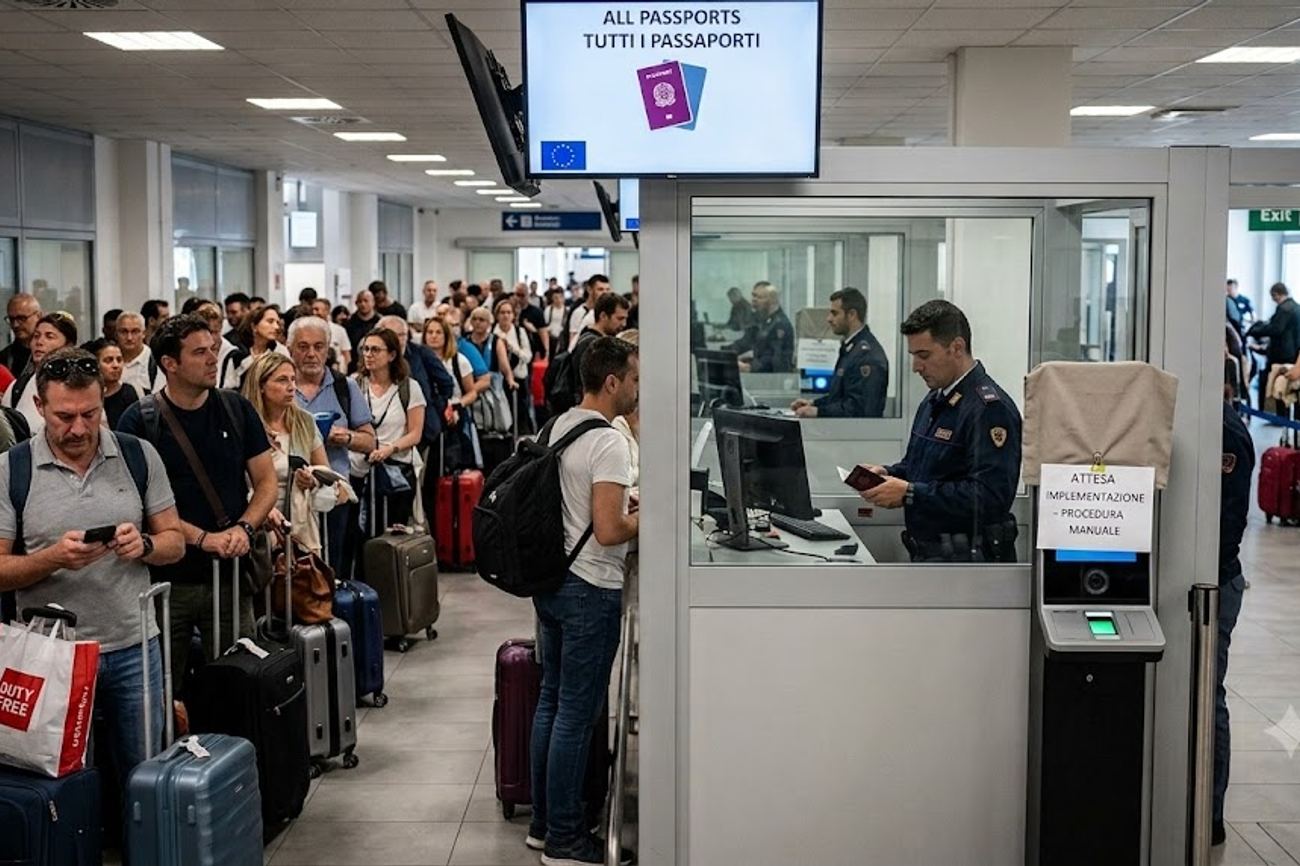
Image generated by AI
[Brussels, September 14, 2026] — France and Italy are leading a coalition of Schengen nations in delaying the full enforcement of the European Union’s Entry/Exit System (EES) biometric checks to prevent catastrophic congestion at major transit hubs. The shift comes as governments acknowledge that current technical readiness and staffing levels are insufficient to handle the massive influx of non-EU travelers without causing systemic failures at border checkpoints.
The EES is a digital overhaul of European border management designed to eliminate manual passport stamping in favor of a centralized database. Under the new mandate, all non-EU citizens must provide biometric data—specifically facial images and fingerprints—upon entry and exit from the Schengen Area. While the European Commission intends for the system to tighten security and automate the monitoring of the 90-day stay limit within any 180-day period, the practical application at the world's busiest airports has triggered alarms among member states.
Technical Failures and Infrastructure Gaps
The decision to seek operational flexibility stems from a misalignment between the EU's digital ambitions and the physical reality of airport infrastructure. France and Italy, which manage some of the highest passenger volumes globally, have warned that the initial biometric registration process is significantly slower than traditional passport control.
Officials cite three primary triggers for the delay:
- Hardware Bottlenecks: The installation of biometric kiosks and scanners has not kept pace with the projected rollout date across all external border points.
- Staffing Shortages: Border agents require specialized training to troubleshoot digital registration errors, and current personnel levels are insufficient to manage the anticipated increase in processing time per passenger.
- System Stability: Concerns persist regarding the stability of the centralized database when subjected to peak-hour loads at "super-hubs" during holiday seasons.
Tourism stakeholders and aviation groups have cautioned that if the system is forced live without these adjustments, the resulting queues could lead to missed flight connections and a breakdown in passenger flow, damaging the reputation of Europe as a seamless travel destination.
Markets and Hubs Under Pressure
The request for flexibility is not limited to France and Italy. A broad group of Schengen members—representing the core of Europe's tourism economy—has signaled that they are not ready for full-scale enforcement.
The following countries are actively seeking operational adjustments:
- France: High-volume entry points including Paris Charles de Gaulle (CDG) and various regional Alpine and Riviera airports.
- Italy: Major gateways such as Rome Fiumicino (FCO), Milan Malpensa (MXP), and various Mediterranean cruise ports.
- Germany: Primary hubs including Frankfurt (FRA) and Munich (MUC).
- Netherlands: Amsterdam Schiphol (AMS), one of the world's most connected airports.
- Belgium, Greece, Malta, Portugal, and Switzerland: All of which handle significant non-EU passenger flows.
For travelers entering via these nations, the transition period will be characterized by a hybrid approach where some checkpoints may utilize the new digital system while others maintain traditional stamping, depending on the specific airport's readiness.
What This Means for Travelers
For the average international visitor, the "delay" does not mean the system is cancelled, but rather that the rollout will be staggered. However, the first time a non-EU citizen enters the Schengen Area under EES, the process will be inherently slower.
Passenger Impact Assessment:
- Increased Buffer Time: Travelers should no longer rely on "standard" arrival times. The initial collection of fingerprints and facial scans adds several minutes to every single passenger's processing time.
- Connection Risks: Passengers with tight layovers at hubs like Paris CDG or Frankfurt FRA are at higher risk of missing connecting flights due to unpredictable border queues.
- Cruise Complications: For those on Mediterranean itineraries, the EES will apply at the first port of entry into the Schengen zone. This may lead to boarding delays for cruise ships if port facilities are overwhelmed.
- End of the Stamp: Once fully operational, the physical ink stamp in the passport is gone. Travelers will rely on the digital record to prove their legal stay duration.
Travelers are strongly advised to check the latest requirements via the Schengen Visa Information System or their respective embassy before departure.
The Path to Full Digitalization
The European Union remains committed to the EES as a cornerstone of its "smart border" strategy. The goal is to reduce identity fraud and automatically flag "overstayers" who exceed the 90-day limit. To reach this goal, the European Union Aviation Safety Agency (EASA) and national border agencies are coordinating to optimize the flow of passengers from the aircraft gate to the biometric kiosk.
The next phase involves "stress-testing" the system during off-peak periods before attempting a full-scale launch. Governments are currently evaluating whether to implement "pre-registration" options, which would allow travelers to upload biometric data via a secure app before arriving at the airport, potentially bypassing the longest queues.
The timeline for full enforcement remains fluid, but the priority has shifted from "speed of launch" to "stability of operation." Until a uniform standard of readiness is achieved across all member states, the risk of "border chaos" remains the primary deterrent to a hard deadline.
FAQ: Schengen Biometric Entry 2026
Do I still need a passport for EES? Yes. The EES does not replace the passport; it replaces the ink stamp inside the passport. You must present a valid travel document to have your biometric data linked to it.
How long will the first registration take? While the EU aims for efficiency, the first-time registration of fingerprints and facial scans is expected to take significantly longer than traditional checks. Travelers should allow an extra 60 to 90 minutes at the border.
Does this apply to US, UK, or Canadian citizens? Yes. The EES applies to all non-EU citizens, including those from visa-exempt countries. If you are not a citizen of a Schengen member state, you will be subject to biometric collection.
What happens if the system is down when I arrive? In the event of technical failure, border authorities will revert to manual passport stamping to ensure the flow of traffic, though this may still result in delays.
The era of the passport stamp is ending; the era of the digital border has begun, however reluctantly.
#Schengen2026 #EESBiometrics #CDG #FCO #EUBorderControl #SchengenTravel
Related Travel Guides
- Lithuania Rises With Slovenia as Curonian Trails and Alpine Routes Challenge Famous Cycling Hotspots of Europe
- Saudi Arabia Creates 4,310 Sq Km Nature Reserve Near Riyadh To Transform Desert Tourism And Protect Biodiversity
- Philippines Advances Batanes Destination Growth With Basco Travel Deals Sabtang Glamping and Smart Registration
Disclaimer
This article is for informational and educational purposes only. It does not constitute legal, financial, or professional advice. While we strive to provide accurate and up-to-date information, travel policies, regulations, and conditions change rapidly. Always verify information with official sources before making travel decisions. Nomad Lawyer makes no representations about the accuracy, reliability, completeness, or suitability of the information provided. Readers should consult qualified professionals for advice specific to their circumstances. The views expressed in this article are those of the author and do not necessarily reflect the views of Nomad Lawyer.
Preeti Gunjan
Contributor & Community Manager
A passionate traveller and community builder. Preeti helps grow the Nomad Lawyer community, fostering engagement and bringing the reader experience to life.
Learn more about our team →