
Explore the New Apuseni Gold Exhibition Trail Today in Romania
Explore the New Apuseni Gold Exhibition Trail Today in Romania

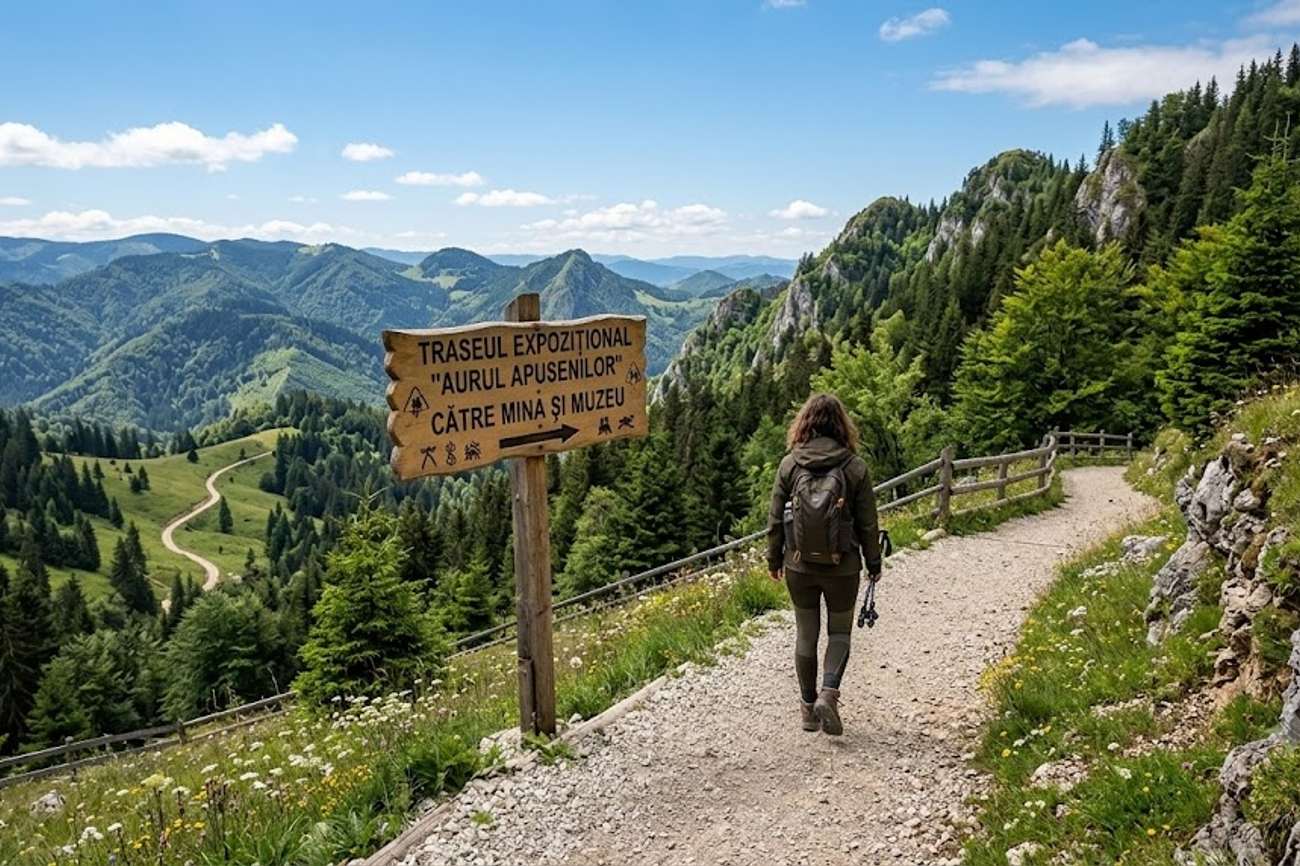
Image generated by AI
[Sibiu, October 2024] — The ASTRA Museum has launched the "Apuseni Gold. Curse and Development" exhibition trail, a large-scale cultural initiative designed to preserve the vanishing industrial heritage of gold extraction in Romania's Apuseni Mountains.
The project transforms the historic mining landscapes of Abrud, Corna, and Roșia Montană into an open-air educational corridor. By integrating physical monuments of traditional technology with oral histories, the initiative seeks to fill a critical void in European industrial tourism and prevent the total erasure of mining legacies by modern commercial development.
The Catalyst for Preservation
The initiative is a direct response to the economic and social vacuums left by the decline of active gold mining in the region. For millennia, the Apuseni Mountains served as a primary extraction hub, but industrial modernization and the subsequent exit of mining operations threatened to leave the region's architectural and social history in ruins.
The ASTRA Museum, a leading institution in the preservation of traditional Romanian culture, collaborated with regional stakeholders to pivot the local economy from resource extraction to heritage appreciation. The project moves beyond static indoor displays, utilizing the actual geography of the mountains to showcase the evolution of mining from Roman antiquity—when the area was known as Alburnus Maior—through the medieval era and into early industrialization.
Impacted Regions and Key Sites
The exhibition trail focuses on three primary hubs, each representing a different facet of the gold mining ecosystem:
- Abrud: Functions as the socio-economic anchor of the trail. Historically the administrative and commercial center, this site highlights the intersection of trade, mining concessions, and urban organization.
- Roșia Montană: A site of global significance featuring millennia of continuous mining. This location emphasizes the Roman origins of the industry and the long-term environmental and architectural impact of gold extraction.
- Corna: Focuses on the domestic reality of the miner, showcasing vernacular architecture where residential homes were integrated with secondary processing workshops.
The trail catalogs specific technological monuments, including historic stamp mills (ștampuri), complex water-management flumes, and primitive ore-processing installations. These sites demonstrate how early engineers harnessed gravity and water power long before the arrival of heavy machinery.
What This Means for Travelers
For the modern traveler, this project represents a shift toward "slow tourism" and deep-cultural immersion in one of Romania's most remote regions. Rather than visiting a centralized museum, visitors now navigate a decentralized trail that blends nature with industrial archaeology.
Practical Implications for Visitors:
- Off-the-Beaten-Path Access: Travelers are encouraged to move away from primary tourist hubs and enter the Apuseni interior. This requires a willingness to navigate rural infrastructure and engage with local communities in Abrud and Roșia Montană.
- Educational Depth: The trail is not merely a sightseeing route; it is a curated study of human labor. Visitors will encounter recorded oral histories and traditional work songs, providing a psychological layer to the physical ruins.
- Sustainable Engagement: By visiting these sites, travelers are directly supporting a new economic model for the region. The shift toward sustainable cultural tourism provides a financial alternative for communities that previously relied solely on extractive industries.
- Architectural Interest: History buffs can observe unique stone-and-timber dwellings specifically engineered to withstand harsh mountain winters while serving as industrial workspaces.
The Path Toward Sustainable Development
The long-term goal of the "Apuseni Gold" project is to establish a permanent framework for educational outreach. The Romanian Ministry of Culture and regional partners aim to use the trail to attract researchers, students, and cultural explorers, diversifying the local economy.
The project emphasizes the "curse and development" duality—acknowledging the immense wealth gold brought to the region while documenting the grueling human cost of subterranean labor. By mapping these vulnerable resources, the ASTRA Museum intends to create a blueprint for other industrial regions in Europe to repurpose their ruins into assets for civic pride and economic stability.
FAQ: Apuseni Gold Trail 2024
What is the best way to access the Apuseni Gold exhibition trail? Visitors should base themselves in the town of Abrud or the village of Roșia Montană. Due to the decentralized nature of the trail and the mountainous terrain, a 4x4 vehicle or a guided local tour is highly recommended for accessing remote mining monuments.
Is the trail suitable for casual tourists or only researchers? The trail is designed for both. While it provides rigorous data for researchers and historians, the open-air format and integration of local folklore make it accessible for any traveler interested in European history and rural Romanian landscapes.
What specific historical sites are highlighted on the route? Key highlights include the Roman-era galleries of Alburnus Maior in Roșia Montană, the traditional stamp mills used for crushing ore, and the administrative archives of the mining concessions in Abrud.
How does this project differ from a standard museum visit? Unlike traditional museums, this is a "living history" project. It utilizes the actual physical landscape—including terraced hillsides and ancient water channels—to show how mining shaped the geography, rather than placing artifacts behind glass.
From the depths of Alburnus Maior to the streets of Abrud, the gold may be gone, but the history remains etched in stone.
#ApuseniMountains2024 #ASTRAMuseum #RosiaMontana #AbrudMining #RomanianIndustrialHeritage #AlburnusMaior
Related Travel Guides
- Flights Cancelled Swept Europe As Rome, Catania, And 10 More Face 151 Cancellations And 1,673 Delays
- Argentina Seamlessly Pairs Patagonia Wilderness With Buenos Aires Culture To Revolutionize Modern Corporate Travel, All You Need To Know
- Arctic Security Frameworks And Rising Infrastructure Investments Are Redefining Modern High-Latitude Expedition Travel In Greenland
Disclaimer
This article is for informational and educational purposes only. It does not constitute legal, financial, or professional advice. While we strive to provide accurate and up-to-date information, travel policies, regulations, and conditions change rapidly. Always verify information with official sources before making travel decisions. Nomad Lawyer makes no representations about the accuracy, reliability, completeness, or suitability of the information provided. Readers should consult qualified professionals for advice specific to their circumstances. The views expressed in this article are those of the author and do not necessarily reflect the views of Nomad Lawyer.
Preeti Gunjan
Contributor & Community Manager
A passionate traveller and community builder. Preeti helps grow the Nomad Lawyer community, fostering engagement and bringing the reader experience to life.
Learn more about our team →