Spain’s November 11 General Strike: Iberia Offers Full Refunds as American Airlines Waives Change Fees Across Madrid and Barcelona

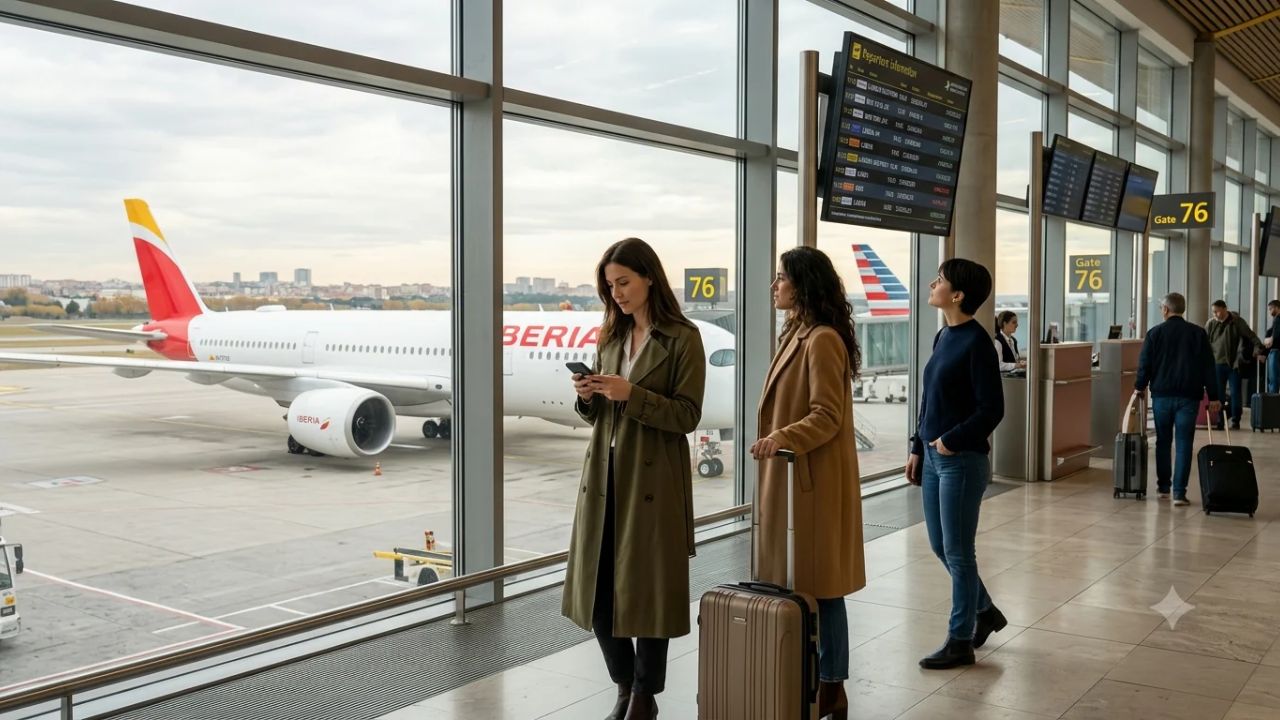
MADRID — International commercial aviation across the Iberian Peninsula is preparing for significant operational friction, as a 24-hour nationwide general strike scheduled for Wednesday, 11 November 2026, prompts major airlines to activate emergency booking waivers and refund protocols. Confirmed via ministerial publication in Spain’s Official State Gazette (Boletín Oficial del Estado), the broad labor action threatens to disrupt flight operations, ground handling, baggage transfers, and terminal security processing across the state-owned Aena airport network. In response, Spanish flag carrier Iberia Group and oneworld transatlantic alliance partner American Airlines have enacted comprehensive passenger protection policies, offering ticketed travelers penalty-free date modifications, travel vouchers, and full cash refunds.
The strike action arrives at a critical juncture for Spain’s tourism economy, which welcomed more than 80.5 million international visitors during the first nine months of 2026. With Madrid-Barajas (MAD) and Barcelona-El Prat (BCN) serving as primary intercontinental hubs connecting Europe with the Americas, the operational slowdown extends far beyond delayed departures. International travelers with tight flight connections, pre-paid hotel stays, or onward rail bookings face compounded logistical challenges, requiring immediate scrutiny of ticket terms, operating carrier rules, and statutory rights governed by European Union passenger protection regulations.
The Legal and Operational Scope of Spain’s General Strike
The 24-hour labor stoppage scheduled for Wednesday, 11 November, was formally recorded under ministerial order BOE-A-2026-23372 in the Boletín Oficial del Estado. Called by major trade union federations, the national general strike spans multiple industrial sectors, including public transportation, civil service administration, logistics, and aviation infrastructure.
Minimum Service Requirements (Servicios Mínimos)
Under Spanish constitutional law, essential public transportation services are protected during national labor disputes through the designation of mandatory minimum services (servicios mínimos). Spain’s Ministry of Transport and Sustainable Mobility (Ministerio de Transportes y Movilidad Sostenible) establishes operational baselines designed to maintain emergency mobility:
- Domestic Island Connectivity: Guaranteed high percentages of flights connecting the Spanish mainland with the Balearic Islands (Mallorca, Ibiza, Menorca) and the Canary Islands (Tenerife, Gran Canaria, Lanzarote).
- Essential Trunk Routes: Protection of select early-morning and late-evening flights between major mainland business centers, particularly the high-density Madrid–Barcelona air bridge corridor.
- International Commitments: Maintenance of a designated percentage of long-haul intercontinental departures operated by domestic flag carriers.
However, while minimum service legislation prevents a total shutdown of Spanish airspace, ground-level airport operations will experience severe friction. The labor action directly involves ground-handling staff, baggage handlers, aircraft refueling teams, catering crews, and private airport security screening contractors.
Consequently, airport management operator Aena warns that travelers must anticipate significant bottlenecks:
- Extended queue times at terminal security checkpoints and passport control gates.
- Delays in aircraft baggage loading and offloading, heightening the risk of mishandled transit luggage.
- Potential congestion on municipal roadway and public transit links connecting urban centers to airport terminals, including the Madrid Metro (Line 8) and Barcelona’s Rodalies rail network.
SPAIN NOVEMBER 11 GENERAL STRIKE MATRIX
| 2026-23372 | 11 flights on | Nov 8 - 18 | at security |
|---|---|---|---|
| - 24-Hour strike | Iberia, Express, | - Tickets bought | checkpoints |
| across Spain | Air Nostrum | by Nov 6 | - Extended lines |
| - Minimum service | - Rebook through | - Fee waiver for | at check-in |
| mandates | Nov 26 or claim | MAD & BCN | - Baggage transfer |
| established | full 100% refund | - Basic Economy | slowdowns on |
| by Ministry | to original card | included | transit links |
Airline Protection Frameworks: Iberia Group vs. American Airlines
To manage passenger volumes and minimize terminal congestion on 11 November, both Iberia Group and American Airlines have published formal travel advisories offering flexible ticket adjustments. However, the specific terms, eligibility windows, and execution channels differ significantly between the two carriers.
1. Iberia Group: Rebooking Flexibility and Full Cash Refunds
Iberia’s customer advisory provides comprehensive relief for travelers holding confirmed itineraries on strike day:
- Operating Carrier Eligibility: The policy applies strictly to flights scheduled for 11 November 2026 that are operated by Iberia, Iberia Express, or regional franchise partner Air Nostrum. Flights marketed under an Iberia flight number (IB codeshare) but operated by partner airlines like British Airways, Vueling, or Qatar Airways follow the individual operating carrier’s standard operational guidelines.
- Rebooking Allowance: Passengers may rebook their journey onto any alternative flight operated by the Iberia Group in the same cabin class for travel up to and including 26 November 2026, completely free of change fees or fare difference penalties.
- Refund Entitlements: Passengers who choose to cancel their travel plans entirely may request a 100 percent refund. The refund can be claimed either as an electronic travel voucher for future booking or returned directly to the original form of payment (credit card, bank account, or Avios points). Importantly, this refund option is available even if the passenger’s specific flight remains technically scheduled to operate on 11 November.
- Action Channels: Travelers who purchased tickets directly through Iberia’s official website, mobile app, or call center can execute changes directly through the "Manage Your Booking" portal. However, passengers who reserved flights through third-party travel agencies, corporate travel management companies, or online travel agencies (OTAs) must request modifications through their original issuing agency.
2. American Airlines: Change Fee Waivers Across Madrid and Barcelona
As Iberia’s joint-business partner on transatlantic routes, American Airlines has implemented an emergency travel waiver targeting travelers transiting its primary Spanish gateways:
- Gateway Scope: The advisory covers all American Airlines flights departing from, arriving at, or connecting through Madrid-Barajas (MAD) or Barcelona-El Prat (BCN) scheduled for 11 November 2026.
- Ticketing Timeline: To qualify, the ticket must have been purchased on or before 6 November 2026.
- Permitted Travel Window: Eligible passengers may make a one-time change without incurring standard change fees, rescheduling their journey for departure dates between 8 November and 18 November 2026.
- Class and Routing Rules: Passengers must maintain the identical origin and destination cities. Basic Economy fares are explicitly included within the waiver. While change fees are completely waived, fare differences may apply if the original booking inventory is unavailable in the new travel window.
- Deadline for Changes: All voluntary ticket adjustments under this advisory must be executed by the end of strike day, 11 November 2026.
| Advisory Component | Iberia Group Policy | American Airlines Policy |
|---|---|---|
| Applicable Travel Date | Wednesday, 11 November 2026 | Wednesday, 11 November 2026 |
| Eligible Operating Airlines | Iberia, Iberia Express, Air Nostrum | American Airlines (incl. MAD/BCN routes) |
| Eligible Airports | All Spanish airports served by Iberia Group | Madrid-Barajas (MAD) & Barcelona-El Prat (BCN) |
| Ticketing Cut-Off Date | Standard booking active prior to strike notice | Tickets purchased on or before 6 November 2026 |
| Permitted Rebooking Horizon | Travel through 26 November 2026 | Travel between 8 November and 18 November 2026 |
| Refund Terms | Full refund to original payment or voucher | Refund available if flight is cancelled by carrier |
| Basic Economy Inclusion | Standard Group rules apply | Explicitly included in change fee waiver |
| Deadline to Execute Change | Before flight departure | On or before 11 November 2026 |
European Air Passenger Rights: Navigating EU Regulation 261/2004
When travel disruptions occur within the European Union, passenger protections are governed by Regulation (EC) No 261/2004. However, travelers must understand the fundamental legal distinction between voluntary advisory changes and involuntary flight cancellations.
Voluntary Changes vs. Involuntary Airline Cancellations
- Voluntary Changes under Airline Advisories: When a passenger voluntarily takes advantage of an airline’s goodwill waiver to rebook or request a refund before the airline officially cancels the flight, the passenger accepts the airline's voluntary terms. In this scenario, the passenger voluntarily surrenders eligibility for statutory cash compensation under EU261.
- Involuntary Flight Cancellation by the Carrier: If the airline officially cancels the flight due to strike-related staff shortages, statutory EU passenger rights engage automatically. Under Article 8 of EU261, the airline must provide the passenger with an immediate choice between:
- Full reimbursement of the ticket cost within seven days, alongside a complimentary return flight to the initial point of departure if applicable.
- Rerouting to the final destination at the earliest opportunity under comparable transport conditions.
- Re-routing at a later date convenient to the passenger, subject to seat availability.
The Right to Care (Article 9)
Regardless of whether a labor strike is legally categorized as an "extraordinary circumstance" that exempts the airline from paying statutory cash delay compensation, the Right to Care is absolute and non-negotiable.
If a flight is cancelled or delayed beyond specified time thresholds (two hours for short-haul flights under 1,500 km, three hours for intra-EU flights over 1,500 km, and four hours for long-haul transatlantic services), the operating carrier must provide passengers free of charge:
- Food and refreshments in reasonable relation to the waiting time.
- Two complimentary telephone calls, telex or fax messages, or emails.
- Hotel accommodation in cases where an overnight stay or a stay additional to that intended by the passenger becomes necessary.
- Free transportation between the airport and the place of accommodation.
If airline representatives are unable to arrange hotel rooms or meals directly due to terminal chaos, travelers should retain itemized receipts for reasonable expenses incurred, submitting them for reimbursement under EU261 mandates.
The Single-Ticket vs. Split-Ticket Vulnerability
A major hazard during strike disruptions involves multi-leg journeys:
- Through-Booked Itineraries: If an entire journey—such as Chicago to Madrid connecting to Seville—is booked under a single confirmation code (PNR), the operating carrier is legally responsible for the passenger until arrival at the final destination. If the transatlantic leg is delayed and causes a missed connection in Madrid, the airline must rebook the domestic sector and provide hotel lodging.
- Split-Ticket Itineraries: If a traveler purchased a transatlantic flight on American Airlines to Madrid, and independently purchased a separate domestic ticket on Iberia or a high-speed train ticket on Renfe to reach Malaga, the airlines bear zero legal responsibility for the missed secondary segment. If the first flight is delayed, the passenger forfeits the separate ticket without statutory recourse.
Economic Dimensions: Spain's High-Yield Tourism Engine Under Scrutiny
The timing of the 11 November general strike highlights the immense economic stakes surrounding Spanish transportation infrastructure. Spain possesses one of the world's most sophisticated and heavily trafficked tourism ecosystems:
- Airport Traffic Milestones: In 2025, Madrid-Barajas handled 68.2 million passengers (+3.0%), functioning as the primary Latin American gateway into the European Union. Barcelona-El Prat handled 57.5 million passengers (+4.4%), serving as the Mediterranean's leading leisure and cruise aviation hub.
- 2026 Year-to-Date Volume: Across its national network of 46 airports, state operator Aena processed 257.2 million passengers during the first nine months of 2026, marking a 4.1 percent expansion over 2025 figures.
- Inbound Tourism Revenue (INE): National Statistics Institute (Instituto Nacional de Estadística) data reveals that Spain welcomed 80.5 million international visitors between January and September 2026 (+5.2%), generating a staggering €114.38 billion in foreign visitor expenditure (+8.0%). The United Kingdom stood as the single largest feeder market, generating roughly 16.2 million arrivals.
- GDP and Employment Contributions: Tourism accounts for 12.6 percent of Spain’s national GDP and sustains more than 2.7 million direct and indirect jobs.
To support this expansion, the Spanish Council of Ministers (Consejo de Ministros) approved Aena’s strategic investment framework, earmarking nearly €13 billion between 2027 and 2031 for major terminal modernizations, baggage automation, and runway capacity expansions across Madrid, Barcelona, and regional airports. In the immediate short term, however, even a single day of nationwide labor disruption poses immediate challenges for hotels, car rental agencies, and tour operators across the country.
SPAIN TOURISM & AVIATION SCALE (JAN–SEP 2026)
| Total Airport | Inbound Foreign | Billion Foreign | Airport Capital |
|---|---|---|---|
| Passengers | Visitors | Visitor Spend | Plan (2027-2031) |
| - Madrid: 68.2M | - +5.2% Growth | - +8.0% YoY Spend | - Focus on Madrid |
| - Barcelona: | - UK #1 Source: | - 12.6% of Spain's | & Barcelona |
| 57.5M (2025) | 16.2M Travelers | National GDP | Terminals |
Downstream Travel Impacts: Hotels, High-Speed Trains, and Transfers
The ripple effects of Wednesday's strike extend far beyond airport concourses, creating compounding complications across secondary travel sectors:
Hotel Accommodations and "No-Show" Penalties
Travelers delayed by 24 hours risk having their hotel reservations marked as unauthorized "no-shows," resulting in the automatic forfeiture of their first night's deposit and potential cancellation of remaining nights. Vacationers taking advantage of airline rebooking waivers must immediately contact hotels in Madrid, Barcelona, Seville, and the Balearic Islands to adjust check-in dates in writing, ensuring that properties hold their reservations for late arrival.
High-Speed Rail Connections
Spain boasts Europe’s most extensive high-speed rail network, operated by state carrier Renfe (AVE and Avlo), alongside private open-access operators Iryo and Ouigo España. Many international passengers land at Madrid-Barajas or Barcelona-El Prat and transfer directly to central stations (Atocha, Chamartín, or Sants) to catch trains into Andalusia, Valencia, or the Basque Country. Because rail transport unions are participating in the general strike, rail frequencies will be strictly limited under separate rail minimum service orders. Travelers connecting from air to rail should verify rail schedules independently via official operator applications.
Ground Transportation and Rental Cars
Car rental facilities at Madrid and Barcelona terminals are bracing for staffing shortages and delayed vehicle returns. Travelers scheduled to collect rental vehicles on 11 November should notify agencies of flight delays to prevent reservations from expiring. Additionally, travelers relying on airport taxis or private ride-hailing services (Uber, Cabify) should anticipate severe driver shortages and surge pricing, making pre-booked airport hotel shuttles or metro lines the most reliable transit options.
Strategic Action Plan for Passengers Traveling on November 11
For travelers holding confirmed flight bookings involving Spain on Wednesday, 11 November, proactive execution is vital to avoiding travel paralysis:
1. Identify the Actual Operating Carrier
Examine your ticket receipt to verify the airline physically operating each flight. A ticket purchased through American Airlines with an "AA" flight number might be physically operated by Iberia, or an Iberia "IB" ticket may be operated by Air Nostrum. Your rebooking options and terminal handling are governed strictly by the operating carrier's rules.
2. Monitor Live Flight Information via Aena
Do not rely exclusively on commercial flight-tracking apps, which often experience data latency during labor strikes. Consult Aena's official live flight information portal (aena.es/en/flight-info.html) for real-time gate allocations, departure delays, and confirmed cancellation notices across all 46 Spanish airports.
3. Arrive at the Terminal Significantly Earlier
If your flight is confirmed to operate and you decide to travel on Wednesday, arrive at the departure terminal at least three to four hours prior to international long-haul departures, and at least two and a half hours prior to domestic or Schengen flights. Security checkpoint lines and bag-drop queues will move substantially slower than standard operating baselines.
4. Utilize Mobile and Online Check-In
Check in online through your airline’s mobile application 24 hours prior to departure and download your digital boarding pass to your smartphone wallet. Travelers traveling with carry-on luggage only can bypass terminal check-in desks entirely and proceed directly to security screening, avoiding major queuing bottlenecks.
5. Document All Expenses and Airline Communications
Keep photographic records of airport departure boards, save all SMS and email notifications from your airline, and retain itemized VAT receipts (facturas) for meals, hotel rooms, and taxi fares. These evidentiary records are essential when filing post-trip reimbursement claims under EU Regulation 261/2004 or processing trip-interruption benefits through private travel insurance policies.
Summary Assessment: Managing Aviation Disruptions with Preparedness
Spain’s nationwide general strike on 11 November 2026 presents a formidable operational test for the nation’s commercial aviation infrastructure. However, the coordinated response from carriers like Iberia Group and American Airlines—providing generous rebooking windows and full refund entitlements—empowers travelers to circumvent travel paralysis through proactive decision-making.
Whether choosing to reschedule travel through late November, claiming a full refund to pursue alternative routes, or preparing for extended terminal queues with early airport arrivals, travelers who understand their rights and monitor official channels will successfully weather the disruption. In modern European travel, thorough preparation and rapid adaptability remain the traveler's greatest assets.
Related Travel Guides
- Madrid-Barajas Terminal Transit Guide: Connecting Between Terminals 1, 2, and 4
- EU Regulation 261/2004 Explained: Complete Passenger Rights for Flight Delays and Strikes
- Barcelona-El Prat Airport Navigation: Metro, Aerobús, and High-Speed Rail Transfers
- Spain High-Speed Rail Travel: Comparing Renfe AVE, Iryo, and Ouigo Networks
This article is for informational purposes. Flight routes, passenger regulations, visa rules, and transit advisories are subject to change by airlines and aviation authorities. Readers are advised to verify schedules and travel documentation with relevant carriers and border agencies before departure.