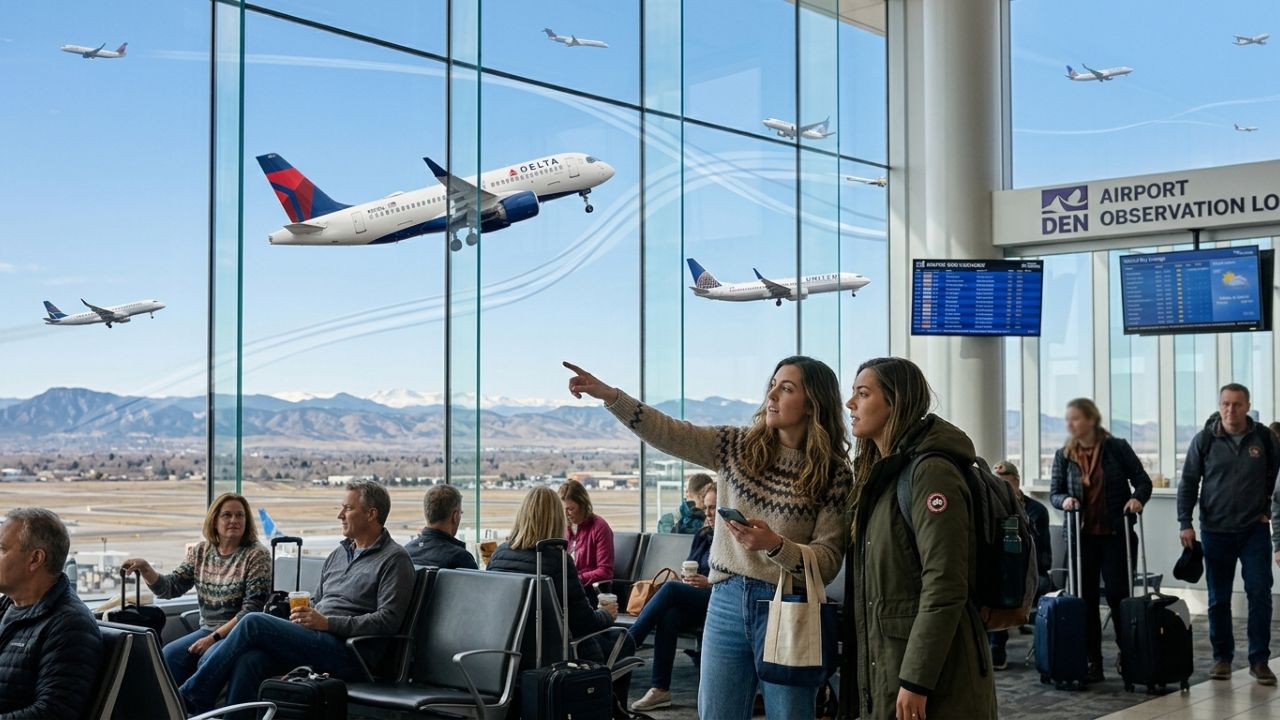
United States December Shutdown Warning Sparks Flight Delay Fears Ahead of 2026 Christmas and New Year Travel Rush

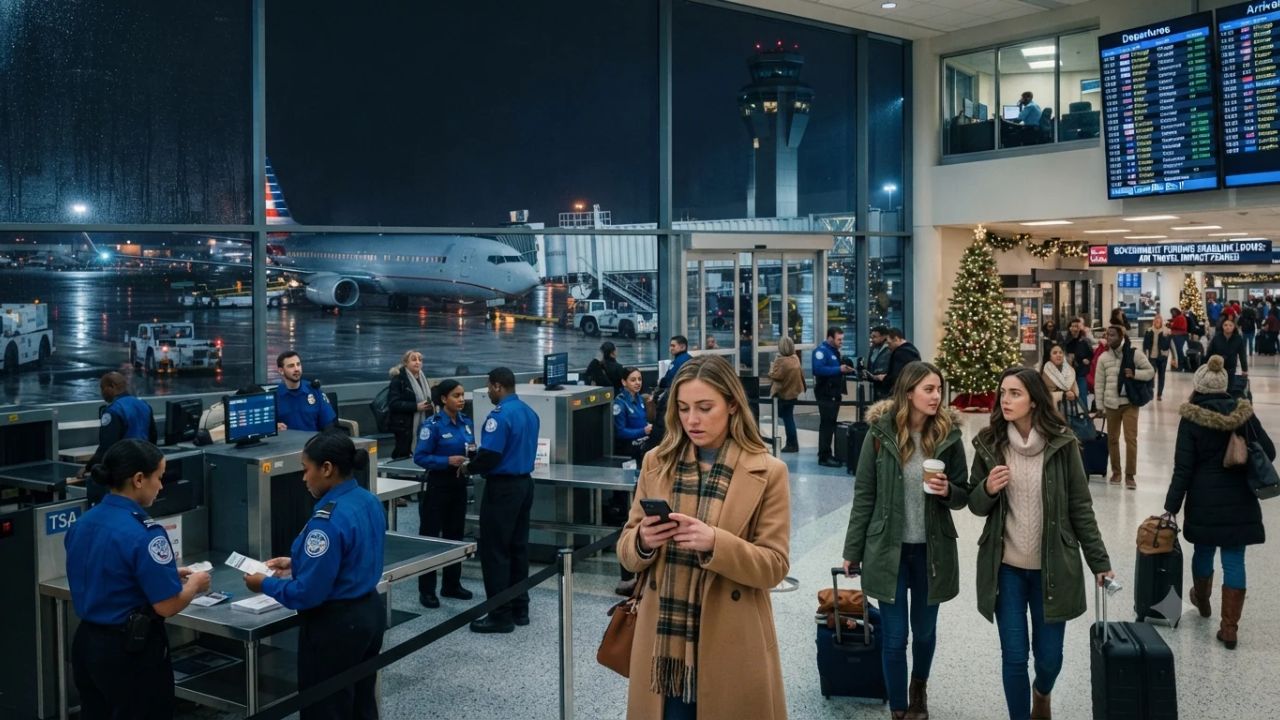
The United States commercial aviation industry has issued an urgent warning to congressional lawmakers, cautioning that a failure to pass federal funding before the December 11, 2026 deadline could trigger widespread flight delays, severe airport checkpoint congestion, and operational gridlock during the peak Christmas and New Year travel season. Led by Airlines for America (A4A)—the premier trade association representing major domestic carriers including American, Delta, United, and Southwest—the airline industry warns that forcing tens of thousands of Transportation Security Administration (TSA) screening officers and Federal Aviation Administration (FAA) air traffic controllers to work without timely compensation during the busiest travel corridor of the year risks crippling the national airspace system. With holiday bookings projected to match historic highs, a prolonged funding lapse threatens to destabilize commercial flight schedules, strand millions of passengers, and delay critical holiday air cargo.
The December 11 funding deadline sits on a dangerous legislative precipice, occurring just days before schools close, families embark on cross-country journeys, and winter weather systems introduce natural operating friction. While essential federal personnel are legally mandated to report for duty during a funding lapse, historical precedents—most notably the 35-day partial shutdown of 2018–2019—demonstrate that delayed paychecks rapidly induce severe workforce absenteeism, reduce active security screening lanes, and force air traffic managers to implement defensive ground delay programs to protect airspace safety. As national polling reveals overwhelming public concern over unpaid aviation workers, industry executives and labor unions are demanding immediate bipartisan action on Capitol Hill to avert a travel crisis.
========================================================================================
UNITED STATES DECEMBER 2026 SHUTDOWN: AVIATION RISK PROFILE
========================================================================================
Key Operational Factor          Federal Benchmark & Industry Exposure Details
----------------------------------------------------------------------------------------
Statutory Funding Deadline      December 11, 2026 (Midnight Expiration of Fiscal Measures)
Primary Industry Warning Body   Airlines for America (A4A) / National Air Traffic Controllers
Essential Personnel Impacted    ~55,000+ TSA Screening Officers & ~14,000 FAA Air Traffic Controllers
Primary Peak Risk Window        December 18, 2026 through January 4, 2027 (Holiday Peak)
Projected Air Travel Volume     Estimated 45 to 48 Million Commercial Airline Passengers
Direct Operational Impacts      Checkpoint lane closures, ground delay programs (GDPs), ground stops
Critical Connecting Hubs        Atlanta (ATL), New York (JFK/EWR/LGA), Dallas-Fort Worth (DFW)
Air Cargo Vulnerability         Peak e-commerce deliveries, express parcel logistics, pharmaceuticals
Training & Pipeline Disruption  Immediate freeze of FAA Academy controller training in Oklahoma City
Current Political Status        Active negotiations; potential shutdown not yet finalized
========================================================================================
Source: Airlines for America (A4A) Industry Directives and Congressional Budget Disclosures.
========================================================================================
The December 11 Cliff: Why Federal Funding Deadlines Threaten Holiday Flight Networks
The timing of the December 11 federal funding expiration represents the primary source of alarm across the commercial aviation sector. Unlike funding lapses that occur in early spring or mid-autumn during lulls in passenger traffic, a December disruption strikes at the single most vulnerable and congested period in the global travel calendar.
Commercial airlines operate within razor-thin operational margins during late December. Fleet utilization rates approach 100 percent, reserve pilot and flight attendant crews are stretched to their limits, and major airport terminals process volumes exceeding two to three times their standard daily averages. If federal agencies suffer operational paralysis, airlines have zero excess capacity to absorb delays.
========================================================================================
TIMELINE OF POTENTIAL SHUTDOWN IMPACT ON DECEMBER 2026 TRAVEL
========================================================================================
Calendar Date            Anticipated Operational Phase & Aviation Impact
----------------------------------------------------------------------------------------
November 11, 2026        Airlines for America issues formal public appeal for funding extension.
December 11, 2026        Federal fiscal authorization expires at midnight if no budget passes.
December 12–15, 2026     Initial shutdown phase: Administrative staff furloughed; essential
                         personnel continue working; first wave of missed paychecks looms.
December 18–24, 2026     Christmas travel surge begins: Heavy passenger volumes collide with
                         initial staffing friction; security wait times begin expanding.
December 25–31, 2026     Secondary holiday wave: Sustained lack of pay increases absenteeism;
                         FAA enforces flow control programs; cascading delays impact hubs.
January 1–4, 2027        New Year return rush: Maximum systemic strain; flight cancellations
                         peak if federal funding remains unresolved.
========================================================================================
The fundamental issue is that modern airline networks operate as tightly synchronized, closed-loop ecosystems. An aircraft scheduled to complete five flight legs in a single day—originating in Orlando, flying through Charlotte, Chicago, and Denver before terminating in Seattle—relies on smooth handoffs between local TSA screeners, regional FAA en-route traffic control centers, and airport ramp towers. A delay of 45 minutes at a single checkpoint cascades across the entire continent, resulting in mandatory flight crew duty-time expirations, missed passenger connections, and widespread cancellations.
TSA Checkpoint Bottlenecks: Unpaid Screeners and Security Lane Closures
The frontline vulnerability of the commercial aviation ecosystem resides at airport Transportation Security Administration (TSA) passenger checkpoints. Across more than 430 commercial airports in the United States, approximately 55,000 Transportation Security Officers (TSOs) perform the essential task of screening passengers, carry-on luggage, and checked baggage.
Under the Antideficiency Act, TSA officers are classified as "excepted" federal employees, meaning they are legally required to report for daily shifts without receiving compensation until Congress approves back pay following the end of the shutdown.
========================================================================================
TSA OPERATIONAL EXPOSURE: STANDARD OPERATIONS VS. PROLONGED SHUTDOWN
========================================================================================
Operational Parameter           Normal Baseline Operations   Prolonged Shutdown Conditions
----------------------------------------------------------------------------------------
Officer Pay Status              Bi-weekly Direct Deposit     Indefinitely delayed paychecks
Screening Lane Utilization      Full lane deployment         Lane consolidation due to call-outs
Average Standard Wait Time      10 to 25 Minutes             45 to 90+ Minutes at major hubs
TSA PreCheck Availability       Dedicated expedited lanes    PreCheck lanes merged into standard queues
Officer Absenteeism Rate        Normal baseline (<3%)        Spikes to 8%–12% as financial strain bites
Per-Passenger Screening Time    Standard processing velocity Delays compound as lines spill into lobbies
Passenger Missed-Flight Rate    Low (<0.5% nationwide)       Elevated; travelers stranded outside gates
========================================================================================
The Mechanism of Checkpoint Gridlock
When a government shutdown extends beyond a single pay period, federal employees face acute financial distress. TSOs—many of whom are early-career civil servants earning between $40,000 and $60,000 annually—must pay for commuting fuel, airport parking, child care, and basic living expenses while receiving zero income.
During previous prolonged shutdowns, this financial pressure led to substantial spikes in unscheduled absences:
- Lane Closures: With fewer screeners reporting for duty, airport federal security directors are forced to close multiple screening lanes, funneling thousands of passengers into single checkpoints.
- Terminal Queue Spills: Security queues routinely spill out of dedicated screening areas into airline ticketing halls, baggage claim belts, and exterior airport sidewalks.
- TSA PreCheck Mergers: At several medium-sized airports, staffing constraints force the suspension of dedicated TSA PreCheck lanes, forcing enrolled travelers who paid for expedited screening into general lines.
While TSA checkpoint screeners cannot legally strike, the mathematical reality of reduced workforce availability directly impairs the passenger throughput required to feed departing aircraft on schedule.
Air Traffic Control Strain: FAA Staffing Crises and Safety Flow Management
While checkpoint delays cause public frustration, the most critical operational hazard of a government shutdown lies thousands of feet above the ground in the towers and radar rooms of the Federal Aviation Administration.
Air traffic controllers manage the safe separation of commercial, corporate, cargo, and military aircraft navigating the National Airspace System (NAS). Like TSA officers, FAA certified professional controllers are classified as essential personnel who must work without pay during a shutdown.
========================================================================================
FAA AIR TRAFFIC SYSTEM: OPERATING CONSTRAINTS DURING A SHUTDOWN
========================================================================================
FAA Operational Domain          Operational Functionality During Federal Shutdown
----------------------------------------------------------------------------------------
Air Route Traffic Control (ARTCC)En-route high-altitude radar control operates continuously;
                                unpaid controllers face stress; overtime shifts mandated
Terminal Radar Approach (TRACON)Approach and departure control around major metro hubs;
                                severe pre-existing staffing shortages compound operational strain
Air Traffic Control Towers (ATCT)Local runway takeoffs and landings; towers operate with zero
                                margin for unscheduled controller absences
Traffic Management Unit (TMU)   Issues Ground Delay Programs (GDPs) and Ground Stops to throttle
                                aircraft volume when controller sector capacity decreases
FAA Academy (Oklahoma City)     Completely suspended; training of new air traffic controllers
                                halts immediately, exacerbating multi-year staffing deficits
Aviation Safety Inspections     Routine safety audits, airline certificate modifications, and
                                technical oversight programs operate at skeleton capacity
========================================================================================
Chronic Pre-Existing Staffing Deficits
The threat of a December 2026 shutdown arrives at a moment when the United States air traffic controller workforce is already operating under unprecedented strain. The FAA faces a well-documented shortage of approximately 3,000 fully certified professional controllers. At critical facilities—such as the New York Terminal Radar Approach Control (N90/PHL TRACON) and the Atlanta TRACON—controllers routinely work mandatory six-day workweeks and ten-hour shifts to keep flights moving.
Introducing delayed paychecks into an already exhausted, high-stress workforce creates immediate operational friction:
- Safety-First Throttling: Air traffic controllers cannot "speed up" their work to compensate for missing colleagues; doing so would violate federal aviation safety regulations. If a radar sector is designed to handle 20 aircraft simultaneously with two controllers, and one controller is absent, the remaining controller must reduce the traffic volume to 10 aircraft.
- Ground Delay Programs (GDPs): When sector capacity drops, the FAA Air Traffic Control System Command Center in Warrenton, Virginia, issues mandatory ground delays, forcing aircraft bound for affected hubs to remain parked at their origin gates for hours.
- Ground Stops: In extreme cases where local tower staffing drops below mandatory minimum thresholds, the FAA issues total ground stops, temporarily halting all inbound departures nationwide.
Hub Exposure: How Disruptions in New York, Atlanta, and Dallas Cascade Nationwide
The vulnerability of the United States air network is concentrated within a handful of mega-hubs that serve as the structural anchors for domestic flight routing. A localized staffing problem at just two or three primary airports produces systemic delays that reverberate coast to coast.
========================================================================================
MAJOR US AVIATION HUBS: SHUTDOWN VULNERABILITY RANKING
========================================================================================
Airport Gateway          Dominant Carriers    Connecting Vulnerability & Network Role
----------------------------------------------------------------------------------------
Atlanta Hartsfield (ATL) Delta Air Lines      World's busiest hub; disruption strands thousands
                                              of transatlantic and southern domestic transfers
New York Metro Complex   Delta, United,       Extremely congested airspace; weather-sensitive;
(JFK, EWR, LGA)          American, JetBlue    TRACON staffing friction triggers immediate delays
Dallas-Fort Worth (DFW)  American Airlines    Primary central US connector; disruption splits
                                              east-west domestic connections across network
Chicago O'Hare (ORD)     United, American     Midwest super-hub; winter snowstorms combined with
                                              staffing shortages create severe flight cancellations
Denver International (DEN)United, Southwest   Major western transit point; high mountain weather
                                              vulnerability leaves zero tolerance for ATC slowdowns
========================================================================================
The Ripple Effect in Practice
To illustrate the vulnerability of the national network, consider the operational path of an aircraft operating for a major network carrier on December 22:
- The aircraft departs Boston Logan bound for Atlanta Hartsfield-Jackson.
- Due to minor staffing shortages at Atlanta TRACON, the FAA issues a 60-minute Ground Delay Program for all Atlanta-bound arrivals.
- The flight lands in Atlanta one hour late. Because gates are fully occupied by delayed outbound aircraft, the plane waits on an active taxiway for 30 minutes before deplaning.
- The flight crew exceeds their maximum legal duty day under FAA Part 117 rest regulations, forcing the airline to locate a replacement crew.
- The aircraft's next scheduled flight—from Atlanta to Dallas-Fort Worth—is delayed by three hours, causing 120 connecting passengers in Dallas to miss their onward flights to Los Angeles, Phoenix, and Honolulu.
This domino effect occurs thousands of times daily during a systemic disruption. Even if an airport in Kansas City, Columbus, or Omaha has full local staffing, its flights will be delayed or cancelled because the incoming aircraft and crews are trapped in New York or Atlanta.
The Public and Economic Pulse: A4A Survey Data and Consumer Sentiment
In presenting its case to Congress, Airlines for America released national public opinion polling conducted by independent research firm AlphaROC, Inc. The survey highlights an overwhelming, bipartisan consensus among American voters regarding the essential role of aviation personnel and the unacceptability of holiday shutdowns.
========================================================================================
ALPHAROC / AIRLINES FOR AMERICA NATIONAL AVIATION SURVEY FINDINGS
========================================================================================
Survey Polling Metric            Public Response Benchmark   Bipartisan Alignment
----------------------------------------------------------------------------------------
Importance of Paying ATC Staff   93% Support Timely Pay      Equal support across party lines
Importance of Paying TSA Screeners91% Support Timely Pay      Overwhelming national consensus
Expectation of Serious Delays    76% Expect Travel Chaos     Deep public skepticism of government
Bipartisan Legislative Priority  93% Demand Congressional ActAviation stability viewed as essential
Traveler Trip Modification Intent42% Would Reconsider Travel Fear of cancellations dampens bookings
Economic Damage Concern          88% Warn of Business Loss   Corporate travel and freight impact
========================================================================================
Source: AlphaROC, Inc. National Survey Conducted on Behalf of Airlines for America (November 2026).
========================================================================================
The survey results reveal that the American public does not distinguish between political parties when assessing airport disruptions; 93 percent of respondents stated that ensuring aviation personnel receive uninterrupted compensation should be a primary bipartisan priority.
Additionally, 76 percent of surveyed citizens stated that they believe serious flight delays and cancellations are inevitable if a shutdown occurs. This widespread public anxiety threatens consumer confidence, as travelers reconsider discretionary winter getaways, corporate executives postpone end-of-year business trips, and retail businesses brace for logistical bottlenecks.
Cargo at Risk: Holiday E-Commerce, Perishables, and Express Freight Operations
The consequences of an aviation shutdown extend far beyond commercial passenger terminals into the air freight logistics chains that underpin the modern United States economy. December represents peak season for express cargo carriers including FedEx Express, UPS Airlines, Atlas Air, and Amazon Air.
========================================================================================
AIR CARGO SECTOR EXPOSURE DURING A DECEMBER SHUTDOWN
========================================================================================
Cargo Category           Operational Function & Economic Vulnerability
----------------------------------------------------------------------------------------
Holiday E-Commerce       Millions of consumer parcels moving through air hubs like
                         Memphis (FedEx), Louisville (UPS), and Cincinnati (Amazon Air)
Pharmaceuticals & Meds   Time-sensitive vaccines, radiopharmaceuticals, and donor organs
                         moving via commercial passenger belly cargo and dedicated freighters
Perishable Food Supplies Fresh seafood, fruits, and meats flown into urban metropolitan centers
                         for holiday grocery and restaurant distribution
Industrial Supply Chains Critical manufacturing spare parts and semiconductor components
                         transported via express air corridors to prevent factory shutdowns
========================================================================================
While commercial cargo pilots and package-handling warehouse personnel are private corporate employees not subject to federal furloughs, their aircraft navigate the exact same air traffic control network as passenger flights.
When the FAA is forced to implement air traffic flow restrictions, cargo flights—which frequently operate during late-night and early-morning banks—face ground holding orders, fuel diversions, and missed delivery windows. A delay of four hours at UPS Worldport in Louisville or FedEx World Hub in Memphis can disrupt supply chains across hundreds of secondary regional sorting facilities, stranding holiday packages on the eve of Christmas.
Long-Term Damage: FAA Academy Freezes, Modernization Delays, and Controller Attrition
While the immediate threat of a shutdown involves missed flights and holiday chaos, aviation analysts warn that the long-term, institutional damage to the United States aerospace infrastructure is even more destructive.
========================================================================================
INSTITUTIONAL CONSEQUENCES OF AN FAA OPERATIONAL FREEZE
========================================================================================
FAA Program Domain       Immediate Shutdown Impact           Long-Term Structural Consequence
----------------------------------------------------------------------------------------
FAA Training Academy     Classrooms close immediately;       Delays controller certification
(Oklahoma City)          student trainees sent home          pipeline by 6 to 12 months nationwide
Air Traffic ModernizationNextGen tech deployment paused;     Postpones digital routing systems
(ADS-B & Data Comm)      contractor software halted          and flight tracking upgrades
Safety Inspector Cadre   Routine airline maintenance audits  Creates backlog in commercial aircraft
                         reduced to emergency responses only certifications and fleet deliveries
Controller Retention     Increases occupational burnout      Accelerates early retirement among senior,
                         among active veterans               highly experienced radar controllers
========================================================================================
Freezing the Controller Pipeline
The FAA Academy at the Mike Monroney Aeronautical Center in Oklahoma City is the sole training pipeline for every new air traffic controller in the nation. During a government shutdown, the Academy is shuttered, instructors are furloughed, and incoming student classes are cancelled.
Because it takes between two and four years of intensive, hands-on training to certify a new radar controller, a shutdown of even three weeks disrupts scheduling for months. Trainees lose simulator proficiency, instructional cohorts must be re-formed, and the nation’s multi-year effort to rebuild its depleted air traffic control workforce is thrown into reverse.
In addition, the demoralizing effect of working high-stress radar shifts without receiving timely compensation accelerates early retirements among veteran controllers. When eligible senior controllers retire prematurely, the aviation system permanently loses decades of irreplaceable institutional experience.
Air Traveler Defense Manual: Strategies for Navigating December Holiday Disruptions
For passengers with booked flights across the United States between December 11, 2026, and early January 2027, taking proactive measures can minimize the risk of being stranded at an airport terminal.
========================================================================================
DECEMBER 2026 HOLIDAY TRAVEL PREPARATION CHECKLIST
========================================================================================
Travel Planning Domain   Recommended Strategic Action
----------------------------------------------------------------------------------------
Flight Scheduling        Book the earliest non-stop departure of the day (05:00 to 07:00 AM);
                         morning flights are far less susceptible to cascading hub delays
Airport Arrival Window   Arrive at airport terminals at least 3 hours before domestic flights
                         and 4 hours before international flights to absorb security lines
Carry-On Management      Pack essential medications, identification, chargers, and change of
                         clothes in carry-on bags; avoid checking irreplaceable holiday items
Airline Mobile App Setup Enable real-time push notifications; store digital boarding passes
                         and monitor inbound aircraft positioning via flight radar tools
Connecting Flight Buffer Avoid tight 45-minute connections; ensure a minimum connection buffer
                         of 90 to 120 minutes when routing through major hubs (ATL, ORD, DFW)
TSA Screening Efficiency Ensure TSA PreCheck or CLEAR credentials are active; double-check carry-on
                         liquids and electronics to prevent bag-check checkpoint delays
========================================================================================
Actionable Traveler Strategies
- Prioritize First-Wave Morning Departures: Flights departing between 05:00 and 07:00 AM represent the safest bet for holiday travelers. These aircraft typically spend the night parked at the gate, and flight crews are well-rested, meaning early flights depart on time before systemic ground delays compound across the afternoon.
- Track the Inbound Aircraft: Rather than monitoring the departure board at your local gate, track the physical aircraft assigned to your flight using airline apps or live radar trackers. If the aircraft incoming from Dallas or Chicago is delayed by two hours, your departure will be delayed regardless of local conditions.
- Know Your Rights Under DOT Regulations: Under finalized United States Department of Transportation (USDOT) rules, passengers are entitled to a full cash refund (not merely airline vouchers) if an airline cancels a flight or makes a significant schedule change (defined as a departure or arrival delay of more than three hours for domestic flights or six hours for international flights) and the passenger chooses not to travel.
Comprehensive Frequently Asked Questions
When is the federal funding deadline that could trigger a government shutdown?
The current federal government funding authorization expires at midnight on December 11, 2026. If Congress fails to pass an appropriations bill or a Continuing Resolution (CR) before this deadline, a partial federal shutdown will begin on December 12.
Do airports close during a United States government shutdown?
No. Commercial airports do not close during a federal shutdown. Aviation security and air traffic management are deemed essential public safety functions, meaning TSA officers and FAA air traffic controllers are legally required to continue working.
Why do flight delays and cancellations occur during a shutdown if workers are essential?
When essential personnel are required to work without receiving regular, timely compensation, workforce stress and financial hardships lead to elevated unscheduled absences. Staffing shortages force the TSA to close security lanes (causing passenger delays) and require the FAA to slow air traffic flow to maintain safety, producing widespread flight delays and cancellations.
Which US airports are most vulnerable to shutdown-related delays?
Major connecting hubs handling high passenger volumes and complex regional airspace are most vulnerable, including Atlanta Hartsfield-Jackson (ATL), the New York metro complex (JFK, Newark, and LaGuardia), Dallas-Fort Worth (DFW), Chicago O'Hare (ORD), and Denver International (DEN).
What did the Airlines for America (A4A) survey reveal about public opinion?
The AlphaROC survey commissioned by Airlines for America found that 93 percent of respondents believe paying air traffic controllers on time is important, 91 percent support paying TSA officers, 76 percent expect serious travel disruptions during a shutdown, and 93 percent say aviation worker compensation should be a bipartisan priority.
How does an air traffic controller shortage affect commercial flights?
Air traffic controllers must maintain minimum safe separation between aircraft. If fewer controllers are on duty due to staffing shortages, the FAA must reduce the number of planes permitted to take off, land, or traverse a sector, triggering Ground Delay Programs and holding patterns.
Can travelers get a refund if their flight is cancelled or severely delayed due to a shutdown?
Yes. Under United States Department of Transportation regulations, if an airline cancels a flight or significantly alters its schedule (delays over 3 hours for domestic flights or 6 hours for international flights) and the passenger declines rebooking, the passenger is legally entitled to a prompt, full refund to their original form of payment.
Does travel insurance cover flight cancellations caused by a government shutdown?
Travel insurance coverage varies widely. Many standard policies contain specific exclusions for government-induced delays or bureaucratic funding disputes. Travelers should review their policy wording to confirm whether "government shutdown" or "airport operational delays" qualify for trip delay or cancellation benefits.
Will international flights arriving into the United States be affected?
Yes. International flights arrive at the same runways and gates managed by FAA controllers and US Customs and Border Protection (CBP) officers. CBP officers are also essential federal employees working without timely pay during a shutdown, which can lead to longer lines at international arrival passport inspection halls.
How does a shutdown impact holiday parcel deliveries and air cargo?
Commercial air cargo carriers like FedEx and UPS depend on FAA air traffic control infrastructure. Traffic flow management slowdowns and airspace restrictions affect overnight freight rotations, potentially creating delivery bottlenecks during peak holiday e-commerce shopping.
Strategic Outlook: Congressional Deadlines and National Economic Mobility
The looming December 11 funding deadline confronts Washington lawmakers with a clear operational choice: achieve a timely legislative compromise or risk inflicting widespread damage on the American traveling public and national economy on the eve of the holiday season.
Commercial aviation is not an abstract budget line; it is the physical circulatory system of the United States economy, supporting over $1.8 trillion in economic activity and millions of livelihoods. For the tens of thousands of dedicated air traffic controllers and security screening personnel who safeguard the skies, stability is a fundamental operational necessity. As the December deadline draws near, the message from airlines, passengers, and business leaders across the nation is unified: Congress must act decisively to protect the stability of the skies and keep America moving forward.
Related Travel Guides
- Haiti Strengthens US Air Corridor as Sunrise Airways Launches Nonstop Cap-Haïtien to New York JFK Flights
- Southern Europe Airport Transfers Cost Comparison: How Athens, Rome, Barcelona, Lisbon, and Malta Reshape Holiday Budgets in 2026
- China Powers Brazil’s Record 2026 International Travel Surge as Foreign Arrivals Hit 7.59 Million Ahead of Schedule
- Spain Tourist Arrivals in Morocco Drop 10% in September as Ceuta Border Friction Tempers Bookings Amid Record Sector Revenue
This article is for informational purposes. Flight routes, passenger regulations, visa rules, and transit advisories are subject to change by airlines and aviation authorities. Readers are advised to verify schedules and travel documentation with relevant carriers and border agencies before departure.
Related Stories

European Airports Post 3.2% Passenger Growth as Madrid Overtakes Paris and Winter Seat Capacity Slows to 1.6%
Barcelona-El Prat Airport Faces 15% Flight Capacity Cut as Aena Closes Runways for €3.1 Million Taxiway Upgrade