
EU Entry/Exit System (EES) Border Relief Ends September 6 2026: Potential for Major Travel Disruptions
Non-EU travelers, including UK and US citizens, face increased border delays after September 6, 2026, as a critical EU legal provision allowing the suspension of biometric checks during congestion expires.

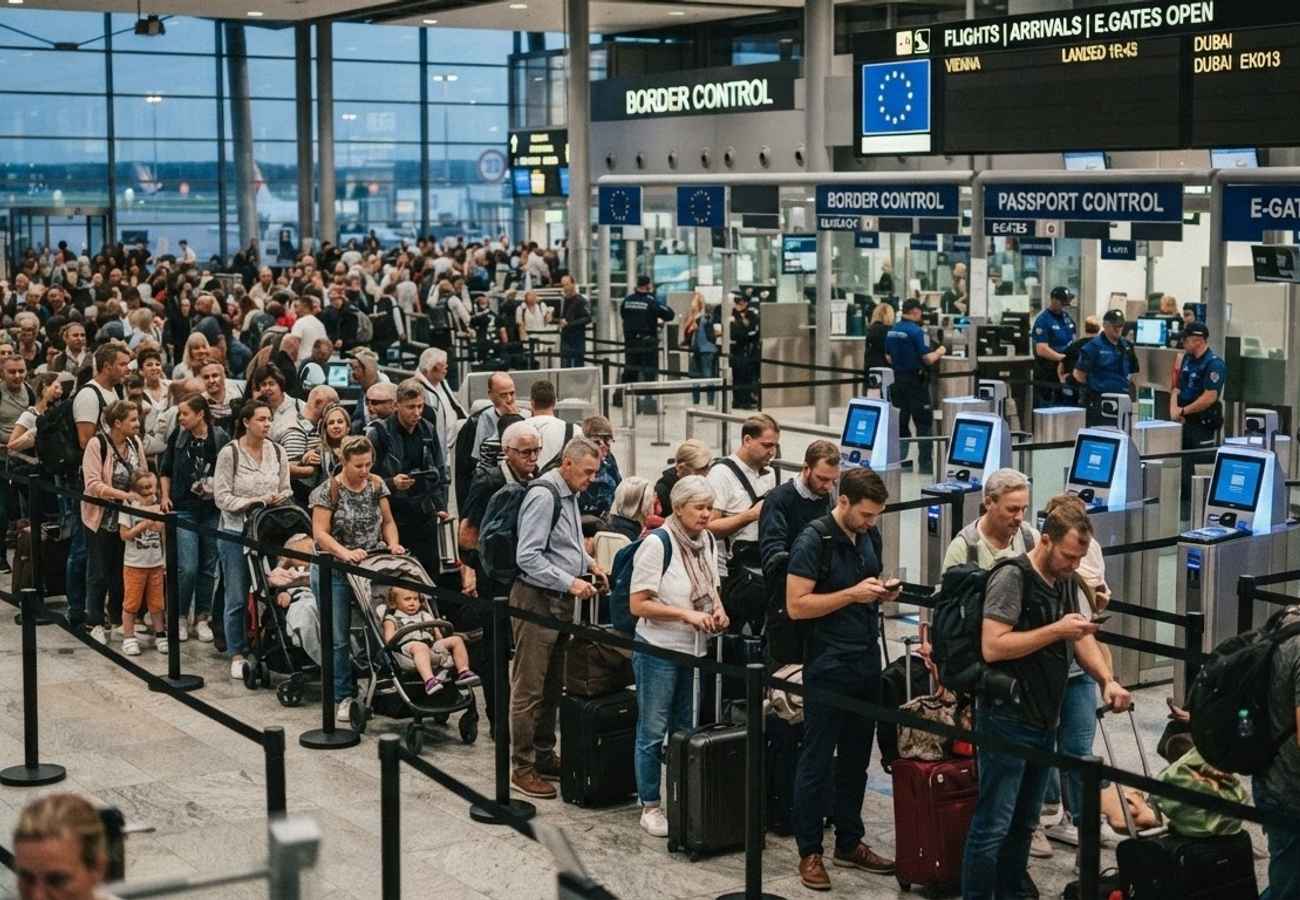
Image generated by AI
Non-EU travelers crossing into the Schengen Area may encounter significantly longer queues starting September 6, 2026. This risk stems from the expiration of a legal "safety valve" that allowed border agents to bypass biometric registration during periods of extreme congestion.
The Entry/Exit System (EES), which became fully operational on April 10, 2026, is designed to digitize border crossings. However, a specific legal provision—Article 8(2)(c) of the current framework—is reaching its statutory limit. This is not a new launch date for the EES, but rather the end of a grace period that provided authorities with the flexibility to manage passenger surges.
The Legal Deadline: Why September 6 Matters
The timeline for EES implementation is governed by Commission Implementing Decision (EU) 2025/1544 and Regulation (EU) 2025/1534. While the system officially began operations on October 12, 2025, the law included a "sunset clause" for congestion management.
Under Article 8(2)(c), the special biometric congestion mechanisms (covered in Articles 7(3) and 7(4)) cease to apply 330 days after the start of operations. Calculating 330 days from the October 12, 2025 start date brings the deadline to September 7, 2026. Consequently, September 6 is the final day these relief provisions can be legally utilized.
EES Implementation Timeline and Legal Milestones
| EES Milestone | Verified Status/Date |
|---|---|
| Official Start Date | October 12, 2025 |
| Full Operational Status | April 10, 2026 |
| Congestion Relief Window | Post-rollout period under Article 7 |
| Sunset Clause Expiration | September 7, 2026 |
| Final Day of Legal Relief | September 6, 2026 |
The Loss of the "Pressure-Release" Mechanism
The expiration of these rules removes a critical tool for border agents. Currently, Article 7(3) allows Member States to partially suspend biometric registration at specific crossings for up to six hours if traffic becomes excessive.
It is important to note that this relief did not turn the EES off; it simply allowed authorities to omit the biometric portion of the check to keep lines moving. After September 6, heavy queues will no longer serve as a legal basis for skipping biometric data collection.
This shift will be most felt during:
- Simultaneous arrivals of multiple long-haul flights.
- Peak holiday surges at ferry terminals.
- High-volume periods for Eurostar and Eurotunnel services.
- Staffing shortages at saturated border kiosks.
High-Risk Corridors: UK, France, and Spain
The UK-France corridor is particularly vulnerable because French border checks are conducted on British soil for many cross-Channel routes. To mitigate this, the UK Department for Transport announced significant investments in July 2026, including £20 million for Kent and an additional £10.5 million for the Port of Dover, Eurotunnel, and Eurostar.
France has attempted to soften the impact by installing pre-registration equipment at 25 major hubs, including:
- Paris Charles de Gaulle and Orly
- Marseille and Nice
- Gare du Nord and London St Pancras
- Dover, Folkestone, and Calais
Spain faces a different challenge: sheer volume. In July 2026, Spain recorded over 44.8 million hotel overnight stays. Because British travelers account for 25.8% of all non-resident hotel nights, the Spanish gateways in Madrid, Barcelona, and the Balearic and Canary Islands are highly susceptible to bottlenecks if biometric processing slows down.
Spain Non-Resident Hotel Night Market Share (July 2026)
| Source Market | Share of Hotel Nights |
|---|---|
| United Kingdom | 25.8% |
| Germany | 14.5% |
| France | 7.9% |
| Netherlands | 5.1% |
| United States | 4.2% |
Infrastructure Pressures in Italy and the Netherlands
Digital borders still require physical space. Amsterdam Schiphol has had to deploy 161 self-service kiosks and redesign waiting areas to accommodate the extra time EES registration requires.
Italy is seeing similar pressure due to a 12.3% year-on-year increase in international overnight stays, with 23 million arrivals recorded in the first quarter of 2026. With foreign visitors generating 54.6% of all hotel nights, the Italian border infrastructure is under constant strain.
Who is Affected by EES Processing?
The EES applies to all non-EU nationals making qualifying short-stay visits to the Schengen area. This includes citizens from:
- The United Kingdom
- United States
- Canada
- Australia
- India
- China
EU citizens, as well as nationals of Iceland, Liechtenstein, Norway, and Switzerland, are exempt from these registration requirements.
Travelers should anticipate longer processing times at Schengen external borders following the September 6 deadline.
Related Travel Guides
Disclaimer
This article is for informational and educational purposes only. It does not constitute legal, financial, or professional advice. While we strive to provide accurate and up-to-date information, travel policies, regulations, and conditions change rapidly. Always verify information with official sources before making travel decisions. Nomad Lawyer makes no representations about the accuracy, reliability, completeness, or suitability of the information provided. Readers should consult qualified professionals for advice specific to their circumstances. The views expressed in this article are those of the author and do not necessarily reflect the views of Nomad Lawyer.
Raushan Kumar
Founder & Lead Developer
Full-stack developer with 11+ years of experience and a passionate traveller. Raushan built Nomad Lawyer from the ground up with a vision to create the best travel and law experience on the web.
Learn more about our team →