Etihad Airways Solidifies UAE-Europe Network as French Operations Hit 20-Year Milestone


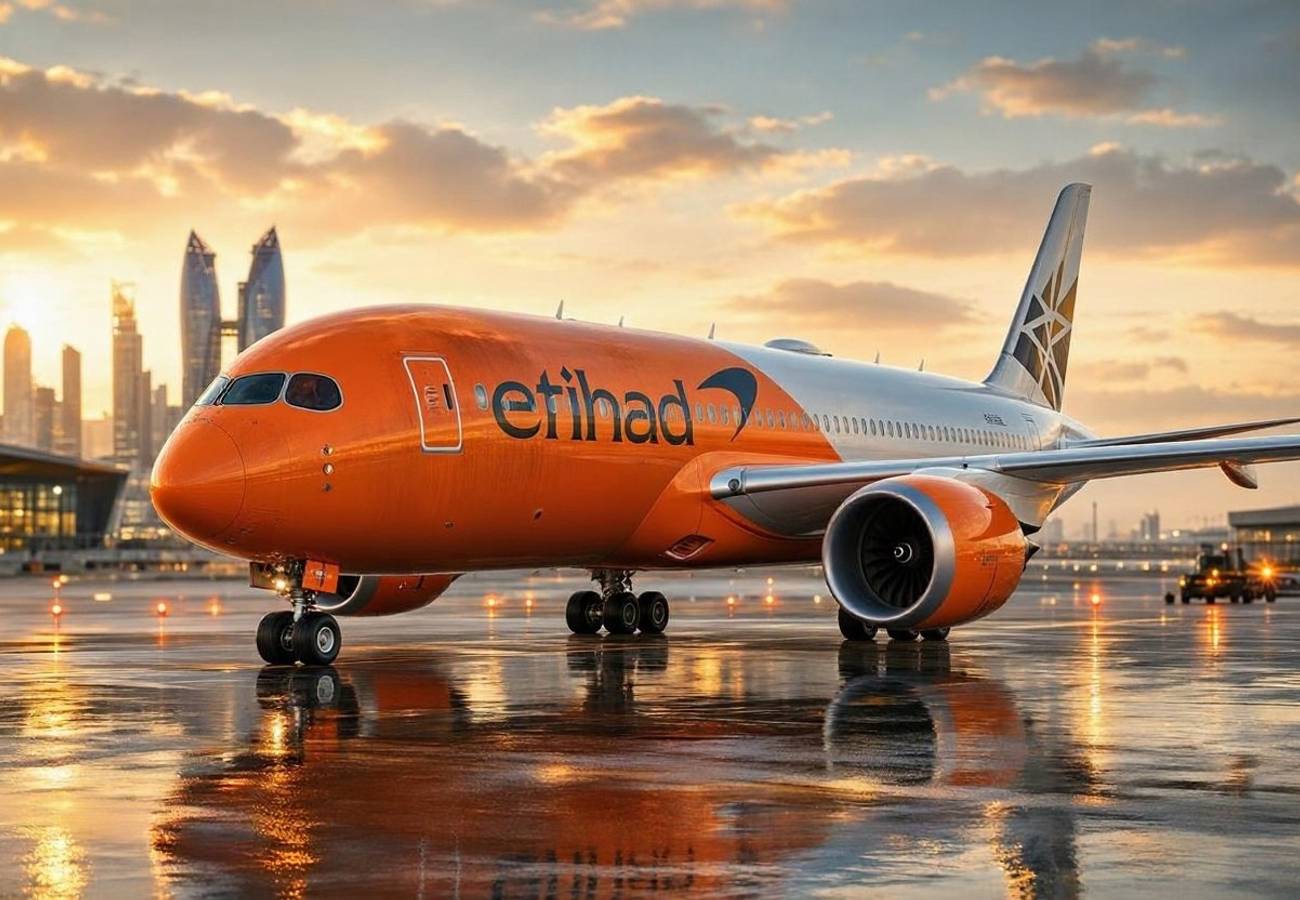
Image generated by AI
[Abu Dhabi, July 3] — The intense structural competition governing the Middle East-to-Europe aviation corridor has reached a historic benchmark. Etihad Airways, the national carrier of the United Arab Emirates, has officially marked 20 consecutive years of continuous passenger operations connecting Abu Dhabi directly to France. This two-decade milestone highlights the absolute strategic necessity of the French aviation market to the UAE's broader global connectivity strategy. By sustaining an uninterrupted, high-capacity travel corridor between the two nations, Etihad Airways has fundamentally shaped modern UAE-Europe transit, capturing massive volumes of highly lucrative corporate mobility and premium leisure traffic.
Over the past 20 years, this specific routing has transformed from a simple point-to-point diplomatic and tourism link into a massive, heavily optimized transit pipeline. The operational consistency deployed by Etihad on its French routes—driven by aggressive fleet optimization and continuous capacity scaling—ensures that the UAE retains a massive foothold in one of Western Europe's most vital economic hubs.
The Power of the Abu Dhabi Transit Engine
The long-term commercial viability of Etihad’s French operations is entirely anchored by the immense infrastructural gravity of Abu Dhabi as a global transit hub. Flight planners have systematically engineered this route to funnel French passengers directly into a massive, integrated global network.
Rather than relying purely on point-to-point tourism, Etihad utilizes Abu Dhabi to capture European travelers bound for secondary destinations. French passengers transiting through the UAE gain hyper-efficient, one-stop access to an incredibly broad geographic footprint, seamlessly connecting to primary markets across Asia, the Middle East, Africa, and the Pacific. This centralized hub-and-spoke model drastically reduces connection times and completely bypasses heavily congested northern European transfer airports.
Escalating the Premium Cabin Experience
To defend its market share over the past 20 years, Etihad Airways has been forced to continuously overhaul its long-haul passenger experience. The airline has utilized the highly competitive French routes as a primary testing ground for rolling out next-generation cabin designs.
The gradual refinement of these long-haul standards—including vastly expanded seating configurations, upgraded digital booking infrastructures, and highly personalized hospitality protocols—proves that luxury remains the ultimate differentiator in the UAE aviation market. By consistently aligning its onboard hardware with the exacting demands of European corporate flyers, Etihad maintains its status within the elite tier of global premium aviation.
Key Facts Breakdown
- The Milestone: Etihad Airways marks 20 years of continuous flight operations connecting Abu Dhabi and France.
- The Hub Strategy: The route is strategically designed to funnel French passengers through Abu Dhabi into Asia, Africa, and the Pacific.
- Service Upgrades: The 20-year span has been marked by constant cabin hardware modernizations and digital booking integrations.
- Market Impact: The route supports massive bilateral economic engagement, accelerating both corporate mobility and international tourism.
Why This Matters
Our analysis of this 20-year operational history reveals a critical reality about the Middle Eastern aviation strategy: survival requires absolute, unyielding consistency. When Etihad launched French operations two decades ago, the carrier was fighting to legitimize Abu Dhabi as a viable alternative to established European mega-hubs. Today, that objective is entirely secured. The success of the French route proves that Gulf carriers can permanently extract high-yield European passengers by offering vastly superior hub infrastructure and relentlessly upgrading their premium cabin hardware. The UAE did not just build a flight to France; it engineered a permanent bypass, successfully convincing millions of European travelers that the fastest, most comfortable route to the Eastern hemisphere goes directly through the Arabian desert.
Industry Outlook
Market trends confirm that as Etihad Airways enters its third decade of French operations, the carrier will face intensely aggressive retaliatory capacity drops from rival Middle Eastern airlines like Qatar Airways and Emirates. To maintain dominance on the Abu Dhabi-France corridor, expect Etihad to aggressively accelerate its deployment of ultra-efficient, next-generation widebody aircraft like the Airbus A350 and Boeing 787 across these specific routes. Furthermore, as the premium leisure demographic demands faster ground processing, the airline will heavily invest in frictionless, biometric-driven transit systems at Abu Dhabi International Airport. Moving forward, the battle for European passengers will no longer be fought solely in the sky, but in the technological efficiency of the airport transit experience.
Related Travel Guides
- India Restores Full West Asia Flight Corridors, Triggering Massive Drop in Peak-Season Airfares
- Ethiopian Airlines Launches Direct Lyon Route, Bypassing Major European Transit Hubs
- Cathay Cargo Launches Intermodal Fresh Logistics Corridors Across the Greater Bay Area
- Japan Airlines Unifies Long-Haul Fleet With Enclosed A350-Style Suites on Boeing 787-9s
- American Airlines Unveils Fast-Track 'Provisions' Lounge at JFK to Combat Terminal Congestion
This article is for informational purposes. Flight routes, passenger regulations, visa rules, and transit advisories are subject to change by airlines and aviation authorities. Readers are advised to verify schedules and travel documentation with relevant carriers and border agencies before departure.
Related Stories
Etihad Airways Deploys McLaren Racing Livery on Boeing 787 Dreamliner for UAE Long-Haul Routes 2026
India Launches International Digi Yatra Biometric Trials at 7 Major Airports for 2027 Expansion