
Cathay Cargo Launches Intermodal Fresh Logistics Corridors Across the Greater Bay Area
By deploying new refrigerated barge routes to Dongguan and extending its Air-Land Fresh Lane to Macao, Cathay Cargo is actively bridging critical gaps in regional pharmaceutical and food supply chains.

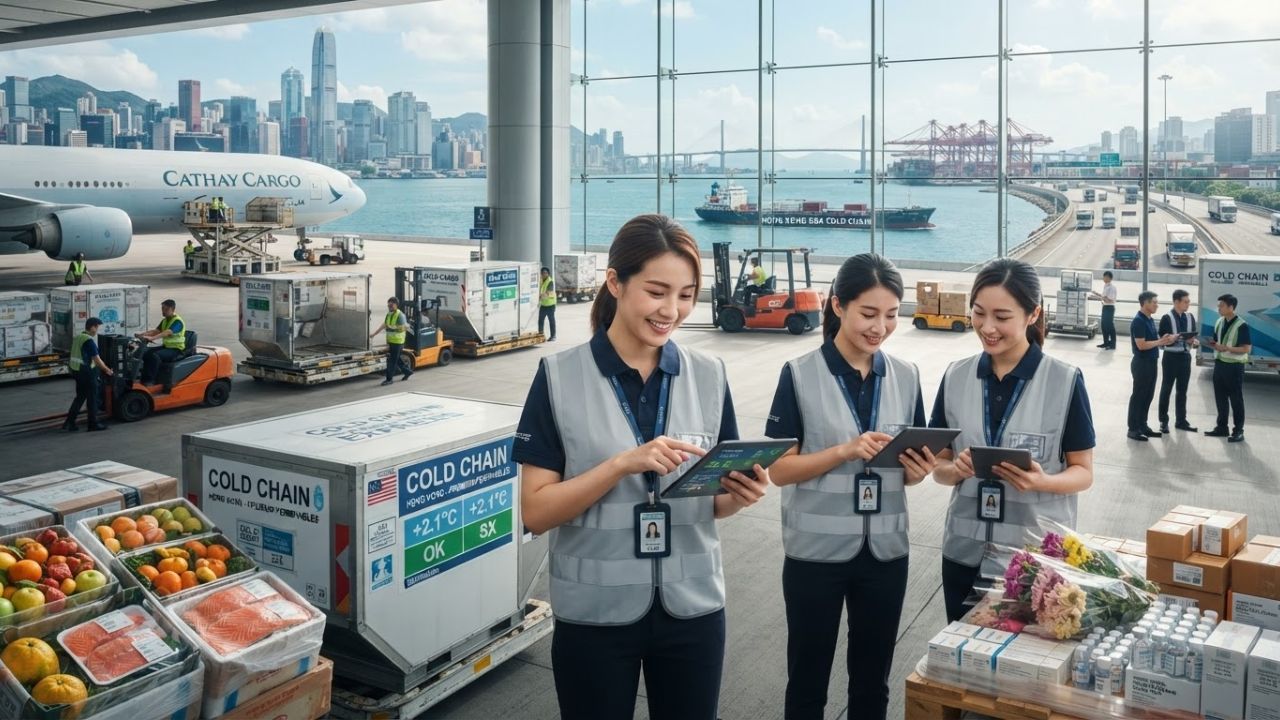
Image generated by AI
[Hong Kong, July 3] — The highly complex logistics architecture governing the Greater Bay Area (GBA) is undergoing a massive structural upgrade. Cathay Cargo has officially expanded its integrated cold chain network across the region, deploying advanced intermodal fresh logistics corridors that seamlessly fuse air, land, and sea transport. This aggressive supply chain expansion is explicitly engineered to accelerate the movement of high-value, temperature-sensitive cargo—including fresh seafood, agricultural products, and critical pharmaceuticals. By bridging isolated transit modalities into a single, cohesive ecosystem, the carrier is drastically reducing handling times and permanently reinforcing Hong Kong’s status as the absolute primary gateway for global trade flows into mainland China.
The new network design fundamentally attacks cross-border transit inefficiencies. Historically, moving perishable cargo from Hong Kong's air terminals deep into the GBA relied heavily on congested road networks, increasing the risk of temperature fluctuations. By integrating maritime and specialized land routes directly into its air cargo ecosystem, Cathay Cargo is effectively bypassing these terrestrial bottlenecks.
Deploying Refrigerated Maritime Logistics to Dongguan
The cornerstone of this infrastructure expansion is the launch of a dedicated refrigerated barge service directly connecting Hong Kong to Dongguan. This sea-based logistics corridor represents a massive shift in how perishable goods are distributed regionally. The specialized barges are engineered to maintain strict, uninterrupted temperature control throughout the maritime journey, ensuring that sensitive cargo quality remains entirely uncompromised from origin to destination.
By shifting massive volumes of fresh food and agricultural exports onto the water, the Dongguan sea corridor fundamentally de-risks the regional supply chain. It completely circumvents unpredictable road congestion at land border crossings, offering a highly reliable, high-capacity alternative that seamlessly complements Cathay’s massive air freight operations.
Expanding the Air-Land Fresh Lane to Macao
Simultaneous to the maritime expansion, Cathay Cargo has officially extended its highly successful “Air-Land Fresh Lane” corridor directly into Macao. This terrestrial extension radically improves the distribution speed for perishable cargo moving between Hong Kong’s aviation network and key urban centers across the Pearl River Delta.
The Macao extension provides importers and exporters with vastly improved, highly synchronized access to international supply chains. By deeply integrating air freight schedules with dedicated road transport systems, the corridor specifically supports the surging demand for rapid, time-sensitive deliveries within the highly lucrative food and pharmaceutical sectors.
Key Facts Breakdown
- The Network: Cathay Cargo is expanding its integrated air, land, and sea cold chain logistics network across the Greater Bay Area.
- Maritime Route: A new, continuous temperature-controlled refrigerated barge service now directly links Hong Kong to Dongguan.
- Terrestrial Route: The "Air-Land Fresh Lane" has been officially extended to service Macao.
- Target Cargo: The infrastructure is engineered for highly perishable goods, including fresh food, seafood, and temperature-sensitive pharmaceuticals.
- Operational Goal: To bypass road congestion, reduce cargo handling times, and preserve product quality across global export and import chains.
Why This Matters
Our analysis of the GBA logistics ecosystem indicates that Cathay Cargo is actively future-proofing its massive air freight dominance by controlling the "last mile" into mainland China. The pharmaceutical and luxury seafood markets operate on razor-thin margins of error; a temperature spike during a multi-hour traffic jam at a land border can instantly destroy millions of dollars in cargo. By launching a refrigerated barge to Dongguan, Cathay is effectively creating a floating, temperature-controlled highway that is completely immune to terrestrial traffic gridlock. This intermodal strategy proves that modern air cargo supremacy is no longer just about flying planes; it is about guaranteeing absolute temperature fidelity from the tarmac in Hong Kong directly into the receiving warehouses of Dongguan and Macao.
Industry Outlook
Market trends suggest that this intermodal cold chain expansion will rapidly attract high-value global pharmaceutical contracts away from rival regional hubs like Shenzhen and Guangzhou. As Cathay Cargo demonstrates the reliability of its Dongguan barge and Macao land corridors, expect European and North American exporters to heavily consolidate their mainland China routing through Hong Kong. Over the next 24 months, competing regional logistics providers will be forced to rapidly invest in their own maritime cold chain infrastructure or risk losing their lucrative perishable market share entirely. Ultimately, this integration permanently solidifies the Greater Bay Area as one of the most advanced, shock-resistant logistics ecosystems on the planet, heavily insulating it against future terrestrial supply chain disruptions.
Related Travel Guides
- Japan Airlines Unifies Long-Haul Fleet With Enclosed A350-Style Suites on Boeing 787-9s
- American Airlines Unveils Fast-Track 'Provisions' Lounge at JFK to Combat Terminal Congestion
- Oman Air Triggers Intense Gulf-Asia Aviation Rivalry With New Direct Muscat-Singapore Route
- Minneapolis Airport Meltdown: 205 Delays Sever Routes to France, Mexico, and Major U.S. Hubs
- Miami Airport Paralyzed as Severe Storms Trigger 304 Flight Delays Across Major Airlines
Disclaimer
This article is for informational and educational purposes only. It does not constitute legal, financial, or professional advice. While we strive to provide accurate and up-to-date information, travel policies, regulations, and conditions change rapidly. Always verify information with official sources before making travel decisions. Nomad Lawyer makes no representations about the accuracy, reliability, completeness, or suitability of the information provided. Readers should consult qualified professionals for advice specific to their circumstances. The views expressed in this article are those of the author and do not necessarily reflect the views of Nomad Lawyer.
Kunal K Choudhary
Co-Founder & Contributor
A passionate traveller and tech enthusiast. Kunal contributes to the vision and growth of Nomad Lawyer, bringing fresh perspectives and driving the community forward.
Learn more about our team →