
Japan Airlines Unifies Long-Haul Fleet With Enclosed A350-Style Suites on Boeing 787-9s
In a massive push for fleet-wide standardization, Japan Airlines is migrating its flagship A350 enclosed business class suites to the Boeing 787-9, raising the baseline for trans-Pacific privacy.

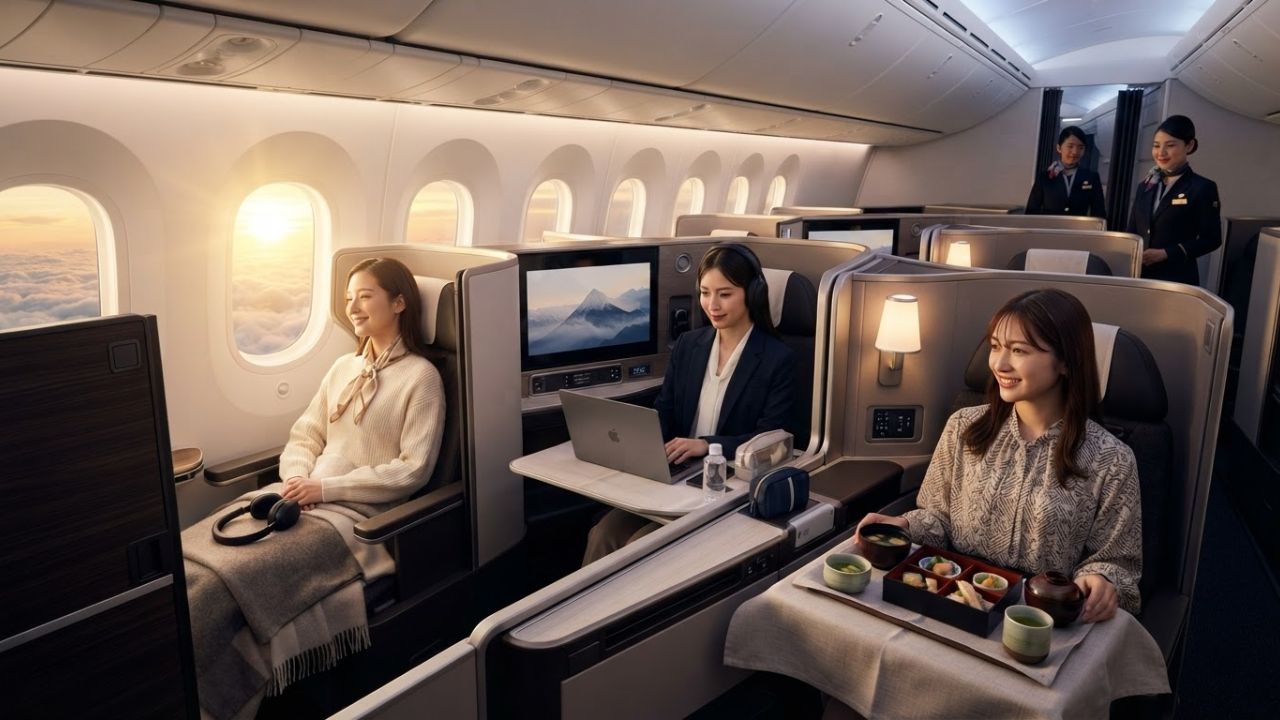
Image generated by AI
[Tokyo, July 3] — The highly fragmented landscape of international premium travel is undergoing a massive consolidation as Japan Airlines initiates a structural overhaul of its Boeing 787-9 Dreamliner fleet. The Japanese flag carrier has officially confirmed the deployment of next-generation, fully enclosed business class suites on its 787-9 aircraft, explicitly mirroring the highly acclaimed design currently utilized on its flagship Airbus A350s. By migrating these high-walled, privacy-door suites onto the Boeing widebody, Japan Airlines is aggressively executing a fleet-wide standardization strategy. This multimillion-dollar cabin upgrade guarantees that high-yield corporate flyers traveling to North America, Europe, and the Asia-Pacific will experience identical levels of extreme privacy and ergonomic comfort, regardless of the specific aircraft type operating the route.
The strategic shift marks a definitive end to traditional, open-seat business class layouts across the carrier’s long-haul network. Aviation analysts note that this upgrade is a direct, calculated response to surging post-pandemic demand for hotel-style spatial isolation in the sky.
Eradicating Premium Cabin Fragmentation
Historically, one of the primary frustrations for premium international travelers has been "equipment swaps"—booking a flight expecting a cutting-edge suite, only to find an older, exposed seat layout due to a last-minute aircraft change. Japan Airlines is utilizing this 787-9 modernization program to entirely eradicate this product variation. By harmonizing the business class design language across both Airbus and Boeing generations, the airline ensures a flawless, unified brand identity.
While the new suites are custom-engineered to fit the specific fuselage dimensions of the Boeing 787-9, the core architectural language remains identical to the A350. This alignment ensures that frequent intercontinental flyers can seamlessly transition between different aircraft within the JAL network without experiencing any downgrade in luxury or spatial isolation.
The Architectural Shift to High-Panel Privacy
The newly confirmed 787-9 suites represent a massive structural leap in onboard passenger comfort, specifically engineered for ultra-long-haul endurance. The integration of fully enclosed sliding doors creates an isolated micro-environment, shielding passengers from aisle foot traffic and ambient cabin lighting.
The cabin utilizes a 1-2-1 layout, guaranteeing absolute direct aisle access for every passenger. High-panel side walls provide intense acoustic and visual separation, essentially creating a private flying hotel room. Furthermore, the ergonomic seat structures have been extensively optimized to provide significantly expanded personal space and superior flat-bed sleep comfort for highly demanding overnight flights.
Key Takeaways
- The Upgrade: Japan Airlines is retrofitting Boeing 787-9s with fully enclosed business class suites.
- The Standardization: The new layout explicitly mirrors the flagship Airbus A350 design language to eliminate fleet fragmentation.
- The Configuration: A 1-2-1 layout guarantees direct aisle access for all passengers.
- The Architecture: Features include full privacy doors, high-panel acoustic walls, and expanded flat-bed space.
- The Target Market: The unified cabin targets high-yield corporate travelers on ultra-long-haul routes connecting Japan to Europe, North America, and the Asia-Pacific.
Why This Matters
Our analysis of this cabin modernization indicates that Japan Airlines is weaponizing consistency to dominate the trans-Pacific premium market. Corporate travel managers and high-net-worth individuals purchase business class tickets for absolute predictability; they demand a guaranteed environment where they can work securely and sleep without interruption. By standardizing the A350 privacy-door concept across the older Boeing 787-9 fleet, JAL effectively removes the "aircraft lottery" from the booking process. This massive capital expenditure proves that sliding privacy doors are no longer a unique flagship novelty—they are the mandatory baseline requirement for any airline attempting to operate a profitable, full-service long-haul network. Carriers that continue to operate exposed, non-doored seats on intercontinental routes will inevitably lose their most lucrative clients to airlines offering unified, fleet-wide privacy.
Industry Outlook
Market trends confirm that JAL's standardization strategy will trigger a massive wave of rapid retrofits across competing Asian and North American carriers. Over the next 36 months, expect major legacy airlines to pour billions into harmonizing their premium cabins across mixed Airbus and Boeing fleets, as product fragmentation becomes commercially lethal. The aerospace supply chain, particularly bespoke seat manufacturers and composite material engineers, will see a massive influx of contracts as airlines rush to engineer custom privacy doors that fit older fuselage dimensions. For the international passenger, this arms race guarantees that the era of the open-aisle business class seat is rapidly concluding, replaced entirely by secure, high-walled flying suites across all major intercontinental corridors.
Related Travel Guides
- Japan Airlines Deploys Ultra-Luxury Boeing 787-9 Business Class Suites on Long-Haul Routes
- American Airlines Unveils Fast-Track 'Provisions' Lounge at JFK to Combat Terminal Congestion
- Oman Air Triggers Intense Gulf-Asia Aviation Rivalry With New Direct Muscat-Singapore Route
- Minneapolis Airport Meltdown: 205 Delays Sever Routes to France, Mexico, and Major U.S. Hubs
- Ryanair Demands Immediate Suspension of EU Biometric Border Checks Amid Summer Travel Meltdown Fears
Disclaimer
This article is for informational and educational purposes only. It does not constitute legal, financial, or professional advice. While we strive to provide accurate and up-to-date information, travel policies, regulations, and conditions change rapidly. Always verify information with official sources before making travel decisions. Nomad Lawyer makes no representations about the accuracy, reliability, completeness, or suitability of the information provided. Readers should consult qualified professionals for advice specific to their circumstances. The views expressed in this article are those of the author and do not necessarily reflect the views of Nomad Lawyer.
Kunal K Choudhary
Co-Founder & Contributor
A passionate traveller and tech enthusiast. Kunal contributes to the vision and growth of Nomad Lawyer, bringing fresh perspectives and driving the community forward.
Learn more about our team →