
India Restores Full West Asia Flight Corridors, Triggering Massive Drop in Peak-Season Airfares
Following months of exhausting airspace detours, the complete stabilization of Gulf flight paths is rapidly injecting fresh capacity and driving down ticket costs for millions of Indian expatriates.

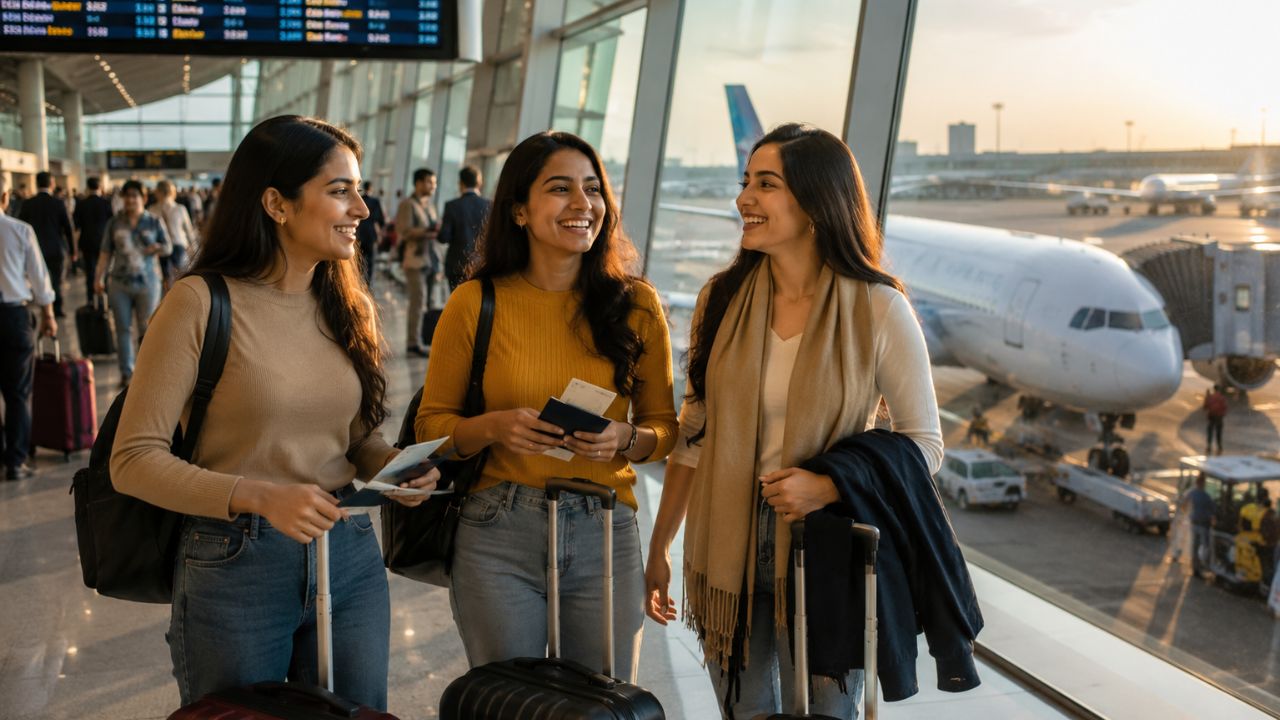
Image generated by AI
[New Delhi, July 3] — The highly lucrative aviation corridor connecting South Asia to the Gulf Cooperation Council (GCC) has officially entered a massive structural recovery phase. Following severe regional hostilities that erupted in late February, commercial carriers were forced to execute extensive, costly detours around restricted West Asian airspaces, severely choking passenger flow. Today, that operational gridlock has shattered. Driven by a massive injection of restored seating capacity, airlines are rapidly reinstating direct flight paths, eliminating exhausting multi-stop transit routing. This historic stabilization of the skies is functioning as a massive pressure-release valve for millions of Indian expatriates and corporate commuters, immediately driving down emergency peak-season airfares across the market.
According to operational data compiled by the Ministry of Civil Aviation, the commercial turnaround gained permanent traction when Air India Express officially confirmed the absolute restoration of its entire West Asia flight grid. This comprehensive reboot across the Arabian Gulf follows months of highly complex coordination with federal oversight agencies to secure safe, direct airspace rights.
Abandoning the Detours for Direct Access
For the massive demographic of Indian expatriates working throughout the region, the reopening of direct flight paths delivers immediate financial and logistical relief. Passengers are permanently abandoning the grueling, multi-hub detours that previously added compounding hours to standard commutes.
Aviation operators have specifically prioritized the reinstatement of direct, high-volume pathways. Critical regional links, including extensive operations into Kuwait and the coastal hub of Salalah in Oman, are now operating at full scale. While elevated fuel overheads continue to exert minor pressure on base ticket pricing, the massive volume of aircraft returning to these routes is successfully absorbing market friction, ensuring everyday consumer budgets receive a much-needed financial break.
Analyzing the Capacity Rebuilding Bottlenecks
Despite surging consumer confidence, real-time aviation metrics indicate that carriers are still carefully managing post-conflict logistics. Total scheduled seating capacity into the United Arab Emirates remains slightly below historical baseline averages. However, major urban centers like Dubai and Abu Dhabi continue to command massive search volumes on travel platforms, solidifying their status as the absolute primary nodes for both leisure and business transit.
Travelers navigating these newly revitalized corridors must remain highly proactive regarding terminal shifts. The Bureau of Civil Aviation Security explicitly advises passengers to digitally verify phased frequency schedules. Notably, specific airlines have relocated their entire operational footprint in Kuwait, centralizing all arrivals and departures exclusively at Terminal 4.
West Asia Monthly Seat Capacity Recovery
| Destination Hub | Monthly Seat Capacity | Year-on-Year Trend Shift |
|---|---|---|
| United Arab Em. | 969,332 Seats | Gradual Recovery Phase |
| Saudi Arabia | 229,673 Seats | Stable Structural Influx |
| Qatar | 193,261 Seats | Moderate Capacity Growth |
| Oman | 133,095 Seats | Sharp Resurgence Surge |
Key Takeaways
- Operational Reboot: Air India Express has fully restored its West Asia flight grid, eliminating costly detours.
- Pricing Impact: The massive influx of direct flight capacity is actively driving down peak-season ticket prices.
- Key Restorations: Direct connectivity to Salalah, Oman, and Kuwait has been fully reinstated.
- Terminal Shifts: Passengers flying into Kuwait must verify their routing, as operations are centralizing at Terminal 4.
- Booking Advice: Travel consultants strongly recommend locking in itineraries at least four weeks prior to departure to secure optimal value.
Why This Matters
Our analysis of the GCC aviation recovery indicates that the rapid drop in airfares is entirely driven by the restoration of direct, point-to-point routing. During the height of the February hostilities, the sheer lack of direct airspace forced airlines to route passengers through secondary, unimpacted hubs, artificially inflating ticket prices through landing fees and excess fuel burn. By reclaiming direct airspace rights, carriers like Air India Express can finally operate their narrow-body fleets at peak profitability, passing the operational savings directly to the consumer. This proves that for the Indian expatriate market, affordability is inextricably linked to geopolitical airspace stability; when the skies are clear, the localized monopolies on safe detours collapse, forcing airlines to compete purely on price.
Industry Outlook
Market trends suggest that the sharp resurgence in Oman’s seating capacity (133,095 monthly seats) will trigger intense regional competition over the next two quarters. As the UAE slowly rebuilds its massive 969,332-seat baseline, secondary Gulf states will aggressively market themselves as alternative, cost-effective entry points into the Middle East. Furthermore, as flight frequencies stagger upward, expect major Indian carriers to aggressively deploy higher-density aircraft onto these restored corridors to capitalize on the massive backlog of postponed family and corporate travel. Passengers traveling through Q3 2026 must remain hyper-vigilant regarding terminal assignments—particularly in heavily restructured hubs like Kuwait—as airlines continue to physically consolidate their ground operations to manage the resurgent passenger rush.
FAQ
Which major West Asian flight routes have been completely restored? National carriers have fully reinstated direct connectivity to primary regional gateways, including comprehensive flight schedules to Salalah in Oman and centralized operations in Kuwait.
Are international airfares expected to drop immediately? Yes, the massive injection of fresh, direct seating capacity across competitive routes is systematically absorbing market friction and driving down extreme peak-season pricing.
Do I need to verify my terminal details before departing for Gulf destinations? Absolutely. Because multiple regional hubs are optimizing their infrastructure to handle the passenger rush, specific airlines have relocated their entire operational layouts to specialized hubs like Terminal 4 in Kuwait.
Disclaimer
This article is for informational and educational purposes only. It does not constitute legal, financial, or professional advice. While we strive to provide accurate and up-to-date information, travel policies, regulations, and conditions change rapidly. Always verify information with official sources before making travel decisions. Nomad Lawyer makes no representations about the accuracy, reliability, completeness, or suitability of the information provided. Readers should consult qualified professionals for advice specific to their circumstances. The views expressed in this article are those of the author and do not necessarily reflect the views of Nomad Lawyer.
Kunal K Choudhary
Co-Founder & Contributor
A passionate traveller and tech enthusiast. Kunal contributes to the vision and growth of Nomad Lawyer, bringing fresh perspectives and driving the community forward.
Learn more about our team →