
Egypt Heritage Tourism Expands Across Saqqara, Giza, and Luxor Circuits
Egypt expands cultural tourism by linking Saqqara, Giza, Luxor, and Faiyum into a unified archaeological heritage corridor for global travelers in 2026.

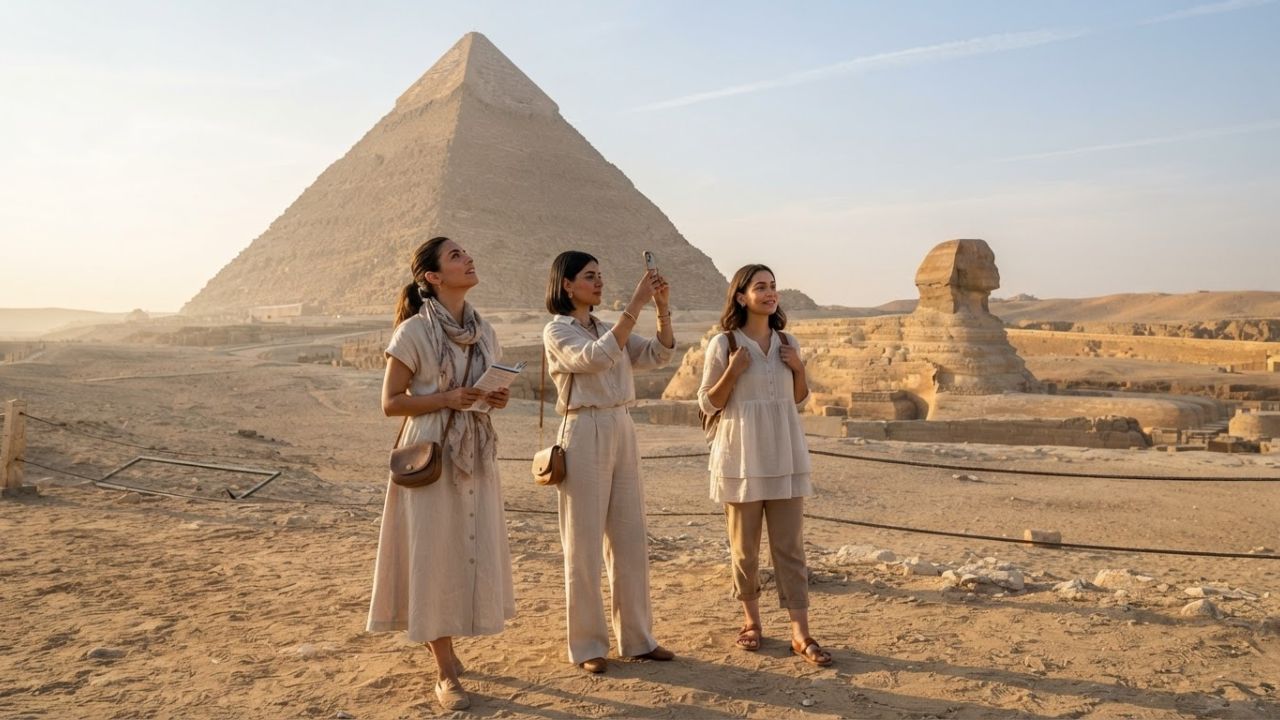
Image generated by AI
Egypt is launching a comprehensive heritage tourism initiative, connecting the historic circuits of Saqqara, Memphis, Giza, Luxor, and Faiyum to offer international travelers a deeper cultural experience. Backed by the Ministry of Tourism and Antiquities, the program promotes conservation, sustainable visitor access, and educational exploration of the ancient civilization's greatest monuments.
The cultural tourism sector in North Africa is observing a major transition, with authorities encouraging visitors to look beyond isolated landmarks and discover the broader context of ancient Egyptian civilization. By connecting historic locations across Saqqara, Memphis, Giza, Luxor, and the Faiyum Oasis, the country is establishing an integrated archaeological travel route. This comprehensive corridor allows travelers to follow the developmental stages of early architecture, engineering, and society, rather than viewing historical structures as isolated attractions. The strategic integration is supported by international bodies, with UNESCO providing World Heritage protection to key areas such as the Memphis Necropolis—which includes the pyramid fields from Giza to Dahshur—due to their outstanding universal value to humanity.
For the traveler, the real impact of this integrated corridor is the availability of an educational, structured travel program. By linking suburban Cairo sites with the temples of Upper Egypt and natural desert oases, the new travel strategy simplifies logistics, making ancient history more accessible.
Historical Milestones Across the Archaeological Corridor
The unified travel corridor guides visitors through different eras of construction, administration, and belief systems, illustrating the growth of ancient society:
- Step Pyramid of Djoser at Saqqara: Located south of Cairo, this necropolis represents a major turning point in engineering. The Step Pyramid demonstrated the transition from traditional mastaba tombs toward large-scale stone structures, providing the architectural foundation for later builders.
- Political Administration at Memphis: Located near modern Mit Rahina, Memphis was the administrative center of early Egypt. Exploring the statues and ruins of the ancient capital helps visitors understand the social organization and royal authority required to build the pyramids.
- Engineering Feats at the Giza Plateau: Home to the Great Sphinx and the pyramids of Khufu, Khafre, and Menkaure, Giza draws millions of visitors annually. The Great Pyramid of Khufu is recognized as the only surviving monument of the ancient Seven Wonders of the World, displaying advanced mathematical planning developed thousands of years ago. The construction of the Giza pyramids involved moving and placing millions of multi-ton limestone blocks, showcasing a level of administrative coordination and logistics that remains a subject of intense modern study. The Great Sphinx, carved out of a single ridge of limestone, stands as a sentinel over the plateau, representing royal power and divine protection.
- Religious Golden Age in Luxor: Built on the location of ancient Thebes, Luxor preserves Karnak Temple, Luxor Temple, the Valley of the Kings, and the Valley of the Queens, illustrating royal burial traditions and religious ceremonies from later historical periods. In Luxor, the Karnak Temple complex spans over 100 hectares, serving as the main place of worship for the god Amun-Ra for over two thousand years. The Valley of the Kings, located on the west bank of the Nile, contains rock-cut tombs adorned with vibrant mythological paintings, designed to protect the pharaohs' spirits and aid their passage to the afterlife.
- Natural History at Faiyum Oasis: Located southwest of Cairo, this fertile oasis combines ancient agricultural settings with natural environments, including the UNESCO-listed Wadi Al-Hitan (Whale Valley), which contains globally significant fossil evidence of whale evolution.
By exploring these connected settings, visitors gain a complete understanding of how early communities adapted to regional climates, organized labor, and developed religious traditions.
Sustainable Management and Site Protection
The growth of cultural tourism operates alongside strict conservation initiatives managed by national and international organizations:
- Official Site Preservation: The Supreme Council of Antiquities and the Ministry of Tourism and Antiquities manage visitor access, archaeological digs, and structural restoration works to protect fragile monuments.
- Balanced Visitor Access: Implementing electronic ticketing systems and managing crowd flows helps reduce physical pressure on popular tombs in the Valley of the Kings and inside the Giza pyramids.
- Community Integration: Conservation efforts are designed to support local economies, ensuring that communities living near historical sites benefit from tourism investments.
These protective measures help guarantee that future generations of travelers can experience Egypt's historical environments safely and comfortably.
Ecotourism and Community Support in Egypt
Promoting sustainable travel along the Nile Valley is essential for protecting sensitive desert and river environments. For the traveler, the real impact is the opportunity to practice slow travel by using low-emission transport. By choosing the overnight trains operated by Egyptian National Railways to travel between Cairo, Luxor, and Aswan instead of booking domestic flights, visitors can reduce carbon emissions.
Travelers can support local communities by staying in independent, family-run Nubian guesthouses in Aswan or local homestays in Tunis village within the Faiyum Oasis. Exploring the Faiyum Oasis allows travelers to participate in community-based ecotourism projects that protect the desert environment. Visitors can hire local desert guides to visit the sand dunes and fossil sites, providing direct income for Bedouin families. Staying at locally owned eco-lodges that use passive solar design and organic farming practices helps preserve the delicate balance between the oasis water supply and the surrounding desert terrains. This slow-travel approach ensures that the ecological resources of Egypt's rural oases are managed responsibly by the communities that rely on them. Purchasing hand-crafted clay pottery, traditional woven textiles, and regional spices directly from local cooperative markets helps ensure that visitor spending directly supports resident families. Furthermore, conserving water in hotels and avoiding single-use plastics protects the Nile River ecosystem and minimizes municipal waste pressure in historic areas.
Destination Specialist Local Insider Tips
To help you navigate Egypt's historic settings safely and comfortably, regional specialists suggest the following tips:
- Explore Saqqara’s Serapeum: Go beyond the Step Pyramid to visit the Serapeum of Saqqara, an under-the-radar subterranean gallery containing massive granite sarcophagi for the sacred Apis bulls.
- Savor Traditional Koshary: Experience local gastronomy. Try authentic Koshary (a layered dish of lentils, rice, macaroni, chick-peas, and spicy tomato-garlic sauce topped with caramelized onions) at neighborhood diners.
- Prepare Small Coins for Baksheesh: Keep small change handy. Tipping ("Baksheesh") is customary for minor services like bathroom access, luggage handling, or local temple guides.
- Plan for the Shoulder Months: Schedule your tours during the late autumn (October-November) or early spring (March-April) when temperatures average 22°C to 28°C, avoiding the intense summer heat of Luxor.
- Dress Modestly at Monuments: Show respect for local cultural norms by wearing modest clothing that covers shoulders and knees, especially when entering active religious sites or rural villages.
Long-Term Outlook for Egyptian Cultural Tourism
The long-term outlook for Egypt's heritage tourism sector, value-based cultural travel, and regional economic development remains highly positive, supported by the integration of modern transit connections, international preservation funding, and digital information systems. By encouraging educational travel that links human engineering with natural history, the country is establishing a resilient tourism model.
As travel trends continue to evolve, the collaboration between archaeological teams, regional heritage boards, and local community coordinators will remain essential. This balanced approach protects Egypt's ancient monuments, supports regional development, and ensures that the Nile corridor remains an inspiring destination for future generations of global travelers.
Related Travel Guides
Disclaimer
This article is for informational and educational purposes only. It does not constitute legal, financial, or professional advice. While we strive to provide accurate and up-to-date information, travel policies, regulations, and conditions change rapidly. Always verify information with official sources before making travel decisions. Nomad Lawyer makes no representations about the accuracy, reliability, completeness, or suitability of the information provided. Readers should consult qualified professionals for advice specific to their circumstances. The views expressed in this article are those of the author and do not necessarily reflect the views of Nomad Lawyer.
Naina Thakur
Contributor & Travel Specialist
Travel enthusiast and legal writer covering visa regulations, responsible tourism, and cultural journeys across global destinations.
Learn more about our team →