Italy and Five European Nations Pivot to High-Yield Luxury Tourism, Replacing Mass Crowds With Ultra-High-Net-Worth Loyalty

ROME, Italy — Faced with strained urban infrastructure, community pushback against overtourism, and the physical degradation of historic city centres, Italy has joined forces with five major European powers to execute a coordinated structural pivot toward high-yield, purpose-driven luxury tourism. Moving decisively away from decades of chasing headline visitor headcounts, Italy, Spain, France, Greece, the United Kingdom, and Switzerland are re-engineering their destination models to attract High-Net-Worth Individuals (HNWIs) and Ultra-High-Net-Worth Individuals (UHNWIs). By prioritizing spending density, extended lengths of stay, architectural heritage preservation, and regenerative community investments over raw footfall, these six nations are transforming the European luxury hospitality sector into an economic powerhouse projected to expand from $33.01 billion in 2026 to more than $50.18 billion by 2031.
This strategic transformation represents a profound reassessment of European tourism economics. For generations, national tourism boards measured promotional success through gross border crossings and airport arrival tallies. However, the resulting concentration of budget mass tourism overwhelmed iconic urban quarters—from the canals of Venice and the historic centre of Florence to Barcelona’s Gothic Quarter and the Athenian Acropolis—generating severe environmental wear and inflating local housing costs without providing proportional tax receipts. The new European doctrine replaces the pursuit of volume with value, cultivating deep guest loyalty among elite global travelers who prioritize privacy, bespoke craftsmanship, ecological regeneration, and discreet cultural immersion.
EUROPEAN HIGH-YIELD LUXURY HOSPITALITY REVOLUTION: MACRO OVERVIEW
| COUNTRY | STRATEGIC FOCUS | KEY PERFORMANCE METRIC | CORE MARKET TRANSFORMATION |
|---|---|---|---|
| Italy | Heritage Conversions | €10.4B Direct Spend | 2% of hotels generate |
| & Regional Spread | €702 Spend / Guest Night | 17.3% of national turnover | |
| Spain | Off-Peak Seasonality | 9.17% Projected CAGR | 47% international travel |
| & Finca Eco-Resorts | RevPAR Up 11.5% | outside summer peak season | |
| France | Palace Distinctions | 23.5% European Share | €4,500 average UHNWI spend |
| & Haute Gastronomy | €1,000+ Average Room Rate | per regional French trip | |
| Greece | Ultra-Branded Keys | Luxury Keys Up 14.2% | Aman, One&Only, Mandarin |
| & Riviera Expansion | Resort RevPAR Up 10.5% | transforming mainland/isles | |
| United Kingdom | Liquid Investment & | £2.1B H1 Transactions | Mega-urban pedestrian zones |
| Grand Heritage Keys | Record London ADR | & historic landmark hotels | |
| Switzerland | Longevity Medicine | World-Leading Medical ADR | Multi-week anti-aging and |
| & Alpine Seclusion | Top Global Spend / Stay | preventative health clinics |
The Italian Blueprint: High Yields, Heritage Palazzos, and Untapped Regional Frontiers
At the vanguard of this continental realignment stands Italy, where the luxury hospitality sector is undergoing an unprecedented structural expansion. Official market projections establish that Italy’s luxury accommodation tier is on track to generate €10.4 billion in direct tourist expenditure, anchoring national economic resilience.
The fundamental justification for Italy’s strategic pivot is revealed in the striking disparity between physical hotel capacity and gross financial yield:
- Inventory Disproportion: Five-star and ultra-luxury properties comprise just 2 percent of Italy’s total hotel supply—accounting for 771 properties and 47,782 rooms.
- Revenue Dominance: Despite representing a tiny fraction of total properties, these luxury establishments generate 17.3 percent of the entire Italian hospitality industry’s turnover.
- Surging Elite Demand: Since 2008, overnight stays in Italian five-star hotels have surged by 111 percent, with international travelers generating more than 54 percent of all luxury accommodation nights.
- Economic Spending Multipliers: A single night spent by an affluent guest in an Italian luxury hotel generates an average of €702 in direct tourist expenditure—cascading through high-end tailoring, private chauffeurs, Michelin-starred gastronomy, and local artisanal workshops. This performance completely overshadows the general hospitality industry average of €209 per night, demonstrating that a modest cohort of high-spending travelers delivers superior macroeconomic benefits with a fraction of the environmental and urban infrastructure footprint.
Global institutional investors have recognized this compelling yield profile. In recent funding cycles, institutional funds allocated 45 percent of total Italian hotel investment transactions (amounting to €2.35 billion) directly into luxury properties, establishing five-star hospitality as the most resilient asset class in Italian commercial real estate.
ITALIAN HOSPITALITY: MASS TOURISM VS. LUXURY TIER DISPARITY
| Entity / Route | Metrics | Operational Status |
|---|---|---|
| PERFORMANCE INDICATOR | GENERAL HOSPITALITY AVERAGE | FIVE-STAR LUXURY TIER |
| Share of Total Hotel Supply | 98.0% of National Properties | 2.0% (771 Hotels / 47,782 Rooms) |
| Share of National Turnover | 82.7% of Sector Revenues | 17.3% of Total Industry Turnover |
| Average Daily Guest Spend | €209 Per Visitor Night | €702 Per Visitor Night |
| International Demand Share | Mixed Domestic / European | 54.0%+ Inbound Long-Haul Affluent |
| Transaction Capital Share | 55.0% of Asset Investments | 45.0% (€2.35 Billion Institutional) |
| Post-2008 Stay Growth Rate | Moderate Incremental Gains | +111% Cumulative Room Night Surge |
The VIP Diamond Concentration and the Emerging Regional Frontiers
Despite its national economic strength, Italy's luxury hospitality landscape exhibits intense geographical concentration alongside remarkable untapped potential:
- The Five-Province Concentration: More than half of Italy’s entire luxury market—53.4 percent—is concentrated within just five powerhouse provinces: Rome (19.7%), Bolzano/South Tyrol (13.1%), Venice, Florence, and Milan. When expanded to the top 17 "luxury hub" provinces, they absorb 79.2 percent of all luxury demand. Regions such as Lazio (109 five-star hotels), Tuscany (94 properties), and Veneto (79 properties) dominate institutional capital deployment.
- The Alpine Eco-Luxury Paradigm: Bolzano’s prominent second-place standing highlights a major cultural shift among global elites toward nature-immersive wellness and high-altitude retreat travel. The Dolomites have become an international sanctuary for biophilic architecture, alpine longevity spas, and farm-to-table Michelin dining, proving that pristine natural environments command room rates matching the Renaissance capitals.
- The Undeveloped Frontier: In stark contrast, 25 Italian provinces currently lack a single five-star hotel, and across 50 additional provincial jurisdictions, luxury hospitality remains entirely marginal. Visionary developers are targeting this geographic imbalance as the primary investment frontier for the next decade. Provinces across Abruzzo, Calabria, Basilicata, and inland Puglia offer untouched coastal and mountain landscapes where historic olive estates (masserie) and medieval hill-town hamlets (borghi) can be converted into ultra-exclusive, low-density boutique retreats.
Historic Preservation: Palazzos, Monasteries, and the Superbonus Turismo
A defining characteristic of Italy’s luxury expansion is its commitment to architectural conservation. Under the stringent provisions of the Italian Cultural Heritage and Landscape Code (Codice dei Beni Culturali e del Paesaggio), historic centres are shielded from destructive new construction. Developers cannot erect generic high-rise hotels in ancient piazzas.
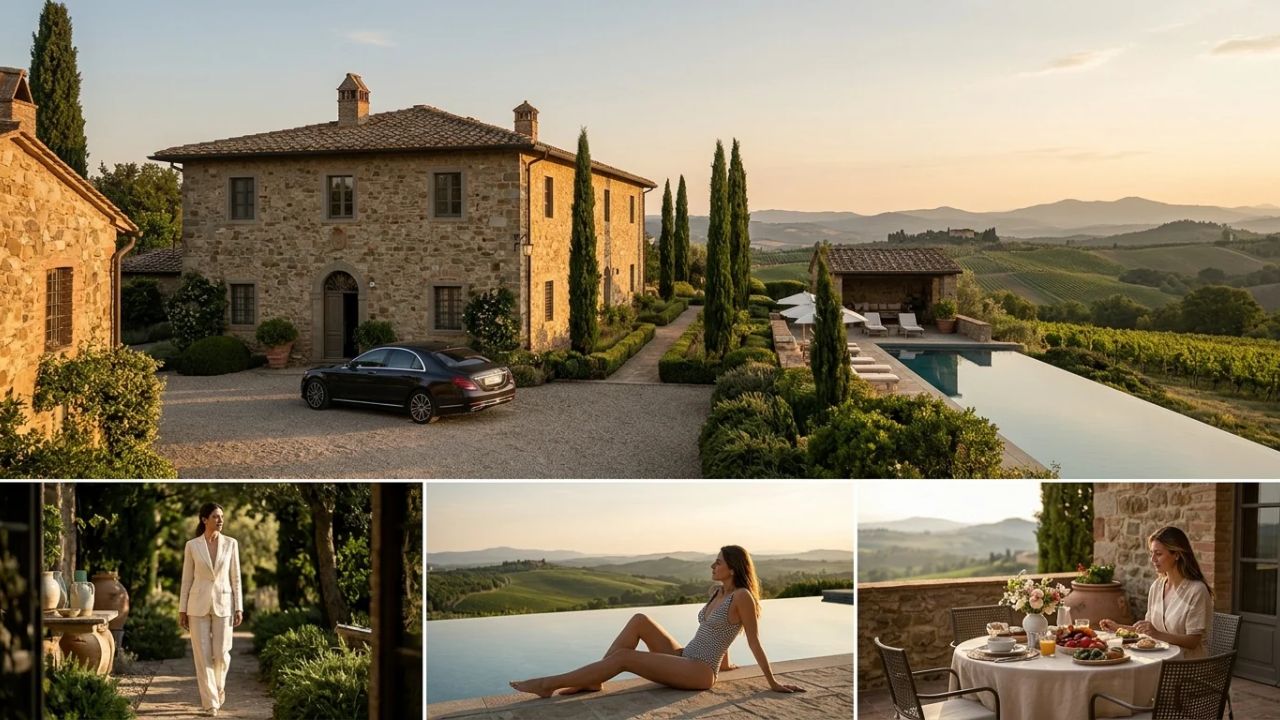
Consequently, 51 percent of luxury hotel transactions involve the meticulous restoration of historic properties. Aided by targeted governmental incentive structures such as the Superbonus Turismo tax credits and heritage development allowances, investors are transforming centuries-old aristocratic palazzos, Franciscan monasteries, and Renaissance villas into world-class hotels. These restorations preserve hand-painted ceiling frescoes, ancient cloistered gardens, and Roman stone foundations while retrofitting state-of-the-art geothermal climate systems, acoustic insulation, and discreet smart technology.
The Six-Nation Strategy: Specialized Approaches to Commanding Elite Yields
Recognizing that competing on volume and discounting room rates degrades national assets, Italy is moving in harmony with five other European nations—Spain, France, Greece, the United Kingdom, and Switzerland. Each country is deploying a specialized, competitive strategy designed to secure long-term loyalty from the global wealth elite.
THE SIX-NATION EUROPEAN LUXURY PLAYBOOK: STRATEGIES & METRICS
| Entity / Route | Metrics | Operational Status |
|---|---|---|
| NATION | CORE STRATEGIC FOCUS | TACTICAL IMPLEMENTATION & PERFORMANCE |
| Spain | Seasonality Smoothing & | 9.17% Compound Annual Growth Rate; |
| Rural Finca Decentralization | 47% of international visits occur off-peak; | |
| RevPAR gains reach 11.5% in rural estates. | ||
| France | Palace Accreditations & | Controls 23.5% of European luxury revenues; |
| Ultra-High Net Worth Spending | Nightly rates exceed €1,000–€2,500; | |
| Average UHNWI trip yields €4,500 local spend. | ||
| Greece | Branded Luxury Enclaves & | 14.2% expansion in branded luxury inventory; |
| Riviera Repositioning | 402 five-star properties operational; | |
| High-end resort RevPAR advances 10.5%. | ||
| United Kingdom | Capital Market Liquidity & | £2.1 billion deployed in H1 2026; |
| Urban Pedestrianization | Landmark conversions (The OWO, Peninsula); | |
| High-street luxury retail corridor overhauls. | ||
| Switzerland | Preventative Longevity Clinics | World's premier medical wellness retreat hub; |
| & High-Alpine Seclusion | Extended multi-week clinical stays; | |
| Unmatched average daily spending rates. |
1. Spain: Off-Peak Travel and Rural Estate Decentralization
Spain is projected to achieve the fastest expansion in European luxury hospitality, recording a forecast 9.17 percent Compound Annual Growth Rate (CAGR). To counteract overtourism protests in Barcelona and the Canary Islands, Spanish tourism authorities and private developers have executed a brilliant decentralization program:
- Counter-Seasonal Travel: Today, 47 percent of international luxury arrivals in Spain occur outside the peak July–August summer window, smoothing demand across autumn, winter, and spring.
- The Finca and Cortijo Revival: Capital is flowing away from crowded beachfront strips into the interior of Andalusia, Extremadura, and Mallorca. Luxury travelers are booking converted 17th-century rural estates (fincas and cortijos) surrounded by olive groves and vineyards, driving revenue per available room (RevPAR) up by 11.5 percent.
- Sustainable Balearic Eco-Resorts: On Ibiza and Menorca, stringent local moratoria on new construction have channeled capital into regenerative agro-tourism retreats operating on 100 percent renewable solar energy and private organic farming.
2. France: Palace Distinctions and Bespoke Haute Living
Holding a commanding 23.5 percent market share of Europe’s luxury hospitality sector, France directly caters to Europe’s 2.9 million millionaires alongside affluent American, Middle Eastern, and Asian dynasties:
- The Exclusive Palace Label: France leverages its prestigious official "Palace" distinction, an elite tier above five stars granted to only thirty-one properties nationwide, including Paris icons Le Bristol, Hôtel de Crillon, and Cheval Blanc Courchevel.
- Unrivaled Spending Density: Top-tier Parisian suites command rates exceeding €1,500 to €3,000 per night, with the average UHNWI itinerary generating an astonishing €4,500 in total regional expenditure across haute couture salons, private wine cellars in Champagne and Bordeaux, and bespoke cultural foundations.
3. Greece: International Branded Enclaves and Riviera Transformations
Greece has initiated a dramatic departure from its budget backpacker and party-island legacy, executing a comprehensive repositioning toward ultra-luxury branded hospitality:
- Branded Hotel Surge: International branded luxury inventory expanded by 14.2 percent to 402 luxury properties, driven by landmark entries from ultra-high-end operators including Aman, One&Only, Four Seasons, and Mandarin Oriental.
- The Athenian Riviera and Mainland Enclaves: Billions in foreign direct investment are transforming the coastal corridor south of Athens (Glyfada, Vouliagmeni, and the Ellinikon redevelopment) into a year-round Mediterranean rival to the French Riviera. Simultaneously, the Peloponnese (Costa Navarino and Porto Heli) has emerged as an exclusive haven for golf, sailing, and private villa ownership, elevating luxury resort RevPAR by 10.5 percent.
4. United Kingdom: Urban Heritage Conversions and Liquid Capital Markets
London remains Europe’s most liquid institutional hotel investment market, capturing £2.1 billion in hotel transaction volume during the first half of 2026 alone:
- Landmark Heritage Transformations: Historic civic and military monuments in central London have been converted into ultra-luxury flagships, highlighted by Raffles London at The OWO (the Old War Office in Whitehall), The Peninsula London overlooking Hyde Park Corner, and the Emory in Knightsbridge.
- Urban Environment Enhancements: Multi-million-pound public realm investments—including the pedestrianization of Oxford Street and streetscape beautification across Mayfair and St. James’s—are designed to create secure, walkable luxury districts supporting elite retail, private members' clubs, and art auction houses.
5. Switzerland: Longevity Science and Alpine Seclusion
Switzerland dominates the ultra-lucrative intersection of luxury hospitality and preventative healthcare. Catering to multi-generational family offices and international business leaders, Swiss properties offer high-ticket medical wellness:
- The Longevity Clinic Model: World-renowned clinical retreats such as Clinique La Prairie in Montreux, the Grand Resort Bad Ragaz, and the Chenot Palace Weggis command astronomical room rates for multi-week programs integrating cellular regeneration, advanced epigenetic testing, stem cell therapies, and personalized nutritional medicine.
- Secluded Alpine Sanctuaries: Properties situated high above Lake Lucerne and across St. Moritz, Gstaad, and Zermatt provide uncompromised privacy, zero-emission alpine transport, and private jet integration via regional airfields like Samedan.
Foundational Mechanisms of the Modern Luxury Pivot
The transition toward high-yield tourism across these six nations is governed by three transformative operational pillars that align with the values of the modern wealth demographic. Today’s affluent traveler is younger, technologically adept, deeply conscious of environmental degradation, and fiercely protective of personal time.
THE THREE PILLARS OF MODERN EUROPEAN LUXURY HOSPITALITY
| Category / Entity | Details / Impact |
|---|---|
| OPERATIONAL PILLAR | CORE PRINCIPLES & IMPLEMENTATION |
| 1. Purpose-Driven & | - Surpassing passive sustainability to generate active regional renewal |
| Regenerative Travel | - Funding historic fresco restoration and local architectural crafts |
| - Private marine reserve stewardship and zero-emission yacht charters | |
| - Alignment with EU Corporate Sustainability Reporting Directives (CSRD) | |
| 2. AI-Powered | - Invisible backend automation resolving skilled hospitality shortages |
| Hyper-Personalization | - Predictive biometric preference mapping (circadian lighting, climate) |
| - Algorithmic procurement of private museum buyouts and artisan dining | |
| - Elevating human staff to focus exclusively on empathetic guest care | |
| 3. The Slow Tourism | - Replacing multi-country checklists with 2-to-4-week single-region stays |
| Paradigm | - Renaissance of luxury rail travel (Orient Express La Dolce Vita) |
| - Deep integration into local agrarian life, truffling, and wine harvest | |
| - Bypassing commercial aviation friction via scenic private carriages |
1. Purpose-Driven and Regenerative Tourism
The contemporary ultra-wealthy traveler is actively rejecting hollow ostentation. Gold-plated bathroom fittings and wasteful buffets have been replaced by a desire for regenerative impact—the expectation that a guest’s stay leaves the local ecology and community measurably better than before arrival:
- Heritage and Art Conservation: Five-star hotels across Florence, Rome, and Venice direct portions of nightly room revenues into private trusts funding the restoration of Renaissance paintings, public fountains, and medieval stonework. Guests gain exclusive, private access to active restoration workshops and archaeological digs.
- Agrarian and Marine Stewardship: Luxury retreats in Andalusia, Tuscany, and the Greek Cyclades operate functioning biodynamic farms that supply zero-kilometer organic produce to hotel dining rooms while rewilding indigenous flora, planting endangered olive varieties, and financing local marine biodiversity sanctuaries.
- Strict Sustainability Compliance: Properties are aligning their operations with the European Union’s Corporate Sustainability Reporting Directive (CSRD), implementing closed-loop greywater recycling, geothermal heating, and zero-single-use-plastic standards to satisfy the environmental scrutiny of discerning family offices.
2. High-Tech Backend Automation and AI Hyper-Personalization
The European luxury sector faces significant headwinds, including stringent labor regulations and a systemic shortage of highly trained hospitality staff. To overcome these bottlenecks without degrading service standards, operators are deploying cutting-edge artificial intelligence and backend automation:
- Invisible Technology, Empathetic Human Service: AI platforms manage energy consumption, predictive equipment maintenance, inventory logistics, and kitchen ordering behind the scenes. This digital efficiency frees human staff from tedious administrative paperwork, allowing butlers, concierges, and sommeliers to devote their undivided attention to personalized guest interactions.
- Predictive Guest Profiling: Advanced machine-learning algorithms analyze past guest preferences across global hotel portfolios to anticipate requirements before arrival. A guest entering a suite finds room temperature, lighting warmth, preferred pillow firmness, and bespoke in-room amenities calibrated precisely to their bio-circadian rhythm.
- Algorithmic Concierge Curation: Elite concierges utilize specialized AI scheduling platforms to coordinate complex itineraries, securing closed-door after-hours access to the Vatican Museums or the Louvre, matching dietary profiles with off-menu tasting menus by Michelin-starred chefs, and organizing private chartered helicopter transfers with zero operational friction.
3. The Slow Tourism Paradigm and the Luxury Rail Revival
Time has become the ultimate luxury commodity. The frenetic, multi-city "grand tour" of the past—where tourists rushed through three countries in seven days—has been superseded by slow, immersive, multi-week explorations of single regions:
- Multi-Week Regional Residency: Elite travelers are booking restored villas in the Val d’Orcia, coastal fincas in Mallorca, or chalet estates in Verbier for three to six weeks. Guests integrate into the rhythm of village life, participating in the autumn grape harvest (vendemmia), learning artisanal cheese-making traditions, and establishing deep emotional connections with host communities.
- The Golden Age of Rail Travel: High-speed airport congestion and private aviation scrutiny have ignited a spectacular renaissance in luxury rail journeys. The rollout of Orient Express La Dolce Vita across Italy—alongside the legendary Venice Simplon-Orient-Express and the Belmond Royal Scotsman—offers guests exquisitely appointed vintage rail carriages, haute cuisine dining, and slow, cinematic transit through the Italian countryside, the Alps, and coastal panoramas. Luxury trains serve as moving five-star hotels, dispersing wealthy passengers into scenic regional towns that rarely see international air arrivals.
Redesigning the Economic Engine: Why Less is More for European Tourism
The collective pivot executed by Italy, Spain, France, Greece, the United Kingdom, and Switzerland provides a visionary template for the future of global tourism. For decades, global tourism policymakers operated under the flawed premise that unconstrained growth in visitor numbers was synonymous with economic progress.
The physical realities of the 21st century have thoroughly disproved that assumption:
- The True Cost of Mass Tourism: Unregulated volume degrades public infrastructure, erodes delicate historical stonework, overcrowds transit systems, generates mountains of municipal waste, and prices local residents out of their ancestral neighborhoods. The low per-capita spending of budget package tourists rarely covers the public expenditures required to manage their footprint.
- The High-Yield Solution: By deliberately replacing volume with value, these six European nations are demonstrating that a destination can generate higher aggregate GDP contribution, sustain well-compensated hospitality careers, and foster flourishing local artisan economies with significantly fewer total visitors.
By welcoming fewer travelers who stay longer, spend deeply, respect local heritage, and actively finance ecological and cultural preservation, Europe is ensuring the survival of its historic treasures. This high-yield, purpose-driven model protects the social fabric of local communities while guaranteeing that Europe remains the world's most aspirational, captivating, and sustainable travel destination for generations to come.
Related Travel Guides
This article is for informational purposes. Flight routes, passenger regulations, visa rules, and transit advisories are subject to change by airlines and aviation authorities. Readers are advised to verify schedules and travel documentation with relevant carriers and border agencies before departure.
Related Stories

Cayman Islands Tourism Hits Record Highs: Stayover Arrivals Surge 11% as Luxury Replaces Mass Caribbean Cruise Traffic
Indonesia Pioneers the Global Regenerative Tourism Revolution: Inside the High-Yield Shift from Mass Footprint to Ecological Restoration