Dominica Celebrates 48 Years of Independence: Creole Heritage, Music Festivals, and Cultural Guide 2026

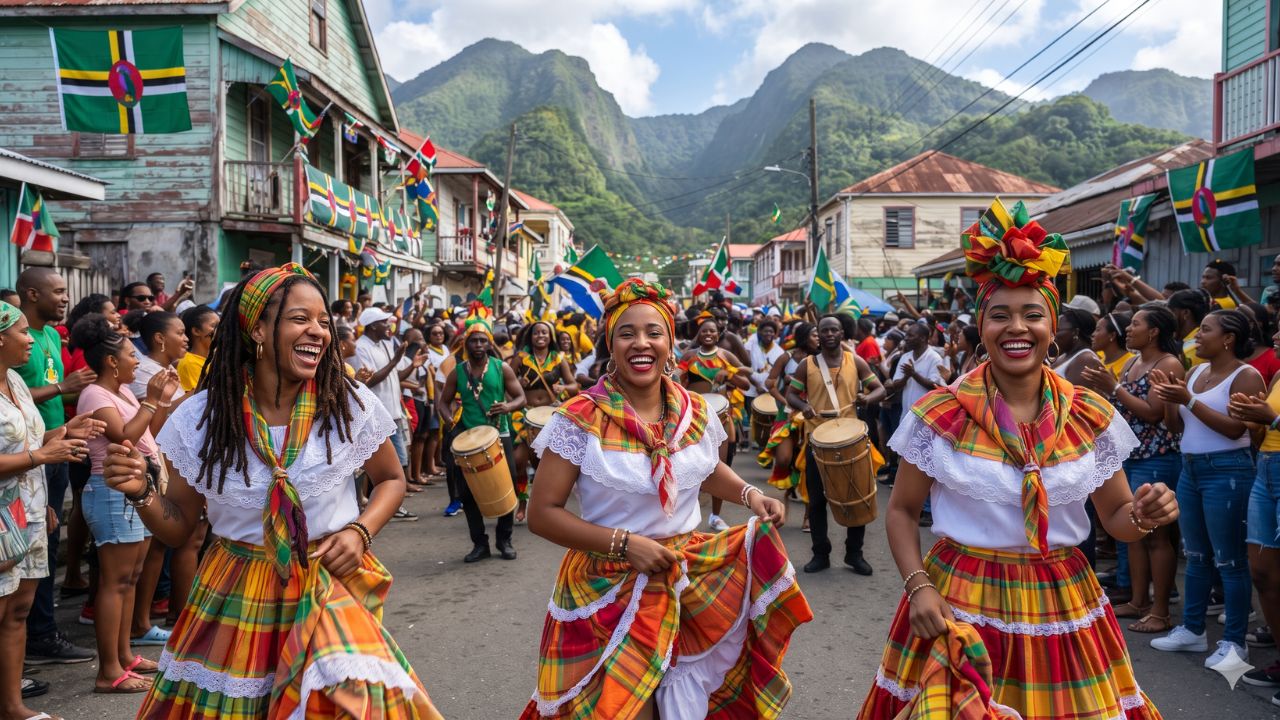
Image generated by AI
While most Caribbean islands compress their national day observances into a single holiday weekend, the eastern Caribbean island of Dominica stages an unbroken seven-week cultural marathon that transforms every village from 19 September through 4 November 2026. Commemorating 48 years of sovereignty achieved from the United Kingdom on 3 November 1978, the official programme unfolds under the theme Our Journey, Our Legacy, Our Future. Across steep volcanic ridges, botanical parklands, and coastal fishing settlements, the Commonwealth of Dominica brings its Kwéyòl language, intricate madras-patterned Wob Dwiyet attire, and village traditions to center stage, proving that the renowned "Nature Island" is defined as profoundly by its living human heritage as by its 365 freshwater rivers.
Beyond the Rainforest Canopy: How Dominica's Extended Independence Calendar Unfolds
The 2026 celebrations showcase an expansive view of national identity, shifting international attention from standard eco-resort marketing toward deep community traditions. Officially launched by the Government of the Commonwealth of Dominica on 19 September, the commemorative schedule spans over 45 days, bridging civic remembrance with public arts, educational symposia, and grassroots district gatherings.
Rather than confining events to the capital city of Roseau, the government coordinates heritage showcases across outer districts. National Heritage Day on 18 October anchored celebrations in the northern community of Paix Bouche, highlighting northern agricultural folklore and traditional cassava bread production. Throughout mid-October, initiatives like History Week, National Emblems Week, the Independence Art Exhibition, and the lively Creole in the Street fair engaged small-scale artisans, street vendors, and independent hospitality providers across the island.
The festival sequence reached its musical zenith from 23 to 25 October at Windsor Park Sports Stadium during the World Creole Music Festival. Serving as a premier cultural anchor for travelers supported by the Discover Dominica Authority, the three-night showcase paired homegrown Cadence-lypso and Bouyon rhythms with international Creole acts, accompanied by the daytime Ti Vilaj Kweyol artisan village staged at the Dominica Botanic Gardens from 19 to 22 October.
| Date & Day (2026) | Official Event Title | Primary Venue & Location | Core Focus & Cultural Activity |
|---|---|---|---|
| 19 September | Official Independence Season Opening | Nationwide broadcast & Roseau | National theme launch: Our Journey, Our Legacy, Our Future |
| 18 October | National Heritage Day | Paix Bouche, Northern District | Community folklore, traditional crafts, and village heritage |
| 19–22 October | Ti Vilaj Kweyol Artisan Fair | Dominica Botanic Gardens, Roseau | Indigenous food, artisanal crafts, language, and oral storytelling |
| 23–25 October | World Creole Music Festival (WCMF) | Windsor Park Sports Stadium | International headline concerts: Cadence-lypso, Zouk, and Bouyon |
| 29 October | National Youth Rally | Windsor Park Sports Stadium | Student athletic parades, civic awards, and youth performances |
| 30 October | Jounen Kweyol & National Dress Parade | Islandwide & Financial Center | Traditional Wob Dwiyet dress, Creole language, and folk music |
| 31 October | Cultural Extravaganza & Eat Fish Day | Regional coastal landing sites | Artisanal fishing heritage, seafood cookouts, and drum circles |
| 1 November | National Cultural Gala | Dominica Botanic Gardens, Roseau | Traditional Jing Ping bands, Quadrille dance, and folk honors |
| 3 November | National Day Observance Ceremony | Roseau & National Stadium | 48th Anniversary of Independence (1978); state address & parade |
| 4 November | National Day of Community Service | Nationwide across all villages | Collective civic beautification, trail clearing, and public works |
While state statistical authorities have not issued specific estimates regarding international visitor headcounts or total commercial revenue generated during the festive season, the schedule provides travelers with an authentic look at Caribbean community life far removed from generic cruise ship ports.
What Makes Dominican Creole Culture Unique
Dominica's Creole identity is the product of geography, indigenous resistance, and cultural resilience. Unlike flat coral atolls across the Caribbean basin that were clear-cut into monoculture sugar plantations, Dominica's near-vertical volcanic terrain and dense rainforests provided sanctuary for the indigenous Kalinago people and self-liberated African maroons. This rugged sanctuary fostered an independent, self-reliant peasantry that preserved West African spiritual practices, ancestral foodways, and a rich French-based Kwéyòl tongue.
The visual embodiment of this heritage is the Wob Dwiyet, Dominica's national dress worn proudly on Jounen Kweyol (Creole Day, celebrated on 30 October). Derived from 18th-century French provincial court attire and adapted with West African textile aesthetics, the ensemble consists of a bright madras cotton overskirt meticulously pleated and pinned over an embroidered white lace petticoat (jupe), accented by a folded triangular silk neck kerchief (foulard) and a ceremonial headpiece (tête en l'air). The number of peaks tied into the headpiece traditionally communicated the wearer's romantic status.
Music represents another pillar of distinction. Dominica is the birthplace of Cadence-lypso—pioneered in the 1970s by bands like Exile One—and high-energy Bouyon music, developed in the late 1980s by the band WCK. These genres fuse acoustic Jing Ping folk ensembles (utilizing the accordion, bamboo flutes, the gwaj metal scraper, and the tanbou drum) with modern synthesizers, providing the musical heartbeat that pulses through street parties from Roseau to Portsmouth.
Visitor Insider Tips: Wob Dwiyet Etiquette, Route Taxis, and Coastal Feasts
Navigating Dominica's Independence season requires an understanding of island geography and local etiquette.
- Jounen Kweyol Dress and Social Etiquette: If visiting on 30 October for Creole Day, participate by wearing madras-patterned shirts, dresses, or scarves. Greeting shopkeepers, elders, and taxi operators with Kwéyòl phrases like "Bonjou" (Good morning) or "Mèsi" (Thank you) demonstrates cultural respect and opens warm conversations.
- Feasting on Eat Fish Day and Creole Day: Seek out village stalls rather than upscale hotel dining rooms on 31 October for Eat Fish Day. Sample titiwi accras (crisp fritters made from tiny freshwater river gobies), roasted breadfruit accompanied by smoked herring, callaloo soup enriched with land crabs and dasheen leaves, and stewed manicou (opossum) or agouti prepared in rich onion gravies.
- Where to Base Yourself for the Celebrations: Travelers attending evening stadium concerts and morning parades should base themselves in Roseau, Castle Comfort, or Wallhouse to avoid driving narrow mountain roads late at night. For outdoor trail exploration combined with village heritage, split your itinerary with a stay around Portsmouth or Soufrière in the south.
- Mountain Transit and Island Mobility: Transport between Roseau and outlying villages relies on shared route minivans, identifiable by their license plates beginning with the letter "H". Fares are regulated by the government and paid directly in Eastern Caribbean Dollars (XCD) upon reaching your destination. If renting a four-wheel-drive vehicle, navigate mountain switchbacks defensively, sounding your horn before blind hairpin turns.
Cultural and Environmental Context: Koudmen Traditions and Climate Resilience
The conclusion of the official Independence calendar on Wednesday, 4 November with the National Day of Community Service highlights an ancestral socio-economic practice known in Kwéyòl as koudmen (giving a helping hand). Long before the introduction of modern government social programs, Dominican villagers gathered collectively to construct timber homes, repair fishing skiffs, clear hurricane-damaged footpaths, and plant root crops for elderly neighbors.
This ingrained civic solidarity proved vital in the aftermath of 2017's devastating Category 5 Hurricane Maria. Today, Dominica is pursuing an ambitious national initiative to become the world's first fully climate-resilient country, fortifying public infrastructure against extreme tropical storms and transitioning toward geothermal energy tapped from its volcanic interior.
Environmental stewardship also safeguards the island's pristine highlands. Up in the cloud forests, the UNESCO World Heritage Morne Trois Pitons National Park shelters the Valley of Desolation, boiling fumaroles, and the nesting habitats of the endangered Sisserou parrot (Amazona imperialis), Dominica's national bird. By channeling tourism revenue into rural homestays, licensed local guides, and community-led conservation, the island ensures that its economic future remains in the hands of the people who have preserved its soil for generations.
FAQ: Visiting Dominica for Independence and Creole Season 2026
What are the primary dates for Dominica's Creole celebrations in 2026?
The full programme runs from 19 September to 4 November 2026. The major cultural peaks take place during the final two weeks of October, culminating in Independence Day on 3 November.
Do international travelers require a visa to enter Dominica?
Citizens of the United States, Canada, the United Kingdom, the European Union, and CARICOM member states do not require a tourist visa for stays up to 90 days. A valid passport and return ticket are mandatory.
How do I get to Dominica from major international transit hubs?
International travelers connect to Douglas-Charles Airport (DOM) via regional non-stop flights from Miami (MIA), San Juan (SJU), Barbados (BGI), Antigua (ANU), and Sint Maarten (SXM).
What currency is accepted during street festivals like Jounen Kweyol?
The official currency is the Eastern Caribbean Dollar (XCD), pegged to the US Dollar at approximately 2.70 XCD to 1 USD. Cash is essential for street vendors, rural food stalls, and public route minivans.
[When the drumbeat of the tanbou echoes across misted volcanic peaks and villages unite in mutual service, Dominica demonstrates that independence is not merely a date on the calendar, but a living way of life.]
Related Travel Guides
Puerto Rico and Grenada Tourism Surge: Caribbean Travel Guide 2027
This article is for informational purposes. Flight routes, passenger regulations, visa rules, and transit advisories are subject to change by airlines and aviation authorities. Readers are advised to verify schedules and travel documentation with relevant carriers and border agencies before departure.
Related Stories
Qatar Airways Launches Historic Flights to Colombia and Venezuela: Long-Haul South America Travel Guide 2026
Chiang Mai Airport Flight Disruptions for Yi Peng and Loy Krathong: Complete Traveler Guide 2026