United Airlines Boeing 777-200ER N27015 Connects Tokyo Haneda to Washington Dulles in 2026

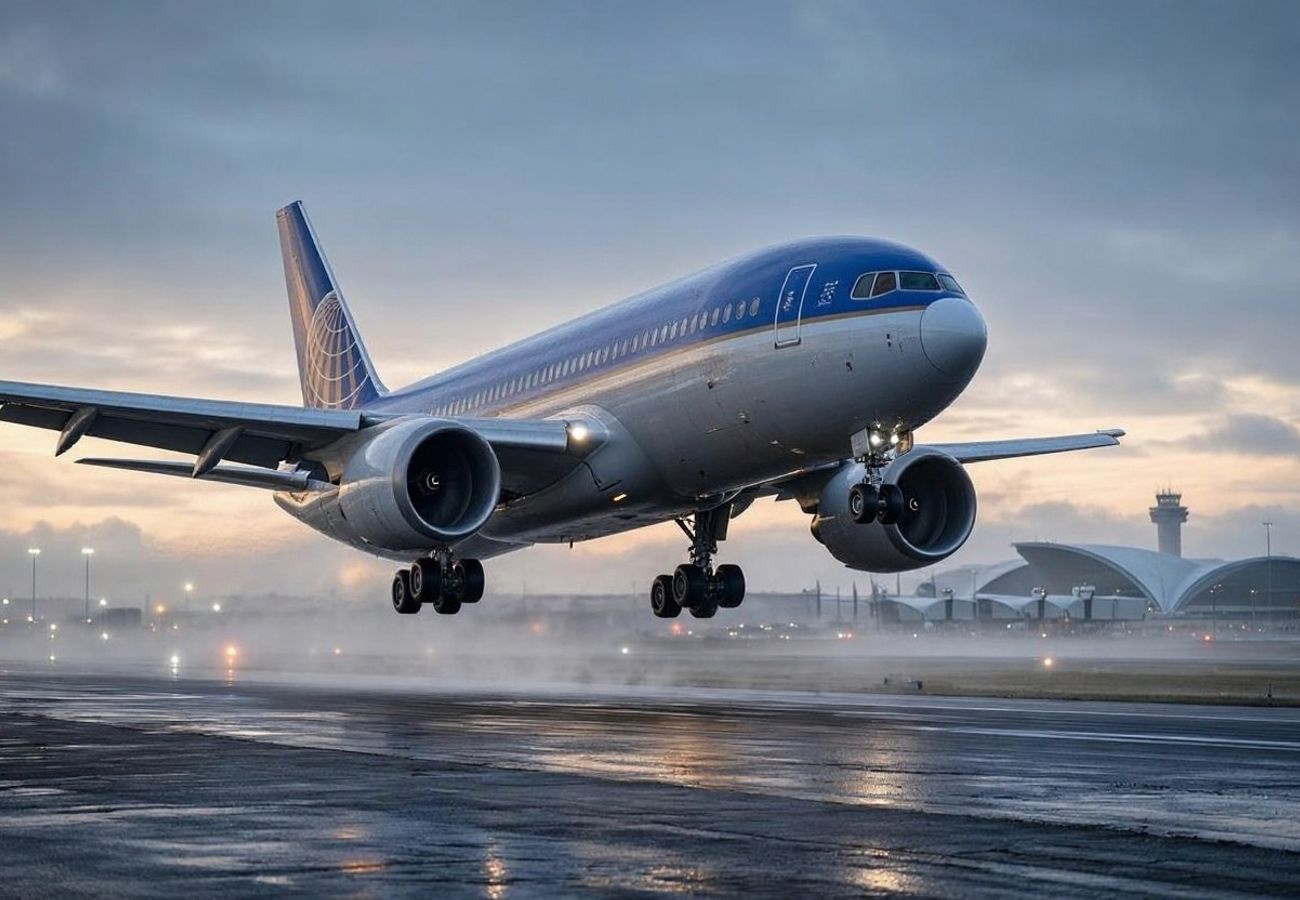
Image generated by AI
Long-haul transpacific flight durations have remained stable at approximately 12 hours for the Tokyo-Washington corridor, yet the operational reliance on Extended Range (ER) aircraft continues to dominate this high-yield market. On 11 November 2026, United Airlines flight UA804, operated by a Boeing 777-224(ER) registration N27015, successfully completed this grueling journey from Tokyo Haneda Airport to Washington Dulles International Airport (IAD), landing on runway 19L.
The Transpacific Corridor in Numbers
The operation of flight UA804 is a case study in the logistics of ultra-long-haul aviation. The journey exceeds 12 hours of continuous flight time, requiring precise fuel load calculations and strict adherence to air traffic restrictions over the Pacific. The use of the Boeing 777-200ER (Extended Range) is a strategic choice; this aircraft model is engineered specifically to bridge the gap between major global hubs without the need for technical stops.
From a data perspective, Washington Dulles serves as a primary gateway for the U.S. capital, utilizing its four-runway infrastructure to accommodate wide-body aircraft. The arrival of N27015 highlights the continued market share of the 777 family in the International Air Transport Association (IATA) registered fleet for long-haul routes, where capacity and range must be balanced against fuel efficiency.
Comparative Aircraft and Route Analysis
When analyzing the Tokyo-Washington route, the Boeing 777-200ER remains a workhorse despite the introduction of newer, more fuel-efficient composite aircraft. The "ER" designation is a critical metric, as it allows for increased fuel capacity, enabling the 12-hour nonstop transit that eliminates the friction of intermediate connections.
The following table compares the operational profile of the aircraft used in flight UA804 against typical regional long-haul benchmarks.
| Metric | UA804 (Boeing 777-200ER) | Standard Long-Haul Narrow-body | Ultra-Long-Haul (ULH) Variants |
|---|---|---|---|
| Flight Duration | 12+ Hours | 6-9 Hours | 16-19 Hours |
| Fuselage Type | Wide-body (Twin-aisle) | Narrow-body (Single-aisle) | Wide-body (Twin-aisle) |
| Route Capacity | High Passenger/Cargo | Low to Medium | High |
| Range Capability | Extended Range (ER) | Standard | Ultra-Long Range (ULR) |
| Primary Hubs | Haneda $\rightarrow$ Dulles | Regional Hubs | Global Megahubs |
What This Means for Travelers
For passengers booking travel between Japan and the U.S. East Coast, the availability of nonstop services like UA804 significantly reduces travel fatigue and the risk of luggage loss associated with connecting flights.
If you are planning a trip between Tokyo and Washington, D.C. in the coming quarters, consider the following data-driven advice:
- Prioritize Nonstop Routes: While connecting flights through West Coast hubs (like LAX or SFO) may appear cheaper, the 12-hour direct flight on a wide-body aircraft like the 777 provides superior cabin pressure and space, reducing jet lag.
- Booking Window: Due to the high demand from government officials and corporate travelers on this specific diplomatic corridor, booking 12-16 weeks in advance is recommended to secure competitive pricing.
- Airport Logistics: Washington Dulles is located approximately 26 miles from central Washington, D.C. Factor in an additional 60-90 minutes for customs and ground transport to the city center.
Projecting the Future of Wide-Body Transit
The continued deployment of the Boeing 777-200ER on the Haneda-Dulles route suggests that United Airlines is prioritizing proven reliability and cargo capacity over the immediate transition to next-generation aircraft on this specific leg. However, as noted in global aviation data from OAG, there is a broader industry shift toward aircraft with lower carbon emissions per seat-mile.
We expect to see a gradual phase-in of newer models that offer higher fuel efficiency, but the 777's ability to handle the heavy passenger and diplomatic loads of the Washington-Tokyo route ensures its relevance through the late 2020s. The stability of this route underscores the enduring economic and diplomatic ties between the two nations, maintaining a steady demand for high-capacity, long-range aviation.
FAQ: United Airlines Transpacific Routes 2026
Is the Boeing 777-200ER still a modern aircraft for 12-hour flights? Yes. The Extended Range (ER) variant is specifically designed for these distances, offering the necessary fuel capacity and cabin stability required for transpacific travel.
Why choose Tokyo Haneda over Narita for Washington-bound flights? Haneda is significantly closer to central Tokyo, reducing ground transit time for passengers and making it the preferred gateway for business and diplomatic travelers.
Are nonstop flights from Tokyo to Washington more expensive than connecting flights? Generally, yes. The convenience of avoiding a layover and the operational cost of wide-body aircraft typically result in a price premium compared to multi-stop itineraries.
How does weather in Washington affect flight arrivals in November? Autumn weather, while often clear, can bring breezy conditions. However, Dulles' advanced infrastructure and runway 19L are designed to handle wide-body arrivals safely in various seasonal conditions.
The arrival of N27015 is more than a visual spectacle; it is a data point in the ongoing optimization of global connectivity.
Related Travel Guides
This article is for informational purposes. Flight routes, passenger regulations, visa rules, and transit advisories are subject to change by airlines and aviation authorities. Readers are advised to verify schedules and travel documentation with relevant carriers and border agencies before departure.
Related Stories
Asia Aviation Crisis 2026: 4,544 Flight Disruptions Hit Bangkok, Tokyo and Delhi Hubs
American Airlines and US Carriers Face Fuel Price Shocks Ahead of Christmas 2026 Travel Season