Thanksgiving and Black Friday Air Travel Hits 29 Million Passengers as Fares Surge 39%

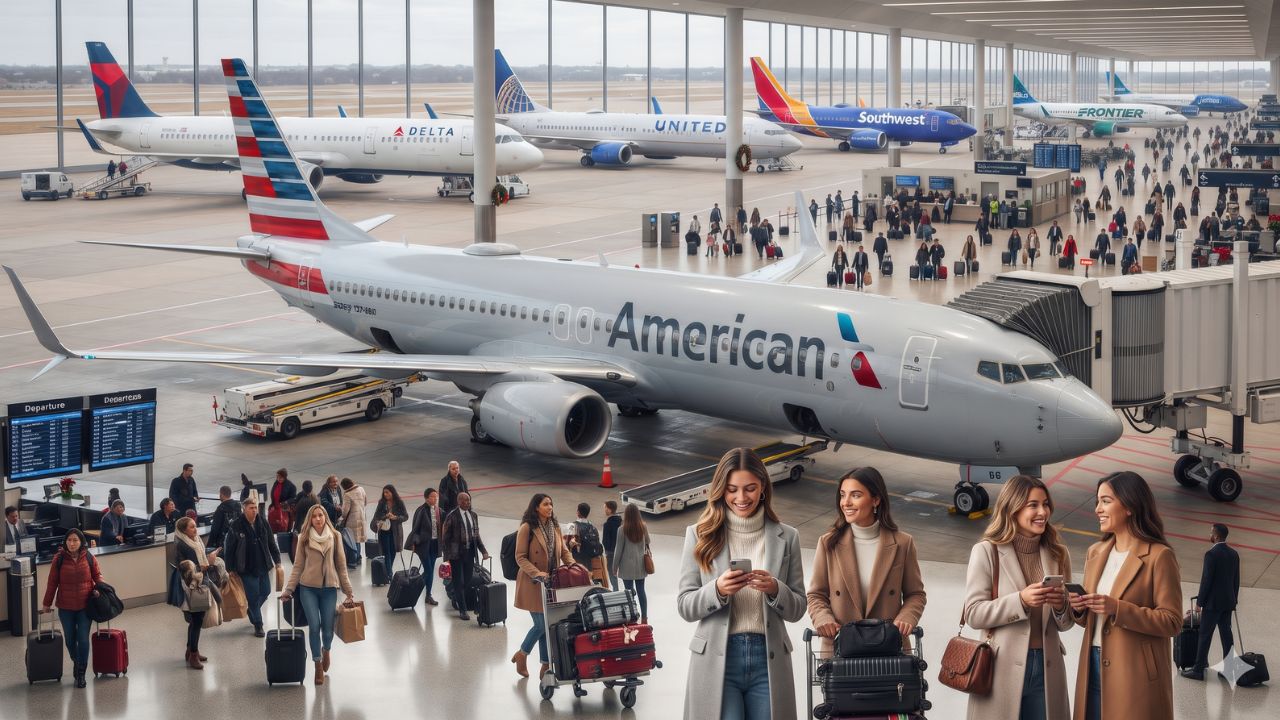
While shopping plazas gear up for retail promotions on Black Friday, 27 November, the most punishing bottleneck across American aviation hits 48 hours later when domestic return fares that surged 39% collide with a rush of 2.7 million flyers per day. According to holiday projections from Airlines for America, nearly 29 million passengers will take to the skies between 20 November and 30 November 2026. Despite carriers adding roughly 38,000 seats daily compared to last year—representing a 2.2% year-over-year capacity bump tracked by Hopper—surging October jet fuel prices averaging $4.64 per gallon have translated into sharp airfare inflation and tightly packed cabins.
Rather than dispersing evenly across the extended holiday week, passenger volume concentrates heavily along post-holiday departure dates. Sunday, 29 November, and Monday, 30 November, stand as the operational high-water marks for the aviation sector. With American Airlines scheduling over eight million travelers across nearly 85,000 flights between 19 November and 1 December, and United Airlines forecasting approximately 600,000 passengers on 29 November alone, travelers face full flights and crowded concourses across major domestic transfer points.
Carrier Deployments and Network Pressure Points
The operational core of the Thanksgiving holiday period rests on the legacy network carriers and Southwest Airlines. American Airlines anchors its eight-million-passenger schedule around fortress hubs in Dallas Fort Worth, Charlotte, Miami, Philadelphia, Phoenix, and Chicago. In North Texas and Georgia, capacity reaches unprecedented heights: Hopper’s November 2026 scheduling analysis reveals that Atlanta’s Hartsfield-Jackson International and Dallas Fort Worth International each boast more than two million scheduled departing seats between 21 November and 1 December.
Simultaneously, United Airlines concentrates operations through transcontinental interchanges in Chicago O'Hare, Denver, Houston, Newark, San Francisco, and Washington Dulles. Delta Air Lines funnels millions through Atlanta, Detroit, Minneapolis-St. Paul, Salt Lake City, New York, and Los Angeles, while Southwest leverages point-to-point volume through Dallas Love Field, Denver, Chicago Midway, Baltimore, Las Vegas, and Phoenix.
Challenging this legacy dominance are regional and budget operators providing critical price relief. Frontier Airlines provides low-fare alternatives into leisure hubs like Las Vegas, Orlando, and Denver. Allegiant Air routes vacationers from secondary communities into warm-weather bases like Orlando Sanford, Punta Gorda, and St. Petersburg-Clearwater, sidestepping congested primary hubs. In northern states, Sun Country Airlines links Minneapolis-St. Paul with sunbelt destinations, while Breeze Airways targets underserved secondary city pairs out of Charleston, Norfolk, and Providence. Alaska Airlines and Hawaiian Airlines anchor high-demand Pacific Coast and island itineraries following their unified Alaska Air Group platform.
Holiday Travel Dynamics: Airline Metrics and Hub Congestion
Evaluating carrier footprints, passenger projections, and market pressures reveals how the Thanksgiving 2026 rush compares across key operational indicators:
| Airline / Travel Metric | Thanksgiving 2026 Operational Scope | Major Core Hubs / Focus Airports | Market Role & Passenger Impact |
|---|---|---|---|
| American Airlines | >8 million passengers across ~85,000 flights | DFW, Charlotte, Miami, Philadelphia, Phoenix, ORD | Largest published Thanksgiving schedule; primary southern hub operator |
| United Airlines | ~600,000 passengers on 29 Nov peak alone | ORD, Denver, Houston, Newark, SFO, Dulles | Massive transcontinental and international holiday network |
| Delta Air Lines | Multi-million passenger systemwide lift | Atlanta, Detroit, Minneapolis, Salt Lake City, JFK, LAX | High-capacity international and domestic hub operations |
| Southwest Airlines | Point-to-point network peak frequencies | Dallas Love, Denver, Chicago Midway, Baltimore, Vegas | High-frequency domestic short-haul and leisure routes |
| Projected Total Travelers | Nearly 29 million passengers (20–30 Nov) | Systemwide US aviation network | A4A forecast averaging 2.7 million passengers per day |
| Average Jet Fuel Cost | $4.64 per gallon (A4A October average) | Global refinery input benchmark | Primary economic driver behind the 39% airfare inflation |
| Airport Seat Peaks | >2 million departing seats per hub | Atlanta (ATL) & Dallas Fort Worth (DFW) | Highest scheduled domestic congestion risks between 21 Nov and 1 Dec |
| Capacity Growth Index | +38,000 seats daily (+2.2% flights) | National commercial fleet deployment | Moderate schedule growth trailing surging consumer demand |
What Makes Thanksgiving 2026 Flying Different
The distinctive feature of the 2026 holiday travel season is the extreme divergence between promotional Black Friday marketing and practical travel realities. Low-cost carrier discounts heavily advertised on 27 November almost universally apply to off-peak travel dates in January and February 2027, offering no relief to holiday travelers returning home on 29 November.
Furthermore, domestic return ticket prices hovering 39% above 2025 levels mean price-sensitive travelers are increasingly unbundling their tickets. Passengers flying budget carriers like Frontier or Allegiant face steep ancillary add-ons for carry-on baggage and seat selection, which can easily erase base fare savings.
Compounding these costs are memory lines from recent airspace ground stops and staffing strains monitored by the Federal Aviation Administration (FAA). With hubs like Charlotte, Atlanta, and Dallas operating at near-total gate capacity, minor localized winter storms in the Midwest or Rockies can initiate cascading system delays that reverberate across the continent for days.
Visitor Insider Tips for Surviving the Post-Thanksgiving Crunch
Navigating the busiest travel weekend of the year requires disciplined departure tactics and contingency planning:
- Avoid the Sunday Afternoon Rush: Sunday, 29 November, represents the single most congested travel window of the entire month. If work and family schedules permit, shifting your return flight to Tuesday, 1 December, or flying at dawn on Thanksgiving morning (26 November) significantly reduces terminal delays and security processing times.
- Arrive Three Hours Ahead at Primary Hubs: With checkpoints managed under elevated Transportation Security Administration (TSA) holiday screening protocols, arriving at high-volume hubs like Atlanta, DFW, Chicago O'Hare, or Denver at least three hours before domestic departures is essential. Security lanes and baggage drop queues regularly exceed 60 minutes during early morning departure banks.
- Audit Carry-on Baggage Dimensions: As airlines push cabin load factors past 90%, gate agents strictly enforce carry-on bag sizes. Pre-pay for checked luggage online to avoid exorbitant gate-check fees charged by budget carriers.
- Monitor Inbound Aircraft Tail Numbers: Do not rely solely on the scheduled departure time displayed on terminal departure boards. Use mobile tracking apps to trace your aircraft’s incoming leg. If the inbound flight encounters air traffic control holding patterns in Denver or Chicago, you will have early warning to explore alternative rebooking options.
Cultural and Environmental Context
Thanksgiving air travel occupies a sacred place in American social life, serving as an annual mass pilgrimage reconnecting multi-generational families. Yet the environmental footprint of mobilizing nearly 29 million passengers across a single ten-day window remains substantial. Thousands of extra flights, prolonged tarmac taxi queues, and holding patterns over saturated hubs drive up aggregate fuel burn during an era where airlines are under pressure to reduce carbon intensity.
At the same time, the economic strain of $4.64-per-gallon jet fuel demonstrates how commercial energy markets shape the travel budget of everyday families. With households absorbing higher ticket costs alongside holiday expenses, regional budget carriers operating out of secondary airfields provide an essential economic bridge, allowing smaller communities across the Midwest, Southeast, and Rockies to maintain holiday connections without being priced out of the skies.
FAQ: Flying During Thanksgiving and Black Friday 2026
What is the absolute busiest day to fly over Thanksgiving 2026?
Sunday, 29 November 2026, is projected to be the busiest day, with United Airlines alone expecting approximately 600,000 passengers as holiday travelers return home simultaneously.
Are Black Friday flight discounts valid for Thanksgiving weekend?
No. Black Friday flight promotions launched on 27 November almost universally apply to post-holiday travel dates between January and April 2027, rather than immediate Thanksgiving returns.
Why are domestic airfares 39% higher this year?
Higher airfares reflect strong consumer demand colliding with tight airline capacity, alongside elevated jet fuel costs that averaged $4.64 per gallon in October 2026.
Which US airports have the highest scheduled departing seats?
Atlanta Hartsfield-Jackson (ATL) and Dallas Fort Worth (DFW) lead the nation, each recording more than two million scheduled departing seats between 21 November and 1 December.
Across the vast domestic skies, surviving the holiday crunch comes down to anticipating the bottlenecks before they appear, trading wishful schedules for early morning precision.
Related Travel Guides
This article is for informational purposes. Flight routes, passenger regulations, visa rules, and transit advisories are subject to change by airlines and aviation authorities. Readers are advised to verify schedules and travel documentation with relevant carriers and border agencies before departure.
Related Stories
American Airlines and US Carriers Face Fuel Price Shocks Ahead of Christmas 2026 Travel Season
Thanksgiving and Black Friday 2026 US Airline Travel Guide: Flight Schedules, Hub Logistics, and Fare Deals