
Indian Railways to Launch Second Sleeper Vande Bharat Express on Delhi Varanasi Route Ahead of Diwali Festive Season

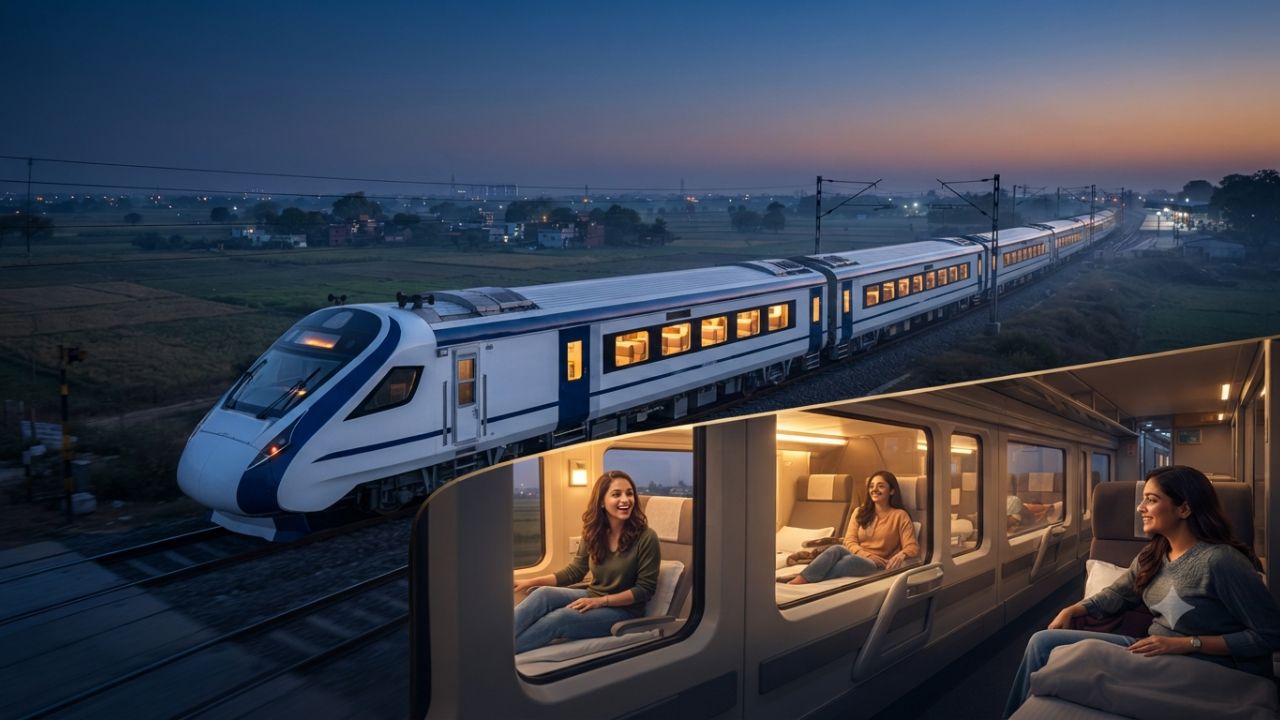
Indian Railways is preparing to launch its second sleeper Vande Bharat Express between New Delhi and Varanasi Cantt ahead of Diwali 2026, featuring 16 AC coaches and 823-passenger capacity for overnight transit.
The Ministry of Railways and Northern Railway (NR) are finalizing plans for the introduction of India's second sleeper Vande Bharat Express on the high-density New Delhi to Varanasi Cantt trunk route. Positioned to transform overnight travel across Uttar Pradesh and the National Capital Region (NCR), the semi-high-speed train is slated to commence trial runs prior to a formal public launch scheduled around the Diwali festival rush.
Unlike the daytime chair-car Vande Bharat services currently operating between Delhi and Varanasi, the new sleeper train format allows passengers to complete the long-distance journey overnight, arriving at early morning destinations. Maintenance operations for the trainset will be managed primarily by Northern Railway, marking the second planned sleeper Vande Bharat deployment following the Howrah–Kamakhya corridor.
Proposed Timetable & Major Intermediate Stoppages
The planned operational schedule connects New Delhi with major economic and cultural centers in Uttar Pradesh, including Kanpur Central, Prayagraj Junction, and Varanasi Cantt.
| Direction / Service | Departure Station | Departure Time | Intermediate Stoppage (1) | Intermediate Stoppage (2) | Destination Station | Arrival Time |
|---|---|---|---|---|---|---|
| Down Service | Varanasi Cantt (BSB) | ~9:20 PM | Prayagraj (~10:45 PM) | Kanpur Central (~12:35 AM) | New Delhi (NDLS) | ~5:00 AM (Next Day) |
| Up Service | New Delhi (NDLS) | ~9:20 PM | Kanpur Central | Prayagraj Junction | Varanasi Cantt (BSB) | ~5:00 AM (Next Day) |
16-Coach Configuration & Technical Specifications
Designed for maximum operational efficiency under the Mission Raftaar track modernization program, the trainset will operate at speeds between 130 kmph and 160 kmph depending on track sector upgrades.
| Coach Class / Category | Number of Coaches | Passenger Capacity / Layout Features | Total Capacity Share |
|---|---|---|---|
| AC Three-Tier (3A) | 11 Coaches | Ergonomic 3-tier berths, individual reading lights, USB charging sockets | ~600 Passengers |
| AC Two-Tier (2A) | 4 Coaches | Wider 2-tier berths, privacy curtains, enhanced storage space | ~180 Passengers |
| First AC (1A) | 1 Coach | Lockable 4-berth and 2-berth coupes, luxury bedding, automated doors | ~43 Passengers |
| Total Composition | 16 Coaches | Semi-high-speed overnight trainset | 823 Passengers |
Mission Raftaar Track Upgrades & Speed Performance
The Delhi–Kanpur–Prayagraj–Varanasi trunk line is undergoing continuous infrastructure strengthening under Indian Railways' Mission Raftaar project. Track fencing, ballastless tracks on high-density stretches, and the installation of the native Kavach Automatic Train Protection (ATP) system will enable the sleeper Vande Bharat to sustain operational speeds up to 160 kmph on cleared sectors.
The overnight scheduling eliminates the need for daytime travel, allowing business executives, pilgrims, tourists, and daily commuters to save a working day while benefiting from reduced transit times compared to traditional Rajdhani or Superfast Express trains operating along the corridor.
Traveler Logistics Guide: IRCTC Booking & Station Navigation
Navigating peak Diwali travel on the Delhi–Varanasi corridor requires strategic advance planning on the IRCTC ticketing portal.
1. IRCTC Booking & Festive Rush Strategy
- Advance Reservation Period (ARP): Tickets for the sleeper Vande Bharat will open under standard 60-day or 120-day ARP rules once the Railway Board issues the official train number. Given high demand around Diwali and Chhath Puja, passengers should complete IRCTC profile verification prior to booking windows opening.
- Quota Allocations: Tatkal and Premium Tatkal quotas will be assigned to the train composition, but early general quota booking remains essential for securing First AC and AC 2-Tier accommodations.
2. Station Boarding & Transit Facilities
- New Delhi Railway Station (NDLS): Passengers departing from NDLS can utilize the Executive Lounge on Platform 16 (Ajmeri Gate side). Access to Digi Yatra facial recognition gates at nearby metro interchanges facilitates rapid transfers from Indira Gandhi International Airport (DEL).
- Varanasi Cantt (BSB): Upgraded passenger holding areas and executive waiting lounges at Varanasi Junction support seamless transfers to local transport, hotels, and ghat areas.
3. Comparing Service Options on the Delhi-Varanasi Route
- Daytime Vande Bharat (Chair Car): 8-hour daytime transit; best for passengers preferring daytime travel without sleeping berths.
- Sleeper Vande Bharat (Overnight): ~7.5-hour overnight transit; optimal for travelers seeking complete rest and early morning arrival in Delhi or Varanasi.
- Shiv Ganga / Garib Rath Express: Traditional overnight options with lower operational speeds and longer transit times.
Infrastructure Impact on Northern India Rail Connectivity
The introduction of sleeper Vande Bharat trainsets represents a key structural upgrade for Indian Railways. By scaling semi-high-speed sleeper operations on high-demand trunk lines, Northern Railway is enhancing long-distance connectivity, improving rolling stock utilization, and setting new standards for passenger comfort across India's rail network.
Related Travel Guides
Disclaimer
This article is for informational and educational purposes only. It does not constitute legal, financial, or professional advice. While we strive to provide accurate and up-to-date information, travel policies, regulations, and conditions change rapidly. Always verify information with official sources before making travel decisions. Nomad Lawyer makes no representations about the accuracy, reliability, completeness, or suitability of the information provided. Readers should consult qualified professionals for advice specific to their circumstances. The views expressed in this article are those of the author and do not necessarily reflect the views of Nomad Lawyer.
Raushan Kumar
Founder & Lead Developer
Full-stack developer with 11+ years of experience and a passionate traveller. Raushan built Nomad Lawyer from the ground up with a vision to create the best travel and law experience on the web.
Learn more about our team →