
Heritage Safety: China Directs Emergency Measures at Terracotta Army and Museums
China's National Cultural Heritage Administration has directed emergency measures at museums following blackouts at the Terracotta Army in Xi'an.

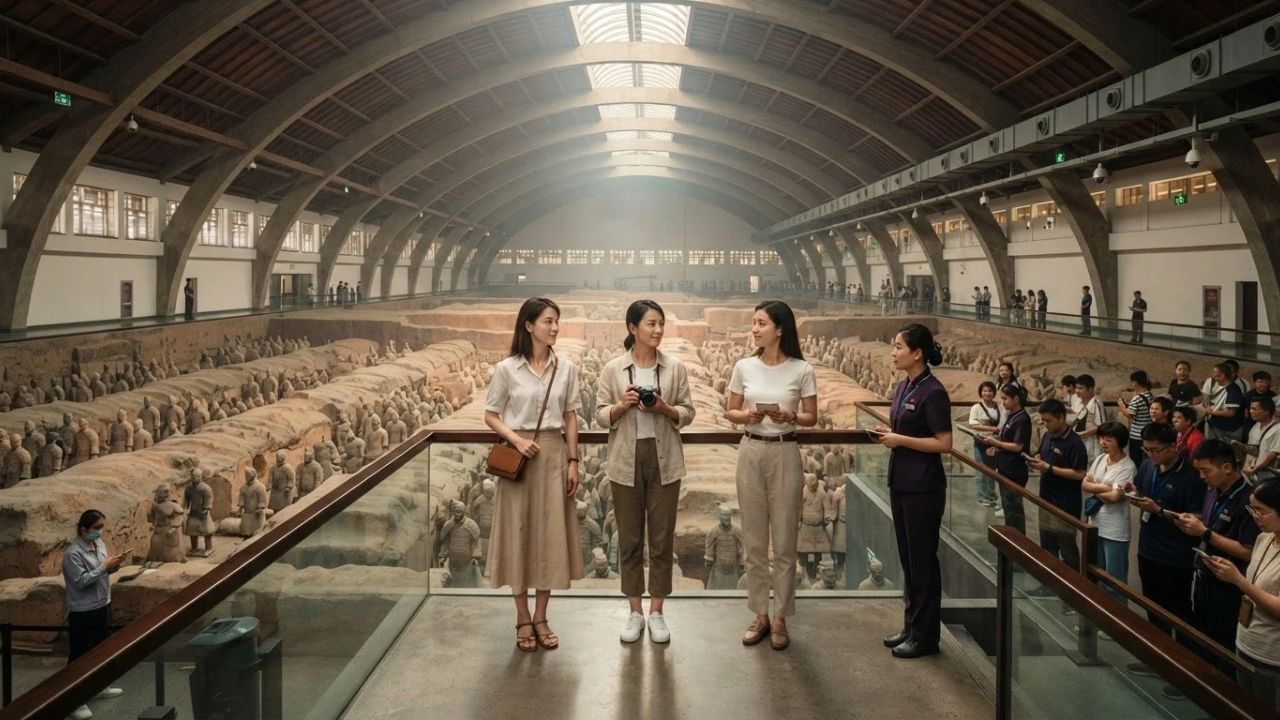
Image generated by AI
China's National Cultural Heritage Administration has launched an urgent museum-safety campaign to manage heavy visitor flows and extreme summer weather. The directive follows a sudden power disruption at the world-famous Terracotta Army in Xi'an, which welcomed 531,175 visitors during the 2026 Spring Festival holiday.
Active Capacity Management at Cultural Attractions
A major trend in global cultural tourism is the integration of active capacity management and infrastructure resilience at high-volume heritage sites. Rather than focusing solely on object preservation behind glass, major museums are updating their electrical systems, backup power grids, and emergency evacuation protocols. This development is driven by a combination of rising visitor numbers, aging infrastructure, and extreme weather events.
By setting clear visitor thresholds and preparing backup safety systems, destinations can move thousands of visitors daily through sensitive exhibition spaces without compromising ancient structures.
Emergency Management Directives for Chinese Museums
The notice issued by China's National Cultural Heritage Administration requires immediate safety reviews:
- Flow Assessments: Individual museums must evaluate daily visitor flows, implement crowd-control barriers, and organize safe diversion pathways.
- Infrastructure Audits: Technical teams must inspect electrical wiring, backup generators, security cameras, access gates, and fire safety systems.
- Response Accountability: Museums are responsible for maintaining emergency systems and reporting any operational disruptions immediately to regional heritage offices.
- Climate Risks: Caverns and exhibition halls must inspect roofs, walls, and temperature-humidity monitoring systems to protect sensitive collections from summer weather.
The measures reflect a unified approach to protecting both historical artifacts and the international tourists visiting them.
Crowd Controls at the Terracotta Warriors
The Emperor Qinshihuang’s Mausoleum Site Museum operates on a scale that requires strict operational management:
- Holiday Rush: During the 2026 Spring Festival holiday, the museum in Xi'an received 531,175 visitors, according to the Shaanxi Provincial Cultural Heritage Administration.
- Safety Response: Officials managed the holiday crowds by extending opening hours, utilizing dynamic visitor-diversion pathways, and placing extra staff in the exhibition halls.
- Inter-Agency Coordination: The museum coordinated with local public security, transit bureaus, and communication departments to organize crowd flows and parking.
These protocols show the level of coordination required to run a globally recognized archaeological complex during peak national travel periods.
Regional Weather and Backup Lighting Directives
Different provinces have introduced localized emergency directives to manage extreme summer weather:
- Hebei Province: Cultural heritage authorities ordered museums to inspect drainage systems, clean rooftops, and install flood barriers. Facilities must prepare water pumps and sandbags to protect underground vaults and low-lying entryways.
- Beijing Municipality: Heritage officials required museums to maintain emergency supplies, including portable backup emergency lights, and inspect lightning-protection wiring.
- Flexible Closures: Both authorities explicitly stated that museums must temporarily close, limit admissions, or evacuate visitors if severe weather or electrical failures create unsafe conditions.
These guidelines ensure that safety takes priority over visitor volumes, protecting historic structures from secondary hazards.
China Museum Safety and Emergency Parameters
The table below breaks down the key visitor volumes, regional safety directives, and target systems across China's heritage sector:
| Destination / Region | Visitor Volume | Regional Safety Priority | Emergency Supplies Required | Local Authority |
|---|---|---|---|---|
| Terracotta Army (Xi'an) | 531,175 visitors (Spring Festival) | Dynamic crowd diversion & extended hours | Backup power & emergency lighting | Shaanxi Provincial Cultural Heritage Administration |
| Hebei Museums | High summer travel peaks | Roof inspections & drainage systems | Water pumps, sandbags & flood barriers | Hebei Cultural Heritage Bureau |
| Beijing Museums | High urban traveler volume | Lightning protection & electrical checks | Portable emergency lights | Beijing Cultural Heritage Administration |
These details outline the safety protocols and equipment requirements established across different regions.
Environmental Sustainability and Artifact Preservation
For the visitor, the real benefit of these emergency safety campaigns is the protection of the delicate cavern atmosphere. Life-sized clay figures are vulnerable to sudden changes in temperature and humidity, which can accelerate the deterioration of ancient pigments.
Additionally, setting strict capacity limits reduces the heat and moisture generated by large groups inside the excavation pits. Upgrading to energy-efficient backup systems helps reduce the overall environmental footprint of these massive museum complexes, while encouraging travelers to use public transport links reduces vehicle emissions around the parks.
For example, you can explore the changing dynamics of Transit Control: Montenegro Imposes Coastal Road Restrictions for Summer Travel to see how other destinations manage visitor transit. For budget-conscious travelers, aligning slow city travel with municipal transit options mirrors similar regional initiatives, such as the Free Admission at Select US State Parks programs. This trend is similar to the tourism growth seen in other destinations, as detailed in our guide on how Utica, New York Emerges as an Affordable Northeast Tourism Hub.
Visitor Insider Tips: Visiting the Terracotta Army
If you are planning to visit Xi'an and the Terracotta Warriors, keep these practical tips in mind:
- Book Morning Slots on Weekdays: To avoid the heaviest crowds, book your admission tickets for early morning slots on weekdays outside national holidays.
- Monitor Regional Weather Alerts: Check local Shaanxi weather reports and museum notices before traveling to ensure the site is operating normally.
- Carry a Small Personal Light: Bring a compact, portable flashlight or rely on your phone's light in case of unexpected, short-term electrical disruptions in the cavern pits.
- Utilize Public Transit Links: Take the high-speed rail to Xi'an North Station or use the dedicated municipal tourist buses to travel to the museum, saving transit and parking times.
- Try Local Shaanxi Culinary Favorites: Outside the museum grounds, visit independent local eateries to sample regional favorites like Roujiamo (flatbread sandwich) or Biangbiang noodles.
Long-Term Outlook for China's Cultural Tourism
The long-term outlook for China's cultural tourism sector is focused on the integration of smart-tourism monitoring systems, the development of green-energy backup grids, and the expansion of digital visitor queues. As passenger numbers continue to rise, major sites will rely on real-time data to manage visitor distributions and protect historic resources.
By investing in modern safety systems and preserving ancient monuments, the country aims to offer travelers a safe and educational cultural experience.
FAQ
What triggered the recent safety campaign in Chinese museums?
The national campaign was prompted by high summer traveler volumes, extreme weather, and reports of a power disruption at the Terracotta Army site.
How many visitors did the Terracotta Army host during the Spring Festival?
The Emperor Qinshihuang’s Mausoleum Site Museum welcomed 531,175 visitors during the holiday period.
What equipment must Hebei museums prepare for emergencies?
Museums in Hebei must prepare water pumps, sandbags, and flood-protection facilities to manage heavy rainfall.
Can museums close during severe weather?
Yes, local heritage authorities have instructed museums to temporarily close, limit entry, or evacuate visitors if conditions become dangerous.
Stay updated on the museum safety guidelines and travel updates shaping cultural tourism in China.
Related Travel Guides
Disclaimer
This article is for informational and educational purposes only. It does not constitute legal, financial, or professional advice. While we strive to provide accurate and up-to-date information, travel policies, regulations, and conditions change rapidly. Always verify information with official sources before making travel decisions. Nomad Lawyer makes no representations about the accuracy, reliability, completeness, or suitability of the information provided. Readers should consult qualified professionals for advice specific to their circumstances. The views expressed in this article are those of the author and do not necessarily reflect the views of Nomad Lawyer.
Raushan Kumar
Founder & Lead Developer
Full-stack developer with 11+ years of experience and a passionate traveller. Raushan built Nomad Lawyer from the ground up with a vision to create the best travel and law experience on the web.
Learn more about our team →