Asia Aviation Crisis 2026: 2,010 Delays and 320 Cancellations Hit Mumbai, Jakarta, and Delhi

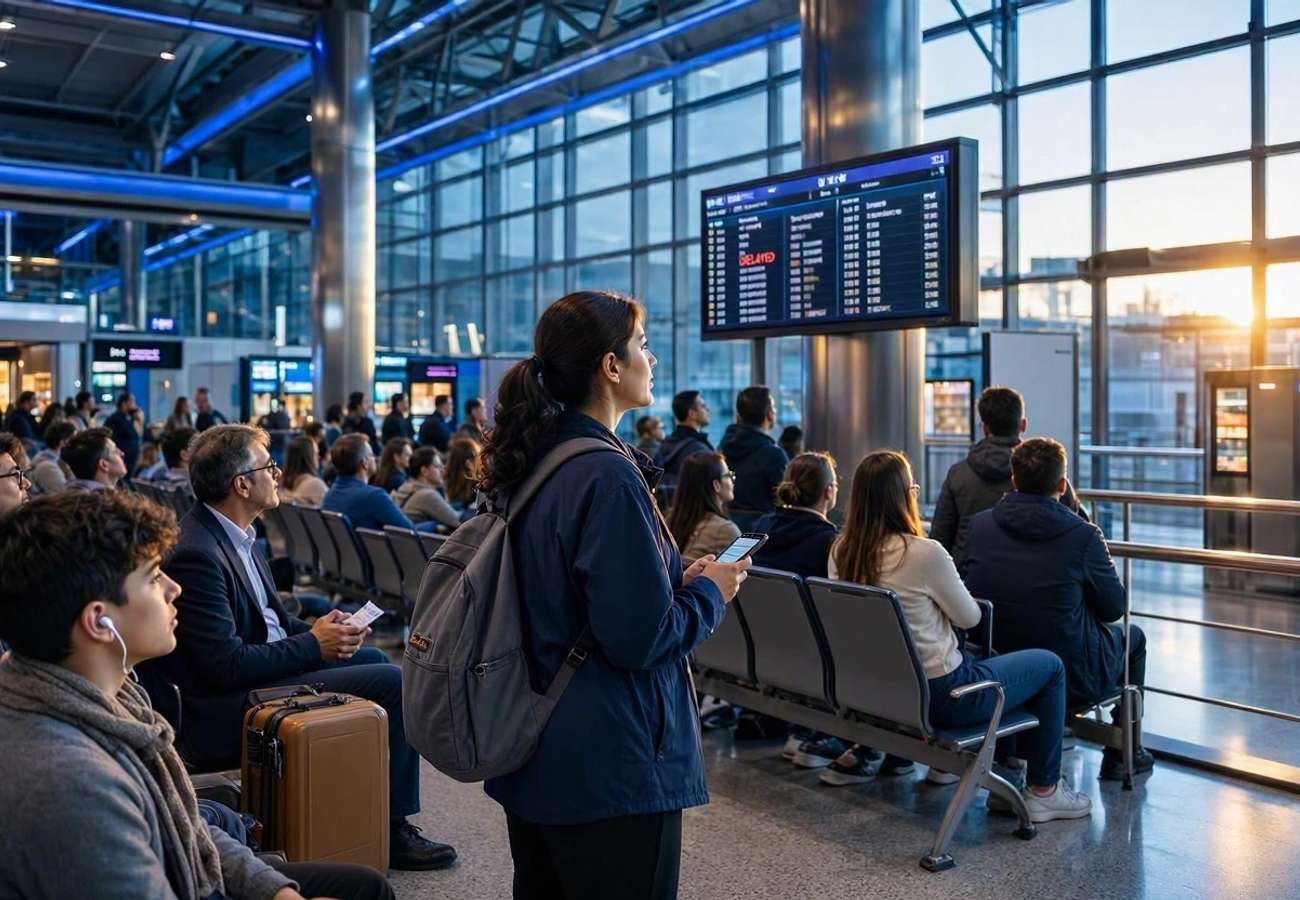
Image generated by AI
Departure delays at Mumbai’s Chhatrapati Shivaji Maharaj Airport hit 41% on October 29, more than double the 20% delay rates recorded at Jakarta and Delhi hubs. This sharp divergence signals a systemic failure at one of Asia's primary gateways, where a combination of technical collapse and weather events triggered a regional ripple effect resulting in 2,010 delays and 320 cancellations across 18 major airports.
The Disruption in Numbers: Systemic Failures
The scale of the October 29 collapse was not the result of a single event but a convergence of three distinct triggers: infrastructure failure, meteorological volatility, and geopolitical instability. In Mumbai, a critical IT and network outage paralyzed digital check-in and passenger processing, forcing a transition to manual operations that throttled airport throughput.
Simultaneously, Cyclonic Storm Arnab destabilized operations across coastal Andhra Pradesh and southern Odisha, specifically impacting Bhogapuram, Vijayawada, and Visakhapatnam airports. Beyond the Indian subcontinent, aviation hubs in Saudi Arabia, including Riyadh and Dammam, faced operational constraints due to reported drone and missile threats, adding a layer of security-driven volatility to the region's airspace.
From a carrier perspective, the data shows a heavy concentration of delays among low-cost carriers (LCCs). IndiGo emerged as the most impacted airline by volume, recording 474 delays. However, China Eastern faced the steepest cancellation rate, with 46 flights scrubbed from the schedule.
Regional Performance Benchmarks
When comparing the 18 affected airports, a clear pattern emerges: Mumbai suffered the most severe operational degradation, while Jakarta faced the highest volume of total cancellations. The disparity in arrival and departure delay rates suggests that while Jakarta and Delhi managed to maintain a semblance of flow, Mumbai's infrastructure reached a complete saturation point.
The following table breaks down the operational impact across the hardest-hit hubs:
| Airport | City | Cancellations | Delays |
|---|---|---|---|
| Soekarno-Hatta Airport | Jakarta | 27 | 235 |
| King Abdulaziz Airport | Jeddah | 26 | 161 |
| Kempegowda Airport | Bengaluru | 24 | 127 |
| Kunming Changshui Airport | Kunming | 23 | 52 |
| Chhatrapati Shivaji Maharaj Airport | Mumbai | 22 | 378 |
| Indira Gandhi Airport | Delhi | 21 | 264 |
| Bhogapuram Airport | Visakhapatnam | 21 | 1 |
| King Khaled Airport | Riyadh | 17 | 21 |
| Rajiv Gandhi Airport | Hyderabad | 15 | 94 |
| Vijayawada Airport | Vijayawada | 15 | 4 |
This data indicates that the "delay-to-cancellation" ratio in Mumbai was significantly higher than in Jakarta, suggesting that Mumbai's issues were rooted in processing bottlenecks (delays) rather than total flight removals (cancellations). According to IATA, such systemic bottlenecks often lead to longer recovery periods for airport ecosystems.
What This Means for Travelers
For passengers operating within the Asia-Pacific and Middle East corridors, these figures highlight a growing fragility in digital aviation infrastructure. When a hub like Mumbai moves to manual processing, the "buffer time" usually recommended for international travel is insufficient.
Actionable Booking and Transit Advice:
- The 4-Hour Rule: In the event of reported IT outages at major hubs, increase your airport arrival window to 4 hours for international flights. Manual processing is exponentially slower than digital check-in.
- Documentation Backup: Always maintain physical copies of your booking confirmations and boarding passes. The Mumbai outage proves that reliance on mobile apps is a single point of failure.
- Contingency Routing: If traveling through coastal India during the cyclone season, prioritize hubs like Delhi (DEL) over coastal options like Visakhapatnam to avoid weather-related scrubbing.
- Rights Awareness: Passengers should consult the International Air Transport Association (IATA) guidelines regarding passenger rights for delays exceeding 3 hours, particularly concerning meal and accommodation vouchers.
Forward Projection: The Vulnerability of Digital Hubs
The October 29 event is a case study in "cascading failure." The fact that a network outage in one city contributed to a regional pattern of 2,010 delays suggests that airline scheduling is now so tightly optimized that there is zero margin for error. As airports integrate more AI-driven passenger processing, the risk of a total system blackout increases.
We expect to see a shift toward "hybrid redundancy" in airport infrastructure, where backup digital systems are maintained in a warm-state to prevent the transition to manual processing. Furthermore, the influence of geopolitical tensions in the Middle East—as seen with the Riyadh and Dammam disruptions—will likely lead to more frequent, short-notice airspace closures, making flexible ticketing a necessity rather than a luxury.
FAQ: Asia Aviation Disruptions 2026
Will ticket prices increase due to these disruptions? Short-term volatility is likely on routes served by IndiGo and China Eastern as they re-optimize schedules. However, systemic delays usually lead to temporary price drops on affected routes to incentivize passengers to rebook.
Is it safe to book flights through Mumbai right now? Yes, but verify the current status of the airport's IT systems via the official airport authority website. If manual processing is still in effect, allow extra time for check-in.
Which airlines are most affected by these trends? IndiGo and China Eastern have shown the highest vulnerability in this specific event, with IndiGo recording the most delays (474) and China Eastern the most cancellations (46).
How do I claim compensation for these delays? Review your fare conditions and contact the airline directly. Keep all receipts for meals and hotels, as these are required for reimbursement claims under most passenger protection rules.
The era of the "seamless" digital airport is facing a reality check as infrastructure fails to keep pace with passenger volume.
Related Travel Guides
This article is for informational purposes. Flight routes, passenger regulations, visa rules, and transit advisories are subject to change by airlines and aviation authorities. Readers are advised to verify schedules and travel documentation with relevant carriers and border agencies before departure.
Related Stories

Sicily, Tuscany and Piedmont: Italy's Luxury Vineyard Escapes Attract US Travelers in 2026
US Aviation Crisis 2026: 1,685 Flight Delays Hit Chicago O'Hare and LAX on October 28