
Pacific Green Grid Pact: California and Oregon Unify Clean Power and EV Travel Corridors for 2026

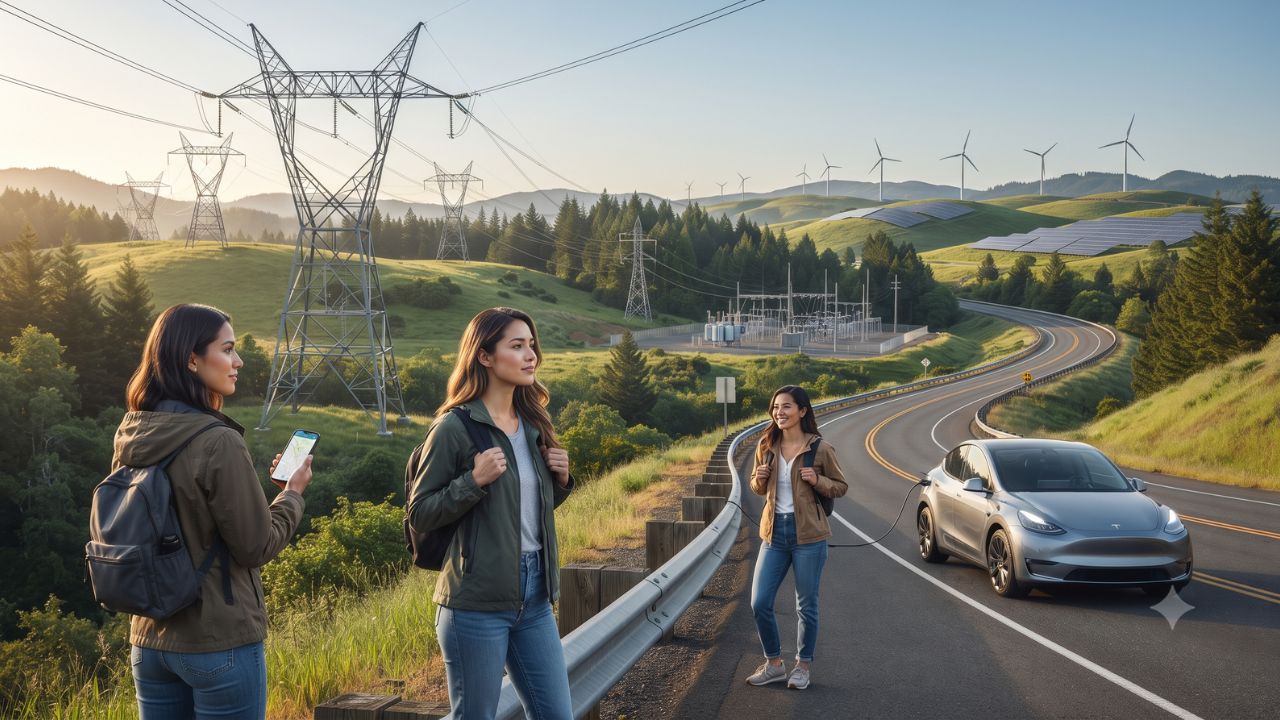
Few road-trippers powering along the Pacific Coast Highway or navigating Interstate 5 realize that a 15,600-megawatt transmission loop is being synchronized across California and Oregon to guarantee uninterrupted clean power for electric vehicle travel during peak heatwaves and winter freezes. Under a landmark multi-state energy compact, regional utility commissions and grid operators are linking desert solar farms, Cascade geothermal wells, and Pacific offshore wind to create an ultra-resilient electrical corridor within 24 months.
The cross-border initiative transforms how clean energy flows between the Pacific Northwest and the American Southwest. By eliminating inter-utility scheduling barriers and conducting environmental reviews in parallel rather than sequentially, the collaborative agreement allows surplus Columbia River hydroelectricity to power southern air conditioning loads in July, while Mojave solar arrays feed northern heating grids during January cold snaps. For eco-conscious road-trippers, campers, and electric vehicle owners exploring the coastal redwoods and high-desert passes, this unified grid infrastructure ensures high-speed charging stations along US-101 and I-5 remain fully operational during seasonal climate anomalies.
Strategic Intertie Expansions Across West Coast Transit Corridors
The interstate compact focuses capital deployment into four strategic high-voltage intertie corridors designed to eliminate bottlenecks across historic transmission choke points:
1. Northern Intertie Upgrade (4,200 MW)
Targeting the rich hydroelectric resources of the Pacific Northwest and emerging offshore wind farms along the northern coast, this 4,200-megawatt enhancement channels surplus power south to alleviate intense summer peak demand across California's major urban centers.
2. Cascades Interconnect (2,800 MW)
Spanning the volcanic Cascade Range between central Oregon and northern California, this 2,800-megawatt corridor taps into continuous baseload geothermal facilities and pumped-storage hydroelectric plants, delivering dependable overnight power across state boundaries.
3. Desert Intertie Expansion (5,500 MW)
Covering the expansive interior solar basins of the Mojave and Colorado deserts, this massive 5,500-megawatt infrastructure combines high-yield photovoltaic arrays with utility-scale Battery Energy Storage Systems (BESS) to eliminate evening energy curtailments and power nighttime vehicle charging networks.
4. Coastal High-Voltage Direct Current Link (3,100 MW)
Positioned along vulnerable coastal shelf zones, this 3,100-megawatt direct current line connects mixed clean generation portfolios, safeguarding critical coastal transit corridors and emergency municipal infrastructure against extreme storm disruptions.
Technical Specifications and Intertie Capacity Matrix
The following table details the four primary transmission corridors, assigned renewable assets, operational transfer capacities, and regional grid resilience objectives:
| Transmission Initiative | Primary Generation Resource | Operating Transfer Capacity | Strategic Regional Impact |
|---|---|---|---|
| Northern Intertie Upgrade | Hydroelectric & Coastal Offshore Wind | 4,200 MW | Alleviates summer urban peaking demand |
| Cascades Interconnect | Geothermal & Pumped Hydro Storage | 2,800 MW | Provides continuous overnight baseload |
| Desert Intertie Expansion | High-Yield Solar & Utility BESS | 5,500 MW | Prevents evening curtailment via big batteries |
| Coastal High-Voltage DC | Mixed Clean Generation Portfolios | 3,100 MW | Shields coastal corridors against severe storms |
| Combined Regional Loop | Fully Integrated Multi-State Grid | 15,600 MW Total | Synchronized West Coast clean power corridor |
What Makes Pacific Coast Green Travel Distinctive
The West Coast has established itself as the world’s foremost laboratory for sustainable overland travel. Motorists driving electric vehicles can travel more than 1,500 continuous miles from the Canadian border in Washington through the volcanic peaks of Oregon to the Mexican border in San Diego, powered entirely by carbon-free energy.
Unlike traditional highway networks reliant on localized diesel generators or fossil-fueled peaking plants, the synchronized Pacific grid utilizes automated load-shedding software and dynamic line rating sensors to stabilize system voltage in fractions of a second. This continuous balancing protects high-output DC fast-charging plazas installed along scenic routes through national forests, wine country valleys, and coastal headlands.
Visitor Insider Tips for West Coast EV Road Trips
Exploring the Pacific Coast with an electric vehicle or low-emission camper is seamless when applying these practical route strategies:
- Charging Station Logistics on Coastal Routes: When driving the dramatic coastal stretch of Highway 1 (Big Sur) or US-101 through the Oregon Dunes, plan charging stops in regional hubs like Monterey, Eureka, Coos Bay, or Newport. Use official digital navigation platforms provided by Visit California and Travel Oregon to identify multi-stall charging plazas equipped with backup battery storage.
- Mountain Passes and Regenerative Braking: When ascending the Cascade Range via Highway 26 around Mount Hood or crossing the Siskiyou Pass (elevation 4,310 feet) on Interstate 5, monitor battery consumption closely during steep climbs. Modern EVs recover up to 20% of expended energy through regenerative braking on the descent into the Rogue River Valley or Shasta Lake basin.
- National Park Access and Shuttles: In peak summer, visitor congestion is managed via clean-energy transit. At Crater Lake National Park and Yosemite National Park, utilize designated park shuttle systems and reserve entry permits well in advance on the official National Park Service portal.
- Farm-to-Table Cuisine and Local Markets: Support local agricultural communities along your route. Stop at roadside farm stands in Oregon's Willamette Valley for fresh Marionberries and Pinot Noir, or sample Dungeness crab fresh from working docks in Crescent City and Astoria.
Cultural Heritage and Ecosystem Stewardship Along the West Coast
The Pacific coastline contains some of North America's most ancient and delicate natural sanctuaries. From the towering old-growth coastal redwoods of Redwood National and State Parks—a celebrated UNESCO World Heritage Site—to the pristine marine sanctuaries of the Olympic and Oregon coasts, preserving biodiversity requires responsible infrastructure planning.
The interstate compact incorporates strict environmental safeguards, utilizing existing highway rights-of-way and buried high-voltage direct current cables to avoid disrupting wildlife migration corridors and Indigenous tribal lands. Parallel permitting processes ensure that comprehensive ecological impact assessments protect salmon spawning rivers, coastal bird sanctuaries, and ancient forest canopies while providing the clean energy necessary to eliminate vehicle exhaust emissions.
FAQ: West Coast Green Travel and EV Corridors in 2026
How much clean energy capacity does the Pacific Green Grid pact add?
The interstate compact coordinates four major transmission initiatives providing a combined 15,600 megawatts of clean energy transfer capacity across California, Oregon, and partner jurisdictions.
When will the initial grid enhancements be operational?
The initial rollout of dynamic line rating sensors, substation transformer upgrades, and synchronized interties is scheduled to reach full commercial operation within 24 months.
Can I drive an electric vehicle along the entire West Coast?
Yes. The West Coast Electric Highway provides high-speed DC fast chargers every 25 to 50 miles along Interstate 5, US-101, and major connecting state routes through California, Oregon, and Washington.
How does the agreement prevent blackouts during heatwaves?
The interconnected grid dynamically transfers surplus clean power—such as northern hydroelectricity during southern summer heatwaves and desert solar during northern winter chills—preventing localized shortages.
From the mist-crowned crowns of ancient redwoods to the sunlit expanse of the Mojave, the West Coast is proving that the future of open-road exploration is clean, quiet, and completely connected.
Related Travel Guides
Disclaimer
This article is for informational and educational purposes only. It does not constitute legal, financial, or professional advice. While we strive to provide accurate and up-to-date information, travel policies, regulations, and conditions change rapidly. Always verify information with official sources before making travel decisions. Nomad Lawyer makes no representations about the accuracy, reliability, completeness, or suitability of the information provided. Readers should consult qualified professionals for advice specific to their circumstances. The views expressed in this article are those of the author and do not necessarily reflect the views of Nomad Lawyer.
Raushan Kumar
Founder & Lead Developer
Full-stack developer with 11+ years of experience and a passionate traveller. Raushan built Nomad Lawyer from the ground up with a vision to create the best travel and law experience on the web.
Learn more about our team →