Bhutan Attracts Latin American and Global Travellers with Tiger’s Nest, Himalayan Valleys, and $100 Sustainable Development Fee

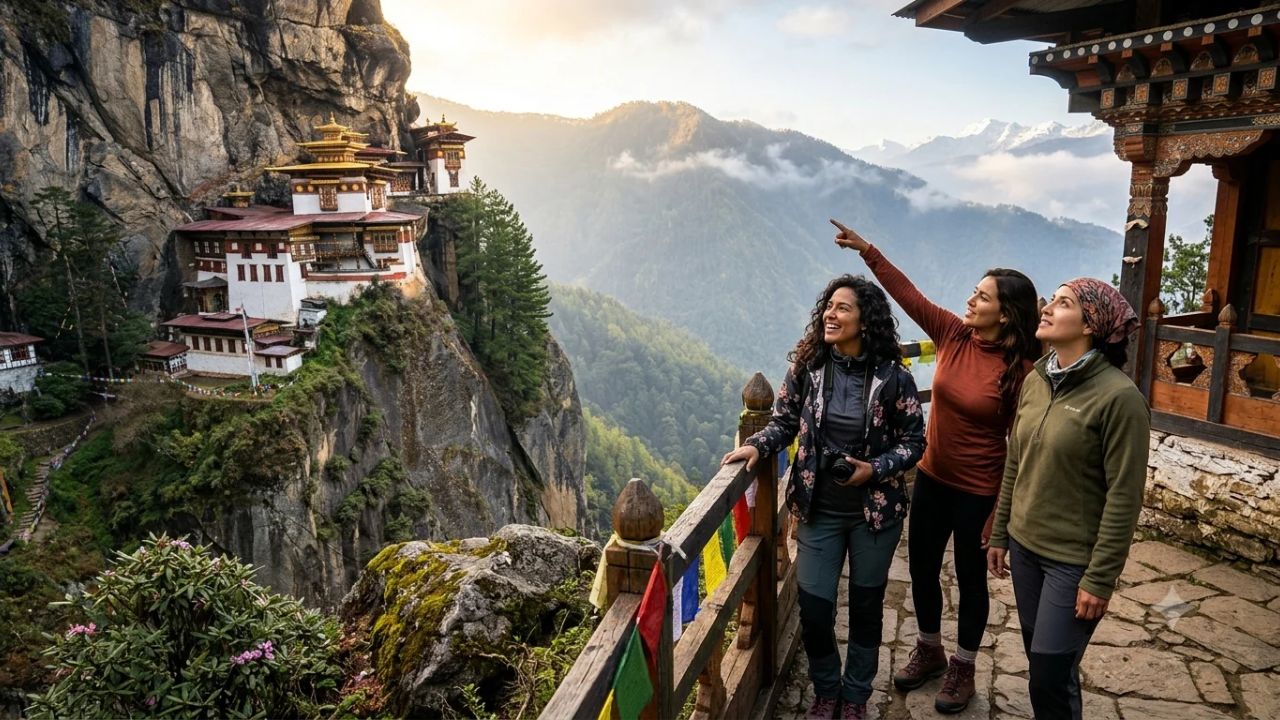
The Kingdom of Bhutan is emerging as a premier long-haul destination for Latin American and international travelers seeking authentic Himalayan cultural heritage, dramatic alpine valleys, and holistic wellness retreats anchored by a revised national tourism policy and extended Sustainable Development Fee incentives.
Positioned in the eastern Himalayas between India and China, Bhutan offers an extraordinary contrast to conventional high-volume Asian tourism destinations. Renowned for its constitutional commitment to environmental stewardship and its foundational philosophy of Gross National Happiness, the kingdom has spent decades refining a "high-value, low-volume" tourism strategy. Today, this sustainable model is capturing substantial interest from emerging long-haul source markets across South America, Central America, and Mexico.
Driven by a promotional 50% reduction in its daily Sustainable Development Fee (SDF)—set at US$100 per adult per night through December 31, 2029—and supported by streamlined air connections through primary Asian transit gateways, Bhutan welcomed 209,376 international visitors in 2025. From the iconic cliffside Taktsang Monastery (Tiger’s Nest) to the glacial wetlands of Phobjikha Valley, the kingdom provides an immersive travel experience blending Buddhist traditions, pristine mountain ecology, and carbon-negative hospitality.
Bhutan’s High-Value, Low-Volume Model Appeals to Unconventional Explorers
The growing appeal of Bhutan among Latin American vacationers aligns with broader shifts in global travel behavior. As travelers increasingly reject crowded urban centers and generic beach resorts, international tourism demand is pivoting toward transformative, nature-based journeys.
Industry research reflects this transformation. According to Booking.com’s 2027 global travel predictions, 77% of surveyed travelers expressed a strong desire for vacation experiences that challenge conventional travel routines and offer genuine cultural depth. Similarly, the Latin America Unlocked study conducted by Interamerican Network identified authentic cultural immersion, holistic wellness, untouched natural environments, traditional gastronomy, and multi-generational family exploration as the primary motivators shaping high-end travel out of Brazil, Mexico, Colombia, Argentina, and Chile.
Bhutan addresses these specific travel aspirations. Rather than pursuing mass passenger arrivals, the Royal Government of Bhutan designs its tourism regulations to protect local traditions, support monastic institutions, and safeguard native wildlife habitats.
| Strategic Travel Dimension | Bhutanese Policy Execution | Relevance for Latin American & International Visitors |
|---|---|---|
| High-Value, Low-Volume Policy | Daily SDF levies prevent overcrowding and mass commercialization | Ensures tranquil, uncrowded access to sacred monasteries and trails |
| Gross National Happiness (GNH) | National development balances economic growth with spiritual wellbeing | Travelers encounter genuine cultural authenticity and community warmth |
| Carbon-Negative Status | Over 70% forest cover absorbs more carbon than the nation emits | Eco-conscious travelers experience a pristine, carbon-neutral holiday |
| Guided Touring Framework | Mandatory certified guides and registered drivers for foreign tourists | In-depth historical interpretation and cultural protocol guidance |
| Aviation Connectivity | Specialized mountain flights connecting Bangkok, Singapore, and Delhi | Seamless pairing with broader multi-country Asian holiday itineraries |
For travelers embarking on extensive journeys from Latin America, Bhutan serves as a compelling centerpiece or high-value extension to broader journeys across South and Southeast Asia.
Tourism Performance: 44.3% Visitor Surge and Revenue Growth
Official visitor statistics released by the Department of Tourism demonstrate that Bhutan’s international tourism recovery has expanded beyond traditional neighboring markets, achieving record-breaking post-pandemic arrivals and foreign exchange receipts.
In 2025, Bhutan welcomed 209,376 tourists, representing a 44.3% annual increase over the 145,065 arrivals recorded in 2024. International visitors arrived from 157 distinct countries, reflecting growing geographic diversification.
| Tourism Performance Metric | Calendar Year 2024 | Calendar Year 2025 | Year-on-Year Growth & Analysis |
|---|---|---|---|
| Total International Tourist Arrivals | 145,065 visitors | 209,376 visitors | +44.3% expansion across all border points |
| Participating Origin Countries | Broad regional representation | 157 sovereign nations | Significant geographic diversification |
| Indian Visitor Market Share | ~65% of total volume | ~62% of total volume | Regional travel remains foundational anchor |
| International (Non-Indian) Market Share | ~35% of total volume | ~38% of total volume | Steady growth in long-haul overseas visitors |
| Average Length of Stay (Indian Visitors) | 4 nights | 4 nights | High-frequency regional short-stay trips |
| Average Length of Stay (Non-Indian Visitors) | 5 nights | 5 nights | Deeper exploration of central and eastern valleys |
| Direct Sustainable Development Fee Revenue | US$29.35 million | US$43.31 million | +49.1% direct government conservation revenue |
| Estimated National Population | ~790,000 residents | ~797,000 residents | United Nations official demographic baseline |
| Capital City (Thimphu) Population | ~195,000 residents | ~203,300 residents | Principal administrative and commercial center |
While travelers from India represented approximately 62% of total arrivals in 2025, overseas travelers from other non-Indian source markets grew to account for 38% of the total visitor volume. The leading long-haul source markets included the United States, China, Singapore, the United Kingdom, Malaysia, Bangladesh, Germany, Australia, and Thailand.
Non-Indian international travelers also demonstrated a longer average length of stay of five nights, compared with four nights recorded among regional Indian visitors. This extended duration allowed overseas guests to journey deeper into central valleys such as Punakha, Phobjikha, and Bumthang.
Financially, direct Sustainable Development Fee (SDF) receipts collected by the national treasury climbed to US$43.31 million in 2025, an increase of 49.1% compared to the US$29.35 million generated in 2024. These funds are allocated directly to state-funded healthcare, free education, national reforestation projects, carbon-neutral infrastructure, and historical monument preservation.
Understanding the Sustainable Development Fee (SDF) and Visa Regulations
A critical planning consideration for international travelers is Bhutan’s two-tier tourism fee structure, designed to fund national development while regulating visitor density.
Under official regulations confirmed in November 2026, international tourists visiting Bhutan benefit from a promotional Sustainable Development Fee rate:
- Promotional SDF Tariff: Set at US$100 per adult per night, representing a 50% reduction from the statutory standard baseline of US$200 per night.
- Validity Window: This promotional rate is legislated to remain in effect through December 31, 2029, providing long-term pricing certainty for tour operators and independent travelers planning multi-year itineraries.
- Children's Concessions: Children aged between 6 and 12 pay a discounted SDF rate of US$50 per night, while children under 6 years of age are completely exempt from the fee.
| Fee Component | Statutory Standard Cost | Current Active Promotional Rate | Policy Purpose & Terms |
|---|---|---|---|
| Sustainable Development Fee (Adult) | US$200 per guest per night | US$100 per guest per night | Valid through 31 December 2029; funds national healthcare and green projects |
| Sustainable Development Fee (Child 6–12) | US$100 per child per night | US$50 per child per night | Discounted family rate through 31 December 2029 |
| Sustainable Development Fee (Child <6) | Exempt | Exempt (US$0) | Free entry for young children |
| Tourist Visa Application Fee | US$40 per passport | US$40 per passport | One-time non-refundable digital processing fee |
| Processing Turnaround Time | 5 working days | 5 working days | Applications processed online via official tourism portal |
Essential Budgeting Distinction for Travelers
Travelers must distinguish between the SDF and the total cost of their holiday. The daily US$100 SDF is a sovereign sustainable tourism tax; it does not cover commercial travel expenses. Travelers must independently budget for:
- Certified hotel accommodation (ranging from boutique heritage hotels to ultra-luxury lodges).
- Mandatory licensed tour guides and private vehicle transport with registered drivers.
- All meals, regional entrance tickets to dzongs, museum admissions, and specialized outdoor activities.
Paro Valley and the Iconic Tiger’s Nest (Taktsang Monastery)
The Paro Valley serves as the cultural and aviation gateway to the kingdom. Encircled by forested mountains and terraced paddy fields, the valley is home to traditional timber-framed farmhouses, historic watchtowers, and sacred monastic fortresses.
The kingdom's most celebrated architectural landmark is Taktsang Monastery, known globally as Tiger’s Nest. Perched precariously on a sheer granite cliff face 900 meters (nearly 3,000 feet) above the Paro Valley floor (at an elevation of 3,120 meters above sea level), the monastery marks the sacred cave where Guru Padmasambhava (Guru Rinpoche) is believed to have meditated in the 8th century after flying to the mountain on the back of a tigress.
| Cultural Experience | Location | Architectural or Cultural Significance |
|---|---|---|
| Taktsang Monastery (Tiger’s Nest) | Upper Paro Valley | Historic cliffside hermitage; requires a demanding 4- to 5-hour round-trip mountain hike |
| Rinpung Dzong | Paro Town | Massive 17th-century fortress-monastery housing monastic and administrative bodies |
| Punakha Dzong | Confluence of Pho and Mo Rivers | The "Palace of Great Happiness"; winter residence of the Central Monastic Body |
| Tshechu Religious Festivals | Paro, Thimphu, Punakha | Sacred annual masked Cham dances performing Buddhist moral narratives |
| Traditional Archery (Dha) | Nationwide stadiums and village greens | National sport celebrated with festive team singing, dancing, and wooden bows |
| Heritage Textile Weaving | Thimphu & Central Valleys | Elaborate hand-woven silk and raw wool garments (gho for men, kira for women) |
Visiting Tiger’s Nest requires physical preparation. The trail involves a steady ascent across dirt paths, pine forests, and stone staircases. Travelers are advised to acclimate in Paro or Thimphu for at least two days before attempting the trek, wear sturdy hiking boots, carry walking poles, and maintain proper hydration.
Wilderness Conservation, Biodiversity, and the Trans Bhutan Trail
Bhutan is globally celebrated for its environmental stewardship. It remains the only country in the world whose national constitution legally mandates that a minimum of 60% of total land area must be maintained under permanent forest cover for all generations.
Official forestry assessments indicate that Bhutan currently exceeds this requirement by a wide margin, with 70.45% of its territory covered by dense forests, alongside an additional 10.43% categorized under sub-alpine scrubland.
| Ecological & Adventure Asset | Environmental Metric | Primary Visitor Appeal & Seasonality |
|---|---|---|
| Constitutional Forest Cover Mandate | 60.0% of national territory | Legal requirement ensuring unbroken ecological habitats |
| Actual Measured Forest Cover | 70.45% (plus 10.43% shrubs) | World's premier carbon-negative national environment |
| Documented Avian Biodiversity | 754 confirmed bird species | World-class birdwatching, especially during March to May |
| Black-Necked Crane Sanctuary | Phobjikha Valley (Gangtey) | High-altitude migratory crane viewing from late October to February |
| The Trans Bhutan Trail | 403-kilometer historical route | Restored historical pathway connecting western and eastern districts |
| Protected National Parks & Corridors | Over 50% of national territory | Connected biological corridors allowing unhindered wildlife movement |
The Trans Bhutan Trail
For long-distance trekking enthusiasts, the restored Trans Bhutan Trail offers an unparalleled cross-country journey. Spanning 403 kilometers (250 miles) from Haa in the western borderlands to Trashigang in the east, this ancient pathway was used for centuries by Buddhist pilgrims, emissaries, and royal messengers before modern road networks were constructed. Reopened for international trekking, visitors can book guided walking itineraries spanning several days or weeks, traversing remote mountain passes, ancient fortress outposts, and rural farming hamlets.
Birdwatching and Black-Necked Cranes
With 754 documented avian species—including endangered varieties like the white-bellied heron, rufous-necked hornbill, and Ward’s trogon—Bhutan represents an ornithological treasure. The prime birdwatching season runs through spring from March to May, when alpine rhododendrons bloom across the mountainsides.
In late autumn and winter, the wide, treeless glacial expanse of the Phobjikha Valley becomes a sacred sanctuary for rare black-necked cranes. Migrating from the high Tibetan plateau, these elegant birds arrive in late October and remain through February, circling the historic Gangtey Monastery upon arrival and departure in an annual ritual revered by local villagers.
Holistic Wellness and Himalayan Gastronomy
Complementing its outdoor adventures, Bhutan provides profound wellness and culinary traditions rooted in centuries of Vajrayana Buddhist philosophy.
Restorative Wellness and Hot-Stone Baths
Wellness travel in Bhutan focuses on mental restoration and physical detoxification. Many luxury lodges and rural homestays feature traditional Dotsho (hot-stone baths). River stones are heated over open wood fires until glowing red, then submerged into a wooden bathing tub filled with fresh mountain water and wild artemisia (wormwood) leaves. As the mineral-dense stones crack under the water, they release steam and natural minerals believed to relieve joint pain, muscular stiffness, and chronic fatigue. Travelers can pair these baths with private guided meditation sessions led by Buddhist monks in quiet temple sanctuaries.
Authentic Culinary Heritage
Bhutanese gastronomy reflects its rugged mountain climate and agricultural traditions. Rather than relying on heavy commercial spices, local cooking celebrates earthy, bold flavors centered around:
- Red Rice: Nutrient-dense, nutty grain grown in the fertile mineral soils of Paro and Punakha.
- Ema Datshi: The national dish, prepared with whole spicy green or dried red chillies stewed in a rich sauce of melted cow or yak cheese.
- Kewa Datshi & Shamu Datshi: Milder variations featuring potatoes (kewa) or wild forest mushrooms (shamu) simmered in creamy cheese.
- Yak Milk Specialties: Dried hard yak cheese (chhurpi) and rich yak butter tea (suja), typically served as a welcoming refreshment.
Staying in family-run rural homestays allows visitors to participate in traditional kitchen life, learn bread-baking techniques over clay stoves, and experience customary Bhutanese hospitality firsthand.
Travel Logistics: Flights, Entry Protocols, and In-Country Transit
Due to mountainous geography, visiting Bhutan requires specific planning regarding international transit corridors, documentation, and in-country mobility.
| International Aviation Hub | Connecting Carriers to Paro (PBH) | Transit Strategy for Latin American Travelers |
|---|---|---|
| Bangkok Suvarnabhumi (BKK) | Drukair, Bhutan Airlines | Primary transit gateway; multiple daily scheduled departures |
| Singapore Changi (SIN) | Drukair | Excellent high-speed intercontinental connections from Europe/Americas |
| Kathmandu Tribhuvan (KTM) | Drukair, Bhutan Airlines | Spectacular mountain flights offering direct views of Mount Everest |
| New Delhi (DEL) & Kolkata (CCU) | Drukair, Bhutan Airlines | Major Indian hubs; requires Indian transit visa depending on baggage transfer |
| Dhaka Hazrat Shahjalal (DAC) | Drukair | Regional transit corridor serving South Asian air networks |
Reaching Paro International Airport
Bhutan possesses only one international airport: Paro International Airport (IATA Code: PBH), located in a narrow mountain valley 2,235 meters (7,330 feet) above sea level. Due to demanding visual flight rules (VFR) and surrounding 5,500-meter peaks, only a select cadre of certified pilots are licensed to navigate aircraft into Paro.
International flights are operated exclusively by two carriers:
- Drukair (Royal Bhutan Airlines): The national flag carrier, operating modern Airbus A320neo and ATR turboprop aircraft.
- Bhutan Airlines (Tashi Air): The nation's private carrier, operating Airbus A319 airframes.
Latin American travelers typically fly intercontinental routes across the Pacific or Atlantic to primary Asian transfer hubs—most conveniently Bangkok (BKK) or Singapore (SIN)—before boarding morning connecting flights into Paro.
In-Country Mobility and Cultural Etiquette
- Transport Regulations: International visitors cannot rent self-drive vehicles. All in-country road travel must be conducted in licensed tourist vehicles accompanied by an authorized local driver and a certified guide.
- Domestic Flights and Charters: Domestic air services link Paro with central and eastern airstrips in Bumthang, Yonphula, and Gelephu, while helicopter charters are available for medical emergencies, scenic transfers, and remote valley logistics.
- Cultural Protocols: Visitors must respect Buddhist traditions. Modest clothing covering shoulders and knees is mandatory inside dzongs and temples, shoes must be removed before entering shrines, and hats must be taken off. Travelers should always ask permission before taking photographs of monks, elders, or local residents.
Frequently Asked Questions
What is Bhutan's Sustainable Development Fee (SDF) rate?
The promotional SDF is US$100 per adult per night, reduced from the standard US$200 rate. This promotional rate is scheduled to remain in effect through December 31, 2029. Children aged 6 to 12 pay US$50 per night.
How do travelers from Latin America fly to Bhutan?
Travelers fly to major Asian aviation hubs like Bangkok (BKK) or Singapore (SIN), then take connecting flights to Paro International Airport (PBH) aboard Drukair or Bhutan Airlines. Other flight connections operate via Kathmandu, New Delhi, and Kolkata.
What is the best time to visit Bhutan for festivals and wildlife?
Spring (March to May) offers pleasant weather, blooming rhododendrons, and prime birdwatching. Autumn (September to November) provides clear skies for trekking and vibrant Tshechu festivals. Black-necked cranes inhabit Phobjikha Valley from late October to February.
Can tourists rent cars and drive themselves in Bhutan?
No. Official tourism regulations strictly prohibit self-drive car rentals for international tourists. All travel within the country must be arranged in licensed vehicles operated by certified Bhutanese drivers accompanied by registered guides.
Related Travel Guides
This article is for informational purposes. Flight routes, passenger regulations, visa rules, and transit advisories are subject to change by airlines and aviation authorities. Readers are advised to verify schedules and travel documentation with relevant carriers and border agencies before departure.
Related Stories
Nepal's Pokhara Seeks Tourism Breakthrough: Overcoming Highway Bottlenecks, Airport Debt, and Operating Cost Pressures
British Airways Resumes Dubai Flights: Unlocking Heritage Tourism, Licensed Guides, and Al Fahidi Hidden Treasures