British Airways Resumes Dubai Flights: Unlocking Heritage Tourism, Licensed Guides, and Al Fahidi Hidden Treasures

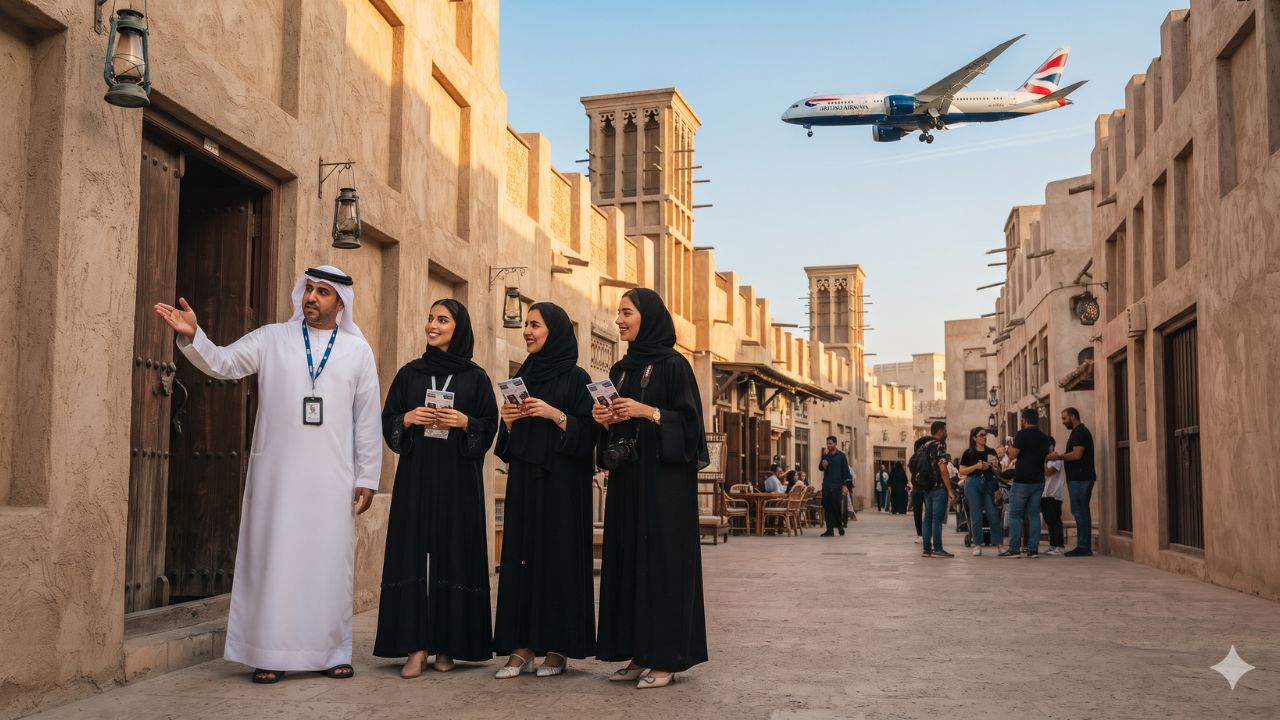
While international travelers routinely picture Dubai through the lens of gleaming skyscrapers and luxury beach resorts, the emirate welcomed a record 19.59 million international overnight visitors in 2025—and an established corps of more than 3,000 licensed tour guides is actively steering those arrivals toward the coral-stone alleyways and wind towers of Old Dubai. As British Airways prepares to restore flight operations between London and Dubai following operational disruptions across the Middle East earlier in 2026, the renewed aviation link opens practical opportunities for neighborhood restaurants, cultural spaces, and independent guides, supported by heritage programs curated through Visit Dubai.
A flight connection provides geographic access, but transforming that physical access into meaningful local commerce requires intentional traveler choices. For Dubai's historic districts along Dubai Creek, the commercial question is how incoming visitors spend their time and resources once they step off long-haul aircraft. Rather than confining itineraries to downtown shopping malls and commercial theme parks, travelers who explore through qualified guides can discover the authentic maritime traditions and architectural heritage that anchored the Arabian Gulf for centuries.
The Aviation Restart and the Baseline of Dubai's Visitor Economy
The anticipated return of British Airways follows a challenging period of flight adjustments documented across international aviation earlier in 2026. Official operational statements from the British flag carrier confirmed schedule reviews and customer support procedures for passengers whose travel plans were interrupted by Middle Eastern airspace turbulence. While travelers must verify specific restart dates, aircraft assignments, and frequencies directly with the airline, the prospect of regular direct flights from London Heathrow provides a steady pipeline of European leisure and corporate travelers.
To understand the economic scale awaiting incoming flights, official performance metrics released in the December 2025 tourism report by the Dubai Department of Economy and Tourism establish clear historical baselines:
- International Overnight Visitors: Dubai welcomed 19.59 million international overnight visitors in 2025.
- Annual Market Growth: This volume represented a 5% increase compared to 2024, demonstrating resilient global demand.
- Professional Guiding Workforce: The Dubai College of Tourism (DCT) lists more than 3,000 certified, licensed tour guides registered across the emirate.
However, destination economists emphasize that airline arrivals alone do not automatically enrich community businesses. Converting transit passengers into clients for traditional tea houses, calligraphy studios, and walking tour cooperatives requires visible, bookable excursions that allow visitors to engage deeply with local residents.
What Makes Old Dubai Different: Wind Towers, Abras, and Al Fahidi
Stepping away from the highway overpasses of Sheikh Zayed Road reveals a dramatically different city along the natural saltwater inlet of Dubai Creek, a historic trading waterway recognized on the tentative list of the UNESCO World Heritage Centre.
The Architectural Heritage of Al Fahidi
The Al Fahidi Historical Neighbourhood—frequently referred to by its historic name, Al Bastakiya—dates back to the late 19th century when pearl merchants and maritime traders established residences beside Dubai Creek. Constructed from local coral stone, gypsum, limestone, and teakwood, the preserved district features distinctive barjeel (traditional wind towers). These four-sided architectural towers acted as non-electric air conditioning systems, funneling Gulf sea breezes down into interior courtyards.
Walking through Al Fahidi's narrow shaded alleyways (sikkas), visitors encounter independent art galleries, the Coffee Museum, traditional craft workshops, and community gathering spots like the Arabian Tea House. It is also home to the Sheikh Mohammed Centre for Cultural Understanding (SMCCU), where travelers share traditional Emirati meals—including saffron-scented machboos and sweet luqaimat dumplings—while discussing local customs, religious traditions, and family life in an open, unscripted setting.
Maritime Crossroads: Dubai Creek and the Souks of Deira
Just outside the courtyard walls, wooden motorized water taxis known as abras ferry passengers across Dubai Creek between Bur Dubai and Deira for a standard fare of 1 AED. Gliding past traditional dhows loaded with spices and textiles from South Asia and East Africa connects travelers directly to Dubai's mercantile origins. On the northern Deira shoreline, walking routes lead into the Spice Souk and Gold Souk, where licensed guides help shoppers distinguish authentic Iranian saffron, frankincense, and oud from mass-produced tourist imports.
Dubai Tourism Performance and Heritage Guiding Framework: 2026
| Indicator & Initiative | Published Position & Source | Operational Standards & Requirements | Traveler Impact & Booking Guidance | | :--- | :--- | :--- | :--- | :--- | | Annual International Visitors | 19.59 million overnight visitors (2025) | Official DET Performance Report (+5% over 2024) | High seasonal demand; advance bookings recommended for guided walks | | Certified Tour Guides | Over 3,000 licensed professionals | Certified via Dubai College of Tourism (DCT) | Guarantees verified historical expertise and first aid compliance | | Guide Licensing Standards | Administered by DET & DCT | Documented education, language fluency, first aid | Always request to see the guide's official physical badge | | Al Fahidi Heritage District | Bur Dubai, beside Dubai Creek | Preserved 19th-century gypsum and coral stone | Pedestrian-only shaded alleys; explore on foot with local hosts | | Dubai Sustainable Tourism (DST) | Launched by DET in 2016 | Operator training on energy, waste, and supply chains | Look for certified eco-conscious and culturally responsible excursions | | Dubai Creek Waterway | Bur Dubai to Deira maritime channel | Historic trade corridor on UNESCO Tentative List | Motorized abra crossings provide authentic public transit for 1 AED |
Visitor Insider Tips: Exploring Dubai Beyond the Guidebooks
Experiencing Dubai through an insider cultural lens requires practical planning and cultural awareness:
- Verify Your Tour Guide's Official License: Under Dubai municipal regulations, anyone providing commercial tour guiding must hold an official badge issued by the Dubai Department of Economy and Tourism following DCT training. When booking independent excursions, ensure the guide operates under a licensed tour company and ask to see their credential card to guarantee quality and safety.
- Time Al Fahidi Walks for Early Morning or Late Afternoon: During winter months (November to March), mid-day sun can still feel intense on exposed stone pavements. Schedule your walking tours for 8:30 a.m. to experience Al Fahidi as shopkeepers open their wooden doors, or begin at 4:30 p.m. to catch sunset light reflecting across the wind towers before the evening call to prayer echoes over the Creek.
- Master the Creek Abra Crossing for 1 AED: Skip air-conditioned taxi rides when traveling between Bur Dubai and Deira. Walk down to the Bur Dubai Abra Station and board a traditional public wooden abra. Hand 1 AED in cash directly to the boat operator as you sit side by side with local commuters crossing to the Deira Old Souk Station.
- Respect Modest Dress Etiquette in Historic Quarters: While modern beach resorts and hotel pool decks permit western swimwear, exploring traditional residential and historic districts like Al Fahidi and the souks requires respectful attire. Ensure shoulders and knees are covered, and wear comfortable, flat walking shoes for cobblestone pathways.
- Allow Adequate Post-Flight Buffers at Dubai International (DXB): If arriving on long-haul flights from London, do not schedule guided excursions immediately upon landing. Allow at least two hours to clear immigration, collect baggage, and complete airport transfers, ensuring flight delays do not result in forfeited booking deposits.
Cultural and Environmental Context: Sustainable Tourism and Local Stewardship
The integration of historic neighborhoods into Dubai's wider tourism master plan reflects an evolving commitment to sustainability and heritage preservation. Through the Dubai Sustainable Tourism (DST) initiative, established by DET in 2016, tourism authorities provide specialized operational guidelines for tour companies, focusing on energy conservation, municipal waste diversion, and ethical local procurement.
In historic quarters like Al Fahidi, sustainability is grounded in architectural stewardship. Restoring 19th-century buildings using traditional materials rather than tearing them down for commercial high-rises keeps Emirati architectural identity alive. In addition, patronizing independent licensed guides and neighborhood artisans ensures that tourist spending flows directly into the local micro-economy rather than being absorbed entirely by multi-national hospitality conglomerates.
By learning the cultural meaning behind traditional hospitality rituals—such as offering Arabic coffee (gahwa) poured from a dallah into a handleless finjan cup accompanied by dates—visitors transition from passive observers to welcomed guests. Choosing thoughtful cultural tours preserves Dubai's authentic heritage and ensures that the emirate's rapid modernization never erases its humble origins as a coastal desert community.
FAQ: Exploring Dubai Heritage and Local Guides 2026–2027
How can travelers verify that a Dubai tour guide is officially licensed?
Ask your tour operator to verify the guide's official license issued by the Dubai Department of Economy and Tourism. Licensed guides complete mandatory training through the Dubai College of Tourism and carry an official identification badge.
What is the best way to travel between Bur Dubai and Deira?
The most authentic, affordable transit is aboard a traditional wooden motorized abra across Dubai Creek. The journey takes roughly five minutes and costs 1 AED in cash paid directly to the captain.
What are the main cultural highlights in the Al Fahidi Historical Neighbourhood?
Al Fahidi features restored late 19th-century wind towers, the Coffee Museum, contemporary Arabian art galleries, traditional craft shops, and the Sheikh Mohammed Centre for Cultural Understanding (SMCCU) for cultural meals and discussions.
When is the ideal time of year to take outdoor walking tours in Dubai?
The winter season between November and March offers pleasant daytime temperatures ranging from 68°F to 82°F (20°C to 28°C), making outdoor neighborhood strolls and Creek boat trips comfortable.
Looking past modern towers to walk the coral-stone corridors of Dubai Creek reveals the true, enduring soul of the Emirates.
Related Travel Guides
- Delta's Austin–Arkansas Flights Reshape Regional Tourism Economics: Day Trips, Late Arrivals, and Visitor Spending 2027
- Japan Overhauls Duty-Free Shopping: New Airport Tax Refund Rules at Narita, Haneda, and Kansai 2026
- Old Dubai Cultural Guide: Walking Al Fahidi, Abra Creek Crossings, and Deira Souks 2027 (Upcoming)
This article is for informational purposes. Flight routes, passenger regulations, visa rules, and transit advisories are subject to change by airlines and aviation authorities. Readers are advised to verify schedules and travel documentation with relevant carriers and border agencies before departure.
Related Stories
Cape Town Completes Table View Beachfront Coastal Transformation Ahead of 2026-2027 Summer Season
Vietnam Airlines Expands Osaka–Hanoi Route: New Afternoon Flights, Europe Connections, and Bilateral Travel Guide 2026–2027