
Central Asia–China Aviation Skyrockets 303.7% as Uzbekistan and Regional Hubs Expand Silk Road Air Corridors and Cargo Fleets

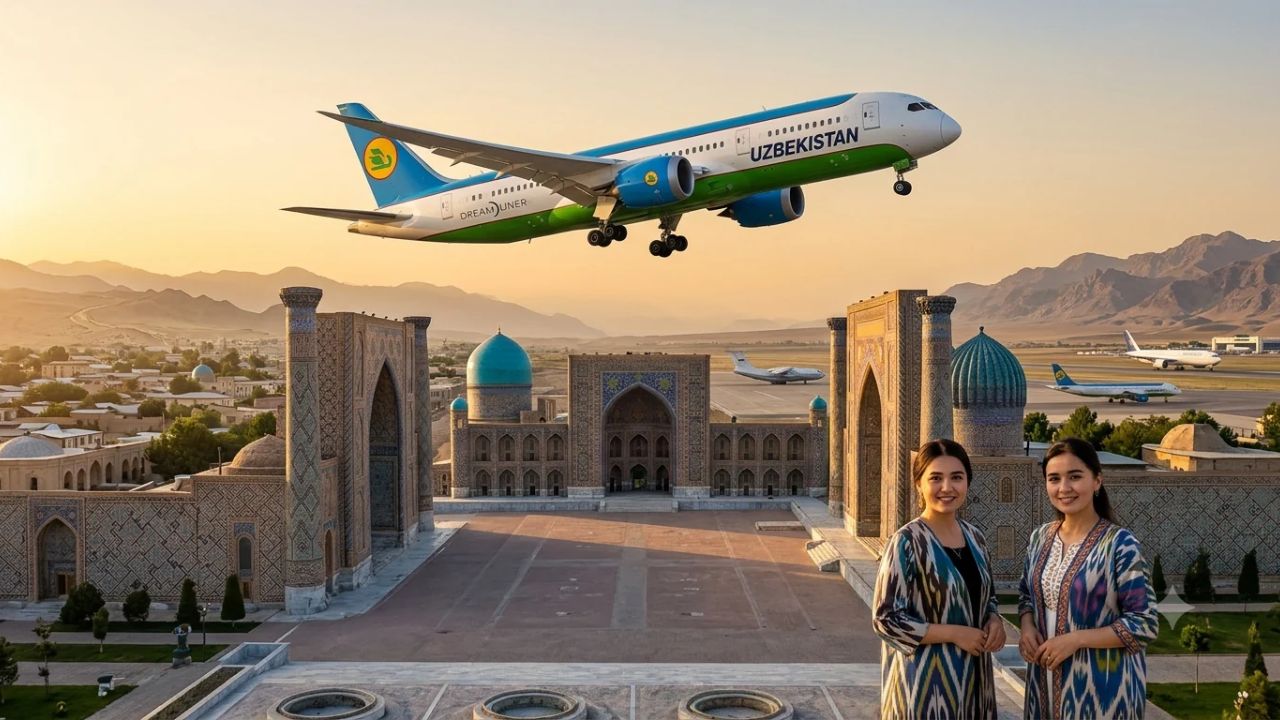
Commercial flight volume between China and Central Asia surged by an extraordinary 303.7% during the first half of 2026 compared to pre-pandemic benchmarks, revitalizing historical Silk Road corridors into a high-capacity aviation superhighway connecting twelve regional destinations with Chinese manufacturing and financial centers.
The dramatic expansion of commercial air routes across the Eurasian heartland marks a historic shift in regional connectivity. Historically defined by land-based caravan tracks winding across deserts and mountain passes, Central Asia is rapidly transforming its airspace into an essential bridge linking East Asia with European and Middle Eastern markets. Driven by targeted foreign direct investment, coordinated bilateral open skies agreements, and progressive visa-waiver regimes, the five Central Asian republics—Kazakhstan, Uzbekistan, Kyrgyzstan, Tajikistan, and Turkmenistan, collectively recognized as the "C5"—have established unprecedented aviation integration with the People's Republic of China.
With scheduled flight frequencies climbing to record heights and specialized cargo fleets expanding to meet cross-border e-commerce demand, the modern "Aviation Silk Road" is driving robust bilateral trade, accelerating academic and diplomatic exchanges, and unlocking multi-destination tourism across Eurasia.
The Modern Aviation Silk Road: Multilateral Coordination and Capital Investment
The triple-digit expansion in Central Asian air connectivity is the direct outcome of multilateral policy coordination between the Civil Aviation Administration of China (CAAC) and the transport ministries of the C5 nations. Rather than allowing route networks to develop organically, regional authorities created an integrated development blueprint designed to capitalize on Central Asia’s geographic position along the natural flight paths connecting East Asia and Europe.
By modernizing airspace management systems, offering competitive overflight navigation fees, and upgrading terminal facilities, Central Asian nations have successfully converted brief intercontinental flyovers into revenue-generating technical stops, cargo distribution hubs, and final tourism destinations.
| Macroeconomic Aviation Metric | Confirmed Value | Operational Significance and Industry Context |
|---|---|---|
| China–Central Asia Flight Growth | 303.7% increase | First-half 2026 flight frequency compared to 2019 pre-pandemic baseline |
| Direct Regional Destinations | 12 connected cities | Primary capitals and secondary industrial nodes linked directly to China |
| Aviation Sector FDI Secured | $1.4 billion | Foreign direct investment specifically committed to air transport assets |
| Pipeline Airport Investments (to 2035) | $5.1 billion | 12 major airport construction and expansion projects tracked by EDB |
| Low-Cost Carrier Capacity Share | 21% of regional total | Budget carriers democratizing regional travel by year-end 2025 |
| Total Central Asian Passenger Traffic | 31.7 million passengers | 2025 passenger volume across the C5, doubling pre-pandemic numbers |
| Regional Air Freight Volume | 335,700 metric tons | Total cargo handled across C5 in 2025, more than quadrupling 2023 levels |
Capital expenditure represents the foundation of this expansion. The Eurasian Development Bank (EDB) tracks 12 major airport development projects currently underway or scheduled across the five Central Asian republics through 2035, representing a combined investment pipeline of $5.1 billion. This program is supported by $1.4 billion in foreign direct investment earmarked specifically for airport modernization, runway reinforcement, cold-chain cargo facilities, and digital air traffic management infrastructure.
The impact of this capital injection is evident in passenger and freight volumes. Total air passenger movements across Central Asia reached 31.7 million travelers in 2025, nearly doubling pre-pandemic totals. Concurrently, air freight volume across the five nations quadrupled between 2023 and 2025, rising to 335,700 metric tons as industrial supply chains and digital retail platforms turned to air freight for rapid cross-border distribution.
Key Economic Catalysts: Visa Liberalization, E-Commerce, and Tourism
The 303.7% surge in air services has triggered a broad economic multiplier effect across Central Asia, enabled by four primary policy catalysts:
1. Frictionless Border Clearance and Smart Visas
The systematic dismantling of immigration barriers has served as the single largest catalyst for passenger traffic growth. The introduction of mutual 30-day visa exemption agreements between China and several Central Asian republics—notably Kazakhstan and Uzbekistan—alongside unilateral transit waivers and streamlined electronic visa declarations, has eliminated bureaucratic friction. Industry booking records demonstrate that the implementation of visa-free protocols historically triggered an immediate 80% surge in commercial airline reservations from China to Central Asian destinations within weeks of enactment.
2. Cross-Border E-Commerce and Dedicated Freight Corridors
Direct air links provide the foundational logistics network required for cross-border digital commerce. Chinese consumers increasingly demand organic Central Asian agricultural goods, dried fruits, honey, and premium textiles, while Central Asian consumers rely on expedited deliveries of consumer electronics, automotive parts, and apparel from Chinese industrial clusters. Expanded "Open Skies" traffic rights for dedicated all-cargo freighters enable shipments to travel between Chinese export centers and Central Asian distribution warehouses in hours rather than the weeks required by overland rail or road corridors.
3. Unified "Great Silk Road" Tourism Identity
Central Asian tourism ministries have moved away from individual national competition toward coordinated regional promotion. Marketed internationally as the "Great Silk Road Tourism Route," joint tourism programs encourage visitors to book multi-stop regional itineraries. Affluent Chinese travelers can seamlessly fly into Tashkent, explore the ancient Silk Road architecture of Samarkand and Bukhara, transfer by air to Almaty for alpine excursions in the Tian Shan mountains, and return home directly from Astana or Bishkek.
4. B2B Commercial Expansion and Energy Diplomacy
Direct air corridors have accelerated foreign direct investment meetings, joint industrial venture negotiations, and energy cooperation summits. Daily flight links between Chinese commercial hubs such as Beijing, Shanghai, Guangzhou, and Urumqi and Central Asian capitals allow corporate executives and engineering teams to conduct on-site project management without circuitous third-country transfers.
Country-by-Country Analysis: The Five Pillars of the Aerial Silk Road
While the C5 nations operate within a shared regional economic space, each individual republic has cultivated a distinct functional specialization within the expanding aviation framework.
| Central Asian Republic | Key Commercial Aviation Role | Passenger / Freight Share | Route Cap and Frequency with China | Signature Carriers & Aircraft Types |
|---|---|---|---|---|
| Uzbekistan | Air cargo logistics heavyweight | 67% of regional air freight | Authorized cap raised from 100 to 114 weekly flights | My Freighter (Boeing 767ER), Uzbekistan Airways |
| Kazakhstan | Regional passenger powerhouse | 49% of regional passenger traffic | 20 city pairs; weekly cap raised from 117 to 180 flights | Air Astana, FlyArystan (28 aircraft fleet), SCAT |
| Kyrgyzstan | Secondary commercial and trade hub | Specialized localized transit | Up to 11 weekly summer round trips on key routes | China Southern Airlines, local regional carriers |
| Tajikistan | Capital-to-capital business corridor | Targeted bilateral transit | Twice-weekly scheduled nonstops | Somon Air, Air China (Dushanbe–Beijing) |
| Turkmenistan | Energy trade and state-directed transit | Energy machinery distribution | Multiple weekly scheduled services | Turkmenistan Airlines (Ashgabat to Beijing, Urumqi) |
Uzbekistan: The Freight Powerhouse and Logistical Epicenter
Uzbekistan has established itself as the undisputed logistics center of Central Asia’s aviation boom. Capitalizing on its central geographic position and modern airport handling infrastructure, Uzbekistan processes an impressive 67% of Central Asia's total air cargo volume.
To accommodate swelling passenger and freight demand, Uzbek and Chinese aviation authorities concluded a bilateral agreement in late 2026 raising authorized scheduled passenger services between the two nations from 100 to 114 flights per week.
In the cargo arena, the rapid rise of specialized cargo carriers has transformed regional supply chains. Tashkent-based My Freighter Airlines has emerged as a major player, operating an expanding fleet of wide-body Boeing 767-300ER freighters. These long-range aircraft provide heavy-lift capacity for consumer electronics and industrial machinery, operating high-frequency cargo schedules linking Tashkent International Airport (TAS) and Navoi International Airport (NVI) directly with manufacturing centers across eastern China. Alongside freight expansion, Uzbekistan is witnessing the emergence of new hybrid and private leisure carriers, providing accessible passenger transport between historical tourist centers and Chinese departure points.
Kazakhstan: The Passenger Powerhouse and Network Leader
Accounting for approximately 49% of Central Asia’s total commercial airline passenger volume, Kazakhstan is the undisputed passenger network leader of the region. Kazakhstan connects to China through 20 distinct city-pair routes, operating the most extensive network of any C5 nation.
Over the past decade, Kazakhstan’s aviation authorities have systematically diversified the country's international network, expanding total foreign flight routes from 32 services to an incredible 161 routes today. In bilateral relations with China, Kazakh carriers currently operate 117 regular weekly flights. Under a landmark bilateral aviation accord finalized in late 2026, the permitted weekly flight ceiling was expanded to 180 flights per week. This agreement clears the way for direct air links connecting Astana and Almaty to high-growth secondary Chinese commercial hubs, including Chengdu in Sichuan province and Kashgar in western Xinjiang.
A key driver of Kazakhstan's passenger democratization is FlyArystan, the low-cost subsidiary of the Air Astana Group. Operating a modern, uniform fleet of 28 Airbus A320 aircraft, FlyArystan has lowered the barrier to air travel across the region, offering competitive point-to-point fares that make cross-border tourism and business travel accessible to middle-income families and independent travelers.
To ensure orderly, long-term sector development, Kazakhstan is actively collaborating with the International Civil Aviation Organization (ICAO) on a comprehensive national aviation master plan projected through 2050, focusing on airspace modernization, airport decarbonization, and transit hub efficiency.
Kyrgyzstan: Expanding Secondary Hubs and Alpine Tourism
The Kyrgyz Republic plays a strategic role by developing connectivity between secondary commercial centers rather than focusing exclusively on capital cities. This regionalized routing fosters localized trading circuits and supports eco-tourism, mountain trekking, and cross-border commercial wholesale markets.
Major international airlines have expanded their schedules to accommodate this demand. China Southern Airlines operates up to 11 weekly round trips during peak summer months, connecting Bishkek’s Manas International Airport (FRU) with major Chinese hubs. Significantly, the route network extends beyond the capital city: direct flights operate between Guangzhou, China’s primary southern industrial base, and Bishkek, while high-frequency cross-border services connect Urumqi in Xinjiang directly with Osh, the historic commercial trading hub of the southern Fergana Valley.
Tajikistan: Securing the Diplomatic and Corporate Gateway
Tajikistan has prioritized the establishment of reliable, premium scheduled air corridors connecting Dushanbe directly with China’s political and financial leadership. For the landlocked republic, establishing direct capital-to-capital aviation links eliminates the need for multi-leg transit through third-country hubs.
The centerpiece of Tajikistan’s Chinese flight operations is the direct scheduled nonstop service linking Dushanbe International Airport (DYU) directly with Beijing Capital International Airport (PEK). Operating on a reliable twice-weekly schedule, the route provides critical connectivity for bilateral diplomatic delegations, mining and infrastructure project managers, and cultural delegations, ensuring steady institutional and corporate access between the two nations.
Turkmenistan: Focused Expansion on the Energy and Trade Axis
Turkmenistan maintains a controlled, state-coordinated approach to its commercial flight operations, aligning aviation capacity directly with national economic development priorities and hydrocarbon trade agreements.
Flag carrier Turkmenistan Airlines operates scheduled direct services linking the capital of Ashgabat with Beijing twice weekly, utilizing modern Boeing long-haul aircraft. In addition to capital-to-capital connections, Turkmenistan maintains scheduled flight frequencies between Ashgabat and Urumqi. This western Chinese gateway serves as an essential logistics entry point for high-precision industrial machinery, pipeline hardware, and drilling equipment required by Turkmenistan's energy sector, while providing Turkmen export goods with direct access to Chinese commercial markets.
The Low-Cost Carrier Revolution and Regional Air Capacity
The rapid growth of Central Asian aviation reflects a fundamental transformation in fleet composition and pricing structures. Prior to 2020, regional aviation was dominated by legacy state flag carriers operating premium-heavy cabin configurations that catered primarily to government officials, corporate executives, and overseas transit passengers.
Over the past five years, the aggressive expansion of low-cost carriers (LCCs) has democratized air travel across the Eurasian landmass. By 2025, budget carriers captured 21% of Central Asia’s total scheduled seat capacity. Low-cost operators have introduced unbundled pricing, high-density seating, and digital direct-to-consumer booking platforms, allowing students, small-scale traders, and family vacationers to travel by air at prices competitive with multi-day rail or long-distance bus journeys.
This structural shift explains how regional passenger traffic surged to 31.7 million travelers in 2025. By lowering the cost of crossing international borders, budget airlines have unlocked latent passenger demand, ensuring that regional growth remains resilient and insulated from fluctuations in luxury business travel spending.
Strategic Outlook: Central Asia as Eurasia’s Indispensable Aviation Bridge
The 303.7% explosion in flight activity between China and Central Asia represents far more than temporary post-pandemic recovery; it marks the emergence of Central Asia as an indispensable aerial crossroads connecting the Eastern and Western hemispheres.
As geopolitical developments alter traditional intercontinental flight corridors, international airlines increasingly depend on Central Asian airspace for efficient transit between East Asia, Europe, and the Middle East. By pairing strategic geography with $5.1 billion in airport infrastructure investments, forward-thinking visa waivers, and aggressive fleet expansion across passenger and cargo sectors, the C5 nations have established an enduring economic foundation. The modern Aviation Silk Road is actively reshaping international supply chains, cultural exchanges, and global tourism networks for decades to come.
Frequently Asked Questions
What caused the 303.7% surge in China–Central Asia flights?
The growth was driven by $1.4 billion in aviation foreign direct investment, bilateral open skies agreements, widespread visa-waiver rollouts, and booming cross-border e-commerce connecting 12 Central Asian cities with China.
Which Central Asian country leads in air freight volume?
Uzbekistan is the regional cargo leader, processing 67% of Central Asia's total air freight. Its logistics capacity is powered by specialized cargo airlines like My Freighter operating wide-body Boeing 767ERs.
How many flights operate weekly between Kazakhstan and China?
Kazakhstan operates 117 regular weekly flights to China across 20 city pairs. A recent bilateral aviation agreement increased the authorized weekly flight ceiling to 180, adding routes to Chengdu and Kashgar.
What is the combined airport investment planned for Central Asia?
The Eurasian Development Bank (EDB) tracks 12 major airport modernization and expansion projects scheduled through 2035 across the five Central Asian republics, representing a combined investment pipeline of $5.1 billion.
Related Travel Guides
This article is for informational purposes. Flight routes, passenger regulations, visa rules, and transit advisories are subject to change by airlines and aviation authorities. Readers are advised to verify schedules and travel documentation with relevant carriers and border agencies before departure.
Related Stories

Air Astana Launches High-Speed Satellite Wi-Fi on Airbus A321LR: Central Asia Flight Guide & 2027 Expansion

Singapore Airlines and Global Carriers Accelerate Multi-Billion-Dollar Premium Cabin Investments Ahead of 2027 Rollout