
Bhubaneswar and Rourkela Intercity Express Trains Cancelled on August 18
Indian Railways cancels Bhubaneswar-Rourkela Train No. 22840 and Rourkela-Bhubaneswar Train No. 22839 on August 18, 2026, due to link train delays in H2 2026.

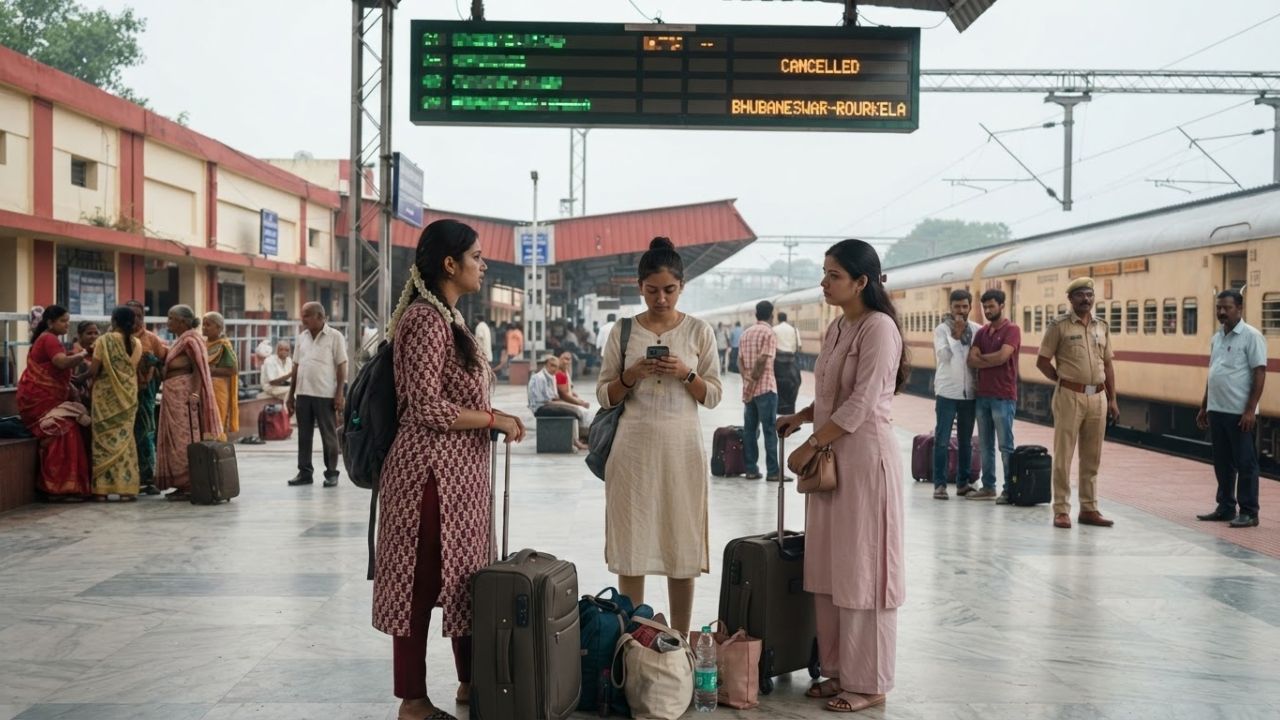
Image generated by AI
Indian Railways has cancelled Train No. 22840 Bhubaneswar–Rourkela Intercity Express and Train No. 22839 Rourkela–Bhubaneswar Intercity Express on August 18, 2026, due to the delay of the incoming link train. This disruption impacts travel between the state capital of Odisha and one of its major industrial centers.
The railway transit market in India is observing a significant transition toward higher frequency intercity services, with passengers increasingly relying on daytime express connections to link commercial hubs and state capitals. In Odisha, daytime passenger rail services serve as a vital link between the capital city of Bhubaneswar and Rourkela, one of the state's most prominent industrial centers. A major milestone in regional travel disruptions occurred on August 18, 2026, when East Coast Railway announced the complete cancellation of both the outbound and inbound Intercity Express services. The operational cancellation applies specifically to Train No. 22840 (Bhubaneswar to Rourkela) and Train No. 22839 (Rourkela to Bhubaneswar) due to a delay involving the incoming link train.
For the traveler, the real impact of this cancellation is the immediate disruption of business, educational, and family itineraries along the corridor. Commuters holding confirmed reservations must quickly find alternative transportation methods, such as regional state buses or alternative train routes. This disruption highlights the vulnerability of regional travel networks to cascading rail delays, making pre-trip verification essential for travelers across the region.
Cascading Operational Delays and Link Train Cancellations
The cancellation of Train No. 22840 and Train No. 22839 represents a complete withdrawal of the intercity service for the day, rather than a simple delay in departure times. According to railway officials, the cause of the disruption is a substantial delay involving the incoming link train.
In railway operations, the performance of a link train is essential to subsequent schedules:
- Rolling Stock Positioning: A link train refers to the incoming service that carries the physical coaches and locomotives needed for another scheduled run. At major terminals like Bhubaneswar, platform turnaround times are highly optimized. Under normal operating parameters, once an incoming link train arrives, the rake (set of coaches) must undergo primary maintenance at the coaching depot. This includes cleaning, safety checks, watering of toilets, and brake testing, which typically takes between four to six hours. When the link train is delayed beyond this window, the depot cannot complete the required safety checks before the scheduled departure time of Train No. 22840, forcing a complete cancellation.
- Cascading Disruptions: When the incoming train is delayed significantly, the coaches cannot be cleaned, inspected, and positioned at the platform on time, preventing the subsequent train from departing safely.
- Network Protection: Rather than allowing delays to cascade across other regional routes and congest major terminals, railway operators often choose to cancel the subsequent intercity service entirely, allowing the schedule to reset for the following operating day.
Because both the outbound and inbound services were cancelled, passengers cannot simply swap to return trains. Booked travelers must check the National Train Enquiry System (NTES) and official railway enquiry services to track alternative trains and reservation availabilities.
Major Intercity Hubs: Bhubaneswar and Rourkela
Bhubaneswar, the capital of Odisha, serves as a primary administrative, educational, and cultural hub, attracting thousands of daily visitors. The city is famous for its ancient temples, government offices, and regional commercial markets. Rourkela, located in northern Odisha, is a major industrial city home to one of India's largest steel plants and numerous manufacturing enterprises.
The Intercity Express serves as the primary daytime transit corridor between these two economic centers, running through several regional stations:
- Daytime Business Travel: The service allows business travelers, engineers, and government officials to complete journeys between the capital and the steel city in a single day.
- Connecting Bookings: The cancellation affects onward travel arrangements, as many passengers use the intercity service to connect with long-distance trains or flights departing from Bhubaneswar.
With the withdrawal of both services, pressure increases on alternative trains running along portions of the corridor, making reserved seating more difficult to secure at short notice.
Ecotourism and Community Support in Odisha
While managing travel disruptions can be stressful, travelers can practice sustainable transit habits to reduce their environmental impact. When train services are cancelled, choosing regional state-run transport buses (OSRTC) or shared vehicles instead of booking private single-passenger cars helps reduce vehicle emissions along the state highways.
Odisha is home to sensitive natural ecosystems, including the Similipal National Park and the Chilika Lake wetland reserve. Travelers can support conservation by minimizing plastic waste and choosing eco-certified local guides. Supporting local economies is also essential. The handloom sector is a vital part of Odisha's cultural heritage. Sambalpuri textiles are famous for their unique tie-and-dye patterns, known as Baandha, which are hand-woven by local artisans in the western districts of the state, including Bargarh and Sambalpur. Similarly, Ikkat weaving involves a complex process of dyeing the warp and weft threads before weaving them together, producing soft, durable fabrics with intricate geometric designs. Supporting these traditional weavers preserves centuries-old craftsmanship and directly funds rural education and development projects. Travelers are encouraged to buy authentic Sambalpuri or Ikkat handloom textiles directly from government-certified weaver cooperatives, and purchase Chhena Poda (caramelized cottage cheese dessert) from independent local sweet shops, keeping tourism capital within resident artisan and farming families.
Destination Specialist Local Insider Tips
To help you manage travel alerts and enjoy the cultural environments of Odisha safely and comfortably, regional specialists suggest the following local tips:
- Utilize the NTES Mobile Application: Enter the exact train number (22840 or 22839) and date of travel on the National Train Enquiry System before leaving for the station. This ensures you have real-time operational status updates.
- Savor Dahi Bara Aloo Dum and Chhena Poda: Experience local culinary specialties. Try Dahi Bara Aloo Dum (savory lentil dumplings in spiced yogurt served with potato curry, onions, and coriander) from local street vendors, or buy fresh Chhena Poda from sweet shops.
- Target the Winter Months for Sightseeing: Plan your leisure travel to Odisha between October and March. The weather is cool and pleasant (ranging between 15°C and 28°C), making outdoor exploration comfortable and avoiding the intense summer heat.
- Observe Etiquette at Ancient Temples: When visiting historical structures like the Lingaraj Temple in Bhubaneswar or the Jagannath Temple in Puri, dress modestly (shoulders and knees covered), remove footwear at the entrance, and note that non-Hindus are restricted from entering the inner sanctums.
- Support Certified Handloom Cooperatives: Purchase traditional hand-woven fabrics from state emporiums, ensuring your spending directly supports the livelihoods of local Odiya weaver families.
Long-Term Outlook for Odisha's Rail Infrastructure
The long-term outlook for rail travel in Odisha remains positive, driven by ongoing investments in track doubling, station modernization under the Amrit Bharat Station Scheme, and the introduction of high-speed intercity routes. By addressing rolling stock bottlenecks and improving link train management, Indian Railways aims to increase the reliability of regional passenger corridors.
As East Coast Railway continues to expand multi-track sections and upgrade coaching terminals in Bhubaneswar and Rourkela, the frequency of cancellations due to cascading delays is expected to decrease. This infrastructure development protects passenger mobility, supports regional businesses, and ensures that Odisha's intercity rail network remains a reliable and sustainable choice for domestic and international travelers.
Related Travel Guides
Disclaimer
This article is for informational and educational purposes only. It does not constitute legal, financial, or professional advice. While we strive to provide accurate and up-to-date information, travel policies, regulations, and conditions change rapidly. Always verify information with official sources before making travel decisions. Nomad Lawyer makes no representations about the accuracy, reliability, completeness, or suitability of the information provided. Readers should consult qualified professionals for advice specific to their circumstances. The views expressed in this article are those of the author and do not necessarily reflect the views of Nomad Lawyer.
Kunal K Choudhary
Co-Founder & Contributor
A passionate traveller and tech enthusiast. Kunal contributes to the vision and growth of Nomad Lawyer, bringing fresh perspectives and driving the community forward.
Learn more about our team →