
Indian Railways Launches Bengaluru–Mumbai Vande Bharat Sleeper in October 2026: Sub-16 Hour Overnight Transit Link Transforms Intercity Travel

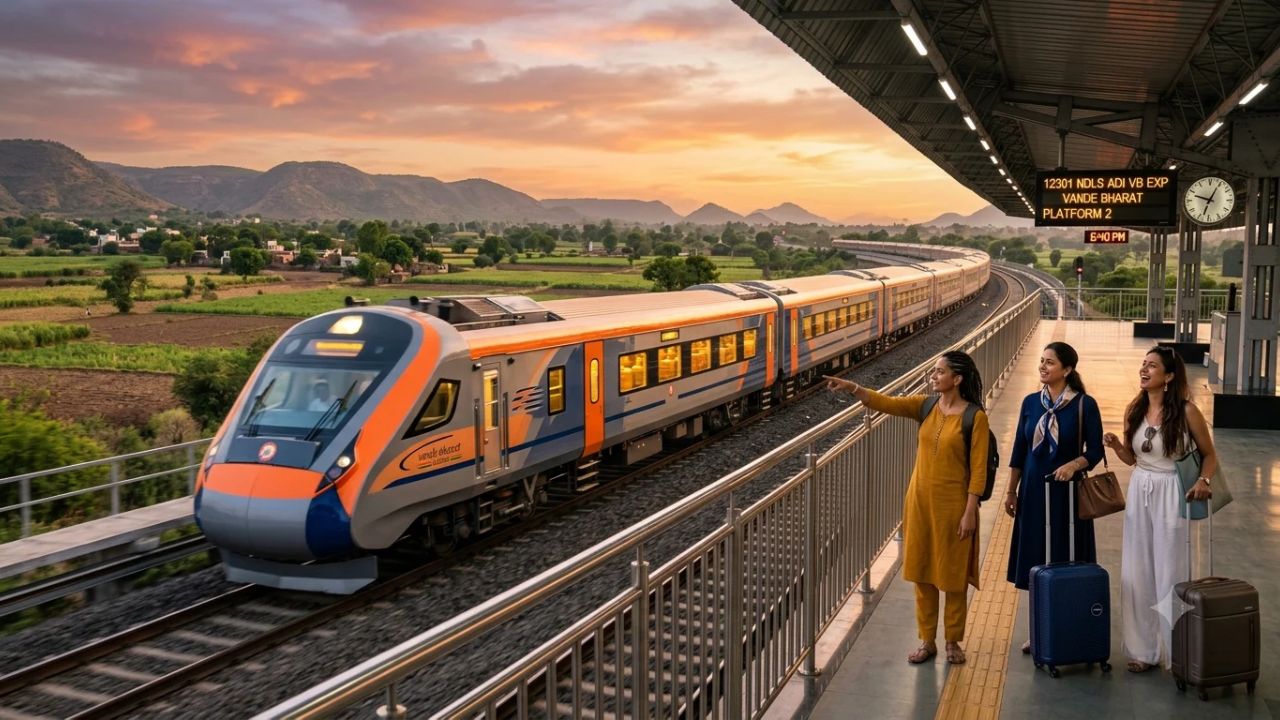
Indian Railways will inaugurate its second nationwide Vande Bharat Sleeper service between Bengaluru and Mumbai in late October 2026, slashing rail journey times between India's southern technology hub and western financial capital to under 16 hours. Timed to commence operations following the conclusion of Dussehra festivities, the semi-high-speed trainset connects Sir M Visvesvaraya Terminal (SMVT) in Bengaluru with Chhatrapati Shivaji Maharaj Terminus (CSMT) in Mumbai. Covering an approximate distance of 1,118 kilometers across a dedicated high-speed operating corridor, the overnight link replaces legacy 24-hour journeys with a streamlined, comfortable service tailored for business commuters, holidaymakers, and intercity travelers.
The deployment marks a defining turning point in the evolution of India's passenger rail sector. While earlier iterations of the Vande Bharat series concentrated exclusively on daytime chair-car services spanning distances between 300 and 750 kilometers, the introduction of high-speed sleeper trainsets targets long-haul journeys exceeding 1,000 kilometers. Operating six days a week, the new service introduces specialized rolling stock, the indigenous Kavach automatic train protection system, and airline-standard interior amenities designed to compete directly with domestic aviation on one of the country's most heavily traveled business corridors.
Bengaluru–Mumbai Rail Modernization: Connecting India's Tech and Financial Centers
The transit route linking Bengaluru and Mumbai serves as one of the primary commercial arteries of the Indian subcontinent. For decades, passenger mobility along this 1,118-kilometer corridor has suffered from infrastructure bottlenecks, severe terrain gradients across the Western Ghats, and aging rolling stock. Traditional overnight express services, including the long-running Udyan Express, require approximately 24 hours to negotiate the distance between the two metropolises. Travelers relying on existing passenger trains routinely lose an entire working day in transit, forcing corporate commuters and time-sensitive travelers to default to domestic flights between Kempegowda International Airport (BLR) and Chhatrapati Shivaji Maharaj International Airport (BOM).
The entry of the Vande Bharat Sleeper fundamentally alters this dynamic. By completing the run in under 16 hours, the train transforms intercity rail travel into an efficient overnight passage. Commuters board after standard office hours in the evening and arrive at their destination before midday the following morning, rested and ready for business meetings without incurring the expense of hotel stays or airport transfers.
| Transit Metric | Legacy Express (Udyan Exp) | Vande Bharat Sleeper 2026 | Operational Gain |
|---|---|---|---|
| Total Distance | ~1,118 to 1,136 km | 1,118 km | Optimized routing |
| Journey Duration | Approximately 24 Hours | Under 16 Hours (< 16h 05m) | Over 8 Hours Saved |
| Propulsion Type | Locomotive-hauled rake | Distributed Traction EMU | Faster Acceleration |
| Maximum Track Speed | 110 km/h | 130 km/h Rated Corridor | Higher Average Speed |
| In-Cab Train Control | Visual Signalling / AWS | Kavach ATP System | Fail-Safe Anti-Crash |
| Lavatory Architecture | Standard Gravitational Discharge | Specialized Bio-Vacuum | Zero Odor Discharge |
| Primary Passenger Base | General Intercity Travellers | Corporate, Leisure, Families | Premium Overnight |
Railway rolling-stock engineers and transport economists note that the introduction of high-capacity sleeper sets optimizes track utilization during overnight hours when passenger line occupancy is historically lower than daytime peaks. The service links major municipal economies across two states, establishing intermediate access points in Karnataka, Andhra Pradesh, and Maharashtra that have historically lacked rapid, high-speed rail connectivity to tier-1 metropolitan centers.
Timetable, Intermediate Halts, and Operational Schedule
Official timetable drafts prepared by railway scheduling engineers establish a departure and arrival sequence structured around passenger convenience and commercial peak demand. Operating six days per week, the train provides consistent capacity across both directions, reserving one day per week for mandatory periodic overhaul, deep cleaning, and technical inspection at specialized maintenance depots.
BENGALURU (SMVT) TO MUMBAI (CSMT) TENTATIVE OPERATIONAL TIMETABLE
| Entity / Facility | Delays | Cancellations | Details |
|---|---|---|---|
| Origin Station | Scheduled Departure | Destination Station | Scheduled Arrival |
| SMVT Bengaluru | 7:50 PM (Evening) | CSMT Mumbai | 11:55 AM (Following Day) |
| CSMT Mumbai (Return) | 8:10 PM (Evening) | SMVT Bengaluru | 11:55 AM (Next Morning) |
Strategic Regional Halts and Urban Interchanges
Rather than operating as a point-to-point non-stop bullet shuttle, the Vande Bharat Sleeper integrates key intermediate junctions that serve vital industrial, agricultural, and cultural catchments across South India and the Deccan Plateau. Each intermediate stop has been selected based on commercial passenger demand and rail junction connectivity:
- Dharmavaram Junction (DMM): Located in the Sri Sathya Sai district of Andhra Pradesh, Dharmavaram serves as a major railway interchange connecting the Rayalaseema region. Known globally for its traditional handloom silk industry, this stop provides business travelers with rapid access to southern Andhra Pradesh while providing an onward gateway to the spiritual center of Puttaparthi.
- Anantapur (ATP): As the administrative headquarters of Anantapur district, this station connects regional administrative offices, agricultural trading centers, and educational institutions directly to Bengaluru and Mumbai.
- Guntakal Junction (GTL): One of the largest railway junctions in the South Central Railway zone, Guntakal connects multiple arterial lines branching toward Chennai, Hyderabad, and Goa. The halt facilitates operational crew changes and serves as a major transit node for connecting regional trains.
- Raichur (RC): Situated in the Krishna-Tungabhadra Doab in northern Karnataka, Raichur represents an industrial powerhouse anchored by thermal power generation, cotton trading, and agricultural supply chains. The stop opens overnight executive travel options for industrial professionals traveling between regional plants and financial headquarters in Mumbai.
- Kalaburagi / Gulbarga (KLBG): Serving as the administrative capital of the Kalyana-Karnataka region, Kalaburagi is an educational and cement manufacturing hub. The Vande Bharat stop eliminates long-standing connectivity grievances, linking northern Karnataka directly to Bengaluru in under eight hours and Mumbai in under eight hours.
- Solapur (SUR): Located in southern Maharashtra, Solapur represents a massive textile and commercial center famous for chadder production, sugar manufacturing, and engineering colleges. It also serves as the prime rail transit gateway for pilgrims traveling onward to Pandharpur, Tuljapur, and Akkalkot.
- Kalyan Junction (KYN): Positioned on the eastern boundary of the Mumbai Metropolitan Region, Kalyan acts as the vital suburban interchange for commuters heading to Thane, Navi Mumbai, Dombivli, and the industrial corridors of Ambernath and Badlapur, allowing passengers to bypass downtown traffic if their final destination lies in Mumbai's eastern suburbs.
STATION HALT SPECIFICATIONS AND INTERCITY RAIL DISTANCES
| Column 1 | Column 2 | Column 3 | Column 4 | Column 5 | Column 6 |
|---|---|---|---|---|---|
| Seq | Station Name | Code | State | Distance from SMVT | Strategic Significance |
| 01 | Sir M Visvesvaraya Term. | SMVT | Karnataka | 0 km (Origin) | Bengaluru Tech Hub |
| 02 | Dharmavaram Junction | DMM | Andhra Pradesh | ~178 km | Silk Industry Hub |
| 03 | Anantapur | ATP | Andhra Pradesh | ~211 km | Administrative Center |
| 04 | Guntakal Junction | GTL | Andhra Pradesh | ~279 km | Major Rail Interchange |
| 05 | Raichur | RC | Karnataka | ~400 km | Thermal Power & Trade |
| 06 | Kalaburagi (Gulbarga) | KLBG | Karnataka | ~544 km | Kalyana-Karnataka Hub |
| 07 | Solapur | SUR | Maharashtra | ~657 km | Textile & Pilgrimage Gate |
| 08 | Kalyan Junction | KYN | Maharashtra | ~1,064 km | MMR Suburban Interchange |
| 09 | Chhatrapati Shivaji Term. | CSMT | Maharashtra | 1,118 km (Terminus) | Financial Capital Center |
Next-Generation Rolling Stock: ICF and BEML Sleeper Architecture
The Bengaluru–Mumbai service showcases India's second indigenously engineered Vande Bharat Sleeper trainset. Developed collaboratively by the Integral Coach Factory (ICF) in Chennai and state-owned rail manufacturer Bharat Earth Movers Limited (BEML) in Bengaluru, the rolling stock marks an engineering transition away from locomotive-hauled carriages toward distributed-traction Electric Multiple Units (EMUs).
VANDE BHARAT SLEEPER TECHNICAL SPECIFICATIONS DATA SHEET
| Category / Entity | Details / Impact |
|---|---|
| Technical Parameter | Engineering Specification |
| Train Formation | 16-Car Distributed Power Electric Multiple Unit (EMU) |
| Coach Class Composition | 1 First AC (1A) Coach, 4 Two-Tier AC (2A) Coaches, 11 Three-Tier AC (3A) |
| Total Passenger Capacity | Approximately 823 Sleeping Berths |
| Structural Shell Material | Austenitic Stainless Steel with Crashworthy Honeycomb Energy Absorbers |
| Operational Maximum Speed | 160 km/h Design Speed; 130 km/h Track-Certified Commercial Speed |
| Test Track Clearance Speed | 180 km/h Dynamic Test Proven |
| Braking System | Electro-Pneumatic Disc Brakes with Regenerative Electric Braking |
| Suspension Architecture | Secondary Air Springs with Hydraulic Yaw Dampers |
| Exterior Ingress System | Microprocessor-Controlled Automatic Sliding Plug Doors |
| Interior Ambient Sound Level | Under 65 dB at Full Operating Speed (Acoustic Damping Insulation) |
Distributed Traction and Aerodynamic Efficiency
Unlike traditional rakes pulled by a solitary electric locomotive at the head of the train, the Vande Bharat Sleeper features motorized bogies distributed under alternate coaches throughout the 16-car rake. This architecture delivers multiple operational benefits:
- Rapid Acceleration and Deceleration: Distributed power allows the train to reach its operating velocity of 130 km/h in significantly less time after departing intermediate stations or slowing for speed restrictions, reducing total cycle times across the 1,118-kilometer corridor.
- Regenerative Braking Systems: During braking phases, the electric traction motors act as generators, feeding electrical power back into the overhead 25 kV AC traction grid, reducing overall energy consumption by up to 30 percent compared to conventional trains.
- Aerodynamic Nose Design: The aerodynamic driver cab profile lowers drag coefficients at high speeds, cutting power requirements and minimizing wind buffeting when passing opposing trains on double-track sectors.
- Vibration and Sound Mitigation: Advanced acoustic insulation materials embedded within the coach walls, double-sealed gangways, and secondary air suspension systems absorb track vibrations, keeping interior cabin sound levels below 65 decibels during high-speed runs.
Advanced Rail Safety Systems: Kavach, Crashworthiness, and Fire Protection
Passenger safety stands at the core of the Vande Bharat Sleeper design. The trainset incorporates active and passive safety mechanisms engineered to eliminate human signaling error and protect passenger survival space during unexpected operational emergencies.
VANDE BHARAT INTEGRATED SAFETY ARCHITECTURE
| Entity / Route | Metrics | Operational Status |
|---|---|---|
| Safety System | Functional Mechanism | Operational Passenger Benefit |
| Kavach ATP System | Radio Frequency Identification | Prevents collisions; auto-brakes if loco |
| (RFID) & In-Cab Signalling | pilot passes signal at danger (SPAD). | |
| Crashworthy Body Shell | Anti-Climbing Buffers & | Absorbs kinetic impact energy; prevents |
| Deformable Crumple Zones | coaches from telescoping or overriding. | |
| Fire Detection & Control | Aerosol Suppression & Optical | Immediate localized suppression in high- |
| Aspirating Smoke Sensors | risk electrical panels and battery banks. | |
| Emergency Passenger Comms | Talk-Back Intercom Units in | Direct, two-way audio line between berth |
| Every Passenger Compartment | occupants, train manager, and loco pilot. | |
| CCTV Surveillance Grid | High-Definition Network IP | 24/7 video recording across vestibules, |
| Cameras in Public Areas | doorway entries, and common gangways. |
The Kavach Collision Prevention System
The Bengaluru–Mumbai corridor features progressive trackside installation of Kavach, India's indigenous Automatic Train Protection (ATP) standard certified to Safety Integrity Level 4 (SIL-4). Kavach coordinates trackside radio units, satellite positioning, and onboard locomotive computers to monitor train separation distances continuously.
If a train operator fails to apply the brakes when approaching a red signal or if an opposing vehicle is detected on the same track block, Kavach automatically commands the electro-pneumatic braking system to bring the train to a complete stop without manual intervention. In low-visibility conditions caused by heavy fog or torrential monsoon downpours across the Western Ghats, Kavach projects live signal aspects directly onto the locomotive driver's digital dashboard display, eliminating reliance on optical line-of-sight sighting.
Structural Integrity and Fire Suppression
The train's structural shell is fabricated using austenitic stainless steel incorporating crashworthy design principles. Specially engineered deformable crumple zones at the ends of each carriage absorb kinetic impact forces during a collision, while robust anti-climbing couplers prevent coaches from mounting on top of one another.
Inside the passenger areas, automated optical smoke and thermal sensors continuously sample cabin air. In the event of localized overheating or electrical arcing, aerosol-based automated fire suppression units discharge instantly inside electrical control cubicles and air conditioning ducts. Fire barriers rated for 30 minutes of structural containment isolate adjacent coaches, giving passengers ample time to evacuate through automated emergency exits.
Passenger Comfort and Interior Innovations: Berths, Bio-Vacuum Toilets, and Ambient Tech
The interior design of the Vande Bharat Sleeper addresses long-standing traveler complaints regarding conventional sleeper classes on Indian Railways. The passenger environment combines ergonomics, hygiene technology, and personalized connectivity to deliver an airline-standard experience.
PASSENGER CABIN AMENITIES: CONVENTIONAL SLEEPER VS VANDE BHARAT
| Entity / Route | Metrics | Operational Status |
|---|---|---|
| Comfort Dimension | Traditional Rajdhani/Superfast | Vande Bharat Sleeper Coach |
| Berth Cushioning | Standard Rexine / PU Foam | High-Resilience Anatomical Molded Foam |
| Ingress Steps | Narrow Metal Ladders | Ergonomic Wide Treads with Safety Grip Rails |
| Charging Ports | Shared 220V AC Sockets per Bay | Dedicated USB-A, USB-C & Universal AC Ports |
| Personal Lighting | Central Bay Overhead Bulbs | Individual Reading Lamps with Dimmer Focus |
| Lavatory System | Open Discharge / Standard Bio | Pressurized Aircraft-Style Bio-Vacuum Toilets |
| Door Operation | Manual Swing Doors (Often Left) | Centralized Automatic Sliding Doors |
| Odor Control | Natural Ventilation Fan Vents | Continuous Fresh Air Circulation & Filtration |
Ergonomic Berths and Enhanced Space Utilization
The sleeper coaches feature redesigned berth geometry that increases usable sleeping length and width. In First AC (1A), passengers enjoy private lockable coupes and cabins with individualized temperature controls, plush leatherette seating, and vanity mirrors. In Two-Tier (2A) and Three-Tier (3A) coaches, the access ladders leading to upper berths have been completely re-engineered with wider, non-slip foot treads and integrated grab handles, allowing senior citizens and children to climb safely without discomfort.
Berths are upholstered in stain-resistant, flame-retardant fabric padded with multi-density foam designed to support spinal alignment during sleep. Nighttime reading lamps provide focused, glare-free illumination that prevents disturbing neighboring passengers. Every berth is equipped with an integrated connectivity panel featuring universal power sockets and rapid-charging USB ports capable of charging laptops, smartphones, and tablet computers simultaneously.
Advanced Bio-Vacuum Sanitation
One of the most noticeable passenger upgrades is the integration of specialized bio-vacuum lavatories, modeled on aviation sanitary systems. Conventional Indian rail toilets rely on gravity-assisted flushing, which consumes up to 10 liters of water per flush and can generate unpleasant odors over long journeys.
The Vande Bharat Sleeper's vacuum system utilizes pneumatic suction that cleans the bowl with less than 1.5 liters of water per flush. The vacuum seal prevents sewer gases from entering passenger cabins, maintaining an odorless environment throughout the 16-hour run. Lavatories also include touchless sensor-activated water taps, automated soap dispensers, anti-bacterial surfaces, and fold-down infant diaper-changing tables.
Traveler Logistics Guide: Navigating SMVT Bengaluru and CSMT Mumbai
Successful intercity transit requires seamless station connectivity at both ends of the journey. Both Sir M Visvesvaraya Terminal (SMVT) in Bengaluru and Chhatrapati Shivaji Maharaj Terminus (CSMT) in Mumbai operate distinct access layouts that travelers must understand to ensure hassle-free boarding and transfers.
INTERCITY TERMINAL LOGISTICS AND COMMUTER TRANSIT GUIDE
| Entity / Route | Metrics | Operational Status |
|---|---|---|
| Operational Factor | SMVT Bengaluru Terminal | CSMT Mumbai Terminus |
| Physical Location | Baiyappanahalli, East BLR | Fort / Bori Bunder, South Mumbai |
| Nearest Metro Station | Baiyappanahalli (Purple Line) | CSMT (Suburban) / Aqua Line Metro Link |
| Recommended Arrival Buffer | 45 to 60 Minutes Pre-Boarding | 45 to 60 Minutes Pre-Boarding |
| Baggage Security Screening | Automated X-Ray at Main Gate | Scanning Scanners at Historical & New Gate |
| Waiting Lounge Amenities | Air-Conditioned VIP Executive | Heritage Waiting Hall & Premium Lounges |
| Last-Mile Transit Options | BMTC Feeder Buses, Cabs, Auto | Central/Harbour Local Trains, Taxis, Cabs |
Station Guide: Sir M Visvesvaraya Terminal (SMVT Bengaluru)
Inaugurated as South India's first fully air-conditioned railway terminal, SMVT Bengaluru is built to mimic the operational ambiance of a modern airport terminal.
- Getting to the Station: Located in the Baiyappanahalli area of eastern Bengaluru, the terminal is accessible via Old Madras Road and the Outer Ring Road. Commuters arriving via the Bengaluru Namma Metro should alight at Baiyappanahalli Metro Station on the Purple Line. BMTC runs frequent non-AC and AC feeder bus shuttles connecting the metro concourse directly to the railway terminal entrance.
- Terminal Layout and Boarding: The terminal features seven platforms connected by a wide, well-lit foot overbridge equipped with moving escalators and high-capacity elevators. Passengers should arrive at least 45 minutes prior to the 7:50 PM scheduled departure to complete baggage screening and reach their designated platform without rushing.
- Facilities: SMVT offers air-conditioned executive waiting lounges, clean digital cloakrooms, multi-cuisine food courts, and electric vehicle charging bays in the primary parking lot.
Station Guide: Chhatrapati Shivaji Maharaj Terminus (CSMT Mumbai)
A UNESCO World Heritage architectural landmark, CSMT serves as the operational nerve center of Central Railway and the terminus for suburban and long-distance trains arriving in South Mumbai.
- Navigating the Platforms: Long-distance express trains, including the incoming Vande Bharat Sleeper, arrive at the outbound terminal platforms (Platforms 14 to 18), situated on the eastern side of the historic terminus building.
- Urban Transit Disembarkation: Passengers arriving at 11:55 AM can access local transport immediately:
- Suburban Railway: Transfer directly across the main concourse to the suburban platforms for Central Line trains running north toward Dadar, Kurla, Ghatkopar, and Thane, or Harbour Line services running to Panvel and Navi Mumbai.
- Taxis and Ride-Hailing: Dedicated black-and-yellow (kaali-peeli) prepaid taxi lines operate directly outside Platform 18 and the main station portico. For app-based rides (Uber, Ola), proceed to the designated pickup points outside the P D'Mello Road exit.
- Business District Proximity: CSMT offers immediate access to Mumbai's primary financial centers, located just 10 to 15 minutes by road from Nariman Point, Ballard Estate, and Fort, and roughly 25 minutes from the Bandra-Kurla Complex (BKC) via the Eastern Freeway.
Reservation and Ticketing Best Practices
Reservations for the Bengaluru–Mumbai Vande Bharat Sleeper are handled through the Indian Railway Catering and Tourism Corporation (IRCTC) digital portal and passenger reservation counters across the country.
- Advance Reservation Period (ARP): Tickets open for booking in accordance with standard Indian Railways ARP guidelines (typically 120 days in advance of travel date). Given the immense commercial demand on this route, travelers should secure reservations well in advance, particularly around major holiday periods including Diwali, Christmas, and New Year.
- Berth Selection Strategy: When booking 2A or 3A accommodations, solo travelers often prefer lower berths for easy luggage access or side-upper berths for uninterrupted privacy. Families traveling together should book early to secure consolidated coupe configurations.
- Dynamic Catering Option: During online ticket reservation, passengers have the option to include onboard catering or opt out. The onboard meal service includes sanitized regional evening dinners and hot morning breakfasts prepared in hygienic base kitchens and served at your berth by dedicated hospitality staff.
Comparative Intercity Transit Analysis: Rail vs Air vs Road
To understand the commercial appeal of the Vande Bharat Sleeper, transport economists compare the door-to-door transit metrics across competing travel modes along the Bengaluru–Mumbai corridor.
MULTIMODAL TRANSIT COMPARISON: BENGALURU TO MUMBAI
| Comparison Factor | Commercial Flight | Vande Bharat Sleeper | Overnight Highway Sleeper Bus |
|---|---|---|---|
| In-Transit Duration | 1 Hour 45 Minutes | Under 16 Hours | 18 to 22 Hours |
| City-Center Transit | 3 to 4 Hours | Zero Hours Added | 1 to 2 Hours Added |
| (Airport Transfers) | (BLR & BOM Travel) | (Departs Downtown) | (Highway Ring Road Drop) |
| Total Door-to-Door | 6 to 7 Hours | ~16.5 Hours | 20 to 24 Hours |
| Elapsed Time | (Daytime Lost) | (Overnight Sleep) | (Subject to Highway Traffic Jams) |
| Productive Hours | Severe Disruption | Zero Working Hours | Highly Fatiguing; Poor Work Condition |
| Preserved | (Continuous Moves) | Lost (Sleep Travel) | |
| Baggage Allowance | Strict 15 kg Limit | Generous (40-50 kg) | Variable; Overhead Space Restrictions |
| Weather Resilience | Air Traffic Delays | High All-Weather | Susceptible to Monsoon Road Damage & |
| During Monsoons | Operational Uptime | Ghat Landslides (NH48) |
The "Productive Time" Equation: Why Rail Competes with Aviation
On paper, a commercial flight between Kempegowda International Airport and Mumbai's domestic airport appears vastly superior, boasting a scheduled flight duration of just one hour and 45 minutes. In practice, the total door-to-door time investment tells an entirely different story.
Kempegowda International Airport lies approximately 35 to 40 kilometers north of central Bengaluru, requiring a 90- to 120-minute road journey through severe urban traffic during peak hours. Airlines enforce a mandatory 60- to 90-minute check-in and security buffer prior to domestic departures. Upon touching down in Mumbai, disembarking, collecting checked luggage, and navigating airport access roads add another 45 to 60 minutes.
In total, flying consumes between six and seven hours of fragmented, highly disruptive daytime hours. Corporate executives cannot engage in deep, uninterrupted work while shuttling between cabs, security queues, boarding gates, and airport terminals.
The Vande Bharat Sleeper eliminates this friction entirely. Boarding at 7:50 PM allows commuters to complete an entire working day in their office, have dinner aboard the train, enjoy seven to eight hours of sound sleep in an air-conditioned berth, and awaken refreshed as the train enters the outskirts of Mumbai. Arriving at CSMT at 11:55 AM deposits passengers directly in the downtown commercial core, preserving productivity while saving the cost of a hotel room.
Overcoming Highway Vulnerabilities
Private sleeper buses operating along National Highway 48 (NH48) represent another popular transit mode, yet they suffer from distinct operational vulnerabilities. Highway travel across the 1,000+ kilometer stretch involves 18 to 22 hours on the road, leaving passengers vulnerable to chronic traffic bottlenecks around the Pune–Bengaluru bypass, toll plaza delays, and monsoon landslides across the hilly ghat sections.
In addition, road accidents along interstate highways remain a constant concern. The Vande Bharat Sleeper delivers a vastly superior safety profile backed by Kavach technology, smooth air-cushioned ride comfort, hygienic private toilets, and predictable arrival schedules regardless of adverse road conditions.
Economic and Infrastructure Impact Across Karnataka and Maharashtra
Beyond offering passenger comfort, the deployment of the Vande Bharat Sleeper acts as a catalyst for regional economic growth across peninsular India. Modernizing connectivity along this corridor aligns with national infrastructure directives aimed at upgrading domestic transit networks to global benchmarks.
REGIONAL ECONOMIC & INDUSTRIAL VALUE DRIVERS
| Category / Entity | Details / Impact |
|---|---|
| Sector Impact | Key Transformation Mechanism |
| Tech-to-Finance Corridor | Frictionless overnight movement between Bengaluru startups/IT parks and |
| Mumbai capital markets, venture funds, and banking headquarters. | |
| Tier-2 Urban Integration | Direct high-speed links integrate Kalaburagi, Raichur, and Solapur into |
| prime commercial transit circuits, attracting regional investment. | |
| Decarbonization & Ecology | Significant modal shift from fossil-fuel highway buses and aviation to |
| energy-efficient electric rail powered by 25 kV AC overhead lines. | |
| Tourism & Heritage Flow | Encourages multi-city leisure travel linking historic Deccan monuments, |
| spiritual hubs (Pandharpur, Puttaparthi), and coastal metropolitan getaways. |
Unlocking Potential in Tier-2 and Tier-3 Intermediate Centers
While the headline benefit focuses on the terminal cities of Bengaluru and Mumbai, the most transformative economic effects may well be felt in the intermediate towns of northern Karnataka and southern Maharashtra.
Cities such as Kalaburagi, Raichur, and Solapur have long struggled with peripheral isolation from premier high-speed transport networks. By granting these commercial hubs dedicated halts on a flagship Vande Bharat route, Indian Railways integrates local business owners, textile exporters, agro-processors, and students directly into India's primary wealth-generating urban centers. A textile manufacturer in Solapur or a cement executive in Kalaburagi can now board late in the evening and attend early morning executive briefings in Mumbai or Bengaluru without navigating regional flights or multi-leg road journeys.
Environmental Dividends and the Electric Rail Transition
As international corporations and institutions prioritize sustainable travel policies to lower corporate carbon footprints, rail transit represents the most ecologically sound mode of intercity transit. High-speed electric trains running on electrified railway corridors generate only a fraction of the greenhouse gas emissions per passenger-kilometer compared to short-haul domestic flights or diesel-powered interstate buses.
With Indian Railways achieving near-complete electrification of its broad-gauge network and integrating renewable solar power into its traction grid, each passenger who shifts from aviation or road transport to the Vande Bharat Sleeper directly supports India's national decarbonization commitments.
The October 2026 launch of the Bengaluru–Mumbai Vande Bharat Sleeper establishes a modern benchmark for long-distance overnight rail journeys across India, proving that high-speed rail can deliver an uncompromised blend of speed, safety, comfort, and sustainable efficiency.
Frequently Asked Questions
When does the Bengaluru–Mumbai Vande Bharat Sleeper begin commercial operations?
Commercial operations commence in late October 2026 following the conclusion of Dussehra festivities, operating six days a week between Sir M Visvesvaraya Terminal in Bengaluru and Chhatrapati Shivaji Maharaj Terminus in Mumbai.
What is the travel time and schedule for the Bengaluru–Mumbai service?
The journey takes under 16 hours. The train departs SMVT Bengaluru at 7:50 PM and arrives at CSMT Mumbai at 11:55 AM next day. Return services depart CSMT at 8:10 PM, reaching Bengaluru at 11:55 AM.
Which intermediate stations does the train halt at along the route?
The train serves seven intermediate stops: Dharmavaram, Anantapur, and Guntakal in Andhra Pradesh; Raichur and Kalaburagi in Karnataka; and Solapur and Kalyan in Maharashtra across the 1,118-kilometer corridor.
What safety technologies are integrated into the Vande Bharat Sleeper?
The train features the indigenous Kavach automatic collision prevention system, crashworthy austenitic stainless steel coach shells, automated optical smoke and aerosol fire suppression units, emergency talk-back intercoms, and comprehensive CCTV surveillance throughout.
Related Travel Guides
- Supreme Court Directs Indian Railways to Provide Mandatory Travel Insurance for Counter PRS Tickets: Landmark Ruling Transforms Passenger Protections in 2026
- Portugal Launches Construction on €4.5 Billion Lisbon–Porto High-Speed Railway Line: 75-Minute Intercity Transit Links and Atlantic Iberian Mobility Overhaul
- Network Rail Confirms Massive Christmas Rail Shutdown at Birmingham New Street and Doncaster: Overhaul Disrupts CrossCountry and LNER Services Across Britain
Disclaimer
This article is for informational and educational purposes only. It does not constitute legal, financial, or professional advice. While we strive to provide accurate and up-to-date information, travel policies, regulations, and conditions change rapidly. Always verify information with official sources before making travel decisions. Nomad Lawyer makes no representations about the accuracy, reliability, completeness, or suitability of the information provided. Readers should consult qualified professionals for advice specific to their circumstances. The views expressed in this article are those of the author and do not necessarily reflect the views of Nomad Lawyer.
Kunal K Choudhary
Co-Founder & Contributor
A passionate traveller and tech enthusiast. Kunal contributes to the vision and growth of Nomad Lawyer, bringing fresh perspectives and driving the community forward.
Learn more about our team →