
Transit Strain: Flight Delays and Cancellations Affect Major Asian Hubs
Over 6,608 delays and 196 cancellations affected 35 Asian airports, with heavy flight disruptions recorded across Tokyo, Shanghai, and Delhi.

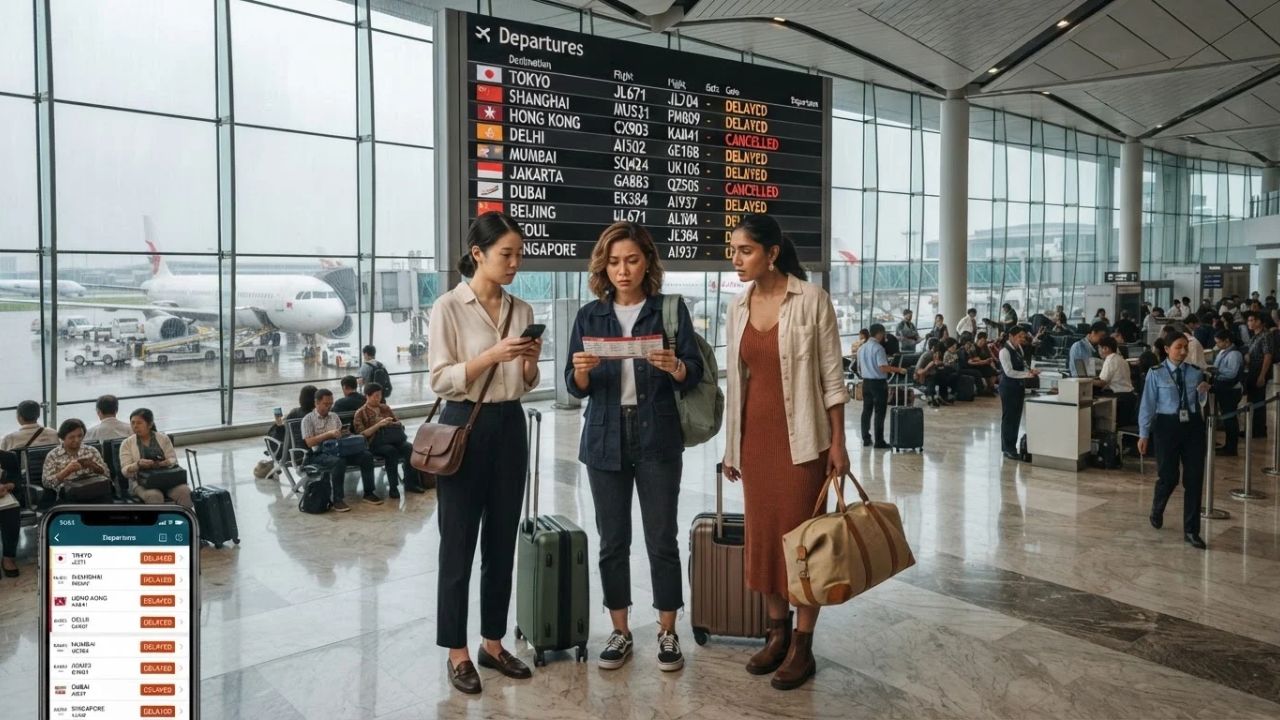
Image generated by AI
Flight disruptions swept across Asia on August 21, 2026, resulting in 6,608 delays and 196 cancellations across Tokyo and 34 other major airports. According to FlightAware metrics recorded at 4:09 pm ET, China, India, and the Gulf hubs experienced severe operational pressure.
Cascade Disruptions in Interconnected Aviation Networks
A significant development in regional transit is the growing vulnerability of Asian aviation hubs to cascading delays. As flight volumes across Asia reach peak historical limits, localized operational bottlenecks—such as weather fronts, military airspace closures, or air traffic pressure—propagate through regional schedules.
A delay at a major gateway like Shanghai Pudong or Tokyo Haneda can impact connecting flights in Hong Kong, Delhi, and Dubai, creating long waiting times and missed connections for international passengers.
China Mainland Aviation Network Under Heavy Pressure
Mainland Chinese airports and carriers experienced the highest volume of delays in the region on August 21, 2026:
- Airport Delays: Shanghai Pudong (PVG) recorded 611 delays, while Guangzhou Baiyun (CAN) followed with 409 delays. Shanghai Hongqiao recorded 241 delays, Beijing Capital reported 288 delays, Hangzhou Xiaoshan saw 366 delays, Shenzhen Bao'an recorded 305 delays, and Nanjing Lukou saw 345 delays.
- Other Chinese Hubs: Chengdu Tianfu saw 266 delays, Chongqing Jiangbei saw 223 delays, Urumqi Diwopu saw 216 delays, Xi'an Xianyang recorded 197 delays, Dalian Zhoushuizi saw 166 delays, Changsha Huanghua recorded 142 delays, Zhengzhou Xinzheng saw 135 delays, Wuhan Tianhe saw 123 delays, Hohhot Baita saw 120 delays, Tianjin Binhai saw 97 delays, and Mianyang Nanjiao saw 18 delays.
- Chinese Airport Cancellations: Xiamen Gaoqi reported 11 cancellations, Beijing Capital recorded 10 cancellations, and Xi'an Xianyang recorded 8 cancellations.
- Chinese Airline Impact: China Eastern reported 854 delays, China Southern saw 564 delays, Air China reported 369 delays, XiamenAir saw 341 delays, Shenzhen Airlines recorded 326 delays, Shandong Airlines saw 270 delays, Sichuan Airlines saw 236 delays, China Express recorded 154 delays, Tianjin Airlines saw 118 delays, and Chengdu Airlines recorded 95 delays.
These figures outline the scale of operational challenges across the Chinese domestic sector.
East Asian Gateways: Japan, Hong Kong, and South Korea
Major East Asian transit facilities experienced substantial flight delays:
- Tokyo Haneda (HND): Japan's busiest terminal recorded 407 delays and 4 cancellations.
- Japanese Carriers: ANA (All Nippon Airways) recorded 163 delays and 2 cancellations.
- Hong Kong International (HKG): Recorded 304 delays and 2 cancellations, impacting connecting passengers between China, Europe, and North America.
- Hong Kong Carriers: Cathay Pacific reported 110 delays, disrupting transfer routes.
- South Korea: Korean Air reported 92 delays and 1 cancellation.
These delays affected passenger connections at these primary transfer hubs.
South and Southeast Asian Route Bottlenecks
India and Indonesia reported significant flight disruptions across domestic networks:
- India Hubs: Delhi's Indira Gandhi International Airport (DEL) recorded 256 delays and 13 cancellations, while Mumbai's Chhatrapati Shivaji Maharaj International Airport (BOM) reported 130 delays and 14 cancellations.
- Indian Carriers: SpiceJet recorded 46 delays and 22 cancellations, while Akasa Air reported 20 delays and 2 cancellations.
- Jakarta Soekarno-Hatta (CGK): Indonesia's main hub recorded 268 delays and 10 cancellations.
- Indonesian Carriers: Batik Air reported 75 delays and 11 cancellations, while Pelita Air Service recorded 17 delays and 1 cancellation.
- Other Indonesian Facilities: Hang Nadim saw 17 delays and 1 cancellation, while Sam Ratulangi reported 6 delays and 4 cancellations.
- Malaysia: Malaysia Airlines reported 52 delays, with few cancellations recorded.
These delays put pressure on domestic capacity in India and Southeast Asia.
Gulf Aviation Hubs and Middle East Transit
Disruptions at Middle Eastern connecting hubs impacted routes linking Europe with Asia:
- Dubai International (DXB): Recorded 358 delays and 3 cancellations, impacting transcontinental connections.
- Sharjah International (SHJ): Reported 67 delays and 4 cancellations.
- Doha Hamad International (DOH): In Qatar, the hub recorded 110 delays and 1 cancellation.
- Riyadh King Khalid (RUH): In Saudi Arabia, the airport reported 103 delays and 27 cancellations.
- Saudi Arabian Carriers: Saudia reported 52 delays and 41 cancellations.
- Other Gulf Carriers: FlyDubai recorded 140 delays, while Air Arabia reported 48 delays and 4 cancellations.
- Pakistan: Pakistan International Airlines (PIA) recorded 21 delays and 5 cancellations.
- Israel: El Al reported 36 delays and 1 cancellation.
These flight holds delayed travelers connecting through the Persian Gulf.
Asia Flight Disruptions and Airport Metrics
The table below summarizes the delays, cancellations, and carrier metrics recorded across major Asian hubs:
| Airport or Carrier Name | Country or Region | Delays Recorded (4:09 pm ET) | Cancellations Recorded | Primary Transit Connection |
|---|---|---|---|---|
| Shanghai Pudong (PVG) | China | 611 delays | Standard operational hold | East Asia – North America |
| Tokyo Haneda (HND) | Japan | 407 delays | 4 cancellations | Global transpacific flights |
| Guangzhou Baiyun (CAN) | China | 409 delays | Standard operational hold | China domestic network |
| Dubai International (DXB) | UAE | 358 delays | 3 cancellations | Europe – Asia transfer |
| Delhi Indira Gandhi (DEL) | India | 256 delays | 13 cancellations | South Asia domestic network |
| Jakarta Soekarno-Hatta | Indonesia | 268 delays | 10 cancellations | Southeast Asia network |
| China Eastern | China | 854 delays | Fleet repositioning | China domestic network |
| China Southern | China | 564 delays | Fleet repositioning | China domestic network |
| Saudia | Saudi Arabia | 52 delays | 41 cancellations | Middle East domestic network |
| SpiceJet | India | 46 delays | 22 cancellations | South Asia domestic network |
These metrics show the delay counts and cancellation numbers established across the Asian aviation sector.
Environmental Efficiency and Smart Passenger Management
For the traveler, the real impact of utilizing high-speed electric rail networks (such as China's CRH or Japan's Shinkansen) during short-haul flight cancellations is the reduction in carbon emissions. Choosing electric ground transport instead of regional air transfers lowers the passenger travel footprint.
Additionally, checking flight status boards via airline apps before leaving hotels reduces terminal crowding, saving municipal energy at airport facilities. Selecting local airport concessions during extended delays helps support small merchants operating within regional travel terminals.
For example, you can explore the changing dynamics of Disruption Hub: Flight Delays and Cancellations Sweep Major US Airports to see how other regions manage delays. For budget-conscious travelers, checking regional flight guides mirrors similar capacity shifts, such as the Vietjet Colombo Ho Chi Minh City Direct Flights updates. This trend is similar to the tourism growth seen in other destinations, as detailed in our guide on how Utica, New York Emerges as an Affordable Northeast Tourism Hub.
Passenger Guidelines During Asian Air Delays
If you are traveling through these major Asian airports, keep these practical tips in mind:
- Check Flight Status Early: Verify departure details on official carrier portals before starting your commute to the terminal.
- Allow Buffer Time: Arrive earlier than usual at busy hubs like Shanghai Pudong, Delhi Indira Gandhi, Tokyo Haneda, and Dubai.
- Carry Essential Medicine: Pack all prescriptions, electronic backups, and travel permits in your hand luggage to prepare for overnight holds.
- Contact Airlines for Rebooking: If your flight is cancelled, contact your airline's support desk or digital reservation portals immediately.
- Avoid Tight Connections: Schedule at least three hours between connecting flights when traveling through highly congested transit hubs.
Long-Term Outlook for Asian Air Space Management
The long-term outlook for the Asian aviation sector is focused on upgrading radar facilities, introducing satellite-based navigation systems, and building additional runways. As passenger demand increases across the region, air traffic control departments will rely on automated systems to coordinate airspace capacity.
By improving weather forecasting and supporting regional ground transport links, the industry aims to minimize flight disruption risks.
FAQ
Which Asian airport recorded the highest number of delays?
Shanghai Pudong International Airport reported the highest delay total in the region, with 611 delays.
How many flights were delayed and cancelled across the region?
A total of 6,608 delays and 196 cancellations were recorded across 35 airports on August 21, 2026.
Which airline recorded the highest number of cancellations?
Saudia reported the highest cancellation total, with 41 flights cancelled.
What is the primary cause of these widespread delays?
Operational challenges, high air traffic volume, and network disruptions cascaded across interconnected routes.
Stay updated on the flight schedules and airspace advisories shaping travel in Asia.
Related Travel Guides
Disclaimer
This article is for informational and educational purposes only. It does not constitute legal, financial, or professional advice. While we strive to provide accurate and up-to-date information, travel policies, regulations, and conditions change rapidly. Always verify information with official sources before making travel decisions. Nomad Lawyer makes no representations about the accuracy, reliability, completeness, or suitability of the information provided. Readers should consult qualified professionals for advice specific to their circumstances. The views expressed in this article are those of the author and do not necessarily reflect the views of Nomad Lawyer.
Raushan Kumar
Founder & Lead Developer
Full-stack developer with 11+ years of experience and a passionate traveller. Raushan built Nomad Lawyer from the ground up with a vision to create the best travel and law experience on the web.
Learn more about our team →