Asia Aviation Disruption: Navigating Flight Delays Across Dubai, Bangkok, and Major Mega-Hubs in 2026

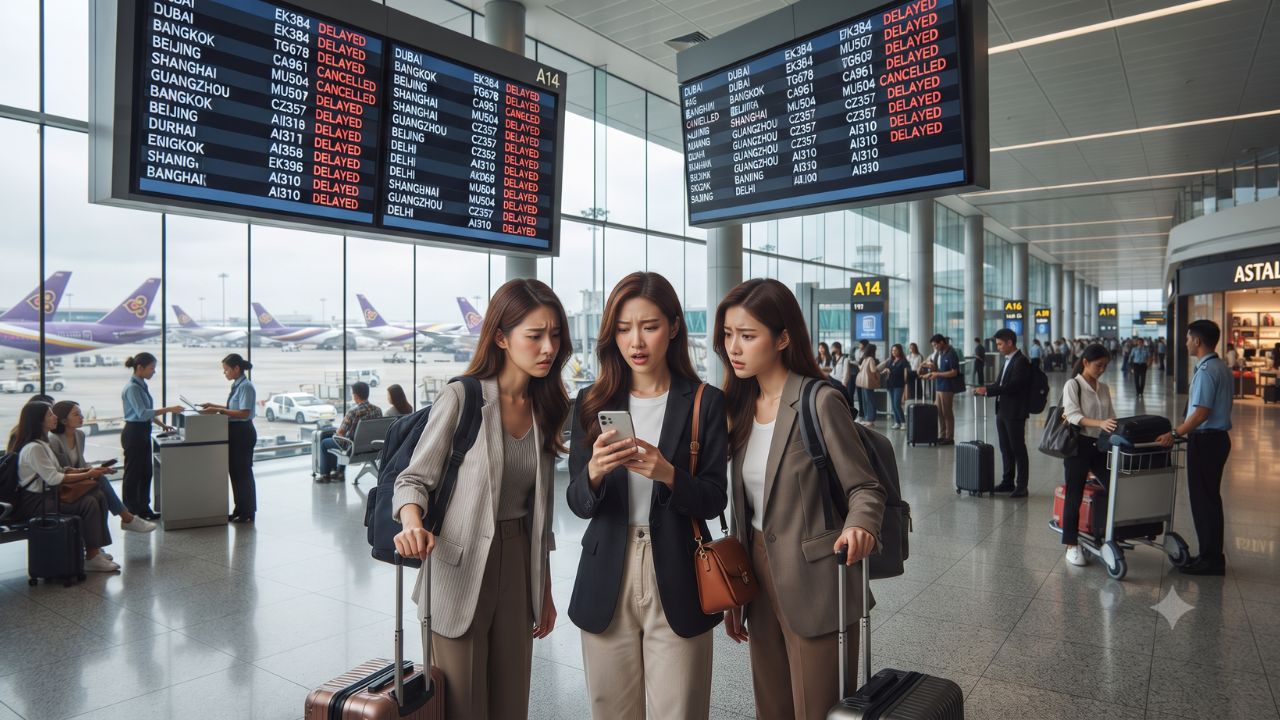
More than 28% of all departing flights out of Bangkok Suvarnabhumi were thrown off schedule during a single 24-hour cycle, yet seasoned transit travelers know that local airport rail links and airside rest zones offer seamless alternatives to terminal chaos. A synchronized wave of network disruptions swept across 19 major airports across China, Saudi Arabia, the United Arab Emirates, India, Indonesia, South Korea, Thailand, and the Philippines, resulting in 2,994 delays and 112 cancellations. Aviation tracking compiled at 2:43 pm ET USA on 23 September 2026 (12:13 am IST on 24 September) confirmed that high passenger volumes, airspace constraints, maintenance requirements, and tight aircraft rotations created extensive ripple effects across the continent's busiest aerial crossroads.
Navigating trans-Asian journeys requires more than passive gate-sitting when major hubs experience schedule shifts. Understanding the specific pressure points at individual airports, knowing terminal geography, and mastering local rebooking protocols make the difference between a stranded night on a hard bench and a smooth detour through vibrant gateway cities.
The Trans-Asian Transit Bottleneck: 19 Airports Facing Compounding Delays
The operational strain on 23-24 September 2026 revealed how interconnected regional flight rotations have become across Eastern Asia, South Asia, and the Gulf corridor. Guangzhou Baiyun recorded the highest single airport delay tally in the region with 328 delayed flights and two cancellations, posting an identical 19% delay rate for both origin and destination flights. China Southern Airlines shouldered 114 of those delays at its southern home base, while China Eastern logged 56 delays.
In northern China, Beijing Capital registered 321 delays and 10 cancellations, driven heavily by Air China, which accumulated 223 delays and nine grounded flights at its flagship terminal alone. Beijing Capital documented a 23% origin delay rate alongside a 21% destination delay rate. Simultaneously, Shanghai Pudong logged 312 delays and four cancellations, reflecting a 19% origin delay rate and a 16% destination delay rate, with China Eastern recording 94 delays and Air China posting 27 delays and three cancellations. Disruptions extended inward across mainland secondary hubs, with Kunming Changshui logging 97 delays, Xiamen Gaoqi recording 88 delays, and Tianjin Binhai alongside Xi’an Xianyang absorbing knock-on schedule shifts.
The Gulf corridor felt matching pressure. Dubai Airports posted 247 delayed operations and five cancellations, with a 23% delay rate for origin services and 24% for arriving flights. FlyDubai accounted for 106 delays and two cancellations, while Emirates recorded 83 delays. In Saudi Arabia, Riyadh's King Khalid International logged 202 delays and five cancellations, with destination flights experiencing a 27% delay rate and origin flights seeing 17% delays. Low-cost carrier Flynas accounted for 74 delays, while national carrier Saudia registered 66 delays and three cancellations. Jeddah's King Abdulaziz International absorbed 136 delays, while domestic stations at Abha Regional and Najran Domestic managed regional schedule adjustments.
| Mega-Hub Airport | Origin Delay Rate | Total Delays | Total Cancellations | Dominant Carriers Affected |
|---|---|---|---|---|
| Guangzhou Baiyun (CAN) | 19% | 328 | 2 | China Southern (114), China Eastern (56) |
| Beijing Capital (PEK) | 23% | 321 | 10 | Air China (223 delays, 9 cancellations) |
| Shanghai Pudong (PVG) | 19% | 312 | 4 | China Eastern (94), Air China (27) |
| Suvarnabhumi Bangkok (BKK) | 28% | 249 | 2 | Thai Airways (57), Thai Vietjet Air (36) |
| Dubai International (DXB) | 23% | 247 | 5 | FlyDubai (106), Emirates (83) |
| King Khalid Riyadh (RUH) | 17% | 202 | 5 | Flynas (74), Saudia (66 delays, 3 cancellations) |
| Seoul Incheon (ICN) | Variable | 193 | 1 | Regional & Long-Haul Carriers |
| Indira Gandhi Delhi (DEL) | Variable | 168 | 17 | IndiGo (58 delays) |
| Ninoy Aquino Manila (MNL) | Variable | 150 | 4 | Domestic & Southeast Asian Carriers |
| Chhatrapati Shivaji Mumbai (BOM) | Variable | 123 | 8 | IndiGo (54 delays) |
Southeast and South Asian hubs encountered severe localized cancellation spikes. Jakarta Soekarno-Hatta documented the highest cancellation total across the entire Asian network with 23 grounded flights, where Batik Air alone recorded 16 cancellations before adding three more at Sultan Hasanuddin. In India, Delhi's Indira Gandhi International posted 168 delays and 17 cancellations, while Mumbai's Chhatrapati Shivaji recorded 123 delays and eight cancellations, with IndiGo generating 112 delays across both terminals (58 in Delhi and 54 in Mumbai). In the Far East, Seoul Incheon logged 193 delays and one cancellation, while Manila's Ninoy Aquino recorded 150 delays and four cancellations.
What Makes Asian Aviation Hubs Different During Schedule Irregularities
Connecting through Asia's mega-terminals during schedule adjustments provides an entirely different experience than transiting European or North American facilities. Modern Asian gateways are built as self-contained micro-cities with dedicated rapid transit infrastructure, airside botanical gardens, and transit hotel systems designed to accommodate thousands of displaced passengers without requiring terminal exits.
At Bangkok Suvarnabhumi, where 249 delays and two cancellations occurred (including 57 Thai Airways delays and 36 Thai Vietjet Air disruptions), the airport's layout spreads over vast linear wings. Understanding that the basement level houses authentic street-food stalls, currency exchange boots with zero commission, and direct access to the Airport Rail Link into Phaya Thai allows travelers to escape terminal fatigue instantly.
At Dubai International, where 247 flights were held up, Terminal 3 functions around the clock with sleep pods, open prayer rooms, and 24-hour shower facilities located between concourses A, B, and C. In mainland China, aviation authorities monitored by the Civil Aviation Administration of China prioritize high-speed rail integration. When Air China logged 308 delays and 20 cancellations across China (including 27 at Shanghai Pudong, 25 at Guangzhou Baiyun, and 9 at Xiamen Gaoqi), intercity travelers between Beijing, Shanghai, and Guangzhou could pivot to 350 km/h bullet trains directly from airport-adjacent rail hubs.
Visitor Insider Tips: Navigating Asia's Busiest Airport Hubs
- Leverage the 144-Hour Visa-Free Transit in China: If your flight is cancelled or delayed overnight at Beijing Capital, Shanghai Pudong, or Guangzhou Baiyun, international passport holders from over 50 eligible countries can apply for a complimentary 144-hour temporary entry permit at dedicated immigration desks. This allows you to transfer to comfortable downtown airport hotels or explore the Forbidden City or the Bund instead of sleeping in departure lounges.
- Master the Rail Transfer Hack at Suvarnabhumi: When flight delays exceed four hours at Bangkok Suvarnabhumi, take the basement Airport Rail Link train for 45 Thai Baht directly to Makkasan Station to connect with the MRT blue line. This avoids highway traffic jams and connects you to authentic night markets around Sukhumvit within 35 minutes.
- Know the Concourses at Dubai International: DXB Terminals 1, 2, and 3 are vast. If transiting between Emirates and FlyDubai, always budget a minimum of 90 minutes for the airside shuttle bus connection. Sleep pods (SnoozeCube and sleep 'n fly) are available in Concourse A and Concourse C for short hourly bookings.
- Use WhatsApp and Airline Apps for Faster Rebooking: Long queues form at physical transfer desks across Delhi, Jakarta, and Riyadh when flights are disrupted. IndiGo, Saudia, and Air China handle rebooking requests significantly faster through their automated mobile applications and customer service chat channels than in-person counters.
- Retain All Physical Expense Receipts: When flight cancellations occur at hubs like Jakarta Soekarno-Hatta or Delhi Indira Gandhi, local consumer regulations require passengers to submit itemized food, beverage, and accommodation receipts to claim statutory reimbursement from airlines like Batik Air or IndiGo.
Cultural and Environmental Context of Asian Air Corridors
The rapid growth of commercial aviation across Asia represents an economic miracle that connects diverse cultures, from the Gulf trade centers to Southeast Asian archipelago communities. However, the concentration of thousands of flights within tight daily windows places immense pressure on regional air-traffic management, terminal workforces, and environmental resources.
International tourism initiatives promoted by official bodies like the Tourism Authority of Thailand encourage travelers to disperse beyond crowded primary gateways into regional provinces. When hub congestion hits Suvarnabhumi or Baiyun, it emphasizes the importance of sustainable transit practices: utilizing high-speed electric rail networks for domestic travel legs, choosing direct regional routes over multi-hub itineraries, and respecting airport ground staff managing high-stress operational bottlenecks across language barriers.
FAQ: Navigating Asian Airport Flight Disruptions 2026
Which Asian airlines experienced the highest flight disruptions?
Air China recorded the highest overall totals with 308 delays and 20 cancellations, followed by China Eastern with 256 delays and seven cancellations, China Southern with 154 delays, Flynas with 125 delays, and Saudia with 123 delays and 13 cancellations.
What should I do if my flight is cancelled at an Asian transit hub?
Contact the operating airline immediately via their mobile app, present your booking confirmation at the nearest airside transit desk, request overnight hotel vouchers if eligible, and preserve boarding passes and receipts for all incidental expenses.
Can I leave the airport during a long layover in Dubai or Bangkok?
Yes. Dubai provides visa-free or visa-on-arrival entry for dozens of nationalities with direct Metro access, while Bangkok Suvarnabhumi connects to downtown via the 30-minute Airport Rail Link.
Related Travel Guides
- Amtrak Rail Safety Week 2026: Operation Clear Track and Traveler Crossing Guide
- California Travel Industry Confronts an Escalating Crisis as Unsuspecting Tourists Fall for Soaring Digital Travel Fraud and Phony Rental Listings: New Travel Alert
- United States Storm Prediction Center Warns of Widespread US Plains Midwest Severe Weather Risk with High Tornado and Hail Potential Disrupting Holiday Weekend Travel: New Travel Alert
This article is for informational purposes. Flight routes, passenger regulations, visa rules, and transit advisories are subject to change by airlines and aviation authorities. Readers are advised to verify schedules and travel documentation with relevant carriers and border agencies before departure.
Related Stories

Middle East Flight Disruptions: Over 880 Delays and 70 Cancellations Hit Dubai, Doha, and Saudi Airports
Malaysia Enters Northeast Monsoon Season as AirAsia Issues Urgent KLIA Terminal 2 Travel Advisory