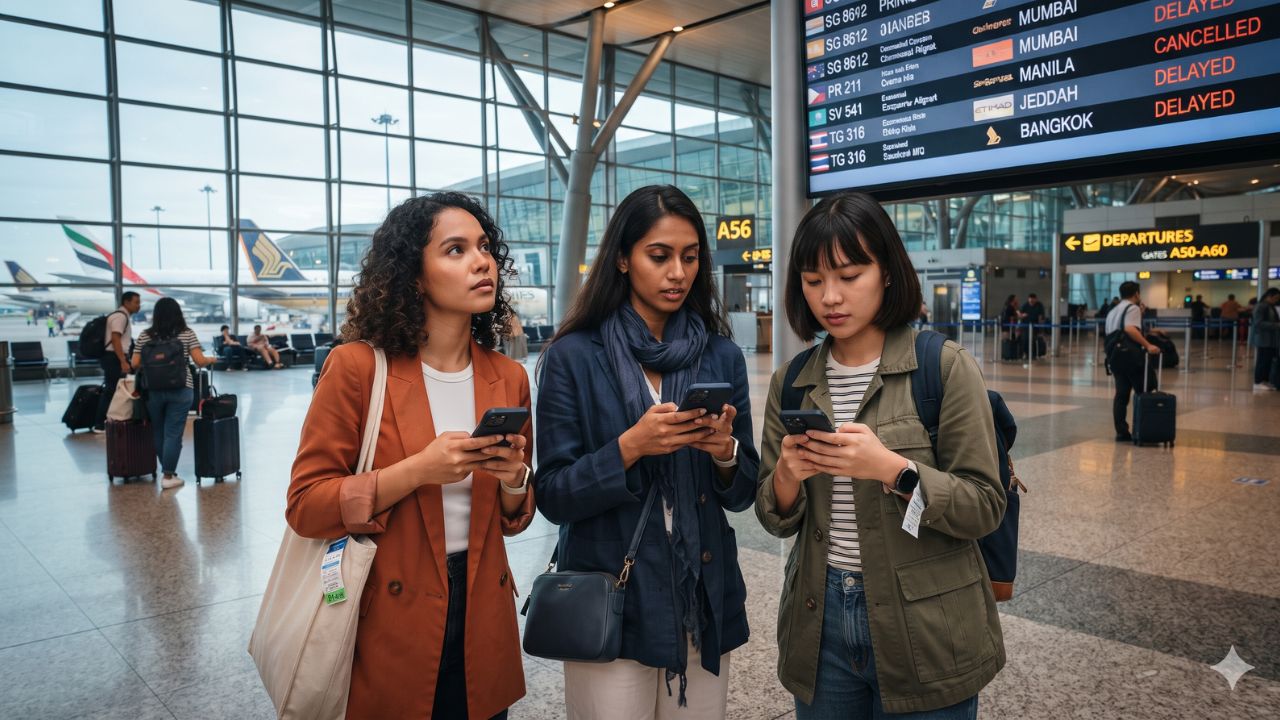
Malaysia Enters Northeast Monsoon Season as AirAsia Issues Urgent KLIA Terminal 2 Travel Advisory

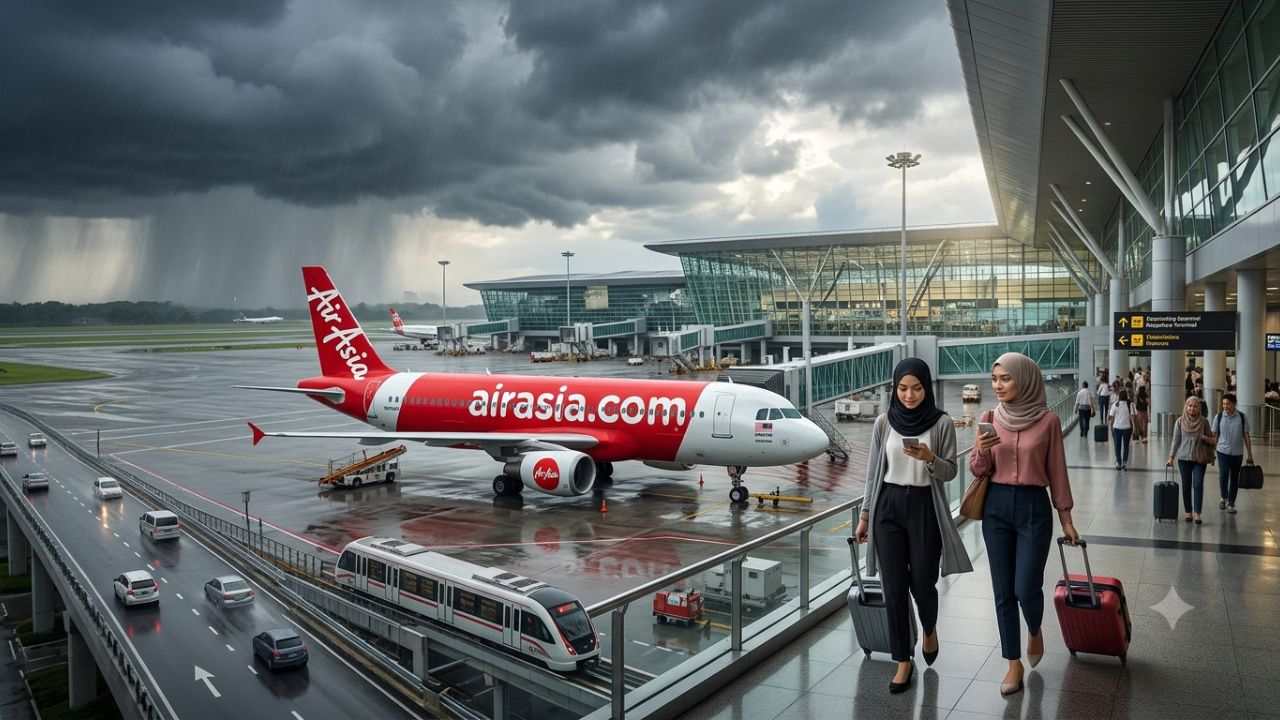
KUALA LUMPUR, Malaysia — As the annual Northeast Monsoon (Monsun Timur Laut) established itself across the Malay Peninsula and northern Borneo, budget aviation pioneer AirAsia issued a comprehensive nationwide passenger travel advisory on Monday, November 2, 2026, urging air travelers to dramatically adjust their journey times when traveling to Kuala Lumpur International Airport (KLIA) and regional airports. Following official meteorological bulletins from the Malaysian Meteorological Department (MetMalaysia) forecasting between three and five prolonged, torrential rain episodes across the country through January 2027, the carrier warned that flash flooding, highway waterlogging, and peak holiday traffic will severely lengthen ground transit times. The airline strongly advised all guests to arrive at terminal departure halls at least three hours before scheduled international flights and at least two hours prior to domestic services, while recommending dedicated airport rail links to bypass congested highway corridors.
+----------------------------------------------------------------------------------------------------+ | KEY TAKEAWAYS: MALAYSIA MONSOON SEASON & AIRASIA PASSENGER ADVISORY | +----------------------------------------------------------------------------------------------------+ | • Stricter Terminal Arrival Windows: AirAsia advises guests to arrive at least 3 hours before | | international departures and at least 2 hours before domestic flights across all Malaysian hubs. | | • Meteorological Onset: MetMalaysia confirmed the Northeast Monsoon began on October 27, 2026, | | with 3 to 5 intense monsoon surges expected to produce localized flooding through January 2027. | | • Rail Transit Bypass: Express Rail Link (ERL) trains provide a reliable 33-minute connection from | | KL Sentral to KLIA Terminal 2, insulating travelers from flooded highway arterial bottlenecks. | | • ERL Fare Adjustment: Standard adult single fares on KLIA Ekspres and KLIA Transit increase from | | RM55 to RM65 starting January 1, 2027, with child tickets (ages 6–15) adjusted to RM29. | | • Strict Cabin Baggage & Health Rules: 7 kg combined limit strictly enforced across 2 pieces; | | pregnant travelers between 28–34 weeks require a medical certificate; 35+ weeks carriage barred. | | • Regulatory Consumer Protections: MAVCOM rules mandate full refunds within 30 days for flight | | delays exceeding 5 hours, though self-transfers on separate tickets remain unprotected. | +----------------------------------------------------------------------------------------------------+
====================================================================================================
                        MALAYSIA MONSOON TRAVEL DISRUPTION & ARTERIAL FLOWS
====================================================================================================

      WEATHER SOURCE PHENOMENON                           TRANSIT IMPACT CORRIDORS
   (Northeast Monsoon / South China Sea)                (Klang Valley to Sepang District)
                 |                                                      |
                 v                                                      v
     [ Severe Monsoon Surges ]                             [ Highway Network Congestion ]
     • 3 to 5 Heavy Rain Spells                            • ELITE Highway (E6) Bottlenecks
     • Peninsular East Coast & Johor                       • Maju Expressway (MEX) Ponding
     • High Risk of Flash Flooding                         • Putrajaya-Cyberjaya Expressway Snarls
                 |                                                      |
                 +--------------------------+---------------------------+
                                            |
                                            v
                        [ AIRPORT ACCESS STRATEGIES (KLIA T2) ]
                                            |
                 +--------------------------+---------------------------+
                 |                                                      |
                 v                                                      v
       [ Road Transfer Route ]                                [ Express Rail Link ]
    • Private Taxis & E-Hailing                            • KLIA Ekspres & KLIA Transit
    • Normal Transit: 45 - 55 Mins                         • Fixed Transit Time: 33 Minutes
    • Storm Transit: 120 - 180+ Mins                       • Zero Flood / Traffic Risk
    • Risk: Inundated Low-Lying Links                      • Adult Fare: RM55 (RM65 from Jan 1, 2027)
                 |                                                      |
                 +--------------------------+---------------------------+
                                            |
                                            v
                             [ KLIA TERMINAL 2 PROCEDURES ]
                  • Mandatory Online Check-In (Open 14 Days to 1 Hr Prior)
                  • Automated Kiosk Bag Drop & Strict 7 kg Cabin Baggage
                  • Digital Border Clearance: MyBorderPass & Physical Passport
                  • International Security Screening & Document Verification
====================================================================================================
The Northeast Monsoon Inception: MetMalaysia Forecasts and Meteorological Dynamics
The seasonal climatic shift across Southeast Asia represents one of the most powerful meteorological mechanisms on Earth. On October 23, 2026, the Malaysian Meteorological Department issued its formal seasonal outlook, officially confirming that the Northeast Monsoon—known locally as Monsun Timur Laut (MTL)—commenced its annual cycle on October 27, 2026. The season is characterized by steady, moisture-laden northeasterly winds blowing across the warm waters of the South China Sea, delivering intense convective cloud clusters and sustained precipitation across the western Pacific rim through March 2027.
MetMalaysia forecasters project that the 2026/2027 monsoon season will generate between three and five distinct "monsoon surges" (episod hujan lebat berterusan). During these surges, intense low-pressure weather systems stall over the region, dumping hundreds of millimeters of rain within 48- to 72-hour windows. While the traditional brunt of monsoon rainfall strikes the eastern coastal states of Kelantan, Terengganu, and Pahang, as well as eastern Johor and western Sarawak, the resulting weather fronts routinely sweep across the central Titiwangsa mountain range into the highly urbanized Klang Valley.
In striking contrast, the Meteorological Service Singapore (MSS) reported on October 29 that the southern tip of the Malay Peninsula remained in an inter-monsoon transitional phase, anticipating local monsoon onset only in late November or early December. This regional divergence highlights an essential travel reality: weather conditions at a passenger’s departure point cannot serve as a reliable proxy for conditions at the arrival terminal. A flight departing a clear, sunny tarmac in Singapore or Penang may descend into torrential squalls and reduced visibility over Kuala Lumpur, triggering sudden air traffic flow management (ATFM) spacing holds and ground equipment stoppages.
When monsoon surges strike the Klang Valley, the immediate threat is rapid-onset flash flooding (banjir kilat). The region’s extensive concrete urbanization, combined with saturated catchment basins along the Klang and Langat river systems, frequently overwhelms local storm drainage networks. Low-lying expressways and critical highway underpasses leading toward the southern district of Sepang, where Kuala Lumpur International Airport is situated, are highly susceptible to sudden ponding, lane closures, and multi-hour traffic paralysis.
From an aviation operational standpoint, monsoon surges also trigger severe ground-level bottlenecks on the airport apron itself. Under international civil aviation safety mandates enforced by the Civil Aviation Authority of Malaysia, ground operations at KLIA Terminal 1 and Terminal 2 are subjected to automated lightning detection protocols. Whenever cloud-to-ground lightning activity is detected within a five-kilometer radius of the aerodrome, an immediate "Code Red" ramp suspension is initiated. During ramp suspensions, ground handling crews are legally prohibited from remaining on open aprons, completely halting baggage loading, pushback tug operations, aircraft marshaling, and fuel hydrant connections. Consequently, even if an aircraft lands safely through heavy rain, passengers may find themselves held on active taxiways for 45 to 90 minutes awaiting the clearance of lightning alerts before ground crews can attach jet bridges and commence disembarkation.
Airport Access Bottlenecks: Working Back From KLIA Terminal 2 Departures
For decades, low-cost carrier passengers traveling through Kuala Lumpur International Airport have operated under the assumption that a highway drive from downtown Kuala Lumpur to the terminal requires approximately 45 to 55 minutes. Under active Northeast Monsoon conditions, relying on this historical benchmark is a recipe for missed flights and ruined holidays.
The primary vehicular arteries linking the capital to Sepang—including the Maju Expressway (MEX / E20), the North-South Expressway Central Link (ELITE / E6), and the Putrajaya-Cyberjaya Expressway (Federal Route 29)—traverse undulating, low-lying river valleys. Specific historical flood zones, such as the low-lying stretches around the Dengkil interchange on the ELITE Highway and the Seri Kembangan drainage corridor along MEX, frequently experience severe water pooling that reduces multi-lane expressways down to a single navigable crawl. During sustained downpours, surface water runoff severely degrades vehicular braking performance, sparks multiple vehicle collisions, and forces traffic police to close inundated ramps. When morning or evening commuter rush hours coincide with a severe tropical deluge, vehicular transit times from central Kuala Lumpur to KLIA Terminal 2 routinely stretch beyond two and a half to three hours.
====================================================================================================
                        TIMELINE PLANNING FOR MONSOON-SEASON DEPARTURES
====================================================================================================

  DEPARTURE FLIGHT PROFILE: 10:00 AM INTERNATIONAL DEPARTURE FROM KLIA TERMINAL 2
----------------------------------------------------------------------------------------------------
  Target Time at Departure Gate:            09:20 AM  (Boarding Gate Closes 20 Mins Prior)
  Security Screening & Immigration:         08:30 AM  (Allow 50 Mins for Peak Queue Clearing)
  Mandatory Terminal Arrival Time:          07:00 AM  (Exactly 3 Hours Before Flight)

  OPTION A: DEDICATED AIRPORT RAIL TRANSIT (KLIA EKSPRES)
  Train Departure from KL Sentral:          06:15 AM  (Arrives KLIA T2 at 06:48 AM - 33 Min Run)
  Departure from Downtown Hotel/Home:       05:30 AM  (Allows 45 Mins City Transit to KL Sentral)
  TOTAL TRANSIT CUSHION:                    4 Hours 30 Minutes Door-to-Gate

  OPTION B: HIGHWAY ROAD VEHICLE / E-HAILING (STORM CONDITIONS)
  Vehicle Pickup from Hotel/Home:           04:30 AM  (Allows 2.5 Hrs for Highway Delays/Floods)
  Arrival at KLIA T2 Curbside:              07:00 AM  (Buffer Accounts for Flash Flood Diversions)
  TOTAL TRANSIT CUSHION:                    5 Hours 30 Minutes Door-to-Gate
====================================================================================================
AirAsia’s advisory urges travelers to reverse-engineer their travel schedules by working backward from their flight departure time. For a 10:00 AM international departure, the airline’s requirement to arrive at the airport three hours prior dictates reaching the terminal curbside by exactly 7:00 AM. When factoring in potential road closures, flooded underpasses, and sluggish highway traffic, a traveler booking a private taxi or e-hailing vehicle from downtown Kuala Lumpur must arrange pickup no later than 4:30 AM.
For domestic flights, where AirAsia mandates a two-hour terminal arrival window, a passenger departing at 10:00 AM must arrive at KLIA Terminal 2 by 8:00 AM. Arriving any later exposes travelers to the risk of encountering closed baggage drop counters, which shut down strictly 60 minutes before scheduled international departures and 45 minutes before domestic flights. Passengers trapped in highway traffic jams have no recourse once check-in systems lock, regardless of whether the weather caused their tardiness.
The national disaster management agency (NADMA) and the Public Works Department (JKR) operate real-time online disaster portals detailing active road closures, river overflow alerts, and landslide advisories across Selangor and Negeri Sembilan. Travelers and hotel concierge desks arranging airport transfers are urged to consult these official portals before selecting driving routes to Sepang, rather than relying solely on automated navigation apps that may not reflect sudden flash flood road blockades.
High-Speed Rail Logistics: KLIA Ekspres Timings and Upcoming 2027 Fare Adjustments
To eliminate highway weather uncertainties entirely, both aviation authorities and transport planners strongly advocate utilizing Malaysia’s dedicated airport rail network. Operated by Express Rail Link Sdn Bhd (ERL), the railway provides an electrified, grade-separated connection that is completely immune to highway traffic jams, flooded roadways, and vehicular accidents.
The network operates two distinct services originating from the city center transit hub at KL Sentral:
- KLIA Ekspres: The non-stop premium express service operates with direct point-to-point transit, reaching KLIA Terminal 1 in 28 minutes and terminating at KLIA Terminal 2 in exactly 33 minutes. Trains depart at 20-minute intervals during peak travel periods and every 30 minutes during off-peak windows.
- KLIA Transit: The commuter airport service serves intermediate stations at Bandar Tasik Selatan, Putrajaya & Cyberjaya, and Salak Tinggi before reaching the airport. The total travel time to KLIA Terminal 2 is approximately 39 minutes, offering a convenient alternative for passengers residing along the southern suburban corridor.
====================================================================================================
                     EXPRESS RAIL LINK (ERL) FARE STRUCTURE & SCHEDULE
====================================================================================================

  PASSENGER CATEGORY         CURRENT FARE (THROUGH 2026)          NEW FARE (EFFECTIVE JAN 1, 2027)
----------------------------------------------------------------------------------------------------
  Standard Adult Single      RM 55.00                             RM 65.00  (+RM 10.00 Adjustment)
  Standard Adult Return      RM 100.00                            RM 120.00 (+RM 20.00 Adjustment)
  Child Single (Ages 6 - 15) RM 25.00                             RM 29.00  (+RM 4.00 Adjustment)
  Child Return (Ages 6 - 15) RM 45.00                             RM 54.00  (+RM 9.00 Adjustment)
  Infants (Under Age 6)      FREE                                 FREE
----------------------------------------------------------------------------------------------------
  Journey Time (Non-Stop):   33 Minutes (KL Sentral to KLIA T2)   Operating Frequency: 20-30 Mins
====================================================================================================
In addition to timing benefits, travelers budgeting for year-end and festive travel must account for confirmed upcoming rail tariff changes. Express Rail Link announced an official fare adjustment taking effect on January 1, 2027. Under the revised price schedule, the standard adult one-way fare between KL Sentral and either airport terminal will rise from RM55 to RM65. A round-trip ticket will increase from RM100 to RM120.
For families traveling with young dependents, child fares (applicable to passengers aged six to 15) will increase from RM25 to RM29 for a single journey, while return tickets will adjust to RM54. Children below the age of six continue to travel free of charge. Travel planners point out that despite the upcoming tariff revision, taking the train remains highly cost-effective for solo travelers and business executives when compared to the risk of missing expensive international flights due to highway flood gridlock.
Operational Realities at KLIA Terminal 2: Baggage, Biometrics, and Digital Clearance
Navigating KLIA Terminal 2 during the peak monsoon season requires familiarity with the facility’s vast spatial footprint and automated passenger processing systems. Unlike the compact regional airports across Southeast Asia, KLIA Terminal 2 is one of the world's largest purpose-built low-cost carrier terminals, encompassing more than 257,000 square meters. Walking distances from the central Gateway@klia2 retail complex to the farthest departure gates in Pier J, K, L, P, or Q can exceed 15 to 20 minutes at a brisk pace.
AirAsia has heavily automated its ground handling infrastructure to process high passenger volumes without manual counter queues. Passengers are required to perform self-check-in online through the carrier’s digital platform or mobile application, which opens 14 days prior to departure and closes exactly one hour before takeoff. Upon completing digital check-in, guests receive an electronic boarding pass containing a machine-readable barcode.
====================================================================================================
                     AIRASIA CABIN & CHECKED BAGGAGE SPECIFICATIONS
====================================================================================================

  BAGGAGE CLASSIFICATION      DIMENSIONS & ALLOWANCE LIMITS        REGULATORY RESTRICTIONS
----------------------------------------------------------------------------------------------------
  Primary Cabin Bag           Max: 56 cm (H) x 36 cm (W) x 23 cm   Must fit in overhead luggage bin;
                              Includes wheels, handles & pockets   Combined weight with personal item

  Personal Handbag / Laptop   Max: 40 cm (H) x 30 cm (W) x 10 cm   Must fit beneath the seat in front;
                              Briefcase, small backpack or purse   Combined weight cannot exceed 7 kg

  Checked Baggage (Drop)      Pre-purchased weight tiers           Self-tagging kiosks print bag tags;
                              (15 kg, 20 kg, 25 kg, 30 kg, 40 kg)  Bag drop counters close 60 mins prior
====================================================================================================
Baggage compliance is strictly enforced at terminal entry portals. AirAsia allows each guest to carry two pieces of cabin baggage aboard the aircraft, with a combined total weight that must not exceed seven kilograms (7 kg). The primary cabin bag must not exceed dimensions of 56 cm (height) x 36 cm (width) x 23 cm (depth) and must fit securely inside the overhead luggage compartment. The second item must be a small personal bag—such as a laptop bag, handbag, or small backpack—measuring no more than 40 cm x 30 cm x 10 cm, designed to stow underneath the seat in front. Ground staff deploy mobile scale units at departure gates; passengers whose cabin baggage exceeds seven kilograms face mandatory offloading of excess items into the aircraft cargo hold, accompanied by steep, last-minute gate baggage fees.
For checked luggage, travelers must utilize the self-service kiosks located throughout the Terminal 2 departures concourse to print adhesive luggage tags before proceeding to automated bag drop units. Self-tagging and bag drop machines operate on strict automated timers. For international flights, bag drop units shut down exactly 60 minutes before departure; for domestic flights, they lock out 45 minutes prior.
Border control clearance has seen significant modernization through the deployment of biometric automated gates. Under the Ministry of Home Affairs and Immigration Department initiatives, Malaysian passport holders can utilize automated gates (including the MyBorderPass and MyNIISe biometric frameworks) by presenting their digital credentials or scanning their passports. However, travelers are strongly reminded that digital clearance systems do not eliminate the legal requirement to carry a physical, valid international passport with at least six months of remaining validity. Foreign visitors entering Malaysia must ensure they complete the digital Malaysia Digital Arrival Card (MDAC) online within three days prior to arrival to ensure seamless entry processing.
Passenger Assistance Protocols: Pregnancy Policies, Reduced Mobility, and Health Certifications
While automated kiosks process the majority of standard travelers, passengers requiring special assistance must navigate specific medical documentation protocols. During seasonal monsoon weather, when flight turbulence and ground delays are elevated, airlines enforce strict compliance checks at staffed customer service counters.
A major focus of AirAsia’s operational policy concerns pregnant travelers. Expectant mothers must declare their pregnancy status at the check-in desk and adhere to strict gestational limits:
- Up to 27 Weeks of Pregnancy: Expectant mothers must sign a standard AirAsia Limited Liability Statement at the airport counter confirming their fitness to fly. No formal physician certificate is required unless complications exist.
- Between 28 and 34 Weeks of Pregnancy: Expectant mothers must present an original, written medical doctor’s certificate confirming the exact number of weeks of pregnancy and certifying that the patient is physically fit to travel by commercial air. The medical certificate must be dated within thirty (30) days of the scheduled departure date of the flight. The passenger must also sign the carrier's liability waiver.
- At 35 Weeks of Pregnancy and Beyond: Carriage is strictly prohibited. In the interests of maternal and fetal safety, AirAsia refuses carriage to any passenger who has reached or surpassed 35 weeks of pregnancy, without exception.
====================================================================================================
                     SPECIAL PASSENGER ASSISTANCE & MEDICAL PROTOCOLS
====================================================================================================

  PASSENGER CATEGORY         REGULATORY REQUIREMENTS              DOCUMENTATION & LEAD TIME
----------------------------------------------------------------------------------------------------
  Pregnant Guests            No certificate required;             Sign AirAsia Limited Liability
  (Up to 27 Weeks)           Standard fitness declaration         Statement at airport counter

  Pregnant Guests            Mandatory doctor's certificate;      Certificate dated within 30 days of
  (28 to 34 Weeks)           Confirms gestational weeks & fitness flight; Sign liability waiver

  Pregnant Guests            CARRIAGE STRICTLY BARRED             No exceptions permitted under
  (35 Weeks and Above)       Safety and health protection         airline international flight rules

  Guests with Reduced        Wheelchair service booking;          Must be pre-booked at least 4 hours
  Mobility (PRM / WCHR)      Dedicated boarding assistance        before departure via booking app

  Young Passengers           Specific age thresholds apply;       Must be accompanied by adult or
  Travelling Alone (YPTA)    Counter verification mandatory       registered under approved family protocol
====================================================================================================
For travelers with reduced mobility or physical disabilities requiring wheelchair assistance, requests must be submitted through the airline’s booking management portal or customer service app at least four hours prior to scheduled departure. Ground handling teams require advance notice to allocate narrow-aisle cabin transfer chairs and assign ramp personnel. Travelers flying with infants under two years of age, unaccompanied minors, or senior citizens needing mobility support cannot utilize automated bag drop units and must report directly to staffed document verification desks, reinforcing the necessity of arriving at Terminal 2 three hours in advance.
Aviation Rights and Delay Protection: CAAM Regulations and MAVCOM Refunds
When severe monsoon weather strikes, cascading flight delays and operational diversions become unavoidable. Understanding legal consumer rights under Malaysian aviation law is essential for travelers navigating disrupted itineraries. Passenger protections are governed by the Malaysian Aviation Consumer Protection Code (MACPC), formulated and enforced by the Malaysian Aviation Commission (MAVCOM) in conjunction with the Civil Aviation Authority of Malaysia (CAAM).
Under the MACPC framework, airlines operating in Malaysia are legally bound to uphold minimum consumer care standards during extended flight delays:
- Delays of Two (2) Hours or More: The operating airline must provide complimentary meals, appropriate refreshments, and access to telephone calls or internet services to enable communication with families or business associates.
- Delays of Five (5) Hours or More: The disruption reaches a major regulatory threshold. If a flight is delayed by five hours or longer, passengers who choose not to proceed with the journey are legally entitled to abandon the ticket and receive a complete, 100 percent refund of the full ticket price—including all fuel surcharges, seat selection fees, baggage charges, and government taxes—processed to the original mode of payment within thirty (30) days. Alternatively, the airline must offer complimentary rerouting to the final destination on the next available flight or an alternative date acceptable to the passenger.
- Overnight Delays: If an afternoon or evening flight is rescheduled to the following day, the carrier is legally required to provide complimentary hotel accommodation, along with free ground transportation between the airport terminal and the hotel property.
====================================================================================================
                MAVCOM CONSUMER RIGHTS: FLIGHT DELAY & CANCELLATION CODE
====================================================================================================

  DELAY DURATION THRESHOLD   MANDATORY CARRIER ENTITLEMENT        LEGAL CONSUMER ALTERNATIVES
----------------------------------------------------------------------------------------------------
  2 Hours or More            Complimentary meals & refreshments;  Free internet / phone communication
                             Real-time schedule update notices    access to adjust family plans

  5 Hours or More            Full 100% ticket refund processed    Option to abandon travel completely;
                             within 30 days to payment card       OR accept free rerouting to destination

  Overnight Reschedule       Complimentary hotel lodging;         Free meals throughout hotel stay;
                             Free two-way airport ground transfer Preserves onward ticket validity
----------------------------------------------------------------------------------------------------
  LEGAL RESTRICTION: Self-transfers on separate tickets across different carriers carry ZERO
  interline protection under MAVCOM rules. Missed connections are the passenger's financial risk.
====================================================================================================
However, regulatory consumer protections carry a critical legal vulnerability that catches thousands of budget travelers unaware: the separate ticket rule. MAVCOM and CAAM regulations apply consumer obligations strictly on a per-ticket contract basis. If a passenger books an AirAsia domestic flight from Kota Bharu to Kuala Lumpur on one booking reference, followed by a separate international flight to London, Tokyo, or Sydney on another airline under a separate booking confirmation, the two carriers have no interline relationship.
If the inbound domestic flight is delayed by heavy monsoon rain, causing the traveler to miss the separate international departure, the first airline bears zero legal or financial responsibility for the missed onward flight. The passenger forfeits the onward ticket, faces steep no-show penalties, and must purchase an entirely new ticket at prevailing last-minute prices. Travel advisors strongly emphasize that travelers utilizing separate tickets during the monsoon season must insert massive layover buffers—ideally six to eight hours, or an overnight stay—between independent flights.
Macroeconomic Foundations: Domestic Tourism Surges and Family Reunification Flows
The timing of the Northeast Monsoon coincides directly with Malaysia's most lucrative, high-volume domestic travel period. The fourth quarter represents the culmination of the academic school calendar, annual corporate leave clearance, and festive family reunions centered around Deepavali, Christmas, and the forthcoming Lunar New Year.
Official macroeconomic data compiled by the Department of Statistics Malaysia (DOSM) illustrates the vast human scale of this seasonal movement. According to the DOSM Domestic Tourism Survey for the second quarter of 2026, Malaysia recorded an astonishing 76.9 million domestic visitor arrivals between April and June alone. Of this massive volume, 29.6 million visitors were overnight tourists (representing 38.5 percent of total domestic movement), while the remainder accounted for regional day-trippers.
====================================================================================================
                 MALAYSIA DOMESTIC TOURISM PATTERNS & SPENDING DYNAMICS
====================================================================================================

  STATISTICAL INDICATOR                  SURVEY RECORD (DOSM Q2 2026)      ANNUAL TRAJECTORY
----------------------------------------------------------------------------------------------------
  Total Domestic Visitor Movements       76.9 Million Visitors             +14.2% Growth Over 2025
  Overnight Leisure & VFR Tourists       29.6 Million Visitors (38.5%)     High Hotel & Transit Demand
  Total Domestic Tourism Expenditure     RM 32.8 Billion                   +12.3% YoY Revenue Expansion
  Primary Travel Purpose: VFR            44.1% (Visiting Friends/Family)   Drives Year-End Holiday Peaks
  Shopping & Culinary Expenditure Share  51.4% of Total Domestic Budget    Major Catalyst for Local Retail
====================================================================================================
Domestic visitor spending reached RM32.8 billion during the quarter, reflecting a robust 12.3 percent expansion compared to the corresponding period in 2025. Significantly, the survey revealed that 44.1 percent of domestic travelers identified "visiting friends and relatives" (VFR) as their primary motivation for travel, far outstripping conventional holiday sightseeing.
The macroeconomic footprint of this festive domestic transit wave extends deep into local regional economies. In states such as Sabah, Sarawak, Kelantan, and Terengganu, year-end homecoming travelers inject hundreds of millions of ringgit into local markets, community homestays, rural vehicle rentals, and municipal food establishments. For these communities, reliable low-cost air links operated by AirAsia, Malaysia Airlines, and Batik Air represent indispensable economic lifelines, bridging families across the South China Sea. When flight schedules face systemic collapse due to ground access disruptions or severe tropical turbulence, the commercial losses ripple through regional hospitality and small-business ecosystems that depend on the year-end festive influx for their annual solvency.
This sociological dynamic explains why airport transit reliability is of paramount importance to ordinary Malaysian families. Year-end domestic air travel is not an elective luxury; it represents an essential social bridge reuniting extended multi-generational families separated between Peninsular commercial hubs and hometowns in Sabah, Sarawak, and the East Coast. When highway flooding paralyzes access to KLIA Terminal 2, the human cost is measured not merely in lost airfares, but in missed weddings, cancelled family reunions, and disrupted annual leave.
Technical Benchmark: Monsoon Travel Transit Options to Kuala Lumpur International Airport
To assist travelers in selecting the most reliable, cost-effective mode of transport between central Kuala Lumpur and KLIA Terminal 2 during the monsoon season, the following comparative benchmark evaluates the three primary transit modes.
| Transport Mode | Point of Origin & Route | Transit Duration (Normal) | Transit Duration (Severe Rain) | Total Cost Profile (Solo / Group) | Weather & Flood Vulnerability | Primary Risk Factor |
|---|---|---|---|---|---|---|
| KLIA Ekspres / Transit (Dedicated Rail) |
KL Sentral via direct dedicated electrified track | 33 Minutes (Direct non-stop) |
33 Minutes (Zero weather impact) |
RM 55.00 per adult (RM 65 from Jan 1, 2027) |
Zero Vulnerability Grade-separated rail immune to road flooding |
Station transfer required from hotel to KL Sentral hub |
| Private Taxi / E-Hailing (Grab / AirAsia Ride) |
Hotel curbside via Maju Expressway (MEX) / ELITE | 45 to 55 Minutes | 120 to 180+ Minutes (Severe congestion) |
RM 65 to RM 110 (Surge pricing during rain) |
Severe Vulnerability Surface ponding, collisions, underpass closures |
Highway gridlock; missed check-in deadlines |
| Direct Express Coach (AeroBus / Airport Coach) |
TBS (Terminal Bersepadu Selatan) or KL Sentral | 60 to 75 Minutes | 150 to 210 Minutes (Heavy bus delays) |
RM 12 to RM 15 per person (Budget option) |
High Vulnerability Subject to all highway closures and slow bus lanes |
High risk of multi-hour delays during torrential storms |
As the comparative matrix clearly indicates, while road transport appears economically attractive for groups or families traveling with extensive luggage under fair weather, its reliability collapses during monsoon deluges. The Express Rail Link remains the only transport mode that guarantees fixed, predictable arrival timings, making it the superior choice whenever MetMalaysia issues active storm warnings.
Essential Field Guide for Monsoon Season Voyagers: Planning, Tracking, and Storm Safety
Successfully navigating air travel during Malaysia’s Northeast Monsoon requires practical preparation, digital vigilance, and tactical journey planning. Travelers flying through KLIA Terminal 2 or regional airports across Malaysia can protect their itineraries by following this operational checklist:
====================================================================================================
                        MONSOON TRAVEL DEPARTURE CHECKLIST
====================================================================================================

 [ ] Real-Time Status Check: Monitor your flight status 24 hours prior and immediately before leaving
     home via the official AirAsia Superapp or airport departure boards.

 [ ] Digital Self-Check-In: Complete online check-in between 14 days and 1 hour before departure;
     download electronic boarding passes directly to your smartphone wallet.

 [ ] Weather & Flood Surveillance: Check MetMalaysia weather radar warnings and NADMA flood portals
     for active road closures across the Klang Valley before ordering transport.

 [ ] Buffer Calibration: Allow at least 3 hours at the airport for international flights and 2 hours
     for domestic services; factor in an additional 60-90 minutes for road journeys.

 [ ] Rail Transport Prioritization: Utilize KLIA Ekspres or KLIA Transit from KL Sentral whenever
     heavy rain is forecast, bypassing expressways completely.

 [ ] Baggage Allowance Audit: Ensure combined cabin baggage strictly adheres to the 7 kg weight
     threshold and specified dimensions to prevent gate delays and penalty fees.

 [ ] Medical Documentation: Pregnant travelers between 28-34 weeks must ensure physician certificates
     are dated within 30 days of the flight; arrange wheelchair support 4 hours prior.
====================================================================================================
Digital Monitoring and Communication Channels
Airlines communicate sudden gate changes, weather holds, and retimed departures directly through digital channels. Travelers must verify that their reservation file contains a functioning, active mobile phone number (with international roaming enabled for foreign travelers) and an actively monitored email address. If an itinerary was purchased through a third-party online travel agency (OTA), travelers should link the booking confirmation into the official airline app to receive real-time push notifications regarding meteorological holds.
What to Do If Your Flight Is Delayed or Cancelled
If your flight experiences a severe weather delay exceeding two hours, proceed to the airline service counter or open the mobile app to claim electronic meal vouchers. If a delay surpasses five hours, assess whether your onward plans remain viable. Under MAVCOM regulations, you have the legal right to cancel the booking and receive a full 100 percent refund to your original payment method. If you choose to continue traveling, the airline will rebook you onto the next available service free of charge.
By respecting the formidable power of the Northeast Monsoon, planning around realistic highway transit cushions, and leveraging Malaysia's high-speed rail infrastructure, travelers can navigate the year-end travel peak safely, smoothly, and without unneeded stress.
Related Travel Guides
- Qatar Airways Launches Landmark Doha to Bogotá and Caracas Flights with Boeing 777-200LR
- Qatar Airways Leads Global Connectivity Focus at 59th AACO AGM in Doha
- UK Restores Hastings Railway Services After Nine-Day Grove Hill Tunnel Overhaul
- Amtrak Expands Thanksgiving Train Services Across the United States for Record 2026 Travel Surge
This article is for informational purposes. Flight routes, passenger regulations, visa rules, and transit advisories are subject to change by airlines and aviation authorities. Readers are advised to verify schedules and travel documentation with relevant carriers and border agencies before departure.
Related Stories
Asia Flight Gridlock: Over 4,700 Delays and 640 Cancellations Hit Bangkok, Mumbai, and Makassar
European Flight Bomb Threats Trigger Seven Emergency Landings and Diversions: Ryanair, LOT, and Wizz Air Security Guide 2026