
Amtrak Rail Safety Week 2026: Operation Clear Track and Traveler Crossing Guide

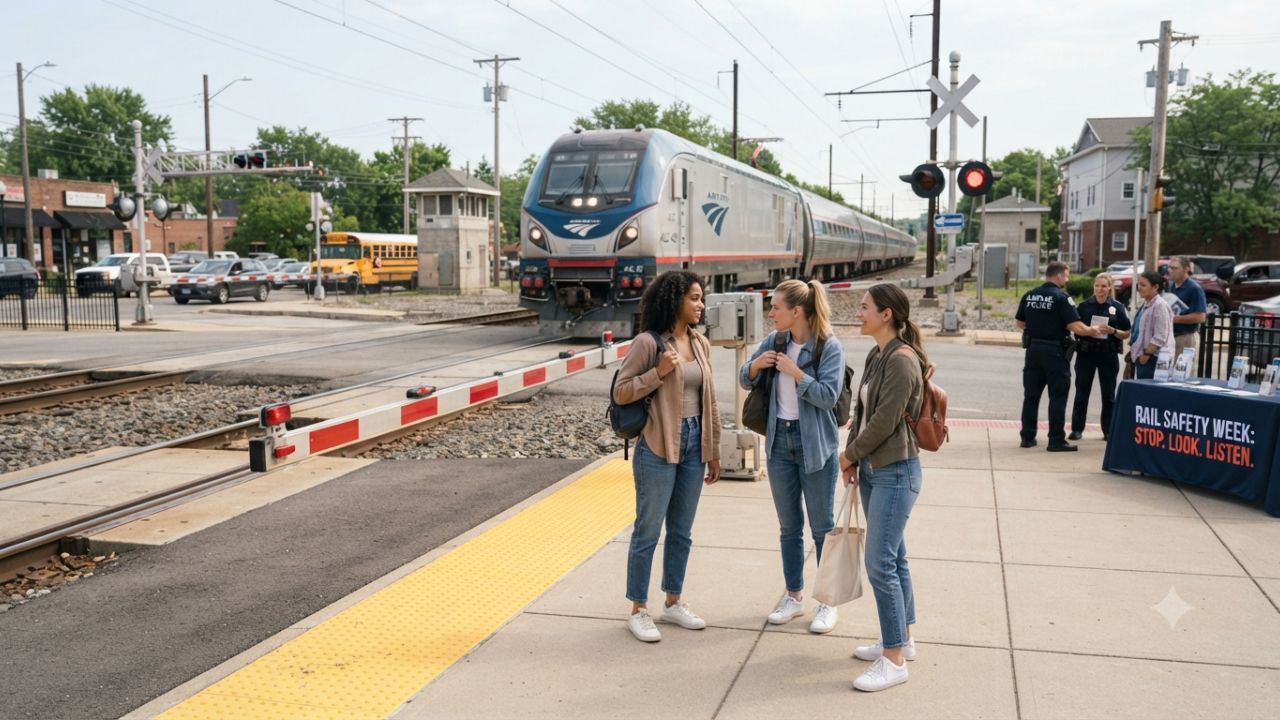
A typical passenger train hurtling down an active mainline at 55 miles per hour requires the length of eighteen football fields—nearly a full mile—to come to a complete halt. With train travel experiencing a massive renaissance across North America, federal transport authorities and passenger rail networks are intensifying nationwide enforcement to eliminate fatal crossing collisions and pedestrian trespassing. Marking the tenth anniversary of the See Tracks, Think Train Week public-education initiative, passenger operator Amtrak is joining forces with local police departments, safety non-profits, and the National Transportation Safety Board for Operation Clear Track on Tuesday, 22 September 2026.
The Nationwide Enforcement Push Across America's Rail Corridors
As millions of domestic and international visitors explore the United States via rail passes, scenic cross-country routes, and rental cars, interactions between public roads and active train corridors continue to rise. Operation Clear Track mobilizes more than 200 law enforcement and municipal safety agencies stationed at thousands of grade crossings across the country. Led by Amtrak Police Chief James Cook, officers are working to surpass the 70,000 rail-safety education cards distributed during last year's campaign, combining on-the-ground traffic enforcement with direct public education.
The national visibility of the 2026 campaign is further amplified by a high-level media briefing in Chicago hosted by NTSB Chair Jennifer Homendy and Amtrak Executive Vice President and Chief Safety Officer Steve Predmore. The overarching message emphasizes that railroad safety is not a seasonal awareness talking point, but an uncompromising, year-round operational standard that requires total vigilance from motorists, photographers, and pedestrians navigating rail-adjacent destinations.
Understanding the Physical Realities of Active Rail Lines
Many travelers unfamiliar with modern rail systems mistakenly assume that locomotive engineers can swerve, brake rapidly, or sound warning horns in time to prevent an accident. In reality, steel wheels moving across steel tracks produce minimal friction, making sudden deceleration physically impossible. Furthermore, modern diesel-electric and electric high-speed trainsets approach much faster and quieter than older freight locomotives, often catching distracted tourists completely by surprise.
Educational programs curated by Operation Lifesaver remind travelers that railroad tracks, ballast beds, trestle bridges, and maintenance access roads are strictly private property. Trespassing along rail rights-of-way—whether to take scenic vacation photographs, walk family pets, or shortcut across city neighborhoods—carries severe legal penalties alongside life-threatening risks.
| Rail Environment | Common Traveler Risk Factor | Official Safety Protocol | Legal & Physical Consequences |
|---|---|---|---|
| Public Grade Crossings | Driving around lowered gates or rushing yellow lights | Stop at least 15 feet from tracks; wait for lights to stop flashing | Heavy moving-violation fines; catastrophic vehicle impact |
| Scenic Bridges & Trestles | Walking onto bridges for panoramic photographs | Stay strictly on designated pedestrian walkways | Zero clearance for oncoming trains; criminal trespassing charges |
| Historic Depot Platforms | Standing past yellow safety lines for selfies | Remain behind tactile warning strips until doors open | Risk of aerodynamic suction from non-stopping express trains |
| Multi-Track Corridors | Crossing immediately after one train passes | Wait until signals clear; expect trains from any direction | Second-train strikes on parallel tracks |
| Rural Unsignaled Crossings | Failing to look both ways at passive crossbucks | Yield, roll down vehicle windows, and listen carefully | High-speed impact in remote emergency response zones |
Recognizing these physical dynamics ensures that holidaymakers can experience the beauty of rail journeys without compromising personal safety or disrupting scheduled train traffic.
Visitor Insider Tips for Safe Travel Near Railway Lines
- Locate the Blue Emergency Notification System (ENS) Sign: Every public rail crossing in the United States features a metal blue sign mounted on the signal mast or crossbuck post. If your vehicle stalls on the tracks or you observe an obstruction, locate the toll-free emergency phone number and unique Department of Transportation (DOT) crossing number on the sign to alert dispatchers immediately.
- Never Stop Your Vehicle on the Tracks in Traffic Queues: When driving through towns with rail intersections, ensure there is enough clearance on the far side of the tracks to accommodate your entire vehicle before proceeding. Never enter a crossing unless you can drive completely across without stopping.
- Cross Bicycle Tires at a Strict 90-Degree Angle: Cyclists touring historic rail-trail towns should approach grade crossings perpendicularly. Crossing railway tracks at a diagonal angle can cause narrow bicycle tires to become trapped in flangeway gaps, resulting in sudden falls directly onto active rails.
- Respect Designations in Designated Quiet Zones: In many historic cities and resort communities, local ordinances establish quiet zones where locomotive horns are silenced during evening hours. Never assume the absence of a horn indicates clear tracks; always check visual signal lights and gate arms.
- Keep Headphones and Distractions Off Near Station Tracks: Noise-canceling headphones and mobile phone screens drastically reduce situational awareness. Remove earbuds and look both ways before stepping onto marked pedestrian crossings at transit centers and rural whistle-stops.
The Cultural Evolution of American Passenger Rail Tourism
Railways have shaped the cultural geography of the United States since the completion of the Transcontinental Railroad in 1869. Historic depots in cities like Chicago, Philadelphia, Denver, and Seattle serve as architectural monuments to an era that connected diverse regional economies. Today, renewed public investment in high-speed rail corridors and heritage excursion routes is revitalizing downtown station districts across the country.
However, modern rail tourism requires balanced civic infrastructure. Community-based safety education prevents tragic accidents in neighborhoods where historic street grids intersect active high-speed corridors. By coordinating federal oversight with municipal policing and grassroots non-profit outreach, transport agencies are building a safer transportation network that supports sustainable long-distance passenger travel.
When travelers respect railway corridors and follow established crossing laws, they protect their loved ones while ensuring that America's storied passenger rail network continues to operate smoothly and safely.
FAQ: Rail Safety for US Travelers 2026
What should I do if my car gets stuck on railroad tracks?
Immediately get everyone out of the vehicle and walk away from the tracks at a 45-degree angle toward the oncoming train direction, then call the emergency number on the blue ENS sign or 911.
Is it legal to walk along railroad tracks to take photographs?
No. All railroad tracks and right-of-way properties are private land. Walking on tracks or bridges is illegal trespassing and exposes you to severe fines and deadly hazards.
What is Operation Clear Track on September 22?
Operation Clear Track is a single-day nationwide initiative bringing together over 200 law enforcement agencies to enforce rail crossing laws and distribute safety education cards.
How long does it take for a passenger train to stop in an emergency?
A passenger train traveling at 55 mph requires up to a full mile (approximately 5,280 feet) to come to a complete stop once emergency brakes are applied.
Honoring the power of the rails and following crossing safety rules ensures that every journey across the American heartland remains a safe and memorable adventure.
Related Travel Guides
Disclaimer
This article is for informational and educational purposes only. It does not constitute legal, financial, or professional advice. While we strive to provide accurate and up-to-date information, travel policies, regulations, and conditions change rapidly. Always verify information with official sources before making travel decisions. Nomad Lawyer makes no representations about the accuracy, reliability, completeness, or suitability of the information provided. Readers should consult qualified professionals for advice specific to their circumstances. The views expressed in this article are those of the author and do not necessarily reflect the views of Nomad Lawyer.
Raushan Kumar
Founder & Lead Developer
Full-stack developer with 11+ years of experience and a passionate traveller. Raushan built Nomad Lawyer from the ground up with a vision to create the best travel and law experience on the web.
Learn more about our team →