The West Coast Transpacific Gateway Battle: How Seattle, San Francisco, Los Angeles, and San Diego Compete Amid US International Capacity Cuts

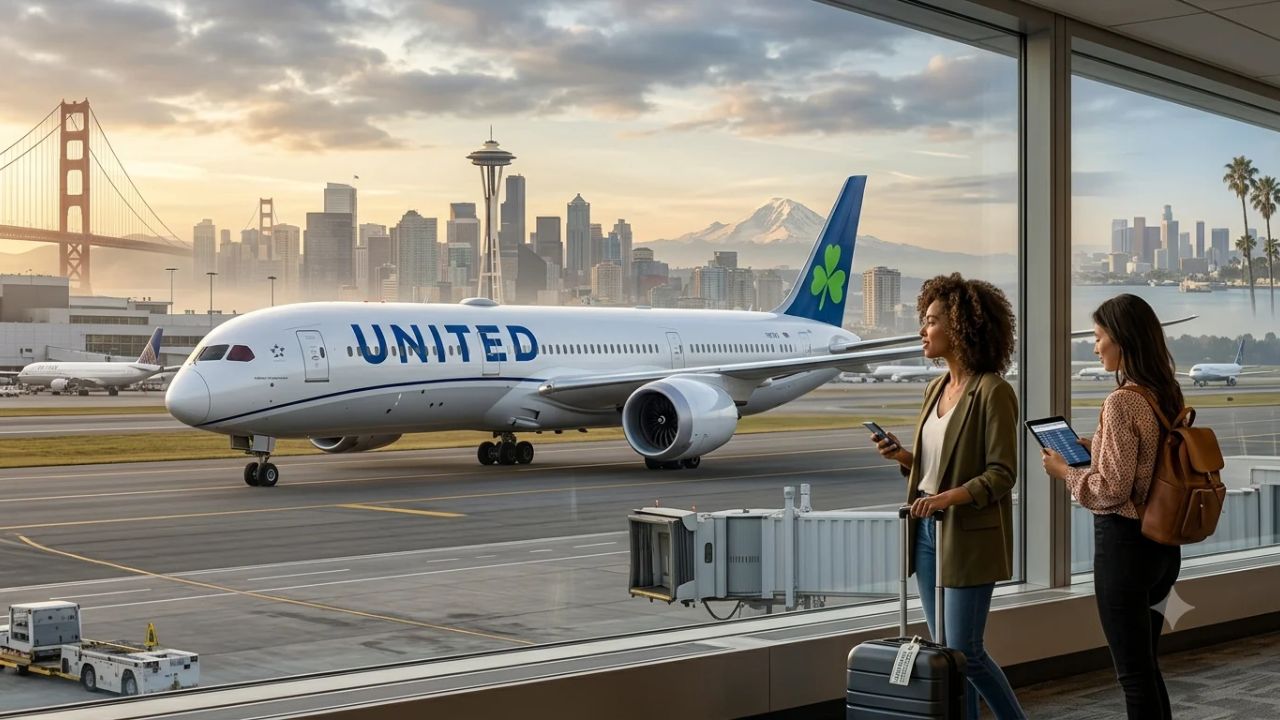
SEATTLE — A fierce commercial contest is transforming transpacific and long-haul aviation along the American Pacific Rim, as Seattle-Tacoma, San Francisco, Los Angeles, and San Diego vie for international airline capacity against the backdrop of contracting United States overseas seat deployment. Scheduled airline capacity data published by OAG for November 2026 reveals that while overall US airline capacity expanded by 1.8 percent to 113.9 million seats, international scheduled capacity contracted by 1.4 percent to 25 million seats. This divergence—compounded by a 4.64 million seat pullback across the summer travel season—has forced network carriers to abandon speculative international flying and concentrate widebody aircraft where passenger yields and local origin-and-destination demand remain unassailable.
Amid this disciplined operating environment, the four primary West Coast gateways are charting distinctly divergent growth paths. Los Angeles International (LAX) retains its position as the region's undisputed volume heavyweight, processing nearly 24 million international passengers annually, while San Francisco International (SFO) leverages its entrenched transpacific position anchored by United Airlines. However, the most dynamic momentum is emerging from the Pacific Northwest and Southern California: Seattle-Tacoma (SEA) achieved a 7.8 percent international passenger surge to 7.1 million travelers, preparing for a landmark transpacific widebody expansion via the Alaska-Hawaiian airline combination. Simultaneously, San Diego International (SAN) recorded an 8.0 percent international surge, leveraging its newly opened Terminal 1 to attract European, Asian, and Latin American flag carriers seeking alternatives to congested metropolitan hubs.
The Macroeconomic Baseline: The US International Capacity Contraction
To appreciate the intensity of the West Coast airport battle, one must examine the broader commercial pressures shaping American international aviation in late 2026. Data published by OAG highlights a persistent divergence between expanding domestic airline seats and contracting overseas flying.
The November 2026 scheduling metrics illustrate this structural realignment:
- Total US Capacity: Reached 113.9 million scheduled seats, an annual increase of 1.8 percent.
- Domestic Seat Growth: Expanded by 2.8 percent to 88.9 million seats, demonstrating solid baseline domestic travel demand.
- International Seat Contraction: Slipped by 1.4 percent to 25.0 million seats, reflecting cautious overseas network management by US and foreign carriers.
- Global Context: Worldwide airline capacity grew 0.9 percent to 484.4 million seats, with North-East Asia (+2.7 million seats) and North America (+2.5 million seats) adding capacity, while Western Europe, South Asia, and the Middle East experienced net capacity trims.
This follows summer 2026 performance figures, where US international airline capacity dropped by 2.0 percent (a loss of 4.64 million seats), with Latin America and the Middle East absorbing nearly 97 percent of the net worldwide decline.
Confronted by elevated aviation fuel costs, delivery delays for Boeing 787 Dreamliners and Airbus A350s, and mandatory engine inspections on modern narrowbody fleets, airline executives are optimizing aircraft utilization. Carriers are no longer willing to flood secondary international gateways with low-yield connecting seats; instead, long-haul aircraft are allocated strictly to airports that deliver high-yield business travelers, premium leisure demand, and sustainable cargo revenues.
WEST COAST AVIATION COMPETITIVE LANDSCAPE (2026)
| Entity / Facility | Delays | Cancellations | Details |
|---|---|---|---|
| Pax (+7.8%) | Pax (+5.5%) | Pax (+0.9%) | Pax (+0.3%) |
| - 70% Local O&D | - Taipei #1 Route | - 75.22M Total | - Int'l Pax: +8.0% |
| - Alaska 2027 | (838k seats) | Passenger Scale | - New Terminal 1 |
| widebody push | - United: 50.8% | - Multi-carrier | opened Sep 2025 |
| (Athens, Osaka | airline seat | mega-hub with | - KLM, Copa, JAL, |
| Paris, Tahiti | concentration | Volaris anchor | Lufthansa links |
Gateway 1: Seattle-Tacoma (SEA) — The Pacific Northwest Breakout
Seattle-Tacoma International Airport enters this four-way contest with extraordinary international passenger momentum. Operating as the primary commercial gateway for Washington State, Oregon, and the broader Pacific Northwest, SEA processed 52,715,000 total passengers in 2025.
While domestic passenger traffic experienced a slight 1.02 percent softening, overseas international passenger traffic surged by 7.8 percent to reach 7,105,076 travelers. This marked the highest rate of international volume expansion among the three largest West Coast gateways.
The Origin-and-Destination (O&D) Advantage
A defining structural strength of SEA is its passenger profile:
- Approximately 70 percent of SEA passengers begin or conclude their journeys locally, rather than transferring between connecting flights.
- Anchored by the global corporate headquarters of Amazon, Microsoft, Costco, Starbucks, PACCAR, and a vast aerospace and biotechnology cluster, Seattle generates an exceptionally affluent demographic of corporate executives and tech specialists who command high-yield Business Class and Premium Economy fares.
- In 2026, SEA expanded its intercontinental network by welcoming Cathay Pacific's non-stop service to Hong Kong, alongside new European long-haul routes operated by Delta Air Lines (Rome, Barcelona) and home carrier Alaska Airlines (London Heathrow, Rome, Reykjavik).
The 2027 Alaska-Hawaiian Widebody Revolution
The most consequential development reshaping Seattle's competitive standing is the international fleet deployment stemming from Alaska Airlines' strategic merger with Hawaiian Airlines. Armed with Hawaiian’s widebody fleet of long-range Airbus A330-200 and Boeing 787-9 Dreamliner aircraft, Alaska Airlines announced a transformative international expansion from Seattle scheduled for spring and summer 2027:
- Athens (ATH): Commencing 12 May 2027, Alaska will launch a three-times-weekly seasonal service to the Greek capital using Boeing 787-9s, establishing Seattle's first non-stop link to southeastern Europe.
- Paris Charles de Gaulle (CDG): Launching 25 May 2027, operating five times weekly with Boeing 787-9 aircraft, directly challenging Air France and Delta on the high-yield French transatlantic corridor.
- Osaka Kansai (KIX): Commencing 14 May 2027, operating four times weekly using Hawaiian Airlines Airbus A330-200 aircraft, expanding Seattle's non-stop connectivity into Japan beyond Tokyo.
- Papeete (PPT), French Polynesia: Launching 11 June 2027 with three weekly flights, opening direct access from the Pacific Northwest to Tahiti.
These route additions elevate Seattle from a regional connecting station into a genuine global transpacific and transatlantic launchpad, directly threatening San Francisco’s traditional dominance over Pacific Northwest flyers.
Gateway 2: San Francisco (SFO) — The Transpacific Tech and Corporate Fortress
San Francisco International Airport remains the premier intellectual and financial gateway to the Asia-Pacific basin. SFO handled 54,118,814 total passengers during fiscal year 2025, representing 5.5 percent annual growth. International enplaned passengers grew by 5.9 percent, while scheduled departing airline seats expanded by 7.3 percent, easily outperforming neighboring East Bay airports in Oakland and San Jose.
Dominance in Asian Trunk Corridors
SFO's international schedule reflects the deep economic, cultural, and venture capital linkages binding Silicon Valley and the Bay Area to East Asia:
- Taipei (TPE): Represents SFO's single largest international destination by capacity, generating an extraordinary 838,627 scheduled seats in FY2025, served by an intense four-way contest between United Airlines, EVA Airways, China Airlines, and Starlux Airlines.
- London Heathrow (LHR): Anchors European connectivity with 672,111 scheduled seats, catering to transatlantic finance and tech consulting.
- Seoul Incheon (ICN): Holds third place with 502,962 scheduled seats, supported by Korean Air, Asiana, and United.
- Vancouver (YVR) and Hong Kong (HKG): Follow with 481,068 seats and 457,022 seats respectively, solidifying SFO’s status as the West Coast's preeminent multi-carrier Asian hub.
The Double-Edged Sword of United Airlines Concentration
The central competitive reality at SFO is airline concentration. United Airlines controlled 48.7 percent of SFO's total scheduled seat market in FY2025, expanding to 50.8 percent in the airport's FY2026 operational reporting, with Alaska Airlines holding 9.5 percent and Delta trailing at 7.6 percent.
This concentration provides massive operational strengths: United’s vast domestic feeder network channels passengers from dozens of secondary US cities directly onto its Asian and European widebody banks. However, it also introduces acute vulnerability: if United reallocates widebody aircraft toward secondary European destinations or expands its Newark hub, SFO’s aggregate international seat volume faces immediate exposure.
| SFO Top International Destinations | FY2025 Scheduled Departing Seats | Primary Operating Carriers | Strategic Economic Anchor |
|---|---|---|---|
| 1. Taipei (TPE) | 838,627 Seats | United, EVA Air, China Airlines, Starlux | Semiconductor & High-Tech Hardware |
| 2. London Heathrow (LHR) | 672,111 Seats | United, British Airways, Virgin Atlantic | Global Finance & Corporate Services |
| 3. Seoul Incheon (ICN) | 502,962 Seats | United, Korean Air, Asiana Airlines | Automotive, Battery Tech & Electronics |
| 4. Vancouver (YVR) | 481,068 Seats | Air Canada, United Airlines | Cross-Border Cascadia Tech Corridor |
| 5. Hong Kong (HKG) | 457,022 Seats | Cathay Pacific, United Airlines | Transpacific Financial Hub & Trade |
Gateway 3: Los Angeles (LAX) — The Global Mega-Gateway Heavyweight
Los Angeles International Airport occupies an entirely different tier of sheer operational scale. Serving as the primary gateway to the second-largest metropolitan population in the United States, LAX handled 75,219,214 passengers during fiscal year 2025, according to Los Angeles World Airports (LAWA).
While total airport traffic contracted slightly by 1.7 percent due to domestic carrier adjustments, international passenger traffic remained resilient, expanding by 0.9 percent to reach 23,825,563 travelers.
Unmatched Carrier Diversity
Unlike SFO's single-carrier domination, LAX functions as a hyper-competitive, multi-hub airport contested by all three major US legacy network carriers:
- Delta Air Lines: Led all operators at LAX during FY2025, transporting 14.2 million passengers.
- United Airlines: Carried 11.8 million passengers, utilizing LAX as a secondary transpacific and Latin American gateway.
- American Airlines: Handled 11.4 million passengers, maintaining a dedicated transpacific hub connecting to Tokyo, Sydney, and Auckland.
- Volaris (Leading Foreign Carrier): Carried approximately 1.3 million passengers, reflecting LAX's role as the premier international gateway connecting the US with Central Mexico.
The Scale Paradox
However, LAX’s massive scale creates distinct operational and competitive friction points:
- Slower international growth (+0.9%) demonstrates that mature mega-hubs face severe saturation compared to nimble secondary airports like Seattle (+7.8%) and San Diego (+8.0%).
- High landing fees, gate leasing costs, and airspace congestion make adding marginal long-haul frequencies economically challenging for foreign airlines.
- The physical layout of LAX—comprising nine individual passenger terminals—creates complex, time-consuming transit connections for passengers transferring between domestic carriers and foreign flag airlines in the Tom Bradley International Terminal (TBIT).
Gateway 4: San Diego (SAN) — The High-Yield Southern California Challenger
San Diego International Airport represents the most compelling dark horse in the West Coast aviation landscape. Historically overshadowed by LAX, situated just 120 miles to the north, SAN has successfully executed a targeted strategy to capture affluent local travelers who previously endured multi-hour drives along the congested Interstate 5 corridor to catch long-haul flights from Los Angeles.
In 2025, SAN welcomed a record-breaking 25.32 million total passengers (+0.3%), with international passenger traffic climbing by 8.0 percent—the fastest percentage expansion among all four West Coast gateways.
Strategic Flag Carrier Additions
San Diego’s international growth is anchored by high-yield foreign flag carriers operating long-range widebodies:
- KLM Royal Dutch Airlines: Operates direct non-stop flights connecting San Diego with Amsterdam Airport Schiphol (AMS), providing direct access to the SkyTeam global alliance network across Europe, Africa, and the Middle East.
- Copa Airlines: Operates non-stop services linking San Diego with its "Hub of the Americas" in Panama City (PTY), opening seamless single-ticket connections across Colombia, Peru, Brazil, and Central America.
- Lufthansa & Japan Airlines: Lufthansa expanded widebody flights into its Munich (MUC) hub, while Japan Airlines maintained its high-yield daily Boeing 787 service to Tokyo Narita (NRT).
Infrastructure Transformation: The New Terminal 1
Underpinning SAN’s international ascent is a transformative $3.8 billion New Terminal 1 redevelopment:
- The initial operational phase opened in September 2025, introducing 19 spacious new gates, expanded security screening checkpoints, and world-class passenger amenities.
- During the fourth quarter of 2025 (October through December), passenger traffic through SAN surged by more than 11 percent compared to the same period in 2024.
- During 2025, the new Terminal 1 accommodated 9.68 million passengers, while Terminal 2 handled 15.64 million, providing the modern gate capacity required to recruit additional foreign carriers into 2027.
| West Coast Airport Gateway | 2025 Total Passengers | 2025 International Passengers | International YoY Growth | Dominant Airline Carrier(s) | Primary Terminal Infrastructure Milestone |
|---|---|---|---|---|---|
| Seattle-Tacoma (SEA) | 52.72 Million | 7.11 Million | +7.8% | Alaska Airlines (49%) & Delta (23%) | International Arrivals Facility (IAF) operating |
| San Francisco (SFO) | 54.12 Million | ~14.2 Million (Est.) | +5.9% (Enplanements) | United Airlines (50.8% Seat Share) | Harvey Milk Terminal 1 full completion |
| Los Angeles (LAX) | 75.22 Million | 23.83 Million | +0.9% | Delta, United, American, Volaris | Automated People Mover & TBIT West Gates |
| San Diego (SAN) | 25.32 Million | ~1.45 Million (Est.) | +8.0% | Southwest (38%), United, Alaska | $3.8B New Terminal 1 opened Sep 2025 |
Point-to-Point O&D vs. Mega-Hub Connecting Economics
The competitive battle across these four gateways illustrates a fundamental shift in international airline route economics: the rising superiority of local Origin-and-Destination (O&D) passenger demand over connecting hub traffic.
Historically, airlines funneled international traffic through mega-hubs like LAX and SFO because widebody aircraft required hundreds of connecting passengers from smaller regional cities to achieve breakeven load factors. However, connecting passengers generate substantially lower revenue per available seat-mile (RASM) than non-stop local travelers, as airlines must discount connecting itineraries to compete with rival hubs.
In markets like Seattle and San Diego:
- Local business travelers in aerospace, cloud computing, defense, and life sciences are willing to pay significant fare premiums for non-stop convenience that eliminates multi-hour layovers in Los Angeles or San Francisco.
- Modern twin-engine widebodies—such as the Boeing 787-9 and Airbus A350-900—feature lower trip fuel burns that allow airlines to operate profitably on smaller, high-yield O&D passenger bases.
- By launching non-stop flights from Seattle to Athens, Paris, and Osaka, Alaska Airlines is directly intercepting premium Pacific Northwest travelers before they can be channeled into United’s SFO hub or Delta’s Salt Lake City connection banks.
Strategic Guidance for West Coast International Travelers
As airlines reconfigure Pacific and European flight schedules across the West Coast, international vacationers and business executives should evaluate their departure options carefully:
1. Compare Fares Across Competing West Coast Gateways
When booking long-haul flights to East Asia, Europe, or Oceania, check departure options across multiple gateways. If non-stop fares out of SFO or LAX are elevated due to peak holiday demand, direct flights from Seattle or San Diego may offer competitive pricing and superior seat availability in premium cabins.
2. Verify Seasonal Operating Calendars
Many newly announced international routes operate on seasonal summer schedules rather than year-round timetables. For instance, Alaska Airlines’ announced Seattle services to Athens, Paris, and Papeete are scheduled primarily for the late spring and summer months. Verify that your intended travel dates fall within active operating windows before confirming land arrangements.
3. Factor in Airport Transfer Logistics
When booking itineraries that require connecting between domestic and international flights, examine terminal navigation realities. Connecting through Seattle’s centralized terminal or San Francisco’s interconnected domestic and international terminals is generally faster and less stressful than completing inter-terminal transfers between separate concourses at Los Angeles International.
4. Leverage Global Airline Alliances
- Star Alliance: SFO remains the undisputed powerhouse, providing seamless connections across United, EVA Air, All Nippon Airways (ANA), Asiana, Singapore Airlines, and Air New Zealand.
- oneworld Alliance: SEA offers exceptional strength via Alaska Airlines and its oneworld partners, including British Airways, Japan Airlines, Cathay Pacific, and Qatar Airways.
- SkyTeam: LAX and SEA provide direct connectivity via Delta Air Lines, Air France, KLM, and Korean Air.
Summary Assessment: The Multi-Polar Future of West Coast Aviation
The competitive realignment unfolding across Seattle, San Francisco, Los Angeles, and San Diego marks the end of an era when one or two mega-airports held an uncontested monopoly over West Coast international mobility. As total US international airline seat capacity contracts and airlines enforce strict yield discipline, international route growth has become highly selective and localized.
While Los Angeles will continue to anchor global passenger volume and San Francisco will fiercely defend its transpacific corporate fortress, the dramatic growth recorded by Seattle and San Diego proves that mid-sized gateways with strong local economies can successfully attract world-class direct intercontinental air services. For international travelers, this four-way competition promises greater non-stop choice, enhanced in-flight products, and unprecedented direct access from the American Pacific coast to the farthest corners of the globe.
Related Travel Guides
- Seattle-Tacoma Airport International Transit Guide: IAF Terminal Navigation and Connections
- San Francisco vs. Los Angeles: Which California Hub is Best for Transpacific Flights?
- San Diego Airport New Terminal 1: Gates, Amenities, and International Airlines Guide
- Transpacific Business Class Product Review: United, Delta, Cathay Pacific, and ANA 2026
This article is for informational purposes. Flight routes, passenger regulations, visa rules, and transit advisories are subject to change by airlines and aviation authorities. Readers are advised to verify schedules and travel documentation with relevant carriers and border agencies before departure.