
ASEAN Digital Travel Revolution: QR Payments and Biometric Borders Transform Southeast Asia 2026
Southeast Asian nations are dismantling traditional travel barriers through integrated QR payment networks, biometric border automation, and high-speed rail corridors that bypass major aviation hubs.

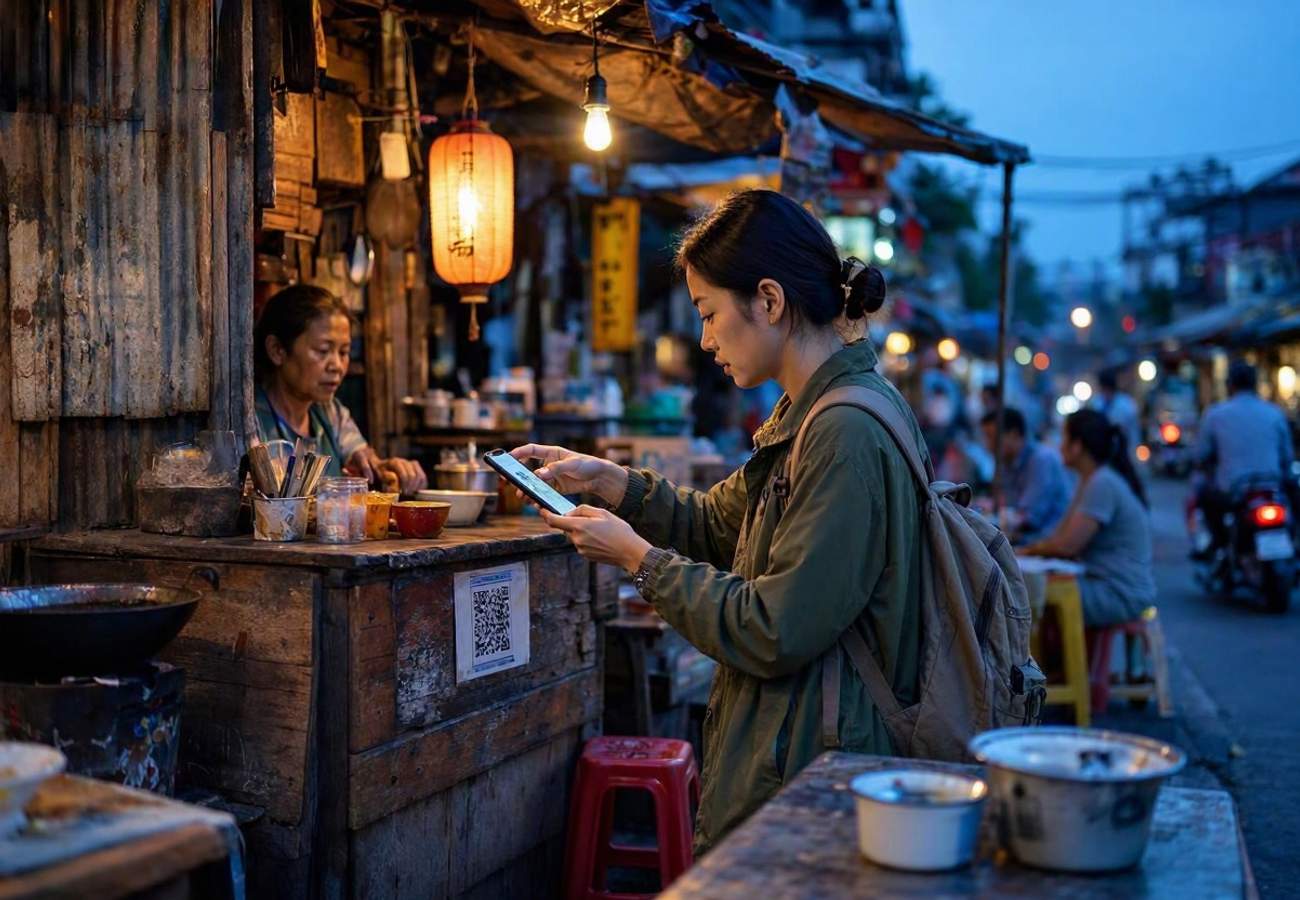
Image generated by AI
[Bangkok, October 7, 2026] — Southeast Asian nations are aggressively restructuring regional mobility by replacing traditional aviation gateways and legacy payment systems with a digitized corridor of biometric borders and interoperable mobile wallets.
This systemic shift moves the region away from a centralized hub-and-spoke model—previously dominated by airports like Singapore Changi and Kuala Lumpur International—toward a decentralized ecosystem. By integrating high-speed rail, automated border controls, and real-time central bank payment switches, ASEAN is enabling international visitors to bypass expensive metropolitan hubs in favor of secondary urban centers.
The Shift to Multimodal Transit Corridors
The traditional reliance on primary air hubs is eroding as overland transit options expand. The Pan-Asian High-Speed Railway, specifically the China-Laos Railway, now serves as a primary artery for passengers from China's Yunnan and Sichuan provinces. Travelers are increasingly routing through Luang Prabang and Vientiane, crossing the Mekong River at Nong Khai, Thailand, to enter domestic rail grids or connect with low-cost carrier (LCC) flights.
This "rail-to-air bridge" allows travelers to avoid the high landing charges, ground handling tariffs, and peak-hour congestion associated with major capital city airports. Consequently, regional carriers are redeploying narrow-body aircraft to point-to-point routes, funneling economic activity into non-metropolitan areas.
Emergence of Secondary Transit Gateways
To manage these decentralized passenger flows, several "sister hubs" have emerged as strategic multimodal nodes:
| Secondary Gateway | Strategic Function | Connectivity Focus |
|---|---|---|
| Da Nang (Vietnam) | East-West Economic Corridor Hub | Links landlocked Laos and NE Thailand to maritime shipping and LCC networks. |
| Penang (Malaysia) | Sub-regional Transit Node | Connects Southern Thailand via ferries and rail to northern aviation operations. |
| Luang Prabang (Laos) | Rail-to-Air Feeder | Converts Kunming–Vientiane rail arrivals into short-haul flights to ASEAN capitals. |
FinTech Interoperability: The Death of the Credit Card
Parallel to physical infrastructure, the Regional Payment Connectivity initiative is dismantling the dominance of traditional credit card rails. By linking national fast payment switches, ASEAN central banks have enabled account-to-account mobile wallet transactions that settle in real-time.
Travelers no longer require expensive credit card terminals or high-fee currency exchanges. Instead, they use domestic banking apps to scan unified national QR codes, with settlements executed at transparent wholesale exchange rates. This system is governed by authorities such as the Bank of Thailand and the Monetary Authority of Singapore (MAS).
National QR Standards and Interoperability Matrix
The following table outlines the current state of cross-border payment linkages across the region:
| Country | QR Standard | Governing Authority | Active Cross-Border Linkages |
|---|---|---|---|
| Thailand | PromptPay | Bank of Thailand / National ITMX | Cambodia, Vietnam, Malaysia, Singapore, Indonesia, Laos |
| Malaysia | DuitNow QR | Bank Negara Malaysia / PayNet | Thailand, Singapore, Indonesia, Cambodia |
| Indonesia | QRIS | Bank Indonesia | Thailand, Malaysia, Singapore, South Korea, Japan, China |
| Singapore | SGQR+ / NETS QR | MAS / IMDA | Thailand, Malaysia, Indonesia |
| Vietnam | VietQR | State Bank of Vietnam / NAPAS | Thailand, Cambodia, Laos, China, Singapore |
| Cambodia | KHQR | National Bank of Cambodia | Thailand, Laos, Vietnam, Malaysia |
| Laos | LAO QR | Bank of the Lao PDR | Cambodia, Thailand, Vietnam |
What This Means for Travelers
For the modern nomad or tourist, these changes translate to a significant reduction in "friction" and cost.
1. Financial Disintermediation: By bypassing the multi-tiered chain of issuing banks and card networks, travelers avoid heavy processing fees and unfavorable currency spreads. Payments now flow directly from the traveler's wallet to the merchant's account. 2. Access to the Informal Economy: Because QR codes require no hardware, micro-vendors, street food operators, and local drivers can now accept international digital payments. This allows tourists to spend money in local neighborhoods rather than being restricted to hotels and malls that accept Visa or Mastercard. 3. Faster Border Crossings: The transition to biometric border control is reducing reliance on paper passports and manual stamping, speeding up the transit process at land and air borders.
The Future of Border Governance
The region is now treating transit processing speed as a competitive advantage. As biometric infrastructure scales, the goal is a "passport-less" experience where facial recognition and digital identities handle clearance. This integration is expanding beyond ASEAN, with Indonesia already activating QR links with Japan and South Korea, and Vietnam establishing reciprocal arrangements with China.
FAQ: ASEAN Digital Travel 2026
Do I need a local bank account to use QR payments in Thailand or Malaysia? Not necessarily. Platforms like TAGTHAi in Thailand allow visitors to link foreign currency to local QR rails via prepaid tourist services, though using a linked home-country app from a participating partner nation is the fastest method.
Can I still use credit cards in Southeast Asia? Yes, but you will find fewer small vendors accept them. Furthermore, you will likely pay higher fees and receive worse exchange rates compared to the real-time central bank switches used by QR wallets.
How does the rail-to-air bridge work for tourists? Instead of flying into a major hub like Bangkok or Singapore, you take high-speed rail (e.g., from China into Laos) and then use a secondary airport (e.g., Luang Prabang) to fly a short distance to your final destination.
Is my biometric data safe at these new borders? Border automation is managed by national security agencies. Travelers should check the specific data privacy policies of the ASEAN Secretariat and the destination country's immigration department.
The era of the mega-hub is ending; the era of the seamless corridor has arrived.
Related Travel Guides
Disclaimer
This article is for informational and educational purposes only. It does not constitute legal, financial, or professional advice. While we strive to provide accurate and up-to-date information, travel policies, regulations, and conditions change rapidly. Always verify information with official sources before making travel decisions. Nomad Lawyer makes no representations about the accuracy, reliability, completeness, or suitability of the information provided. Readers should consult qualified professionals for advice specific to their circumstances. The views expressed in this article are those of the author and do not necessarily reflect the views of Nomad Lawyer.
Naina Thakur
Contributor & Travel Specialist
Travel enthusiast and legal writer covering visa regulations, responsible tourism, and cultural journeys across global destinations.
Learn more about our team →