Singapore Blocks Vehicle Entry Permits for Unpaid Fines as ASEAN Digital Road Rules Diverge in 2026

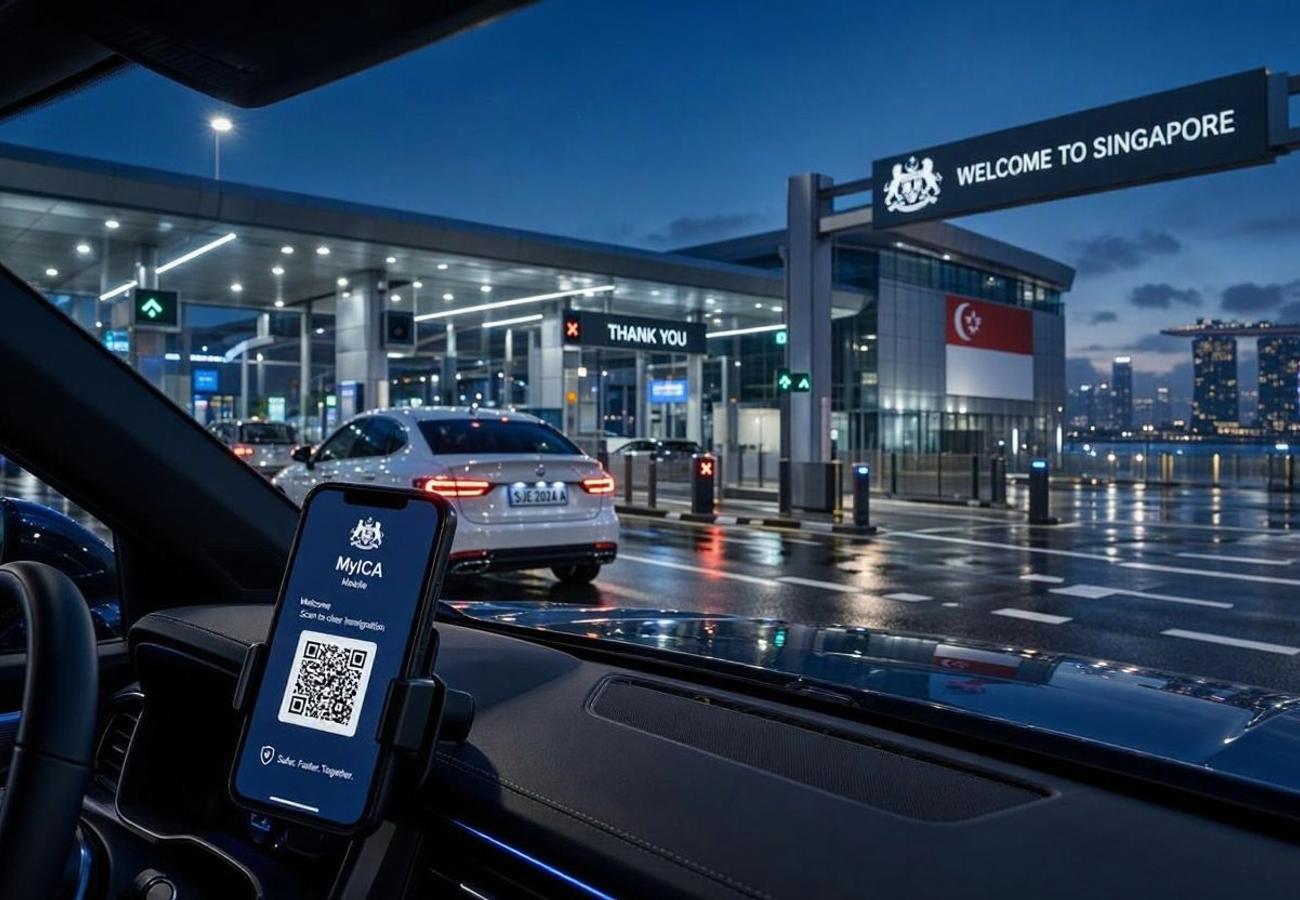
Image generated by AI
[Singapore, November 3, 2026] — Singapore has officially begun denying new and renewal applications for Vehicle Entry Permits (VEP) to foreign-registered vehicles with outstanding traffic, parking, or emissions fines. Effective November 2, the policy shifts enforcement from the physical land checkpoints to the digital application stage, preventing non-compliant motorists from even attempting to enter the city-state.
The move, coordinated by the Land Transport Authority (LTA) and the Ministry of Home Affairs, follows a formal announcement made on May 15. While offending vehicles were previously intercepted at the border, the new system creates a digital blockade during the permit process. This coincides with an updated SG Arrival Card requirement that forces short-term visitors in foreign cars to secure a valid VEP before completing their immigration submission via the MyICA app.
The Shift to Pre-Checkpoint Enforcement
The primary objective of the new LTA mandate is to ensure financial compliance before a vehicle reaches the border. Motorists are now required to settle all outstanding penalties through authorized channels prior to using the OneMotoring service.
Because payment records can take up to two calendar days to reflect in the system, the LTA advises that all VEP applications be submitted at least two weeks before the intended travel date. This eliminates the possibility of "last-minute" applications being blocked due to lagging payment updates.
For those entering from Malaysia, the VEP is only one part of a larger compliance stack. Drivers must still possess:
- A vehicle-specific Autopass card for recording entry/exit and payment.
- Valid road tax and insurance.
- An official LTA approval email.
The enforcement extends beyond private cars; it includes permits for ASEAN-registered taxis, buses, and goods vehicles, placing a significant compliance burden on regional transport fleets.
Border Volume and Digital Throughput
The urgency of these digital shifts is driven by massive traffic volumes. Between September 4 and 14, 2026, the Immigration and Checkpoints Authority (ICA) recorded over 6.1 million crossings at the Woodlands and Tuas checkpoints. Peak daily traffic hit 599,000 on September 4 alone.
To manage this load, Singapore has deployed QR-code and facial-recognition technology, which has boosted departure clearance by more than 35% during peak hours. This equates to roughly 7,600 additional travelers processed per hour compared to 2019 levels.
ASEAN Digital Road Border Comparison
While Singapore is tightening its digital grip, other ASEAN nations employ vastly different systems. There is currently no unified "ASEAN Permit"; each country operates a sovereign digital ecosystem.
| Country | Primary Digital Process | Critical Traveler Distinction |
|---|---|---|
| Singapore | LTA VEP, Autopass, MyICA | Unpaid fines now trigger an automatic VEP application block. |
| Malaysia | JPJ VEP Portal & RFID | Requires a non-transferable RFID tag; RM20 Road Charge per entry. |
| Thailand | DLT Foreign Vehicle Permit | Must be applied via licensed Thai agencies; SG, MY, and LAO vehicles are exempt. |
| Indonesia | Customs Vehicle Declaration | Temporary import clearance is separate from the E-CD passenger QR code. |
| Brunei | Customs Exit and Entry System | Uses a QR-coded travel pass and vehicle-based land charges. |
Regional Compliance Deep Dive
Malaysia's RFID Model
The Malaysian Road Transport Department (JPJ) utilizes a VEP portal where owners must register and install a non-transferable RFID tag. This tag is valid for five years upon activation. Notably, a standard Touch ‘n Go RFID used for tolls is not a substitute for the official VEP identifier. Since July 1, 2025, enforcement has intensified, with over 194,000 private vehicles and 2,660 company vehicles having activated tags as of mid-2025.
Thailand's Agency-Led System
The Thailand Department of Land Transport (DLT) requires a Foreign Vehicle Permit for most private vehicles, which must be processed through a licensed Thai travel agency at least five working days before arrival. While vehicles from Singapore, Malaysia, and Laos are exempt from this specific permit, they must still comply with standard customs and insurance laws. For those who do need the permit, the limit is 30 days per application and 60 days per year.
Indonesia's Import Split
Indonesia separates the person from the vehicle. The Directorate General of Customs and Excise manages a Vehicle Declaration for temporary imports (typically 30 days), while passengers use the E-CD system to generate a QR code for personal customs clearance. This distinction is particularly critical for those crossing from Malaysian Borneo into Kalimantan.
What This Means for Travelers
For the average driver, the "border experience" has moved from the checkpoint to the smartphone. You can no longer resolve a fine with a credit card at the booth; if you have an unpaid ticket in Singapore, you are effectively banned from applying for entry until the debt is cleared.
Immediate Action Items:
- Audit Your Fines: Check the OneMotoring portal for any outstanding Singaporean penalties immediately.
- The 14-Day Rule: Do not wait until the week of your trip to apply for a VEP. Apply 14 days out to account for payment processing lags.
- Update Apps: Ensure the MyICA app is updated to the latest version to avoid errors during the SG Arrival Card submission.
- Verify RFID: If entering Malaysia, confirm your VEP RFID is activated and distinct from your toll RFID.
FAQ: ASEAN Road Travel 2026
Can I pay my Singapore traffic fines at the border to get my VEP? No. The new system blocks the VEP application process itself. You must settle all fines through authorized digital channels and wait up to two days for the system to update before applying.
Do I need a separate permit for my car and myself when entering Indonesia? Yes. You must complete a Vehicle Declaration for the car's temporary import and a separate electronic customs declaration (E-CD) to receive a QR code for your personal entry.
Are Singaporean cars exempt from Thailand's Foreign Vehicle Permit? Yes, vehicles registered in Singapore, Malaysia, and Laos are exempt from the DLT's Foreign Vehicle Permit, though standard insurance and customs requirements still apply.
Is the Malaysia VEP RFID the same as the Touch 'n Go tag? No. The official VEP RFID is a non-transferable identifier for the vehicle's entry permit and is entirely separate from the RFID tags used for paying highway tolls.
The digital border is now the first point of failure for the unprepared motorist.
Related Travel Guides
This article is for informational purposes. Flight routes, passenger regulations, visa rules, and transit advisories are subject to change by airlines and aviation authorities. Readers are advised to verify schedules and travel documentation with relevant carriers and border agencies before departure.
Related Stories
AI Travel Planning Japan 2026: Navigating Digital Itineraries and JR Pass Price Hikes

China Tech Tourism 2026: How to Access New AI and Robotics Routes in Hangzhou and Shenzhen